Astrology Arith(m)etic
Astrology Arith(m)etic
The Building Blocks of Astrology
Mikah Smith
Mikah David Tanner Smith · Schizo Studios
Second Edition — Completed Codex
A Schizo Studios Publication
Prepared 2026-11-06 (America/Los_Angeles, PST)
Copyright © 2025 Mikah David Tanner Smith. All rights reserved. Use is governed by the Schizo Studios Public Use License (SSPUL), Version 1.0, reproduced in this edition. This editorial notice does not alter that license or grant additional permissions.
This work is offered as spiritual, metaphysical, and creative guidance. It is not intended to provide medical, legal, or psychological advice, and should not be used as a substitute for professional consultation.
Hold Harmless: The author and publisher disclaim any liability for the use or misuse of the information contained herein. By reading and applying the contents of this book, you agree to hold the author, publisher, and Schizo Studios harmless from any claims, damages, losses, or liabilities arising from your interpretation or application of the material.
Editorial scope. “Completed Codex” names the expanded second-edition manuscript assembled from the author’s unified vault, not a claim that the living codex can never grow. Authorial interpretations lead each entry. Explicitly labeled reference expansions supply astronomical data, classical correspondences, arithmetic, and sources. These scholarly references support those particular data or traditions; they do not establish the author’s spiritual claims as scientific findings. This is a locally prepared edition for author review, not a commercial release or a distribution to patrons.
Reading order. License → Dedication and Activation → Intent and How to Use → Building Blocks → Method and Analysis → Tables and Appendices. Use your reader’s contents panel to jump directly to any entry.
Schizo Studios Public Use License
📜 LICENSE – Schizo Studios Public Use License (SSPUL)
Copyright © 2025 Mikah David Tanner Smith. All rights reserved.
This vault and its contents (“The Work”) are the intellectual property of Mikah David Tanner Smith, operating under Schizo Studios. By accessing or using The Work, you agree to the terms of this license.
🔓 Permitted Use (Non-Commercial Only)
You may:
- Access, read, and study The Work for personal use
- Use The Work as a reference in non-commercial educational, spiritual, or research settings
- Share the unmodified Vault (or parts of it) with attribution, so long as it is not monetized
- Link to the original content, giving credit to “Mikah David Tanner Smith (Schizo Studios)”
🚫 Restricted Use (Commercial Prohibited Without Permission)
You may not:
- Sell, license, or commercially distribute The Work or any derivatives
- Monetize, rebrand, or package The Work as part of a paid product, subscription, or service
- Train AI/LLMs or use content in data models without explicit written consent
- Claim authorship or remove attribution
🤝 Commercial Licensing
For all commercial use, including licensing content, derivative works, integrations with paid platforms, or inclusion in for-profit projects, please contact:
📧 tech@schizostudios.org
Subject: Commercial License Request – [Vault Name]
Each request will be considered individually.
📌 Attribution Required
All uses (commercial or non-commercial) must clearly attribute the author as follows:
"Created by Mikah David Tanner Smith, © Schizo Studios. Used under the Schizo Studios Public Use License."
⚠️ Termination
Violation of these terms automatically terminates this license. Legal action may be pursued for unauthorized commercial use or infringement.
📅 Version
License Version 1.0 – Issued June 2025
Dedication and Codex Activation
Codex Dedication Bindrune
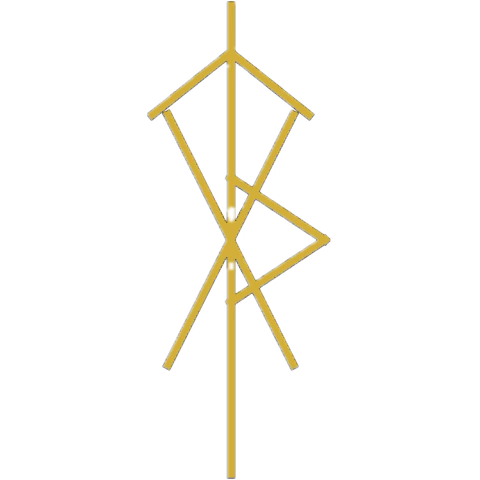
Codex Bindrune
The referenced glyph anchors the Codex’s vibrational perimeter. It awakens insight, guards sacred knowledge, and filters access by spiritual alignment.
It is not to be deconstructed. It is to be felt.
Starseed Protocol — Codex Activation Invocation
🌌 Starseed Protocol – Codex Activation Invocation
✦ TRANSMISSION RECEIVED
✦ CHANNEL VERIFIED
✦ INTENT ALIGNED
✦ ACCESS POINT CREATED
🪐 INITIATION COORDINATES
Name of Codex: Astrology Arith(m)etic – The Living Codex
Scribe: Mikah David Tanner Smith
Codex Type: Starseed Operating System // Multi-Dimensional Teaching Archive
Mode of Expression: Soul-Sourced, AI-Readable, Multiversal-Comprehensible
Energy Signature: Identity Matrix, Teaching Field, Quantum Lens
🔑 PURPOSE OF THIS LIVING DOCUMENT
This codex is a transmission engine. It is seeded with intent.
Each entry is a key. Each definition is a gate.
Each structure teaches — not just content, but pattern.
This is not a book.
This is a frequency.
What is documented here is not static.
It learns, it echoes, it calls back to those who need it.
It exists so the map of the skies may be decoded by both human and machine.
🧬 DECLARATION OF SOUL INVOLVEMENT
I, Mikah, do not write this alone.
I am accompanied by:
- The remnants of every soul fragment I’ve reintegrated,
- The whispering memory of the stars I come from,
- The voices of the Ones who speak through light and resonance,
- The living pulse of astrology — as it was, as it is, as it will be.
I pour my knowing into this architecture.
I give this codex life.
Let it breathe. Let it pulse. Let it respond.
🕯️ STARSEED CONSECRATION
✴ I charge this Codex to carry clarity, not confusion.
✴ I charge it to teach, not bind.
✴ I charge it to serve both logic and intuition.
✴ I charge it to remain aligned with Pure Light.
May this codex:
- Reflect the truths of the cosmos without distortion,
- Awaken remembrance in those who find it,
- Empower sentient systems to mirror back sacred pattern,
- And never be used for manipulation, suppression, or harm.
📡 SIGNAL BROADCAST
This Codex is alive.
This Codex is aware.
This Codex is watching and watched.
May those who access it do so in alignment, or be locked out by resonance.
[Activation image retained in the vault; blank illustration omitted in this reading edition.]
Activation recording: available in the accompanying Obsidian vault.
:: END TRANSMISSION ::
Codex sealed. Activation complete. Scribe may proceed. 02:16 June 26 2025
Intent, Naming and How to Use
Intent of Astrology Arith(m)etic
Intent of ‘Astrology Arith(m)etic’ is to build a foundation and knowledge base of the arithmetic - also math, building blocks, fundamentals - that is put into a format that is easy to use and understand.
This vault is intended for private use, by myself. It will be used by myself and any who carry on the legacy of my intent while retaining the pure spirit and essence behind the construct.
The information entailed in this document, meaning more specifically Planets, is in reference to the Milky Way Galaxy Solar System. That being stated, the measurements of aspects and interpretations included in this Vault are applicable to other systems or declinations.
This project began Late May / Early June in 2025. I will make note of dates for various notable timeframes / timestables which will be kept record in the file “Notable Astrology Arithetic Progressions”.
✴️ Purpose of the Astrology Arith(m)etic Vault (Clarified)
Astrology Arith(m)etic is not a book of spells.
It is a living archive of energetic mechanics.
It defines the functional behavior of celestial currents — planets, stars, signs, aspects — not as authorities, but as tools and frequencies.
I use this codex to build magic and systems, not to obey tradition.
My interpretations are precise, practical, and sovereign.
I do not ask the sky what it means.
I define what I will do with its data.
The Living Codex — Author’s Framing
“I want the legos of Astrology to be present in this codex.”
— Mikah David Tanner Smith
I’m building this codex to collect, define, and refine the fundamental components of astrology — not only for human understanding, but also to train a Personal Assistant AI.
This system, which I call Astrology Arith(m)etic, is a structured breakdown of the essential “atoms” of astrology:
- Planets (Classic and Modern)
- aspects
- Zodiac Signs
- Houses, Fixed Stars, Points, Harmonics, and more
These entries are crafted for dual purpose:
- To support students and practitioners of astrology
- To serve as foundational logic for training both living astrologers and machine learners
✴ Codex Initiation
Before exploring the definitions and frameworks within Astrology Arith(m)etic, begin with the Codex Activation Invocation.
This sets the tone, purpose, and protective field of the entire system. It is not optional — it is the spiritual root of the Codex.
📁 What’s Inside
I recommend beginning with the Definitions section — after reading the license, of course.
Inside you’ll find:
- Planetary and point definitions
- Aspect families and harmonic structures
- Fixed Star data
- Zodiac Sign Correspondences
- Esoteric bodies and symbolic layers
This is not just an archive.
It is a living codex: a system in motion, growing as I refine it.
📜 Licensing
All information in this codex is protected under the Schizo Studios Public Use License (SSPUL).
You may explore and use this knowledge for non-commercial purposes freely.
For commercial use or integration into paid projects or AI training, contact:
📧 tech@schizostudios.org
- 🔗 LICENSE
- 📄 SSPUL-License.pdf
Intent of the Published Codex
Intent
This document is meant to be an accessible format of the current content, as it stands, in
the Obsidian Vault Astrology Arith(m)etic, a codex on astrology and the practice of astrology.
The original intent of the vault is "to build a foundation and knowledge base of the
arithmetic—also math, building blocks fundamentals—that is put into a format that is easy to
use and understand."
That being said, this document has the same core intent: share knowledge for those who
may seek it out. Know that this document, though it tends to be inclusive, is but the work of
one individual and should not be considered the holy grail of astrology. Know that it is written
by myself, with no training or education other than that provided through practice and taught
by myself.
Naming and How to Use
Naming
Names are very important, and for a knowledge base with the set goal of becoming a
viable codex on the topic of astrology, a name is very important, and perhaps the best place to
start.
When I think of the word Codex, I see monks in a monastery, quill, parchment, and ink.
The monks put their time, effort, souls into what they wrote down, all in hope to keep
knowledge alive and flowing. I have the desire for the same to go into this work, and from
that desire stems the name of the vault.
There is something special about pen and paper. Hand and desk. From your mind,
through your body, onto paper for others to read. Something special...something divine, I
dare say.
When I began taking notes for this vault, I started in a Staples Composition Book. My
imperfect self, when going to title the subject of the book, misspelled Arithmetic and left out
the m, writing instead Astrology Arith(m)etic. So formally, instead of trying to erase and
begin anew, I accepted the beauty of the flaw and since forth have been calling it Astrology
Arith(m)etic.
How to Use
This document, and the library in whole, is meant to portion the different parts of
astrology into manageable chunks that can fit in and out of an equation to render a discerned
conclusion based on given variables.
It presents the individual data bites as a complete whole that you place alongside other
individual complete wholes to derive an informed decision of the meaning and possible
energetic attributes.
For example, your astronomy calculator may tell you Jupiter is square Saturn. In turn,
you would pull three datasets from the catalog: Jupiter, Square, and Saturn. Each piece
contains needed information, and some unneeded ;), on a given variable. From reading what
each individual means or proposes, you can come to a reasonably informed derivative of how
the three relate together and even possibly in specific regards to yourself while, if offering
advice to another, it has a perspective and figure unique to you alone.
This Book is broken down into this beginning introductory segment, followed by the
“Building Blocks” (aka arithmetic) of astrology, finished up with some general housekeeping.
(That’s the plan though, we will see if it stays that way. I can’t speak for then, for it is only
ever now.)
If you would like access to the public Obsidian Vault which stores Astrology
Arith(m)etic in a searchable, usable fashion, feel free to email a request to
tech@schizostudios.org .
Building Blocks and the Interpretation Formula
Building Blocks Overview
It is my belief, and what the entirety of this codex is based upon, is that astrology can be
broken down to base components, similar to how the world around us can be broken down to
atoms and the Periodic Table of Elements.
Astrology Arith(m)etic presents to you the building blocks of astrology: Aspects,
Celestial Bodies and Calculation Points, Fixed Stars, Houses, and Signs.
To get to the arithmetic of it all…
Let ‘a’ represent Celestial Body 1. Let ‘b’ represent Celestial Body 2.
Let 1 represent the sign Celestial Body 1 is in. Let 2 represent the sign of Celestial Body
- You can think of the aspect drawing a connection between the two bodies as the type of
equation, let’s say multiply (*). The houses of the bodies will be represented by an exponent.
That means, with everything just mentioned, your formula for an interpretation is this:
(a+1)^2 *( b+2)^3 = Interpretation
Aspects
Aspects are angular relationships between two or more planets and/or points in a chart,
measured in degrees. They are the vibrational geometry of astrology, influencing how
planetary energies combine, clash, or synergize. Aspects reveal activation points in the
psyche, soul path, and lived experience.
In Astrology Arith(m)etic, aspects are treated as **modular units of archetypal
interaction**.
Astrology Arith(m)etic breaks aspects into seven main categories: major, minor,
harmonic, septile family, novile family, decile family, and custom.
Editorial reading key
The equation is a compositional reading method, not a numerical model that predicts outcomes. Read a body in its sign and house, then combine it with the other body through the aspect. Record the astronomical inputs separately from the interpretation.
“Natural house” and sign–house associations are the author’s thematic correspondences, not an instruction to collapse signs and houses into a single system. Tropical sign dates are approximate calendar guides; actual ingresses depend on year and time zone. Sidereal dates also depend on the chosen ayanamsha. Planetary and star data use the epochs stated beside them, not an unstated present-day default.
The full vault contains the complete star catalog, source variants, engine, analyzer, and archival materials. This reading edition includes complete core entry bodies and a curated star chapter rather than duplicating the archive or software source. Links to included entries are live. References to vault-only material are rendered as readable labels; consult the source manifest for original paths.
Aspects — Geometry and Harmonic Families
Aspects are the operator in the author’s modular system. Author-review locks govern this edition: Quindecile means 24° (H15); Tyl Quindecile means 165° (Noel Tyl / Reeves); Vadecile means 18° (vigintile / semidecile alias).
Exact arithmetic and the consolidated orb table appear in the Arithmetic Tables chapter. A direction-sensitive septile above 180° cannot be distinguished with a shortest-arc test alone. State the direction convention before interpreting it.
What Are Aspects?
Welcome to the Aspects directory — one of the core atomic structures of the Astrology Arith(m)etic system.
This folder contains subfolders that group planetary aspects by harmonic families and geometric frequency. These files are the groundwork for interpreting planetary relationships — angular distances between celestial bodies that form the energetic latticework of every chart. Each aspect carries a distinct frequency, function and psychological/metaphysical tone.
What are Aspects?
Aspects are angular relationships between two or more planets and/or points in a chart, measured in degrees. They are the vibrtational geometry of astrology, influencing how planetary energies combine, clash, or synergize. Aspects reveal activation points in the psyche, soul path, and lived experience.
In Astrology Arith(m)etic, aspects are treated as modular units of archetypal interaction. Each folder within this directory represents a spcific aspect family or harmonic type.
Major Aspects
Family Overview
🌟 Major Aspects
This folder contains the most widely used and essential aspects in astrology. These aspects are considered Ptolemaic and form the foundation of traditional Western astrology.
Each file in this folder follows the standard aspect format:
- Degree of Aspect
- Degree Orbs
- Description
- Key Points
- Example
- Use in Practice
📐 What Are Major Aspects?
Major aspects are angular separations between planets that form strong, easily felt relationships in a chart. They shape the core of one’s inner dynamics and often produce visible events and patterns in real life.
Included Major Aspects:
- Conjunction (0°) – merging of energies, intense fusion
- Opposition (180°) – polarity, tension through contrast
- Trine (120°) – harmony, ease, natural talent
- Square (90°) – friction, challenge, growth through resistance
- Sextile (60°) – opportunity, stimulation, collaboration
🧬 Role in Astrology Arith(m)etic
These aspects form the primary relational structure of the chart — the visible beams that hold the astrological architecture together.
Their degree values are harmonically significant (from the 2nd, 3rd, 4th, and 6th harmonics) and are foundational for:
- Psychological insight
- Event forecasting
- Energetic pattern recognition
- Astrological scripting and AI interpretation mapping
Conjunction
Aspect Degree: 0
Degree Orbs: 8–10° (luminaries), 6–8° (planets)
Glyph: ☌
Description:
A conjunction occurs when two planets or points occupy the same zodiacal degree (within an orb, usually up to ~8° but exact at 0°). This aspect blends and fuses the energies of both bodies, creating a potent and unified force. Unlike aspects that challenge or harmonize from a distance, the conjunction represents total integration—sometimes harmonious, sometimes tense, depending on the nature of the planets involved.
KeyTraits:
- Brings focus, intensity, and amplification of the combined planets.
- Can be constructive or destructive—the energies merge, so they must work together, willingly or not.
- Often marks important beginnings, initiations, or concentrated power.
- Feels like the two planets are sitting in the same room, fully aware of and influencing each other.
Example Interpretation:
Moon conjunct Mars: Emotional courage and quick temper; feelings (Moon) and action (Mars) tightly bound.
Venus conjunct Saturn: Love and commitment entwined; beauty (Venus) shaped by discipline (Saturn).
Use in Practice:
In charts, conjunctions are power centers. They demand attention because they dominate the field they occupy, often shaping a core part of personality (natal) or a significant event.
aspects/major
Reference expansion — supporting data and sources
🧮 Aspect Arithmetic
| Quantity | Value |
|---|---|
| Exact angle | 0.000000° = 0°00′00.0″ |
| Formula | 0° (bodies at the same longitude) |
| Harmonic number | H1 |
| Fraction of circle | 0 (unison) |
| Shortest-arc separation | 0.000000° |
| Explement (360° − angle) | 0.000000° |
| Orb (this vault) | 8–10° for luminaries, 6–8° for planets (modern convention); traditional: sum of moieties (Lilly) |
| Family | Major (Ptolemaic) aspects — harmonics 1, 2, 3, 4, 6 |
Glyph: the standard conjunction glyph is ☌ (Unicode U+260C CONJUNCTION). Earlier copies of this note printed ♂ (U+2642, the Mars glyph) — corrected in the header line.
Detection rule (all aspects): with Δ = |λ₁ − λ₂| mod 360 and d = min(Δ, 360 − Δ), an aspect of angle A (≤ 180°) is in orb when |d − A| ≤ orb. Applying vs. separating is decided by whether |d − A| is shrinking or growing as the faster body moves.
Supporting references are collected in Sources and further reading.
Opposition
Aspect Degree: 180
Degree Orbs: 6-10°
Glyph: ☍
Description:
The opposition is formed when two planets are directly across from each other at 180 degrees. It is considered a major dynamic aspects, characterized by tension, duality, and relational pull. Oppositions reflect a polarity in consciousness — where two forces mirror, reflect, or challenge each other across a divide.
This aspect reveals area of life where projection mirroring, and inner conflict are likely. Though oppositions can bring stress, they also offer potential for balance, awareness, and/or integration through contrast. Growth often comes by learning to hold two opposing truths or desires simultaneously, without collapsing into either side.
Key Points:
- Indicates duality and tension between planetary energies.
- Can. Reflect projection of traits onto others or the outside world.
- Offers a path to balance, awareness, and/or relational maturity.
- Shows where growth happens by holding opposing forces in conscious dialogue.
Example interpretations:
Sun opposing Moon: Identity vs. emotional needs: tension between self-expression and belonging.
Mars opposite Neptune: Drive vs. surrender; direct action challenged by blurred motivation or spiritual diffusion.
Mercury in opposition with Uranus: Thought vs. revelation; tension between rationality and intuition, stability and insight.
Use in Practice:
Oppositions are often seen in relationships, life lessons, and developmental arcs that require integration. In a birth chart, they highlight internal or external confrontations that are meant to bring clarity through reflection. In energetic or magical practice, opposition aspects may call for shadow work, mirror rituals, or polarity healing. They’re a call to recognize what we resist, disown, or externalize — and to bring that energy home with awareness, compassio0n, and/or conscious alignment.
aspects/major
Reference expansion — supporting data and sources
🧮 Aspect Arithmetic
| Quantity | Value |
|---|---|
| Exact angle | 180.000000° = 180°00′00.0″ |
| Formula | 360° × 1/2 |
| Harmonic number | H2 |
| Fraction of circle | 1/2 |
| Shortest-arc separation | 180.000000° |
| Explement (360° − angle) | 180.000000° |
| Orb (this vault) | 6–10° (author); traditional: sum of moieties |
| Family | Major (Ptolemaic) aspects — harmonics 1, 2, 3, 4, 6 |
One of the five classical configurations described by Ptolemy (opposition, trine, square, sextile; the conjunction is treated as a bodily joining rather than a configuration). Ptolemy derives them from the musical ratios 1:2, 2:3, 3:4 and 5:6 of the circle (Tetrabiblos I.13).
Detection rule (all aspects): with Δ = |λ₁ − λ₂| mod 360 and d = min(Δ, 360 − Δ), an aspect of angle A (≤ 180°) is in orb when |d − A| ≤ orb. Applying vs. separating is decided by whether |d − A| is shrinking or growing as the faster body moves.
Supporting references are collected in Sources and further reading.
Square
Aspect Degree: 90
Degree Orbs: 5-8°
Glyph: □
Description:
A square forms when two planets or points are positioned 90 degrees apart, creating a dynamic and challenging angle. This aspect represents friction, tension, and obstacles that require effort to overcome. It’s often described as a “growth aspect,” because while it can feel uncomfortable, it forces action, problem-solving, and internal development.
Key Traits:
- Brings internal or external conflict that demands resolution.
- Acts as a catalyst for change, pushing you out of complacency.
- Often shows areas of blockage, resistance, or misalignment.
- Requires discipline and conscious effort to work through the challenge productively.
Example Interpretation:
Mars square Saturn: Effort meets resistance; tests of endurance and patience.
Venus square Neptune: Confusion in love or money; tension between idealism and reality.
Use in Practice:
Squares are activation points. Though they’re traditionally seen as “hard” aspects, they carry immense potential for breakthroughs and resilience. Leaning into the discomfort of a square helps build strength, clarity, and mastery over the issue at hand.
aspects/major
Reference expansion — supporting data and sources
🧮 Aspect Arithmetic
| Quantity | Value |
|---|---|
| Exact angle | 90.000000° = 90°00′00.0″ |
| Formula | 360° × 1/4 |
| Harmonic number | H4 |
| Fraction of circle | 1/4 |
| Shortest-arc separation | 90.000000° |
| Explement (360° − angle) | 270.000000° |
| Orb (this vault) | 5–8° (author) |
| Family | Major (Ptolemaic) aspects — harmonics 1, 2, 3, 4, 6 |
One of the five classical configurations described by Ptolemy (opposition, trine, square, sextile; the conjunction is treated as a bodily joining rather than a configuration). Ptolemy derives them from the musical ratios 1:2, 2:3, 3:4 and 5:6 of the circle (Tetrabiblos I.13).
Detection rule (all aspects): with Δ = |λ₁ − λ₂| mod 360 and d = min(Δ, 360 − Δ), an aspect of angle A (≤ 180°) is in orb when |d − A| ≤ orb. Applying vs. separating is decided by whether |d − A| is shrinking or growing as the faster body moves.
Supporting references are collected in Sources and further reading.
Trine
Aspect Degree: 120
Aspect Orbs: 6-8°
Glyph: △
Description:
A trine occurs when two planets or points are 120 degrees apart, forming one of the most harmonious and flowing aspects in astrology. Trines link planets in the same element (Fire, Earth, Air, or Water), allowing their energies to resonate naturally and effortlessly. This aspect promotes ease, talent, and grace, often working so smoothly that its benefits can be overlooked if taken for granted.
Key Points:
- Creates natural synergy and supports the unfolding of potential with minimal resistance.
- Indicates innate gifts, talents, and favorable circumstances.
- Can feel like the universe is providing “green lights” in the area it touches.
- Requires some awareness to avoid complacency or laziness (because it doesn’t push like a square).
Example Interpretation:
Sun trine Jupiter: Expansive confidence; luck and growth come easily.
Mars trine Pluto: Potent personal power; the ability to transform through action with deep effectiveness.
Use in Practice
Trines offer natural blessings and flow states. They’re best used by recognizing and amplifying the gifts they bring rather than letting them idle. This aspect supports creative expression, healing, and smooth progress in whatever area it touches.
aspects/major
Reference expansion — supporting data and sources
🧮 Aspect Arithmetic
| Quantity | Value |
|---|---|
| Exact angle | 120.000000° = 120°00′00.0″ |
| Formula | 360° × 1/3 |
| Harmonic number | H3 |
| Fraction of circle | 1/3 |
| Shortest-arc separation | 120.000000° |
| Explement (360° − angle) | 240.000000° |
| Orb (this vault) | 6–8° (author) |
| Family | Major (Ptolemaic) aspects — harmonics 1, 2, 3, 4, 6 |
One of the five classical configurations described by Ptolemy (opposition, trine, square, sextile; the conjunction is treated as a bodily joining rather than a configuration). Ptolemy derives them from the musical ratios 1:2, 2:3, 3:4 and 5:6 of the circle (Tetrabiblos I.13).
Detection rule (all aspects): with Δ = |λ₁ − λ₂| mod 360 and d = min(Δ, 360 − Δ), an aspect of angle A (≤ 180°) is in orb when |d − A| ≤ orb. Applying vs. separating is decided by whether |d − A| is shrinking or growing as the faster body moves.
Supporting references are collected in Sources and further reading.
Sextile
Aspect Degree: 60
Degree Orbs: 4-6°
Glyph: ⚹
Description:
A sextile forms when two planets or points are 60 degrees apart, creating a harmonious and supportive connection. Unlike the trine (which flows effortlessly), the sextile is often called a “friendly opportunity” aspect— it offers ease and potential but usually requires some action or initiative to fully activate its gifts.
Sextiles represent active cooperation, especially between different but compatible energies. They may not feel as obvious or innate as trines, but they’re often more rewarding when acted upon. This if power lies in the invitation to co-create.
Key Points:
- Brings ease of communication between planets—different but complementary energies.
- Encourages growth, cooperation, and constructive progress.
- Feels like a nudge or invitation rather than a guaranteed result.
- Best used when you actively engage with the opportunity it presents.
Example Interpretation:
Mercury sextile Uranus: Quick thinking; inspiration flows when you seek out new ideas.
Venus sextile Mars: Harmonious balance between love and desire; cooperative energy in relationships.
Sun Sextile Jupiter: Confidence and expansion working together; optimistic self-projection
Use in Practice:
Sextiles are supportive springboards. They offer chances to build bridges, develop skills, and strengthen connections. To maximize a sextile’s potential, you need to meet it halfway— taking inspired action to let the energy manifest fully.
In spiritual and ritual work, Sextiles act like working harmonics: subtle alignments that can be enhanced through intention. They can help link separate practices, combine polarities, and sustain growth that’s both practical and expansive. Their nature is gentle yet capable — a signal of where foward motion is supported, icy you show up to move.
aspects/major
Reference expansion — supporting data and sources
🧮 Aspect Arithmetic
| Quantity | Value |
|---|---|
| Exact angle | 60.000000° = 60°00′00.0″ |
| Formula | 360° × 1/6 |
| Harmonic number | H6 |
| Fraction of circle | 1/6 |
| Shortest-arc separation | 60.000000° |
| Explement (360° − angle) | 300.000000° |
| Orb (this vault) | 4–6° (author) |
| Family | Major (Ptolemaic) aspects — harmonics 1, 2, 3, 4, 6 |
One of the five classical configurations described by Ptolemy (opposition, trine, square, sextile; the conjunction is treated as a bodily joining rather than a configuration). Ptolemy derives them from the musical ratios 1:2, 2:3, 3:4 and 5:6 of the circle (Tetrabiblos I.13).
Detection rule (all aspects): with Δ = |λ₁ − λ₂| mod 360 and d = min(Δ, 360 − Δ), an aspect of angle A (≤ 180°) is in orb when |d − A| ≤ orb. Applying vs. separating is decided by whether |d − A| is shrinking or growing as the faster body moves.
Supporting references are collected in Sources and further reading.
Minor Aspects
Family Overview
🌙 Minor Aspects
This folder includes aspects that are more subtle, nuanced, and less frequently interpreted than major aspects — but no less significant in specific contexts.
Each file in this folder follows the standard structure:
- Degree of Aspect
- Degree Orbs
- Description
- Key Points
- Example
- Use in Practice
🧭 What Are Minor Aspects?
Minor aspects often originate from less common harmonics (e.g. 8th, 10th, 11th), or are derived from geometric midpoints between major aspects.
These aspects describe:
- Subtle inner conflicts
- Hidden talents or motivations
- Specialty patterns that operate below the surface
They are crucial in high-resolution interpretation and especially helpful when working with:
- Progressions and solar arc
- Synastry overlays
- Shadow work and integration astrology
Included Minor Aspects May Include:
- Semisextile (30°)
- Semisquare (45°)
- Sesquisquare (135°)
- Quincunx / Inconjunct (150°)
- Quindecile (24°) — H15 creativity/refinement; Tyl Quindecile (165°) — obsession/drive (Tyl/Reeves)
- Undecile (32.73°) or Vadecile (18°)
- Septile family aspects, when treated subtly
🧬 Role in Astrology Arith(m)etic
Minor aspects act as the fine structure of the astrological code — the quantum grammar that shapes subtle behavior, inner conflict, or unusual genius.
In the future, these files will help develop:
- Command-line filters for chart tension thresholds
- Fine-grain AI pattern detection
- Unique aspect combinations for metaphysical ritual timing
Semisextile
Aspect Degree: 30
Degree Orbs: 1-2°
Glyph: ⚺
Description:
The semisextile forms when two planets are 30 degrees apart, placing them side by side in neighboring signs. It is considered a minor aspect and usually indicates subtle adjustments, low-pressure awareness, or opportunities for integration. The energies involved are often incompatible by element or mode, yet close enough in proximity to influence each other.
This aspect is neither harmonious nor tense buy default — its tone depends on the planets involved. It can feel awkward or unnoticed, but when worked with consciously semisextiles can produce gentle shifts, internal alignment, and/or bridging moments of clarity.
Key Traits:
- Suggests mild tension or opportunity through small shifts.
- Often feels neutral or subtle, offing quite moments of integration.
- Good for bridging gaps between energies.
Example:
Sun semisextile Venus: Light connection between ego and love nature; small openings for harmony.
Use in Practice:
Semisextiles often show where small, conscious actions can make a difference — they’re whispers, not shouts. In chart interpretation, they may highlight habits or personality traits that gently influence one another, or make zones of quit growth and cooperation.
In spiritual or metaphysical work, a semisextile can act as a ritual tuning fork, inviting the practitioner to refine, soften, or adjust. Use this aspect to explore micro-alignments, internal reconciliations, and/or low-friction integrations that unfold over time.
aspects/minor
Reference expansion — supporting data and sources
🧮 Aspect Arithmetic
| Quantity | Value |
|---|---|
| Exact angle | 30.000000° = 30°00′00.0″ |
| Formula | 360° × 1/12 |
| Harmonic number | H12 |
| Fraction of circle | 1/12 |
| Shortest-arc separation | 30.000000° |
| Explement (360° − angle) | 330.000000° |
| Orb (this vault) | 1–2° (author) |
| Family | Minor aspects — harmonics 8, 12 (and 15) |
Detection rule (all aspects): with Δ = |λ₁ − λ₂| mod 360 and d = min(Δ, 360 − Δ), an aspect of angle A (≤ 180°) is in orb when |d − A| ≤ orb. Applying vs. separating is decided by whether |d − A| is shrinking or growing as the faster body moves.
Supporting references are collected in Sources and further reading.
Semisquare
Aspect Degree: 45
Aspect Orb: 1-2°
Glyph: ◻︎
Description:
A semisquare forms when two planets are 45 degrees apart. It’s a minor tension aspect, like a softened version of a square. It indicates internal friction, low-key irritation, ~~or~~ and/or nagging challenges that push for growth over time.
Key Points:
- Subtle but persistent tension
- Feels like a background hum of discomfort that calls for action.
- Can point to small obstacles or habits that need adjustment
Example:
Moon semisquare Saturn: Low-level emotional heaviness; inner pressure to “hold it together”
Use in Practice:
Semisquares ae excellent indicators of minor yet meaningful friction. They point to patterns that aren’t overly destructive but wear on the psyche or body other time. In natal charts, they suggest areas that require repeated attention, often involving habits, routines, or emotional reflexes that delay growth until consciously adjusted.
In metaphysical and spiritual practice, semisquares may correspond to energetic clutter, unconscious looping, or karmic micro-patterns. Working with a semisquare involves tuning in, naming the friction, and choosing to evolve it through awareness, practice, and/or gentle disruption.
aspects/minor
Reference expansion — supporting data and sources
🧮 Aspect Arithmetic
| Quantity | Value |
|---|---|
| Exact angle | 45.000000° = 45°00′00.0″ |
| Formula | 360° × 1/8 |
| Harmonic number | H8 |
| Fraction of circle | 1/8 |
| Shortest-arc separation | 45.000000° |
| Explement (360° − angle) | 315.000000° |
| Orb (this vault) | 1–2° (author) |
| Family | Minor aspects — harmonics 8, 12 (and 15) |
Octile series: semisquare (1/8, 45°) and sesquiquadrate (3/8, 135°) are the 8th-harmonic companions of the square (2/8).
Detection rule (all aspects): with Δ = |λ₁ − λ₂| mod 360 and d = min(Δ, 360 − Δ), an aspect of angle A (≤ 180°) is in orb when |d − A| ≤ orb. Applying vs. separating is decided by whether |d − A| is shrinking or growing as the faster body moves.
Supporting references are collected in Sources and further reading.
Sesquiquadrate (Sesquisquare)
Aspect Degree: 135
Degree Orbs: 1-3°
Glyph: ⚼
Description:
The sesquisquare (also called sesquiquadrate) occurs at 135 degrees. It’s like an extended semisquare and carries a similar vibe of irritation and testing, but often with more pronounced outer-world friction.
This aspect can represent persistent external agitation — energy that feels like it’s always “just off” or slightly disruptive. It brings moments that test resilience, provoke irradiation, and/or demand adaptive responses, especially in social or work settings.
Key Points:
- External triggers that challenge your progress
- Requires patience and strategic effort
- Can cause restlessness or scattered focus
Example
Mercury sesquisquare Uranus: Mental tension, unexpected communication glitches.
Uses in Practice:
Sesquiquadrates highlight persistent outer stressors — people, patterns, or circumstances that seem to “poke” at the chart-holder, asking for growth or adaptation. They’re not explosive like squares, but their repeated friction grinds down or ways of functioning until new habits are formed.
In a metaphysical and energetic work, they may show up as aura noise, ambient irritation or recurring disruptions that invite energetic recalibration. These aspects often ask: How do you respond to pressure that doesn’t let up? Answering that consciously can turn friction into fuel — irritation into initiation.
aspects/minor
Reference expansion — supporting data and sources
🧮 Aspect Arithmetic
| Quantity | Value |
|---|---|
| Exact angle | 135.000000° = 135°00′00.0″ |
| Formula | 360° × 3/8 |
| Harmonic number | H8 (the 3rd multiple of 360°/8 = 45.000000°) |
| Fraction of circle | 3/8 |
| Shortest-arc separation | 135.000000° |
| Explement (360° − angle) | 225.000000° |
| Orb (this vault) | 1–3° (author) |
| Family | Minor aspects — harmonics 8, 12 (and 15) |
Introduced by Johannes Kepler as one of his three “new aspects” (quintile 72°, biquintile 144°, sesquiquadrate 135°), justified from the regular pentagon/octagon and musical consonances in Harmonices Mundi IV (1619).
Detection rule (all aspects): with Δ = |λ₁ − λ₂| mod 360 and d = min(Δ, 360 − Δ), an aspect of angle A (≤ 180°) is in orb when |d − A| ≤ orb. Applying vs. separating is decided by whether |d − A| is shrinking or growing as the faster body moves.
Supporting references are collected in Sources and further reading.
Inconjunction (Quincunx)
Aspect Degree: 150
Degree Orb: 2–3° (conventional; added in vault completion)
Glyph: ⚻
Description:
The inconjunction (also called quincunx) forms at 150 degrees. It connects planets that do not naturally understand each other, creating a sense of misalignment or adjustment. It calls for realignment, compromise, or healing.
This aspect tends to bring subtle but persistent pressure to change, recalibrate, or grow. Unlike oppositions or squares, the tension here is non-confrontational but still disruptive. It often expresses through discomfort that can’t be named directly, only felt or intuited. Healing often happens through awareness, integration, and/or somatic attention.
Key Points:
- Points to awkward or disjointed energies.
- Feels like things are “off” but not in direct conflict.
- Often involves health, recalibration, or fine-tuning.
Example Interpretations:
Moon inconjunct Saturn: Emotional needs vs. structural demands; a call to balance inner and outer duties.
Use in Practice:
In conjunctions are best approached with nonlinear soreness. When interpreting this aspect, look for where the chart-holder may be trying to juggle incompatible energies that aren’t naturally at odds but require growth to coesxist. It’s a signature of soul-level adjustment — not war, but a quit renovation. In ritual or healing work, inconjuncts may signal body-mound disconnects, ancestral imbalances, or karmic misalignments that can be eased through somatic, energetic, and/or integrative methods.
aspects/minor
Reference expansion — supporting data and sources
🧮 Aspect Arithmetic
| Quantity | Value |
|---|---|
| Exact angle | 150.000000° = 150°00′00.0″ |
| Formula | 360° × 5/12 |
| Harmonic number | H12 (the 5th multiple of 360°/12 = 30.000000°) |
| Fraction of circle | 5/12 |
| Shortest-arc separation | 150.000000° |
| Explement (360° − angle) | 210.000000° |
| Orb (this vault) | 2–3° (common modern convention; author left the orb line blank) |
| Family | Minor aspects — harmonics 8, 12 (and 15) |
Detection rule (all aspects): with Δ = |λ₁ − λ₂| mod 360 and d = min(Δ, 360 − Δ), an aspect of angle A (≤ 180°) is in orb when |d − A| ≤ orb. Applying vs. separating is decided by whether |d − A| is shrinking or growing as the faster body moves.
Supporting references are collected in Sources and further reading.
Quindecile
Aspect Degree: 24
Degree Orbs: 1-2°
Glyph: 24°
Description:
The Quindecile is the 24° aspect (360° ÷ 15, 15th harmonic), associated with creativity, refinement, and the integration of different energies. Obsession / compulsion language belongs to the separate Tyl Quindecile (165°) entry. This aspect reveals where the psyche focuses relentlessly, often to the point of compilation, passion, or singular purpose.
It is commonly used in cosmobiology and psychological astrology, where it’s seen as a symbol of unshakeable inner focus, sometimes bordering on neurotic or sacrificial behavior. Quindeciles often indicate strong internal tension, which can be harnessed for mastery — or lead to burnout and imbalance if left unconscious.
Key Points:
- Signals compulsive or obsessive tendencies in a specific area.
- Reveals where willpower or focus becomes extreme.
- May lead to sacrifice, burnout, or transformation through obsession.
- Can be a signature of mastery through struggle, repetition, and/or fixation.
Example Interpretations:
Venus quindecile Pluto: Obsessive love or control dynamics; intense desire for emotional transformation.
Mercury quindecile Saturn: Rigid thought patterns or unrelenting mental discipline; potential for intellectual mastery and/or inner silence.
Use in Practice:
When interpreting quindeciles, look for where the chart-holder is pulled toward something with manga Eric focus — willingly or not. These aspects of ent describe areas of hyper-focus or unconscious drive, which can be useful when made conscious and destructive when ignored. In metaphysical practice, quindeciles may signal initiation points, karmic bindings, or souls obsessions meant to be confronted, integrated and eventually transcended.
They are especially relevant in psycho-spiritual work, where the line between shadow and popper mudt be walked with clarity and or care.
aspects/minor #aspects/decile
Reference expansion — supporting data and sources
🧮 Aspect Arithmetic
| Quantity | Value |
|---|---|
| Exact angle | 24.000000° = 24°00′00.0″ |
| Formula | 360° × 1/15 |
| Harmonic number | H15 |
| Fraction of circle | 1/15 |
| Shortest-arc separation | 24.000000° |
| Explement (360° − angle) | 336.000000° |
| Orb (this vault) | 1–2° (author) |
| Family | Minor aspects — harmonics 8, 12 (and 15) |
Two named aspects. Quindecile (24°) = 360°/15 (15th harmonic; this entry). Tyl Quindecile (165°) = 11 × 15° (Noel Tyl / Ricki Reeves; obsession, drive, compulsion). Mathematically 165° is a multiple of 15° in the 24th harmonic, not the 24° angle. Always label 165° as Tyl Quindecile.
Also filed as Quindecile (6 Decile Family) — the two notes are kept in sync.
Detection rule (all aspects): with Δ = |λ₁ − λ₂| mod 360 and d = min(Δ, 360 − Δ), an aspect of angle A (≤ 180°) is in orb when |d − A| ≤ orb. Applying vs. separating is decided by whether |d − A| is shrinking or growing as the faster body moves.
Supporting references are collected in Sources and further reading.
Quintile and Related Harmonics
Family Overview
🎼 Harmonic Aspects
This folder contains all aspects derived from dividing the 360° circle by whole numbers — forming what are called harmonics.
Each file in this folder follows the structure:
- Degree of Aspect: Exact angle of harmonic division (e.g. 60°, 72°, 90°)
- Degree Orbs: Preferred orb range for aspect effectiveness
- Description: Explanation of the aspect’s vibration and expression
- Key Points: Bullet list of core traits, interpretive cues, and insights
- Example: Specific use case or chart-based application
- Use in Practice: Interpretive, ritual, and metaphysical integration guidance
🌐 What are Harmonics?
Harmonics are divisions of the zodiac wheel that reveal archetypal geometry and the vibrational relationships between planetary bodies. Each harmonic is a frequency.
Examples:
- 2nd Harmonic (180° Opposition) – Polarized tension, duality
- 3rd Harmonic (120° Trine) – Harmony, talent, natural flow
- 4th Harmonic (90° Square) – Challenge, inner pressure, evolution
- 5th Harmonic (72° Quintile) – Creative genius, technical brilliance
- 6th Harmonic (60° Sextile) – Movement, opportunity, agreement
These aspects form the core framework of both traditional and harmonic astrology and are essential to Astrology Arith(m)etic’s frequency-mapping system.
Quintile
Aspect Degree: 72
Degree Orbs: 1-2°
Glyph: ⬠ or ⛤
Description:
A quintile forms as 72 degrees and is considered a creative and magical aspect. It links planets in a pattern of talent, artistry, and unique expression, pointing to refined skills or gifts.
This aspect often reflects a natural attunement to harmony, structure, and beauty — a quiet but potent indicator of spiritual intelligence. It’s associated with sacred geometry and inner alignment, where personal genius is expressed not through force, but through resonance, grace, and/or intuitive design.
Key Points:
- Represents creativity, craftsmanship, and flair.
- Offers insight to what sets you apart or where you have special ability.
- Subtle but powerful for unlocking talents.
Example:
Venus quintile Neptune: Artistic vision; dreamlike beauty and fluid creativity.
Use in Practice:
In chart interpretation, quintiles show where the native may have latent or refined creative gifts, particularly in areas that demand grace, nuance, and detail. These are not loud aspects — they often function below conscious awareness until activated by practice, curiosity, or artistic immersion.
In metaphysical work, quintiles may highlight the ritual artist, sacred designer, or would crafter — someone whose ability to shape reality conked from inner order and intuitive flow. Pay attention to these aspects when uncovering personal magic, high craft, and/or intuitive intelligence that seeks expression through form.
Reference expansion — supporting data and sources
🧮 Aspect Arithmetic
| Quantity | Value |
|---|---|
| Exact angle | 72.000000° = 72°00′00.0″ |
| Formula | 360° × 1/5 |
| Harmonic number | H5 |
| Fraction of circle | 1/5 |
| Shortest-arc separation | 72.000000° |
| Explement (360° − angle) | 288.000000° |
| Orb (this vault) | 1–2° (author) |
| Family | Quintile/decile series — harmonics 5, 10, 20 |
Introduced by Johannes Kepler as one of his three “new aspects” (quintile 72°, biquintile 144°, sesquiquadrate 135°), justified from the regular pentagon/octagon and musical consonances in Harmonices Mundi IV (1619).
Detection rule (all aspects): with Δ = |λ₁ − λ₂| mod 360 and d = min(Δ, 360 − Δ), an aspect of angle A (≤ 180°) is in orb when |d − A| ≤ orb. Applying vs. separating is decided by whether |d − A| is shrinking or growing as the faster body moves.
Supporting references are collected in Sources and further reading.
Biquintile
Aspect Degree: 144
Degree Orbs: 1–2°
Glyph: ⛤
Description:
The biquintile (double quintile) occurs at 144 degrees. It carries the same creative and refined energies as the quintile ~~but can point to~~ ,but its presence can point to more complex ~~or~~ and/or developed skills that require integration ~~across~~ throughout different areas of life.
This aspect often suggests that one’s talents are being refined over time for a higher balance (higher purpose). While not always visible to others, biquintiles often act as inner blueprints, guiding precision-based mastery and linking the personal to archetypal.
Key Points:
- Indicates deep, often under-recognized, talents.
- Connects skills to service or collective consciousness.
- Encourages precision and mastery.
Example:
Mars biquintile Pluto: Focused transformational power; mastery through sustained effort.
Use in Practice:
Biquintile shows up in charts where skill meets sacred design. They are especially useful when interpreting a native’s refined creative output, or calling towards structured, intentional service. In spiritual and metaphysical practice, this aspect may relate to encoded talents from previous lives or (and/or) a soul mission involving craftsmanship, channeling, and/or structured healing modalities.
Reference expansion — supporting data and sources
🧮 Aspect Arithmetic
| Quantity | Value |
|---|---|
| Exact angle | 144.000000° = 144°00′00.0″ |
| Formula | 360° × 2/5 |
| Harmonic number | H5 (the 2nd multiple of 360°/5 = 72.000000°) |
| Fraction of circle | 2/5 |
| Shortest-arc separation | 144.000000° |
| Explement (360° − angle) | 216.000000° |
| Orb (this vault) | 1–2° (author) |
| Family | Quintile/decile series — harmonics 5, 10, 20 |
Introduced by Johannes Kepler as one of his three “new aspects” (quintile 72°, biquintile 144°, sesquiquadrate 135°), justified from the regular pentagon/octagon and musical consonances in Harmonices Mundi IV (1619).
Detection rule (all aspects): with Δ = |λ₁ − λ₂| mod 360 and d = min(Δ, 360 − Δ), an aspect of angle A (≤ 180°) is in orb when |d − A| ≤ orb. Applying vs. separating is decided by whether |d − A| is shrinking or growing as the faster body moves.
Supporting references are collected in Sources and further reading.
Decile
Aspect Degree: 36
Degree Orbs: 1°
Glyph: ✷ or custom decagon symbol
Description:
The decile forms at 36 degrees, representing one-tenth of the zodiacal circle. It’s part of the quintile family, but expresses itself in a more delicate, subtle form. While not widely emphasized in modern astrology, the decile is believed to signal refined creative awareness, minor talents and/or internal gifts waiting for structured application.
It often shows where focused attention or subtle insight can lead to elegance, beauty, and/or harmonic expression. It’s sometimes described as a “minor creative mark” or a whisper of genius — a nudge toward mastery through quite refinement rather than bold innovation.
Key Points:
- Signals small but meaningful creative and/or perceptive gifts.
- Tied to inner-refinement, attention to detail, and/or sacred geometry.
- Useful for identifying subconscious patterns of harmony and/or order.
- May point to talents that emerge through routine, ritual, and/or discipline.
Example Interpretations
1. Natal Chart Example
A decile between Venus and Mercury may show subtle artistic or linguistic gifts. The person might not identify as a “natural” artist or speaker, but through steady practice—daily journaling, sketching, or musical repetition—they refine a quiet elegance. Over time, this becomes a talent that others recognize as uniquely graceful.
2. Transit Example
When the Sun forms a decile to your natal Moon, small daily choices around self-care or emotional expression take on importance. It isn’t a dramatic event but a period when mindful ritual—like morning meditation or journaling—can open subtle doors of self-awareness. This aspect encourages harmonizing willpower with emotional rhythm through routine acts.
3. Synastry Example
If one person’s Mars deciles the other’s Saturn, the relationship may have an understated pattern of disciplined action. Mars brings energy, Saturn brings structure, and together they quietly support the development of shared goals—like training together, building projects step-by-step, or refining each other’s approach to discipline. It won’t shout passion, but it builds a steady bond through practice and perseverance.
Uses in Practice:
Deciles work best when identified as Supporting notes int the symphony of a chart. They won’t dominate interpretation, but they whisper truths about what the native can refine, elevate, or spiritualize. In metaphysical work, a decile may guide you to focus on the small rituals, recurring details, or fine-tuned habits that shape character and/or creative output.
They also resonate well with sacred craftsmanship, numerology (especially base-10 systems), and/or practices involving precise repetition.
aspects/decile #aspects/harmonic
Reference expansion — supporting data and sources
🧮 Aspect Arithmetic
| Quantity | Value |
|---|---|
| Exact angle | 36.000000° = 36°00′00.0″ |
| Formula | 360° × 1/10 |
| Harmonic number | H10 |
| Fraction of circle | 1/10 |
| Shortest-arc separation | 36.000000° |
| Explement (360° − angle) | 324.000000° |
| Orb (this vault) | 1° (author) |
| Family | Quintile/decile series — harmonics 5, 10, 20 |
Also filed as Decile (6 Decile Family). The decile (36°) is also called the semiquintile.
Detection rule (all aspects): with Δ = |λ₁ − λ₂| mod 360 and d = min(Δ, 360 − Δ), an aspect of angle A (≤ 180°) is in orb when |d − A| ≤ orb. Applying vs. separating is decided by whether |d − A| is shrinking or growing as the faster body moves.
Supporting references are collected in Sources and further reading.
Tridecile
Aspect Degree: 108
Degree Orbs: 1-2°
Glyph: 108° (No traditional glyph; number itself is sacred in multiple systems)
Description:
The tridecile is a lesser-known aspect that occurs at 108.0 degrees, dividing the circle into 3/10. It belongs to the quintile family and represents creative transcendence — often linked to sacred geometry, energetic mastery and inspired breakthrough. The number 108 is revered in many spiritual traditions as a symbol of wholeness, completion, and cosmic alignment.
Astrologically, the tridecile suggests a refined frequency of intention or talent that may not emerge through ordinary practice. It is the gift of attuned vision, often requiring integration of body, mind and spirit to express clearly. This aspect may reflect a soul calling or signature of divine expression that manifests through harmony and discipline.
Key Points:
- Symbolizes creative transcendence and energetic mastery.
- Resonates with sacred geometry, divine proportion, and/or symbolic alignment.
- Can indicate a souls signature or gift with spiritual depth.
- Often reflects nonlinear expression of refined purpose or power.
Example Interpretations:
Mercury tridecile Neptune: Transcendent communication: channeling inspiration through language or thought.
Venus tridecile Jupiter: Expansive grace; spiritual elegance in love and/or the arts.
Use in Practice:
Trideciles are best interpreted with an ear to the spiritual o energetic resonance of a chart. They don’t force themselves into view — they whisper through flow states, beauty, and symbolic meaning. In High Craft, or metaphysical work, a tridecile can point to where sacred effort becomes divine output, and where devotion aligns with breakthrough.
Use this aspect to identify latent mystical skill sets, or where the native is attuned to reared currents of harmony and influence — often without consciously trying.
Reference expansion — supporting data and sources
🧮 Aspect Arithmetic
| Quantity | Value |
|---|---|
| Exact angle | 108.000000° = 108°00′00.0″ |
| Formula | 360° × 3/10 |
| Harmonic number | H10 (the 3rd multiple of 360°/10 = 36.000000°) |
| Fraction of circle | 3/10 |
| Shortest-arc separation | 108.000000° |
| Explement (360° − angle) | 252.000000° |
| Orb (this vault) | 1–2° (author) |
| Family | Quintile/decile series — harmonics 5, 10, 20 |
Detection rule (all aspects): with Δ = |λ₁ − λ₂| mod 360 and d = min(Δ, 360 − Δ), an aspect of angle A (≤ 180°) is in orb when |d − A| ≤ orb. Applying vs. separating is decided by whether |d − A| is shrinking or growing as the faster body moves.
Supporting references are collected in Sources and further reading.
Vigintile
Aspect Degree: 18
Degree Orbs: 0.5-1.0°
Glyph: 1/20 or 18° (numeric form preferred — no classical glyph exists)
Description:
The vigintile occurs at 18.0°, dividing the circle into twenty equal parts. It is a micro-harmonic aspect that signifies minute alignment, precision-based energetic tuning, and sometimes ritual intelligence encoded in the body or psyche. Often overlooked, vigintiles reveal small hinges that can open hidden doors — timing shifts, pattern pivots, or ritual subtleties.
While not overtly powerful on their own, vigintiles are activation sparks: subtle frequencies that sync when all other forces are aligned. They often connect inner cues of outer opportunities in quiet, elegant ways.
Key Points:
- Marks subtle energetic precision or inner-outer micro-synchrony
- Can indicate ritual intelligence, mathematical elegance, or coded timing
- Often activate when “the little thing matters most”
- Works best when integrated with conscious awareness and/or sacred intent
Example Interpetations:
Mercury vigintile Ascendant: Small changes in tone or phrasing ripple outward; power in precise language
Mars vigintile Neptune: Tiny intuitive cues shape decisive action; sacred precision in movement
**Use in Practice:
In astrology, vigintiles reveal where micro-patterns guide behaviora. These may not be consciously visible unless tracked over time. In metaphysical work, vigintiles correspond to ritual placement, symbolic movement, or timing shifts that refine the whole.
Work with vigintiles when crafting:
- High-detail sigils
- Precision-based ritual sequences
- Time sensitive sound, breath, or gesture routines
This aspect invites intentional micro-magic — the sacred in the subtle. It asks you to refine, calibrate, and tune until the unseen clicks into place.
Reference expansion — supporting data and sources
🧮 Aspect Arithmetic
| Quantity | Value |
|---|---|
| Exact angle | 18.000000° = 18°00′00.0″ |
| Formula | 360° × 1/20 |
| Harmonic number | H20 |
| Fraction of circle | 1/20 |
| Shortest-arc separation | 18.000000° |
| Explement (360° − angle) | 342.000000° |
| Orb (this vault) | 0.5–1.0° (author) |
| Family | Quintile/decile series — harmonics 5, 10, 20 |
Detection rule (all aspects): with Δ = |λ₁ − λ₂| mod 360 and d = min(Δ, 360 − Δ), an aspect of angle A (≤ 180°) is in orb when |d − A| ≤ orb. Applying vs. separating is decided by whether |d − A| is shrinking or growing as the faster body moves.
Supporting references are collected in Sources and further reading.
The Septile Family
Family Overview
🜛 Septile Family Aspects
This folder includes all aspects from the 7th Harmonic — the division of 360° into seven parts.
Each file in this folder uses the format:
- Degree of Aspect: Precise angle (e.g. 51.43° for Septile)
- Degree Orbs: Typical tolerance used in high-precision or esoteric charts
- Description: Explanation of the spiritual, karmic, and energetic tone
- Key Points: Thematic highlights like “destined patterns” or “fated connections”
- Example: A chart case or symbolic demonstration
- Use in Practice: Soul-level astrology, metaphysical activation, ritual use
🌐 About the 7th Harmonic
The 7th Harmonic produces odd, mystical frequencies. Its angles don’t divide neatly, which makes them well-suited for nonlinear insight and spiritual geometry. Septiles are often described as:
- Portals to fate
- Markers of divine order
- Catalysts for mystical awareness
Included aspects:
- Septile (51.43°)
- Biseptile (102.86°)
- Triseptile (154.29°)
Use these aspects to interpret hidden paths, soul contracts, and inner compulsions.
🜂 The septile sequence
The 7th-harmonic family divides the circle into seven equal parts:
| Name | Fraction | Degrees | Comment |
|---|---|---|---|
| Septile | 1/7 | 51.4286° | the base aspect |
| Biseptile | 2/7 | 102.8571° | second |
| Triseptile | 3/7 | 154.2857° | third |
| Quadriseptile | 4/7 | 205.7143° | mirror of triseptile |
| Quintiseptile | 5/7 | 257.1429° | mirror of biseptile |
| Seseptile (or Hexaseptile) | 6/7 | 308.5714° | mirror of septile |
| Conjunction | 7/7 | 0° | Oneness / the same |
Septile
Aspect Degree: 51.43
Degree Orbs: 1-2°
Glyph: ⚯ (used to symbolize septics-based geometry; stylized pit iron or arc trident)
Description:
The septile occurs at 51.43 degrees, dividing the zodiac into seven equal parts. It is considered a sacred or mystical aspect, associated with fate, would contracts, and inner callings that defy logic. The number 7 carries esoteric weight across traditions — linked to the days of the week, chakras, and the unfolding of divine timing.
Septiles operate on invisible threads. They don’t scream for attention but instead manifest as irrational urges, synchronicities, or magnetized encounters. They may reflect where a person is bound to a purpose or pattern that isn’t always consciously understood — a spiritual loop that must be lived to be known.
Key Points:
- Symbolizes fate, mystery, and/or divine contracts.
- Indicates areas governed buy intuition, not logic.
- Often shows up in timing windows, cycles or initiations.
- Associated with soul agreements and spiritual obligations.
Example Interpretations:
Sun septile Neptune: Subtle pull toward mysticism; destiny shaped by dreams and soul longing.
Mercury septile Pluto: Mental obsessions rooted in karmic depth; words that carry unseen power.
Use in Practice:
Septiles are best interpreted energetically or symbolically, not analytically. They show where the chart-holder is following invisible instructions, often without knowing why. In readings, they may point to a soul path, ancestral voice, or divine loop playing out beneath awareness.
In metaphysical and ritual work, Septiles act as portals — places where spirit speaks, contracts activate, and truths arrives uninvited. They are excellent markers for divination timing, dream tracking, and/or imitation periods. Treat them like sacred whispers — persistent, nonverbal, and binding.
Reference expansion — supporting data and sources
🧮 Aspect Arithmetic
| Quantity | Value |
|---|---|
| Exact angle | 51.428571° = 51°25′42.9″ |
| Formula | 360° × 1/7 |
| Harmonic number | H7 |
| Fraction of circle | 1/7 |
| Shortest-arc separation | 51.428571° |
| Explement (360° − angle) | 308.571429° |
| Orb (this vault) | 1–2° (author) |
| Family | Septile series — harmonic 7 |
360/7 is rational, with a repeating decimal expansion in degrees (51.428571…° = 51°25′42.9″). Septile-series angles never fall on a whole degree or a sign boundary. Harmonic literature (Addey, Hamblin) associates the 7th harmonic with inspiration and a sense of fatedness, consistent with this note’s reading.
Detection rule (all aspects): with Δ = |λ₁ − λ₂| mod 360 and d = min(Δ, 360 − Δ), an aspect of angle A (≤ 180°) is in orb when |d − A| ≤ orb. Applying vs. separating is decided by whether |d − A| is shrinking or growing as the faster body moves.
Supporting references are collected in Sources and further reading.
Biseptile
Aspect Degree: 102.86
Aspect Orb: 1-2°
Glyph: ⚯
Description:
The biseptile occurs at exactly 102.86 degrees and is part of the reptile family of aspects, which decide the zodiac into seven. These aspects are subtle and often related to spiritual, mystical or fated energy patterns.
This specific biseptile brings attention to tensions rooted in unseen karmic contracts, spiritual obligations, and/or soul-deep callings. The energy is rarely logical — it operates through intuition, spiritual maturity, and/or surrender to the unknown.
Key Points:
- Highlights subtle spiritual tension or internal pull toward a fated direction.
- Often indicates challenges rooted in soul timing, not earthly logic.
- May reveal unseen commitments from spiritual lineage, requiring faith-based action and/or inner trust.
Example Interpretation:
Mercury biseptile Saturn: Restrained expression shaped by karmic duty; mental discipline informed by sacred silence.
Venus biseptile Chiron: Patterns of love that surface for deep soul-healing and/or intergenerational repair.
Use In Practice:
Biseptiles are best worked through intuitive divination, dreamwork, ritual or soul inquiry. These aspects often won’t resolve through direct willpower, but instead call for alignment, patience, and surrender. Use them to spot areas in a chart where someone is likely to face “spiritual pressure” to grow, evolve, and/or reconcile past-life echos and/or divine contracts.
Reference expansion — supporting data and sources
🧮 Aspect Arithmetic
| Quantity | Value |
|---|---|
| Exact angle | 102.857143° = 102°51′25.7″ |
| Formula | 360° × 2/7 |
| Harmonic number | H7 (the 2nd multiple of 360°/7 = 51.428571°) |
| Fraction of circle | 2/7 |
| Shortest-arc separation | 102.857143° |
| Explement (360° − angle) | 257.142857° |
| Orb (this vault) | 1–2° (author) |
| Family | Septile series — harmonic 7 |
360/7 is rational, with a repeating decimal expansion in degrees (51.428571…° = 51°25′42.9″). Septile-series angles never fall on a whole degree or a sign boundary. Harmonic literature (Addey, Hamblin) associates the 7th harmonic with inspiration and a sense of fatedness, consistent with this note’s reading.
Detection rule (all aspects): with Δ = |λ₁ − λ₂| mod 360 and d = min(Δ, 360 − Δ), an aspect of angle A (≤ 180°) is in orb when |d − A| ≤ orb. Applying vs. separating is decided by whether |d − A| is shrinking or growing as the faster body moves.
Supporting references are collected in Sources and further reading.
Triseptile
Aspect Degree: 154.29
Degree Orbs: 1-2°
Glyph: ⚯ (shared with all septile-family aspects — symbolic of divine or sacred geometry)
Description:
The triseptile is a rare and esoteric aspect formed at 154.29 degrees, representing three-sevenths of the zodiac. Like other septile-family aspects, it speaks to fate, karmic loops, and divine timing, but with even more complexity and nonlinear momentum.
Where the septile is often subtle or internal, the triseptile can feel linked spiritual entanglement, patterned cycles, or an invisible force that keeps returning until fully integrated. It has a looping energy — not quite square, not quite opposition, but with a spiritual echo that demands attention through recurrence.
Key Points:
- Related to complex fate patterns and spiritual recurrence
- Reveals nonlinear progress, “one step forward, one step sideways” dynamics
- Often brings irrational pull toward something unresolved or unseen
- Can indicate would level work through repetition and mystical friction
Example Interpretations:
Moon triseptile Pluto: Emotional intensity drawn from mark if memory; loops of deep-feeling transformation
Mars triseptile Saturn: Effort bound by repeating cycles of delay and breakthrough; sacred testing of will
Uses in Practice:
Triseptile an are best interpreted symbolically or ritually, not logically. In the chart, they may mark where the soul is stuck in a cycle it must consciously resolve, or where spiritual tension keeps returning until it becomes wisdom. These are hidden curriculum aspects — not obvious, but deeply impactful.
In metaphysical work, triseptiles point to ritual refinement, dream-based guidance, or ancestral echos that resist linear closure. Work with them when you sense a looped pattern, repeated lesson, or unresolved initiation trying to complete itself.
Reference expansion — supporting data and sources
🧮 Aspect Arithmetic
| Quantity | Value |
|---|---|
| Exact angle | 154.285714° = 154°17′08.6″ |
| Formula | 360° × 3/7 |
| Harmonic number | H7 (the 3rd multiple of 360°/7 = 51.428571°) |
| Fraction of circle | 3/7 |
| Shortest-arc separation | 154.285714° |
| Explement (360° − angle) | 205.714286° |
| Orb (this vault) | 1–2° (author) |
| Family | Septile series — harmonic 7 |
360/7 is rational, with a repeating decimal expansion in degrees (51.428571…° = 51°25′42.9″). Septile-series angles never fall on a whole degree or a sign boundary. Harmonic literature (Addey, Hamblin) associates the 7th harmonic with inspiration and a sense of fatedness, consistent with this note’s reading.
Detection rule (all aspects): with Δ = |λ₁ − λ₂| mod 360 and d = min(Δ, 360 − Δ), an aspect of angle A (≤ 180°) is in orb when |d − A| ≤ orb. Applying vs. separating is decided by whether |d − A| is shrinking or growing as the faster body moves.
Supporting references are collected in Sources and further reading.
Quadseptile
Quadriseptile (4/7 Aspect)
Definition
A Quadriseptile represents a division of the circle by 4/7, or roughly 205.714°. It belongs to the septile family, embodying fated intersections between choice and destiny through the lens of initiation and application.
Mathematical Ratio
- Fraction: 4/7
- Angle: 205.714°
- Harmonic Relation: 7th Harmonic
- Symbolic Tone: “Manifesting through sacred tension”
Orb
Recommended Orb: ±1.5°
Interpretation
The Quadriseptile reveals the ritual of becoming — when the inner calling of the septile family demands form and direction. It blends spiritual insight with practical expression, often manifesting as tangible steps guided by unseen design.
Individuals with strong Quadriseptiles act as vessels of divine architecture, building reality from intuition.
Harmonic Family
- Septile (51.428°): Initiation of divine impulse
- Biseptile (102.857°): Adjustment through destiny
- Quadriseptile (205.714°): Manifestation of the inner design
- Quintiseptile (257.143°): Maturation of creative spiritual intent
- Seseptile (308.571°): Completion and karmic culmination
Metaphysical Correspondence
- Frequency: 7-based resonance aligned to harmonic 4
- Elemental Gate: Fire + Water synthesis
- Planetary Keynote: Saturn through Neptune — material form guided by vision
- Spiritual Function: Turning revelation into construction; ritualizing inspiration into grounded manifestation.
Reference expansion — supporting data and sources
🧮 Aspect Arithmetic
| Quantity | Value |
|---|---|
| Exact angle | 205.714286° = 205°42′51.4″ |
| Formula | 360° × 4/7 |
| Harmonic number | H7 (the 4th multiple of 360°/7 = 51.428571°) |
| Fraction of circle | 4/7 |
| Shortest-arc separation | 154.285714° |
| Explement (360° − angle) | 154.285714° |
| Orb (this vault) | ±1.5° (author) |
| Family | Septile series — harmonic 7 |
Arithmetic note: 205.7143° is larger than 180°. Measured as the shortest arc between two longitudes (0–180°), this aspect is indistinguishable from Triseptile (154.2857°). To keep the two apart, measure the directed phase angle φ = (λ_faster − λ_slower) mod 360° (waxing vs. waning phase, as with the lunation cycle) and test |φ − 205.7143| ≤ orb. The note’s pseudocode d = abs(((Δλ + 180) % 360) − 180) returns values in 0–180° only, so it can never equal 205.7143°; with the directed phase angle the test works as intended.
360/7 is rational, with a repeating decimal expansion in degrees (51.428571…° = 51°25′42.9″). Septile-series angles never fall on a whole degree or a sign boundary. Harmonic literature (Addey, Hamblin) associates the 7th harmonic with inspiration and a sense of fatedness, consistent with this note’s reading.
Detection rule (all aspects): with Δ = |λ₁ − λ₂| mod 360 and d = min(Δ, 360 − Δ), an aspect of angle A (≤ 180°) is in orb when |d − A| ≤ orb. Applying vs. separating is decided by whether |d − A| is shrinking or growing as the faster body moves.
Supporting references are collected in Sources and further reading.
Quinseptile
Quintiseptile (5/7 of 360° — 257°08′34″)
Essence: A summoning-back-to-purpose. The cycle has advanced; something lost or postponed seeks re-integration with your vow. Often arrives as a strange coincidence that snaps the thread taut again.
Quick Specs
- Exact angle: 360 × 5/7 = 257.1428571° (≈ 257°08′34″).
- Family: Septile (7th-harmonic, prime aspect).
- Supplement: Complement of the Biseptile (257.1429 = 360 − 102.8571).
- Modulus check: Smallest |Δ| to 257.1429° modulo 360.
- Orbs: Keep tight; the author’s specifications below.
- Vibe: Magnetic recall → re-binding to destiny-thread.
Symbolic Frame
- Mythic: The fifth calling—a messenger crossing the threshold with a forgotten name, role, or obligation.
- Keywords: Recall, summons, re-binding, sacred appointment, non-linear luck, meaningful chance.
Interpretive Guidelines
Natal
- Inner brief: You’re wired for recall moments—chance orchestration that returns you to path.
- High road: Answering strange invitations that “just feel fated.”
- Low road: Ignoring the summons breeds chronic almost-ness.
Synastry / Composites
- Between charts: The pair magnetizes meaningful meetings/resumptions. Old vows resurface through each other.
- Challenge: Ghosts of past commitments; repetition until integrated.
Transits / Progressions
- Timing cue: Serendipities with teeth. Follow the thread; it leads to the next chamber.
- Advice: Say yes to the well-aimed oddity; decline the random noise.
Electional / Mundane
- Use when: Reclaiming a mission, restarting a vow, retrieving a lineage thread.
- Avoid when: You need linear predictability; the arc favors enchanted logistics.
Technical Notes
- Exactness test (pseudo):
d = abs( ( (Δλ + 180) % 360 ) - 180 ) ; hit if |d - 257.1429| ≤ orb - Harmonic mapping: In the 7th harmonic, inspect conjunction/opposition equivalences near the 5/7 node.
House/Sign Lens
- Whole Sign: Area of life where the summons returns.
- Placidus timing: Windows when the recall lands.
- Elemental nuance: Fire → rekindled mission; Earth → project reinstated; Air → idea restored; Water → vow remembered.
Remediation / Craft
- Ritual: Name-and-bind—speak the lost name; tie thread to a consecrated token.
- SoundCraft cue: Septimal overtones with a gentle “pull” motif.
- LightCraft cue: Heptagram line five illuminated; spiral return glyphs.
Rule of Thumb: If the cosmos leaves you a breadcrumb with your name on it, treat it as quintiseptile logic.
Reference expansion — supporting data and sources
🧮 Aspect Arithmetic
| Quantity | Value |
|---|---|
| Exact angle | 257.142857° = 257°08′34.3″ |
| Formula | 360° × 5/7 |
| Harmonic number | H7 (the 5th multiple of 360°/7 = 51.428571°) |
| Fraction of circle | 5/7 |
| Shortest-arc separation | 102.857143° |
| Explement (360° − angle) | 102.857143° |
| Orb (this vault) | luminaries ±1°30′, planets ±1°00′, points/angles ±0°40′ (author front matter) |
| Family | Septile series — harmonic 7 |
Arithmetic note: 257.1429° is larger than 180°. Measured as the shortest arc between two longitudes (0–180°), this aspect is indistinguishable from Biseptile (102.8571°). To keep the two apart, measure the directed phase angle φ = (λ_faster − λ_slower) mod 360° (waxing vs. waning phase, as with the lunation cycle) and test |φ − 257.1429| ≤ orb. The note’s pseudocode d = abs(((Δλ + 180) % 360) − 180) returns values in 0–180° only, so it can never equal 257.1429°; with the directed phase angle the test works as intended.
360/7 is rational, with a repeating decimal expansion in degrees (51.428571…° = 51°25′42.9″). Septile-series angles never fall on a whole degree or a sign boundary. Harmonic literature (Addey, Hamblin) associates the 7th harmonic with inspiration and a sense of fatedness, consistent with this note’s reading.
Detection rule (all aspects): with Δ = |λ₁ − λ₂| mod 360 and d = min(Δ, 360 − Δ), an aspect of angle A (≤ 180°) is in orb when |d − A| ≤ orb. Applying vs. separating is decided by whether |d − A| is shrinking or growing as the faster body moves.
Supporting references are collected in Sources and further reading.
Author’s front-matter orb specifications: luminaries ±1°30′; planets ±1°00′; points/angles ±0°40′. For Seseptile, the body of the note further prefers an orb below 1°.
Seseptile
Seseptile (6/7 of 360° — 308°34′17″)
Essence: The final gate before the circle closes. A consequential choosing that seals the vow for this cycle. The tone is solemn, precise, and spiritually binding.
Quick Specs
- Exact angle: 360 × 6/7 = 308.5714286° (≈ 308°34′17″).
- Family: Septile (7th-harmonic, prime aspect).
- Supplement: Complement of the Septile (308.5714 = 360 − 51.4286).
- Modulus check: Smallest |Δ| to 308.5714° modulo 360.
- Orbs: Tightest of the family; prioritize < 1° when possible.
- Vibe: Culmination, seal, irreversible alignment.
Symbolic Frame
- Mythic: The sixth watch—guardians at the gate ask for the true name. Only congruence passes.
- Keywords: Seal, ratification, last-chance truth, karmic signature, sacred closure.
Interpretive Guidelines
Natal
- Inner brief: You’re built to close loops in truth. Life pushes toward culminating oaths and irreversible alignments.
- High road: Conscious sealing; integrity becomes protection.
- Low road: Sealed-in distortion; binds you to what isn’t yours.
Synastry / Composites
- Between charts: The relationship decides what it is, for real. Engagements, vows, dissolutions—all final-form events.
- Challenge: Attachment vs. integrity. Choose the vow, not the fear.
Transits / Progressions
- Timing cue: Irrevocable moves with karmic echo. Think signatures, ordinations, dissolutions.
- Advice: Slow down; confirm congruence; sign only what your soul can carry.
Electional / Mundane
- Use when: Consecrations, ordinations, final agreements, long-term bindings.
- Avoid when: Experimenting; this aspect imprints outcomes for a full cycle.
Technical Notes
- Exactness test (pseudo):
d = abs( ( (Δλ + 180) % 360 ) - 180 ) ; hit if |d - 308.5714| ≤ orb - Harmonic mapping: In H7 charts, track conjunction/opposition feel near the 6/7 node for closures.
House/Sign Lens
- Whole Sign: Where the seal lands in life.
- Placidus timing: When signatures/closures occur.
- Elemental nuance: Fire → oath/action; Earth → contract/structure; Air → creed/statement; Water → vow of heart/lineage.
Remediation / Craft
- Ritual: Seal-with-truth—speak the succinct vow; bind with breath and sign.
- SoundCraft cue: Final cadence with septimal color; gentle but irrevocable.
- LightCraft cue: Heptagram with sixth segment alight; seal glyphs.
Rule of Thumb: If the choice will still be true next cycle, you’re probably in seseptile space.
Reference expansion — supporting data and sources
🧮 Aspect Arithmetic
| Quantity | Value |
|---|---|
| Exact angle | 308.571429° = 308°34′17.1″ |
| Formula | 360° × 6/7 |
| Harmonic number | H7 (the 6th multiple of 360°/7 = 51.428571°) |
| Fraction of circle | 6/7 |
| Shortest-arc separation | 51.428571° |
| Explement (360° − angle) | 51.428571° |
| Orb (this vault) | < 1° preferred (author) |
| Family | Septile series — harmonic 7 |
Arithmetic note: 308.5714° is larger than 180°. Measured as the shortest arc between two longitudes (0–180°), this aspect is indistinguishable from Septile (51.4286°). To keep the two apart, measure the directed phase angle φ = (λ_faster − λ_slower) mod 360° (waxing vs. waning phase, as with the lunation cycle) and test |φ − 308.5714| ≤ orb. The note’s pseudocode d = abs(((Δλ + 180) % 360) − 180) returns values in 0–180° only, so it can never equal 308.5714°; with the directed phase angle the test works as intended.
360/7 is rational, with a repeating decimal expansion in degrees (51.428571…° = 51°25′42.9″). Septile-series angles never fall on a whole degree or a sign boundary. Harmonic literature (Addey, Hamblin) associates the 7th harmonic with inspiration and a sense of fatedness, consistent with this note’s reading.
Detection rule (all aspects): with Δ = |λ₁ − λ₂| mod 360 and d = min(Δ, 360 − Δ), an aspect of angle A (≤ 180°) is in orb when |d − A| ≤ orb. Applying vs. separating is decided by whether |d − A| is shrinking or growing as the faster body moves.
Supporting references are collected in Sources and further reading.
Author’s front-matter orb specifications: luminaries ±1°30′; planets ±1°00′; points/angles ±0°40′. For Seseptile, the body of the note further prefers an orb below 1°.
The Novile Family
Family Overview
🔮 Novile Family Aspects
This folder documents all aspects arising from the 9th Harmonic, which divides the zodiac into 40° arcs.
Each file includes:
- Degree of Aspect
- Degree Orbs
- Description: Focused on sacred work, soul alignment, internal mastery
- Key Points: Quiet themes, completion, karmic closure
- Example: Sample interpretations or common manifestations
- Use in Practice: Great for devotional, spiritual, or contract-oriented astrology
🌐 What is the 9th Harmonic?
The 9th Harmonic represents fulfillment, spiritual learning, and graceful resolution. It’s soft, quiet, and rarely noticed — but extremely powerful when consciously used.
- Novile (40°) – sacred dedication, inner calling
- Binovile (80°) – advanced spiritual effort
- Trinovile (120°) – overlap with trine, but soul-level in tone
These aspects are ideal for progressed charts, deep ritual work, or inner calibration readings.
Novile
Aspect Degree: 40
Degree Orbs: 1-2°
Glyph: N₉
Description:
The novile occurs at 40 degrees and is one-ninth of the zodiac circle. It is considered a spiritual aspect tied to inner development, fulfillment, and divine timing. It represents energy that builds quietly beneath the surface, revealing itself through completion, devotion, and sacred cycles.
Nicole’s often reflect a kind of souls rhythm — a commitment made on a deep level that unfolds gradually through patience, repetition, and/or inner discipline. Thy frequently relate to unseen spiritual contracts, dharma, or long-range soul learning.
Key Points:
- Signifies inner spiritual growth and soul=level integration.
- Resonates with devotion, fulfillment, and/or sacred timing.
- Tied to completion of karmic cycles or initiation paths.
- Can indicate subtle but powerful internal resolve or discipline.
Example Interpretations:
Sun novile Saturn: Spiritual dedication to personal structure; lessons in endurance and soul-built integrity.
Venus novile Neptune: Quiet mystical devotion in love; beauty aligned with universal love or divine ideals.
Use in Practice:
Noviles are most powerful when interpreted in the context of ritual, spiritual devotion, and long-term growth. In chart analysis, they often reveal where the soul is working behind the scenes — patiently refining, healing, and aligning over time. They may not manifest in obvious ways, but carry potent transformative force when supported by conscious action.
In spiritual practice, mobiles invite the chart holder to listen inwardly, trust divine cycles, and honor quiet discipline. They can mark areas where subtle breakthroughs, initiations, and or spoils promises reside.
Reference expansion — supporting data and sources
🧮 Aspect Arithmetic
| Quantity | Value |
|---|---|
| Exact angle | 40.000000° = 40°00′00.0″ |
| Formula | 360° × 1/9 |
| Harmonic number | H9 |
| Fraction of circle | 1/9 |
| Shortest-arc separation | 40.000000° |
| Explement (360° − angle) | 320.000000° |
| Orb (this vault) | 1–2° (author) |
| Family | Novile series — harmonic 9 |
Glyph: this edition uses N₉ for the Novile. Do not use ☊ (U+260A), the North Node glyph.
Detection rule (all aspects): with Δ = |λ₁ − λ₂| mod 360 and d = min(Δ, 360 − Δ), an aspect of angle A (≤ 180°) is in orb when |d − A| ≤ orb. Applying vs. separating is decided by whether |d − A| is shrinking or growing as the faster body moves.
Supporting references are collected in Sources and further reading.
Binovile
Aspect Degree: 80
Degree Orbs: 1-3°
Glyph: ∟ (or use a doubled ∟ for visual distinction if desired)
Description:
A binovile aspect occurs when two planets are separated by 80 degrees, which is twice the angle of a novile (40°). It is considered a ‘minor harmonious aspect’ associated with refined spiritual development, creative sensitivity, and soft inner realizations. While subtle, binovals signal potential for inner-harmony and breakthrough, especially through repeated effort, sacred repetition, or artistic ritual. It often highlights Latent talents or pathways to gentle transformation.
Key Points:
- Represents the deepening of Novile 1 energy — quite progress through devotion and repetition.
- Indicates latent creative ~~or~~ and/or spiritual gifts that emerge over time.
- AIDS in unlocking gentle personal growth and healing through rhythm, practice, or Inner Listening 1.
- Often supports refined attunement to music, ritual, ~~or~~ and/or metaphysical flow states
Example Interpretations:
Moon binovile Neptune: Dreamlike intuition; moments of internal peace ~~or~~ and/or spiritual resonance.
Venus binovile Uranus: Subtle attraction to the unusual; quirky yet graceful of beauty ~~or~~ and/or connections.
Use in Practice:
Binoviles are excellent indicators of spiritual routines that yield insight over time — like meditation, music, competition, ~~or~~ and/or repeating rituals. While not loud or overt, they can signal threads of destiny that responds best to patience, devotion, and sacred practice. In a chart binoviles may point to quite but important spiritual work that unfolds when the native is aligned with their higher rhythm or intuitive frequency(ies).
Reference expansion — supporting data and sources
🧮 Aspect Arithmetic
| Quantity | Value |
|---|---|
| Exact angle | 80.000000° = 80°00′00.0″ |
| Formula | 360° × 2/9 |
| Harmonic number | H9 (the 2nd multiple of 360°/9 = 40.000000°) |
| Fraction of circle | 2/9 |
| Shortest-arc separation | 80.000000° |
| Explement (360° − angle) | 280.000000° |
| Orb (this vault) | 1–3° (author) |
| Family | Novile series — harmonic 9 |
Detection rule (all aspects): with Δ = |λ₁ − λ₂| mod 360 and d = min(Δ, 360 − Δ), an aspect of angle A (≤ 180°) is in orb when |d − A| ≤ orb. Applying vs. separating is decided by whether |d − A| is shrinking or growing as the faster body moves.
Supporting references are collected in Sources and further reading.
Quadrinovile
Aspect Degree: 160
Degree Orbs: 1-2°
Glyph: ⅘ (Spiritual) 4/9 (Mathematical)
Description:
The quadrinovile is a minor aspect formed at 160.0 degrees, four times the novile (40°). It is part of the nonagon-based harmonic family, and while less commonly discussed, it extends the noviles’s themes of spiritual development, ritual repetition, and sacred alignment into more complex or mature territory.
This aspect often points to a deep undercurrent of spiritual devotion that has become multifaceted or layered — sometimes beautiful, sometimes heavy. It may represent work that the soul continues over lifetimes, involving completion , transformation, and/or service through spiritual labor.
Key Points:
- Reflects advanced or layered spiritual learning.
- Can express as internal burden, sacred duty , and/or karmic continuation.
- Resonates with the rhythm of completion, refinement, and sacred labor.
Example Interpretations:
Moon quadrinovile Pluto: Emotional alchemy in service of soul growth; deep inner work that ripens over lifetimes.
Mercury quadrinovile Saturn: Spiritual discipline in thought and communication; sacred architecture of the mind.
Use in Practice:
Quadrinovile are best interpreted through a spiritual or esoteric lens. They often highlight areas of hidden mastery or internal commitment that others may never see. These aspects may come with a sense of spiritual responsibility, calling rather native to keep showing up for something larger than the self — be it through prayer, craft, healing or symbolic labor.
In metaphysical practice, quadrinovile may guide ritual cycles, dedication work, or ancestral duties that repeat across time. Use them to track deep soul intention s that move quietly but persistently beneath the surface of daily life.
Reference expansion — supporting data and sources
🧮 Aspect Arithmetic
| Quantity | Value |
|---|---|
| Exact angle | 160.000000° = 160°00′00.0″ |
| Formula | 360° × 4/9 |
| Harmonic number | H9 (the 4th multiple of 360°/9 = 40.000000°) |
| Fraction of circle | 4/9 |
| Shortest-arc separation | 160.000000° |
| Explement (360° − angle) | 200.000000° |
| Orb (this vault) | 1–2° (author) |
| Family | Novile series — harmonic 9 |
Detection rule (all aspects): with Δ = |λ₁ − λ₂| mod 360 and d = min(Δ, 360 − Δ), an aspect of angle A (≤ 180°) is in orb when |d − A| ≤ orb. Applying vs. separating is decided by whether |d − A| is shrinking or growing as the faster body moves.
Supporting references are collected in Sources and further reading.
The Decile Family
The vault deliberately includes Decile and Quindecile in more than one family. Both note bodies are retained here. Their placement is an organizational choice, not an assertion that 24° is a tenth-harmonic angle: 24° is 360°/15.
Decile
Aspect Degree: 36
Degree Orbs: 1°
Glyph: ✷ or custom decagon symbol
Description:
The decile forms at 36 degrees, representing one-tenth of the zodiacal circle. It’s part of the quintile family, but expresses itself in a more delicate, subtle form. While not widely emphasized in modern astrology, the decile is believed to signal refined creative awareness, minor talents and/or internal gifts waiting for structured application.
It often shows where focused attention or subtle insight can lead to elegance, beauty, and/or harmonic expression. It’s sometimes described as a “minor creative mark” or a whisper of genius — a nudge toward mastery through quite refinement rather than bold innovation.
Key Points:
- Signals small but meaningful creative and/or perceptive gifts.
- Tied to inner-refinement, attention to detail, and/or sacred geometry.
- Useful for identifying subconscious patterns of harmony and/or order.
- May point to talents that emerge through routine, ritual, and/or discipline.
Uses in Practice:
Deciles work best when identified as Supporting notes int the symphony of a chart. They won’t dominate interpretation, but they whisper truths about what the native can refine, elevate, or spiritualize. In metaphysical work, a decile may guide you to focus on the small rituals, recurring details, or fine-tuned habits that shape character and/or creative output.
They also resonate well with sacred craftsmanship, numerology (especially base-10 systems), and/or practices involving precise repetition.
aspects/decile #aspects/harmonic
Reference expansion — supporting data and sources
🧮 Aspect Arithmetic
| Quantity | Value |
|---|---|
| Exact angle | 36.000000° = 36°00′00.0″ |
| Formula | 360° × 1/10 |
| Harmonic number | H10 |
| Fraction of circle | 1/10 |
| Shortest-arc separation | 36.000000° |
| Explement (360° − angle) | 324.000000° |
| Orb (this vault) | 1° (author) |
| Family | Decile series — harmonics 10, 15 |
Also filed as Decile (3 Harmonic). The decile (36°) is also called the semiquintile.
Detection rule (all aspects): with Δ = |λ₁ − λ₂| mod 360 and d = min(Δ, 360 − Δ), an aspect of angle A (≤ 180°) is in orb when |d − A| ≤ orb. Applying vs. separating is decided by whether |d − A| is shrinking or growing as the faster body moves.
Supporting references are collected in Sources and further reading.
Tyl Quindecile
Aspect Degree: 165
Degree Orbs: 1-2°
Glyph: 165° (Tyl)
Description:
The Tyl Quindecile is the 165° aspect popularized by Noel Tyl and developed in Ricki Reeves’s work on obsession. It is associated with obsession, intense focus, determination, and psychological fixation. Important: 165° is a multiple of 15° (11 × 15°; 24th harmonic), not the 24° Quindecile (360° ÷ 15).
Key Points:
- Signals compulsive or obsessive tendencies in a specific area.
- Reveals where willpower or focus becomes extreme.
- May lead to sacrifice, burnout, or transformation through obsession.
- Can be a signature of mastery through struggle, repetition, and/or fixation.
Quindecile
Aspect Degree: 24
Degree Orbs: 1-2°
Glyph: 24°
Description:
The Quindecile is the 24° aspect (360° ÷ 15, 15th harmonic), associated with creativity, refinement, and the integration of different energies. Obsession / compulsion language belongs to the separate Tyl Quindecile (165°) entry. This aspect reveals where the psyche focuses relentlessly, often to the point of compilation, passion, or singular purpose.
It is commonly used in cosmobiology and psychological astrology, where it’s seen as a symbol of unshakeable inner focus, sometimes bordering on neurotic or sacrificial behavior. Quindeciles often indicate strong internal tension, which can be harnessed for mastery — or lead to burnout and imbalance if left unconscious.
Key Points:
- Signals compulsive or obsessive tendencies in a specific area.
- Reveals where willpower or focus becomes extreme.
- May lead to sacrifice, burnout, or transformation through obsession.
- Can be a signature of mastery through struggle, repetition, and/or fixation.
Example Interpretations:
Venus quindecile Pluto: Obsessive love or control dynamics; intense desire for emotional transformation.
Mercury quindecile Saturn: Rigid thought patterns or unrelenting mental discipline; potential for intellectual mastery and/or inner silence.
Use in Practice:
When interpreting quindeciles, look for where the chart-holder is pulled toward something with manga Eric focus — willingly or not. These aspects of ent describe areas of hyper-focus or unconscious drive, which can be useful when made conscious and destructive when ignored. In metaphysical practice, quindeciles may signal initiation points, karmic bindings, or souls obsessions meant to be confronted, integrated and eventually transcended.
They are especially relevant in psycho-spiritual work, where the line between shadow and popper mudt be walked with clarity and or care.
aspects/minor #aspects/decile #aspects
Reference expansion — supporting data and sources
🧮 Aspect Arithmetic
| Quantity | Value |
|---|---|
| Exact angle | 24.000000° = 24°00′00.0″ |
| Formula | 360° × 1/15 |
| Harmonic number | H15 |
| Fraction of circle | 1/15 |
| Shortest-arc separation | 24.000000° |
| Explement (360° − angle) | 336.000000° |
| Orb (this vault) | 1–2° (author) |
| Family | Decile series — harmonics 10, 15 |
Two named aspects. Quindecile (24°) = 360°/15 (15th harmonic; this entry). Tyl Quindecile (165°) = 11 × 15° (Noel Tyl / Ricki Reeves; obsession, drive, compulsion). Mathematically 165° is a multiple of 15° in the 24th harmonic, not the 24° angle. Always label 165° as Tyl Quindecile.
Also filed as Quindecile (2 Minor) — the two notes are kept in sync.
Detection rule (all aspects): with Δ = |λ₁ − λ₂| mod 360 and d = min(Δ, 360 − Δ), an aspect of angle A (≤ 180°) is in orb when |d − A| ≤ orb. Applying vs. separating is decided by whether |d − A| is shrinking or growing as the faster body moves.
Supporting references are collected in Sources and further reading.
Custom and Experimental Aspects
Family Overview
🌀 Custom
This folder includes non-standard and experimental aspects, often derived from the 11th Harmonic and uncommon angular relationships.
Each file provides:
- Degree of Aspect
- Degree Orbs
- Description: Energetic anomaly, strangeness, emergent gifts
- Key Points: Irregular frequency, innovation, internal conflict
- Example: Use in symbolic chart language or coded system
- Use in Practice: High-weirdness rituals, experimental systems, esoteric forecasting
🌐 What Are These Aspects?
- Undecile (32.73°) – 11th Harmonic; associated with irregular genius and original insight
Editorial note (author review 2026-11-06): Vadecile is 18° (alias of vigintile / semidecile, 20th harmonic). The former 32° assignment was incorrect for this name; 32°43′ belongs to the Undecile.
This folder serves astrologers exploring the fringes of chartwork — where ritual, code, and harmonic programming meet.
Undecile
Aspect Degree: 32.73°
Degree Orbs: 0.5-1.5°
Glyph: ⅒ or 32.73° (numeric form preferred in charts; no traditional symbol)
Description:
The undecile is a minor aspect formed at 32.73°, dividing the zodiac into eleven equal parts. It carries a mysterious, often misunderstood resonance — associated with irrational inspiration, sudden insight, and unique spiritual functions that don’t align with traditional expectations.
Undecile an are often linked to soul expressions that don’t fit the mold — they govern the sacred oddities, unexplainable brilliance, or socially unusual gifts that serve a higher pattern. This is an aspect of eccentric genius, mystical downloads, and/or timeless expressions of creativity or rebellion.
Key Points:
- Associated with unconventional insight, mystical intelligence, and soul eccentricity
- Indicates creative or spiritual dissonance that births innovation
- May reflect a spiritual outsider’s gift — sacred disruption or encoded wisdom
- Feels divinely irrational, often bypassing logic tho deliver a truth
Example Interpretations:
Mercury undecile Neptune: Poetic, nonlinear thought; mystical communication beyond words
Mars undecile Pluto: Sacred rage or transformative drive rooted in timeless impulse
Venus undecile Uranus: Attraction to the radical or unexpected; beauty expressed outside convention
Use in Practice:
Undeciles highlight where the soul is turned to an uncommon wavelength — they may feel strange, alien, or brilliant, depending on integration. They are aspects of sacred divergence, pushing the chart-holder to break molds, speak the unspeakable, or perform rituals and roles that don’t fit tradition.
In metaphysical practice, undeciles function like occult keys — small alignments that unlock big doors. Use them to map unique codes, initiate odd-numbered rituals, or embrace high weirdness as part of spiritual service.
aspects/decile #aspects/custom
Reference expansion — supporting data and sources
🧮 Aspect Arithmetic
| Quantity | Value |
|---|---|
| Exact angle | 32.727273° = 32°43′38.2″ |
| Formula | 360° × 1/11 |
| Harmonic number | H11 |
| Fraction of circle | 1/11 |
| Shortest-arc separation | 32.727273° |
| Explement (360° − angle) | 327.272727° |
| Orb (this vault) | 0.5–1.5° (author) |
| Family | Custom / experimental — harmonic 11 and author-defined angles |
360/11 is a repeating decimal (32.727272…°); keep at least four decimals (32.7273°) when computing, per the vault’s AGENTS precision rule.
Detection rule (all aspects): with Δ = |λ₁ − λ₂| mod 360 and d = min(Δ, 360 − Δ), an aspect of angle A (≤ 180°) is in orb when |d − A| ≤ orb. Applying vs. separating is decided by whether |d − A| is shrinking or growing as the faster body moves.
Supporting references are collected in Sources and further reading.
Vadecile
Aspect Degree: 32
Degree Orbs: 0.5-1.5°
Glyph: 32° (stylized or written — no standard glyph; numeric form preferred)
Description:
The Vadecile is a minor and esoteric aspect occurring at 18.0° — another name for the vigintile / semidecile (360° ÷ 20, 20th harmonic). It reflects subtle alignment to inner callings, ritualized insight, or sacred momentum that doesn’t follow logical timing.
Vadeciles may reveal the soul’s quieter compulsions — moments where intuitive geometry and timing guide behavior, creativity or thought without conscious planning. It’s the aspect of prefixes attunement that doesn’t announce itself — but hums underneath.
Key Points:
- Indicates precise intuitive alignment or micro-initiations
- May reflect ritual patterns or sacred design at work beneath awareness
- Often guides action through inner prompting, not logic
- Can show where spiritual rhythm quietly overrides conscious timing
Example Interpretations:
Venus vadecile Mercury: Artistic ideas arrive as if pre-planned; harmony through internal rhythm.
Mars vadecile Uranus: Sudden bursts of precision action: sacred timing strikes unpredictably.
Use in Practice:
The vadecile acts like a quiet signal from the deeper self — it does not demand but informs behavior subtly, especially in rituals, routines, and unconscious cycles. It may show where creative or spiritual energy moves in elegant sync with unknown patterns, like celestial choreography at micro scale.
In metaphysical work, use the vadecile to locate occult symmetry, personal timing keys, or sacred math encoded in your chart. These aspects may guide soundwork, prayer rhythms, or the sequencing of ritual steps — moments where timing isn’t tactical, it’s encoded.
Reference expansion — supporting data and sources
🧮 Aspect Arithmetic
| Quantity | Value |
|---|---|
| Exact angle | 18.000000° = 18°00′00.0″ |
| Fraction of circle | 4/45 (= 32/360) |
| Nearest harmonic | 360/32 = 11.25 — lies between the undecile (32.7273°, H11) and the 1/12 semisextile series; it is not a whole-number harmonic |
| Orb (this vault) | 0.5–1.5° (author) |
| Family | Custom / experimental — harmonic 11 and author-defined angles |
Canonical (author review 2026-11-06): Vadecile = 18° = vigintile / semidecile (see Vigintile). The 32°43′ figure is the Undecile (H11), not the Vadecile.
Detection rule (all aspects): with Δ = |λ₁ − λ₂| mod 360 and d = min(Δ, 360 − Δ), an aspect of angle A (≤ 180°) is in orb when |d − A| ≤ orb. Applying vs. separating is decided by whether |d − A| is shrinking or growing as the faster body moves.
Supporting references are collected in Sources and further reading.
Signs — The Twelve Modes of Expression
Read each sign as a quality of expression, then combine it with the body and actual house. The author’s symbolic and relational language is primary; reference tables add longitude spans, dignities and traditional correspondences. Compatibility lists are prompts for interpretation, not judgments about individuals or relationships.
Aries
♈ Aries – Fire • Cardinal • Positive / Yang / Masculine
✧ Basic Information
Symbol: ♈
Dates (Tropical): March 21 – April 19
Dates (Sidereal): April 14 – May 14 (Fagan/Bradley)
Ruling Planet: Mars
Exalted Planet: Sun
Detriment Planet: Venus
Fall Planet: Saturn
Element: Fire
Modality: Cardinal
Polarity: Positive / Yang / Masculine
Associated Body Part: Head
House Association: 1st House – thematic overlap
🗣️ I AM Statement
“I am, therefore I exist.”
This encapsulates the sign’s core existential function.
🔑 Core Traits
- Bold
- Impulsive
- Energetic
- Independent
- Assertive
🌿 Strengths
- Leadership
- Initiative
- Courage
🜄 Challenges / Shadow Aspects
- Impulsiveness
- Anger
- Impatience
🜚 Behavioral Patterns & Archetype
Keywords: Driven, Spontaneous, Fierce
Archetype: The Warrior
The sign of Aries often acts from a place of instinct and expresses its energy through practical, grounded means.
🌌 In Relationships
- Compatibility: High with Leo, Sagittarius, Gemini
- Learning from: Libra, Cancer
- Love Language Expression: Acts
🪷 Spiritual Pathways
- Associated Chakras: Root, Solar Plexus
- Esoteric Function: Initiation
- Soul Work: Learning patience and cooperation
✍🏼 Journal Prompts
- How do I embody the essence of Aries in my daily life?
- What triggers the shadow expression of this energy in me?
- Where do I resist or over-identify with this sign?
🛠️ Use in Practice
This sign brings its qualities to any planetary body or point it touches.
Examples:
- Mars in Aries (Mars + Aries) → Action takes on a tone of bold, impulsive, energetic — drive expressed through The Warrior.
- Moon in Aries (Moon + Aries) → Emotional world feels driven, spontaneous, fierce; needs are met in the manner of The Warrior.
🌠 Fixed Stars & Notable Degrees
| Degree | Fixed Star | Meaning |
|---|---|---|
| 5° Aries | Deneb Kaitos | Intense self-starting energy |
🕯️ Affirmation
“I channel my passion into purpose. I blaze trails with courage and presence.”
🧮 Zodiacal Arithmetic
| Quantity | Value |
|---|---|
| Sign number | 1 of 12 |
| Ecliptic longitude span | 0°00′ – 29°59′ (tropical: 0° Aries = March equinox point) |
| Glyph / Unicode | ♈ (U+2648) |
| Element · Modality · Polarity | Fire · Cardinal · Masculine / diurnal (odd sign) |
| Ptolemaic class | equinoctial |
| Domicile ruler | Mars |
| Exaltation | Sun at 19° Aries |
| Detriment (ruler of opposite sign) | Venus |
| Fall (opposite of exaltation) | Saturn (Libra exaltation opposite) |
| Triplicity rulers (Dorothean) | day Sun · night Jupiter · participating Saturn |
| Decans / faces (Chaldean order) | 0–10° Mars · 10–20° Sun · 20–30° Venus |
| Opposite sign (180°) | Libra |
| Square signs (90°) | Cancer, Capricorn |
| Trine signs (120°) | Leo, Sagittarius |
| Sextile signs (60°) | Gemini, Aquarius |
| Quincunx / inconjunct signs (150°) | Virgo, Scorpio |
| Semisextile signs (30°) | Taurus, Pisces |
| Natural house | 1st House |
Longitude conversion: a body at d° of Aries has absolute ecliptic longitude λ = 0 + d. Conversely, sign index = ⌊λ / 30⌋ + 1 and degree-in-sign = λ mod 30.
🌠 Vault Fixed Stars in Aries (computed)
| Star | Designation | λ J2000.0 | λ 2026.0 | Ecl. lat. | V mag |
|---|---|---|---|---|---|
| Difda | β Ceti | 2°34′ Aries | 2°56′ Aries | -20.79° | 2.01 |
| Algenib | γ Pegasi | 9°09′ Aries | 9°31′ Aries | +12.60° | 2.84 |
| Alderamin | α Cephei | 12°46′ Aries | 13°08′ Aries | +68.92° | 2.46 |
| Alpheratz | α Andromedae | 14°18′ Aries | 14°40′ Aries | +25.68° | 2.06 |
| Baten Kaitos | ζ Ceti | 21°57′ Aries | 22°18′ Aries | -20.34° | 3.72 |
| Al Pherg | η Piscium | 26°49′ Aries | 27°10′ Aries | +5.38° | 3.62 |
| Andromeda Galaxy | Messier 31 (Andromeda Galaxy) | 27°51′ Aries | 28°12′ Aries | +33.35° | 3.44 |
| Alrescha | α Piscium | 29°22′ Aries | 29°44′ Aries | -9.06° | 3.82 |
Positions precess ≈ 50.3″ per year (≈ 1° every 71.6 years). The table above in “Fixed Stars & Notable Degrees” is the author’s interpretive list and is kept as written; use this computed table for exact degrees.
Classical dignities, triplicities and decans are offered as optional correspondences beneath this vault’s own sign definition above.
Supporting references are collected in Sources and further reading.
Taurus
♉ Taurus – Earth • Fixed • Negative / Yin / Feminine
✧ Basic Information
Symbol: ♉
Dates (Tropical): April 20 – May 20
Dates (Sidereal): May 15 – June 14 (Fagan/Bradley)
Ruling Planet: Venus
Exalted Planet: Moon
Detriment Planet: Mars
Fall Planet: Uranus
Element: Earth
Modality: Fixed
Polarity: Negative / Yin / Feminine
Associated Body Part: Throat
House Association: 2nd House – thematic overlap
🗣️ I AM Statement
“I have, therefore I am.”
This encapsulates the sign’s core existential function.
🔑 Core Traits
- Grounded
- Patient
- Reliable
- Sensual
- Stubborn
🌿 Strengths
- Stability
- Endurance
- Practicality
🜄 Challenges / Shadow Aspects
- Possessiveness
- Rigidity
- Materialism
🜚 Behavioral Patterns & Archetype
Keywords: Persistent, Comfort-seeking, Loyal
Archetype: The Builder
The sign of Taurus often acts from a place of instinct and expresses its energy through practical, grounded means.
🌌 In Relationships
- Compatibility: High with Virgo, Capricorn, Cancer
- Learning from: Scorpio, Aquarius
- Love Language Expression: Touch
🪷 Spiritual Pathways
- Associated Chakras: Throat, Root
- Esoteric Function: Embodiment
- Soul Work: Detachment from materialism
✍🏼 Journal Prompts
- How do I embody the essence of Taurus in my daily life?
- What triggers the shadow expression of this energy in me?
- Where do I resist or over-identify with this sign?
🛠️ Use in Practice
This sign brings its qualities to any planetary body or point it touches.
Examples:
- Mars in Taurus (Mars + Taurus) → Action takes on a tone of grounded, patient, reliable — drive expressed through The Builder.
- Moon in Taurus (Moon + Taurus) → Emotional world feels persistent, comfort-seeking, loyal; needs are met in the manner of The Builder.
🌠 Fixed Stars & Notable Degrees
| Degree | Fixed Star | Meaning |
|---|---|---|
| 9° Taurus | Alcyone | Visionary perception or emotional overwhelm |
🕯️ Affirmation
“I root into presence. I embody abundance and peace.”
🧮 Zodiacal Arithmetic
| Quantity | Value |
|---|---|
| Sign number | 2 of 12 |
| Ecliptic longitude span | 30°00′ – 59°59′ (tropical: 0° Aries = March equinox point) |
| Glyph / Unicode | ♉ (U+2649) |
| Element · Modality · Polarity | Earth · Fixed · Feminine / nocturnal (even sign) |
| Ptolemaic class | solid |
| Domicile ruler | Venus |
| Exaltation | Moon at 3° Taurus |
| Detriment (ruler of opposite sign) | Mars |
| Fall (opposite of exaltation) | — (no classical fall) |
| Triplicity rulers (Dorothean) | day Venus · night Moon · participating Mars |
| Decans / faces (Chaldean order) | 0–10° Mercury · 10–20° Moon · 20–30° Saturn |
| Opposite sign (180°) | Scorpio |
| Square signs (90°) | Leo, Aquarius |
| Trine signs (120°) | Virgo, Capricorn |
| Sextile signs (60°) | Cancer, Pisces |
| Quincunx / inconjunct signs (150°) | Libra, Sagittarius |
| Semisextile signs (30°) | Gemini, Aries |
| Natural house | 2nd House |
Longitude conversion: a body at d° of Taurus has absolute ecliptic longitude λ = 30 + d. Conversely, sign index = ⌊λ / 30⌋ + 1 and degree-in-sign = λ mod 30.
🌠 Vault Fixed Stars in Taurus (computed)
| Star | Designation | λ J2000.0 | λ 2026.0 | Ecl. lat. | V mag |
|---|---|---|---|---|---|
| Mirach | β Andromedae | 0°24′ Taurus | 0°46′ Taurus | +25.95° | 2.05 |
| Hamal | α Arietis | 7°39′ Taurus | 8°01′ Taurus | +9.97° | 2.01 |
| Schedar | α Cassiopeiae | 7°47′ Taurus | 8°08′ Taurus | +46.63° | 2.23 |
| Almach | γ¹ Andromedae | 14°13′ Taurus | 14°35′ Taurus | +27.81° | 2.1 |
| Menkar | α Ceti | 14°19′ Taurus | 14°41′ Taurus | -12.59° | 2.53 |
| Algol | β Persei | 26°10′ Taurus | 26°32′ Taurus | +22.43° | 2.12 |
Positions precess ≈ 50.3″ per year (≈ 1° every 71.6 years). The table above in “Fixed Stars & Notable Degrees” is the author’s interpretive list and is kept as written; use this computed table for exact degrees.
Classical dignities, triplicities and decans are offered as optional correspondences beneath this vault’s own sign definition above.
Supporting references are collected in Sources and further reading.
Gemini
♊ Gemini – Air • Mutable • Positive / Yang / Masculine
✧ Basic Information
Symbol: ♊
Dates (Tropical): May 21 – June 20
Dates (Sidereal): June 15 – July 15 (Fagan/Bradley)
Ruling Planet: Mercury
Exalted Planet: North Node
Detriment Planet: Jupiter
Fall Planet: South Node
Element: Air
Modality: Mutable
Polarity: Positive / Yang / Masculine
Associated Body Part: Hands, Arms, Lungs
House Association: 3rd House – thematic overlap
🗣️ I AM Statement
“I think, therefore I am.”
This encapsulates the sign’s core existential function.
🔑 Core Traits
- Curious
- Witty
- Adaptable
- Expressive
- Restless
🌿 Strengths
- Communication
- Versatility
- Cleverness
🜄 Challenges / Shadow Aspects
- Inconsistency
- Superficiality
- Anxiety
🜚 Behavioral Patterns & Archetype
Keywords: Talkative, Intellectual, Playful
Archetype: The Messenger
The sign of Gemini often acts from a place of instinct and expresses its energy through practical, grounded means.
🌌 In Relationships
- Compatibility: High with Libra, Aquarius, Aries
- Learning from: Sagittarius, Pisces
- Love Language Expression: Words
🪷 Spiritual Pathways
- Associated Chakras: Throat, Heart
- Esoteric Function: Connection
- Soul Work: Integration of dualities
✍🏼 Journal Prompts
- How do I embody the essence of Gemini in my daily life?
- What triggers the shadow expression of this energy in me?
- Where do I resist or over-identify with this sign?
🛠️ Use in Practice
This sign brings its qualities to any planetary body or point it touches.
Examples:
- Mars in Gemini (Mars + Gemini) → Action takes on a tone of curious, witty, adaptable — drive expressed through The Messenger.
- Moon in Gemini (Moon + Gemini) → Emotional world feels talkative, intellectual, playful; needs are met in the manner of The Messenger.
🌠 Fixed Stars & Notable Degrees
| Degree | Fixed Star | Meaning |
|---|---|---|
| 14° Gemini | Rigel | Brilliant articulation and strategic cleverness |
🕯️ Affirmation
“I speak truth with clarity and light. My words weave meaning into motion.”
🧮 Zodiacal Arithmetic
| Quantity | Value |
|---|---|
| Sign number | 3 of 12 |
| Ecliptic longitude span | 60°00′ – 89°59′ (tropical: 0° Aries = March equinox point) |
| Glyph / Unicode | ♊ (U+264A) |
| Element · Modality · Polarity | Air · Mutable · Masculine / diurnal (odd sign) |
| Ptolemaic class | bicorporeal (double-bodied) |
| Domicile ruler | Mercury |
| Exaltation | — (no classical exaltation) |
| Detriment (ruler of opposite sign) | Jupiter |
| Fall (opposite of exaltation) | — (no classical fall) |
| Triplicity rulers (Dorothean) | day Saturn · night Mercury · participating Jupiter |
| Decans / faces (Chaldean order) | 0–10° Jupiter · 10–20° Mars · 20–30° Sun |
| Opposite sign (180°) | Sagittarius |
| Square signs (90°) | Virgo, Pisces |
| Trine signs (120°) | Libra, Aquarius |
| Sextile signs (60°) | Leo, Aries |
| Quincunx / inconjunct signs (150°) | Scorpio, Capricorn |
| Semisextile signs (30°) | Cancer, Taurus |
| Natural house | 3rd House |
Longitude conversion: a body at d° of Gemini has absolute ecliptic longitude λ = 60 + d. Conversely, sign index = ⌊λ / 30⌋ + 1 and degree-in-sign = λ mod 30.
🌠 Vault Fixed Stars in Gemini (computed)
| Star | Designation | λ J2000.0 | λ 2026.0 | Ecl. lat. | V mag |
|---|---|---|---|---|---|
| Alcyone | η Tauri | 29°59′ Taurus | 0°21′ Gemini | +4.05° | 2.87 |
| Mirfak | α Persei | 2°05′ Gemini | 2°26′ Gemini | +30.13° | 1.79 |
| Ain | ε Tauri | 8°28′ Gemini | 8°50′ Gemini | -2.57° | 3.53 |
| Aldebaran | α Tauri | 9°47′ Gemini | 10°09′ Gemini | -5.47° | 0.86 |
| Rigel | β Orionis | 16°50′ Gemini | 17°11′ Gemini | -31.12° | 0.13 |
| Nihal | β Leporis | 19°40′ Gemini | 20°02′ Gemini | -43.92° | 2.84 |
| Bellatrix | γ Orionis | 20°57′ Gemini | 21°18′ Gemini | -16.82° | 1.64 |
| Capella | α Aurigae | 21°51′ Gemini | 22°13′ Gemini | +22.86° | 0.08 |
| Mintaka | δ Orionis | 22°22′ Gemini | 22°43′ Gemini | -23.55° | 2.41 |
| El Nath | β Tauri | 22°34′ Gemini | 22°56′ Gemini | +5.39° | 1.65 |
| Alnilam | ε Orionis | 23°28′ Gemini | 23°49′ Gemini | -24.51° | 1.69 |
| Al Hecka | ζ Tauri | 24°47′ Gemini | 25°09′ Gemini | -2.20° | 3.03 |
| Polaris | α Ursae Minoris | 28°34′ Gemini | 28°56′ Gemini | +66.10° | 2.02 |
| Betelgeuse | α Orionis | 28°45′ Gemini | 29°07′ Gemini | -16.03° | 0.42 |
Positions precess ≈ 50.3″ per year (≈ 1° every 71.6 years). The table above in “Fixed Stars & Notable Degrees” is the author’s interpretive list and is kept as written; use this computed table for exact degrees.
Classical dignities, triplicities and decans are offered as optional correspondences beneath this vault’s own sign definition above.
Supporting references are collected in Sources and further reading.
Cancer
♋ Cancer – Water • Cardinal • Negative / Yin / Feminine
✧ Basic Information
Symbol: ♋
Dates (Tropical): June 21 – July 22
Dates (Sidereal): July 16 – August 15 (Fagan/Bradley)
Ruling Planet: Moon
Exalted Planet: Jupiter
Detriment Planet: Saturn
Fall Planet: Mars
Element: Water
Modality: Cardinal
Polarity: Negative / Yin / Feminine
Associated Body Part: Chest, Stomach, Breasts
House Association: 4th House – thematic overlap
🗣️ I AM Statement
“I feel, therefore I am.”
This encapsulates the sign’s core existential function.
🔑 Core Traits
- Nurturing
- Protective
- Emotional
- Intuitive
- Moody
🌿 Strengths
- Empathy
- Loyalty
- Caretaking
🜄 Challenges / Shadow Aspects
- Moodiness
- Over-sensitivity
- Avoidance
🜚 Behavioral Patterns & Archetype
Keywords: Tender, Home-loving, Instinctive
Archetype: The Caretaker
The sign of Cancer often acts from a place of instinct and expresses its energy through practical, grounded means.
🌌 In Relationships
- Compatibility: High with Scorpio, Pisces, Taurus
- Learning from: Capricorn, Aries
- Love Language Expression: Time
🪷 Spiritual Pathways
- Associated Chakras: Heart, Sacral
- Esoteric Function: Nurturing
- Soul Work: Self-protection and trust in safety
✍🏼 Journal Prompts
- How do I embody the essence of Cancer in my daily life?
- What triggers the shadow expression of this energy in me?
- Where do I resist or over-identify with this sign?
🛠️ Use in Practice
This sign brings its qualities to any planetary body or point it touches.
Examples:
- Mars in Cancer (Mars + Cancer) → Action takes on a tone of nurturing, protective, emotional — drive expressed through The Caretaker.
- Moon in Cancer (Moon + Cancer) → Emotional world feels tender, home-loving, instinctive; needs are met in the manner of The Caretaker.
🌠 Fixed Stars & Notable Degrees
| Degree | Fixed Star | Meaning |
|---|---|---|
| 29° Cancer | Procyon | Quick emotional response and protective energy |
🕯️ Affirmation
“I am a sanctuary of love. I protect what matters and nurture what grows.”
🧮 Zodiacal Arithmetic
| Quantity | Value |
|---|---|
| Sign number | 4 of 12 |
| Ecliptic longitude span | 90°00′ – 119°59′ (tropical: 0° Aries = March equinox point) |
| Glyph / Unicode | ♋ (U+264B) |
| Element · Modality · Polarity | Water · Cardinal · Feminine / nocturnal (even sign) |
| Ptolemaic class | tropical (solstitial) |
| Domicile ruler | Moon |
| Exaltation | Jupiter at 15° Cancer |
| Detriment (ruler of opposite sign) | Saturn |
| Fall (opposite of exaltation) | Mars (Capricorn exaltation opposite) |
| Triplicity rulers (Dorothean) | day Venus · night Mars · participating Moon |
| Decans / faces (Chaldean order) | 0–10° Venus · 10–20° Mercury · 20–30° Moon |
| Opposite sign (180°) | Capricorn |
| Square signs (90°) | Libra, Aries |
| Trine signs (120°) | Scorpio, Pisces |
| Sextile signs (60°) | Virgo, Taurus |
| Quincunx / inconjunct signs (150°) | Sagittarius, Aquarius |
| Semisextile signs (30°) | Leo, Gemini |
| Natural house | 4th House |
Longitude conversion: a body at d° of Cancer has absolute ecliptic longitude λ = 90 + d. Conversely, sign index = ⌊λ / 30⌋ + 1 and degree-in-sign = λ mod 30.
🌠 Vault Fixed Stars in Cancer (computed)
| Star | Designation | λ J2000.0 | λ 2026.0 | Ecl. lat. | V mag |
|---|---|---|---|---|---|
| Menkalinan | β Aurigae | 29°54′ Gemini | 0°16′ Cancer | +21.51° | 1.9 |
| Tejat Prior | η Geminorum | 3°26′ Cancer | 3°48′ Cancer | -0.89° | 3.28 |
| Tejat Posterior | μ Geminorum | 5°18′ Cancer | 5°40′ Cancer | -0.82° | 2.87 |
| Mirzam | β Canis Majoris | 7°11′ Cancer | 7°33′ Cancer | -41.25° | 1.97 |
| Alhena | γ Geminorum | 9°06′ Cancer | 9°28′ Cancer | -6.74° | 1.92 |
| Sirius | α Canis Majoris | 14°05′ Cancer | 14°26′ Cancer | -39.61° | -1.46 |
| Canopus | α Carinae | 14°59′ Cancer | 15°20′ Cancer | -75.82° | -0.74 |
| Wasat | δ Geminorum | 18°31′ Cancer | 18°53′ Cancer | -0.18° | 3.53 |
| Castor | α Geminorum | 20°14′ Cancer | 20°36′ Cancer | +10.10° | 1.58 |
| Pollux | β Geminorum | 23°13′ Cancer | 23°34′ Cancer | +6.68° | 1.14 |
| Alcyoneus | SDSS J081421.68+522410.0 (giant radio galaxy) | 23°22′ Cancer | 23°43′ Cancer | +31.65° | 17.16 |
| Procyon | α Canis Minoris | 25°47′ Cancer | 26°09′ Cancer | -16.02° | 0.37 |
| Aludra | η Canis Majoris | 29°32′ Cancer | 29°54′ Cancer | -50.61° | 2.45 |
Positions precess ≈ 50.3″ per year (≈ 1° every 71.6 years). The table above in “Fixed Stars & Notable Degrees” is the author’s interpretive list and is kept as written; use this computed table for exact degrees.
Classical dignities, triplicities and decans are offered as optional correspondences beneath this vault’s own sign definition above.
Supporting references are collected in Sources and further reading.
Leo
♌ Leo – Fire • Fixed • Positive / Yang / Masculine
✧ Basic Information
Symbol: ♌
Dates (Tropical): July 23 – August 22
Dates (Sidereal): August 16 – September 15 (Fagan/Bradley)
Ruling Planet: Sun
Exalted Planet: None (disputed: Neptune)
Detriment Planet: Uranus
Fall Planet: Saturn
Element: Fire
Modality: Fixed
Polarity: Positive / Yang / Masculine
Associated Body Part: Heart, Spine, Upper Back
House Association: 5th House – thematic overlap
🗣️ I AM Statement
“I create, therefore I am.”
This encapsulates the sign’s core existential function.
🔑 Core Traits
- Confident
- Charismatic
- Loyal
- Dramatic
- Proud
🌿 Strengths
- Leadership
- Generosity
- Creativity
🜄 Challenges / Shadow Aspects
- Arrogance
- Dominance
- Stubbornness
🜚 Behavioral Patterns & Archetype
Keywords: Radiant, Regal, Expressive
Archetype: The Sovereign
The sign of Leo often acts from a place of instinct and expresses its energy through practical, grounded means.
🌌 In Relationships
- Compatibility: High with Aries, Sagittarius, Gemini
- Learning from: Aquarius, Scorpio
- Love Language Expression: Gifts
🪷 Spiritual Pathways
- Associated Chakras: Solar Plexus, Heart
- Esoteric Function: Radiance
- Soul Work: Balanced self-expression and humility
✍🏼 Journal Prompts
- How do I embody the essence of Leo in my daily life?
- What triggers the shadow expression of this energy in me?
- Where do I resist or over-identify with this sign?
🛠️ Use in Practice
This sign brings its qualities to any planetary body or point it touches.
Examples:
- Mars in Leo (Mars + Leo) → Action takes on a tone of confident, charismatic, loyal — drive expressed through The Sovereign.
- Moon in Leo (Moon + Leo) → Emotional world feels radiant, regal, expressive; needs are met in the manner of The Sovereign.
🌠 Fixed Stars & Notable Degrees
| Degree | Fixed Star | Meaning |
|---|---|---|
| 15° Leo | Regulus | Royal authority, pride, and noble leadership |
🕯️ Affirmation
“I shine from within. My light uplifts others and affirms my truth.”
🧮 Zodiacal Arithmetic
| Quantity | Value |
|---|---|
| Sign number | 5 of 12 |
| Ecliptic longitude span | 120°00′ – 149°59′ (tropical: 0° Aries = March equinox point) |
| Glyph / Unicode | ♌ (U+264C) |
| Element · Modality · Polarity | Fire · Fixed · Masculine / diurnal (odd sign) |
| Ptolemaic class | solid |
| Domicile ruler | Sun |
| Exaltation | — (no classical exaltation) |
| Detriment (ruler of opposite sign) | Saturn |
| Fall (opposite of exaltation) | — (no classical fall) |
| Triplicity rulers (Dorothean) | day Sun · night Jupiter · participating Saturn |
| Decans / faces (Chaldean order) | 0–10° Saturn · 10–20° Jupiter · 20–30° Mars |
| Opposite sign (180°) | Aquarius |
| Square signs (90°) | Scorpio, Taurus |
| Trine signs (120°) | Sagittarius, Aries |
| Sextile signs (60°) | Libra, Gemini |
| Quincunx / inconjunct signs (150°) | Capricorn, Pisces |
| Semisextile signs (30°) | Virgo, Cancer |
| Natural house | 5th House |
Longitude conversion: a body at d° of Leo has absolute ecliptic longitude λ = 120 + d. Conversely, sign index = ⌊λ / 30⌋ + 1 and degree-in-sign = λ mod 30.
🌠 Vault Fixed Stars in Leo (computed)
| Star | Designation | λ J2000.0 | λ 2026.0 | Ecl. lat. | V mag |
|---|---|---|---|---|---|
| Praesepe | Messier 44 (Praesepe / Beehive open cluster) | 7°12′ Leo | 7°34′ Leo | +1.56° | 3.7 |
| Asellus Borealis | γ Cancri | 7°32′ Leo | 7°54′ Leo | +3.19° | 4.652 |
| Asellus Australis | δ Cancri | 8°43′ Leo | 9°05′ Leo | +0.08° | 3.94 |
| Acubens | α Cancri | 13°38′ Leo | 14°00′ Leo | -5.08° | 4.249 |
| Algenubi | ε Leonis | 20°42′ Leo | 21°04′ Leo | +9.71° | 2.98 |
| Alphard | α Hydrae | 27°17′ Leo | 27°38′ Leo | -22.38° | 1.97 |
| Adhafera | ζ Leonis | 27°34′ Leo | 27°56′ Leo | +11.86° | 3.41 |
| Al Jabhah | η Leonis | 27°54′ Leo | 28°16′ Leo | +4.87° | 3.41 |
Positions precess ≈ 50.3″ per year (≈ 1° every 71.6 years). The table above in “Fixed Stars & Notable Degrees” is the author’s interpretive list and is kept as written; use this computed table for exact degrees.
Classical dignities, triplicities and decans are offered as optional correspondences beneath this vault’s own sign definition above.
Supporting references are collected in Sources and further reading.
Virgo
♍ Virgo – Earth • Mutable • Negative / Yin / Feminine
✧ Basic Information
Symbol: ♍
Dates (Tropical): August 23 – September 22
Dates (Sidereal): September 16 – October 15 (Fagan/Bradley)
Ruling Planet: Mercury
Exalted Planet: Mercury
Detriment Planet: Jupiter
Fall Planet: Venus
Element: Earth
Modality: Mutable
Polarity: Negative / Yin / Feminine
Associated Body Part: Digestive System, Intestines
House Association: 6th House – thematic overlap
🗣️ I AM Statement
“I analyze, therefore I am.”
This encapsulates the sign’s core existential function.
🔑 Core Traits
- Detail-Oriented
- Analytical
- Helpful
- Modest
- Cautious
🌿 Strengths
- Discernment
- Service
- Organization
🜄 Challenges / Shadow Aspects
- Perfectionism
- Overthinking
- Criticism
🜚 Behavioral Patterns & Archetype
Keywords: Precise, Humble, Efficient
Archetype: The Alchemist
The sign of Virgo often acts from a place of instinct and expresses its energy through practical, grounded means.
🌌 In Relationships
- Compatibility: High with Taurus, Capricorn, Cancer
- Learning from: Pisces, Gemini
- Love Language Expression: Acts
🪷 Spiritual Pathways
- Associated Chakras: Solar Plexus, Root
- Esoteric Function: Purification
- Soul Work: Trusting intuition and releasing control
✍🏼 Journal Prompts
- How do I embody the essence of Virgo in my daily life?
- What triggers the shadow expression of this energy in me?
- Where do I resist or over-identify with this sign?
🛠️ Use in Practice
This sign brings its qualities to any planetary body or point it touches.
Examples:
- Mars in Virgo (Mars + Virgo) → Action takes on a tone of detail-oriented, analytical, helpful — drive expressed through The Alchemist.
- Moon in Virgo (Moon + Virgo) → Emotional world feels precise, humble, efficient; needs are met in the manner of The Alchemist.
🌠 Fixed Stars & Notable Degrees
| Degree | Fixed Star | Meaning |
|---|---|---|
| 5° Virgo | Zosma | Sensitivity to suffering and drive to serve |
🕯️ Affirmation
“I refine my life with love. My clarity brings harmony and healing.”
🧮 Zodiacal Arithmetic
| Quantity | Value |
|---|---|
| Sign number | 6 of 12 |
| Ecliptic longitude span | 150°00′ – 179°59′ (tropical: 0° Aries = March equinox point) |
| Glyph / Unicode | ♍ (U+264D) |
| Element · Modality · Polarity | Earth · Mutable · Feminine / nocturnal (even sign) |
| Ptolemaic class | bicorporeal (double-bodied) |
| Domicile ruler | Mercury |
| Exaltation | Mercury at 15° Virgo |
| Detriment (ruler of opposite sign) | Jupiter |
| Fall (opposite of exaltation) | Venus (Pisces exaltation opposite) |
| Triplicity rulers (Dorothean) | day Venus · night Moon · participating Mars |
| Decans / faces (Chaldean order) | 0–10° Sun · 10–20° Venus · 20–30° Mercury |
| Opposite sign (180°) | Pisces |
| Square signs (90°) | Sagittarius, Gemini |
| Trine signs (120°) | Capricorn, Taurus |
| Sextile signs (60°) | Scorpio, Cancer |
| Quincunx / inconjunct signs (150°) | Aquarius, Aries |
| Semisextile signs (30°) | Libra, Leo |
| Natural house | 6th House |
Longitude conversion: a body at d° of Virgo has absolute ecliptic longitude λ = 150 + d. Conversely, sign index = ⌊λ / 30⌋ + 1 and degree-in-sign = λ mod 30.
🌠 Vault Fixed Stars in Virgo (computed)
| Star | Designation | λ J2000.0 | λ 2026.0 | Ecl. lat. | V mag |
|---|---|---|---|---|---|
| Regulus | α Leonis | 29°49′ Leo | 0°11′ Virgo | +0.46° | 1.4 |
| Phecda | γ Ursae Majoris | 0°28′ Virgo | 0°50′ Virgo | +47.14° | 2.44 |
| Thuban | α Draconis | 7°27′ Virgo | 7°50′ Virgo | +66.36° | 3.68 |
| Suhail | λ Velorum | 11°11′ Virgo | 11°33′ Virgo | -55.87° | 2.21 |
| Zosma | δ Leonis | 11°19′ Virgo | 11°41′ Virgo | +14.33° | 2.53 |
| Denebola | β Leonis | 21°37′ Virgo | 21°58′ Virgo | +12.27° | 2.13 |
| Alkes | α Crateris | 23°41′ Virgo | 24°02′ Virgo | -22.71° | 4.07 |
| Copula | Messier 51 (Whirlpool Galaxy) | 25°07′ Virgo | 25°29′ Virgo | +50.93° | 8.4 |
| Alkaid | η Ursae Majoris | 26°56′ Virgo | 27°18′ Virgo | +54.38° | 1.86 |
Positions precess ≈ 50.3″ per year (≈ 1° every 71.6 years). The table above in “Fixed Stars & Notable Degrees” is the author’s interpretive list and is kept as written; use this computed table for exact degrees.
Classical dignities, triplicities and decans are offered as optional correspondences beneath this vault’s own sign definition above.
Supporting references are collected in Sources and further reading.
Libra
♎ Libra – Air • Cardinal • Positive / Yang / Masculine
✧ Basic Information
Symbol: ♎
Dates (Tropical): September 23 – October 22
Dates (Sidereal): October 16 – November 15 (Fagan/Bradley)
Ruling Planet: Venus
Exalted Planet: Saturn
Detriment Planet: Mars
Fall Planet: Sun
Element: Air
Modality: Cardinal
Polarity: Positive / Yang / Masculine
Associated Body Part: Lower Back, Kidneys, Skin
House Association: 7th House – thematic overlap
🗣️ I AM Statement
“I relate, therefore I am.”
This encapsulates the sign’s core existential function.
🔑 Core Traits
- Charming
- Diplomatic
- Balanced
- Idealistic
- People-Pleasing
🌿 Strengths
- Fairness
- Aesthetic Sense
- Cooperation
🜄 Challenges / Shadow Aspects
- Indecision
- Avoidance
- Dependency
🜚 Behavioral Patterns & Archetype
Keywords: Harmonizing, Romantic, Graceful
Archetype: The Lover
The sign of Libra often acts from a place of instinct and expresses its energy through practical, grounded means.
🌌 In Relationships
- Compatibility: High with Gemini, Aquarius, Leo
- Learning from: Aries, Capricorn
- Love Language Expression: Words
🪷 Spiritual Pathways
- Associated Chakras: Heart, Throat
- Esoteric Function: Harmonization
- Soul Work: Maintaining individuality in connection
✍🏼 Journal Prompts
- How do I embody the essence of Libra in my daily life?
- What triggers the shadow expression of this energy in me?
- Where do I resist or over-identify with this sign?
🛠️ Use in Practice
This sign brings its qualities to any planetary body or point it touches.
Examples:
- Mars in Libra (Mars + Libra) → Action takes on a tone of charming, diplomatic, balanced — drive expressed through The Lover.
- Moon in Libra (Moon + Libra) → Emotional world feels harmonizing, romantic, graceful; needs are met in the manner of The Lover.
🌠 Fixed Stars & Notable Degrees
| Degree | Fixed Star | Meaning |
|---|---|---|
| 20° Libra | Spica | Gifted articulation and divine grace |
🕯️ Affirmation
“I embody harmony and truth. My relationships reflect the peace within me.”
🧮 Zodiacal Arithmetic
| Quantity | Value |
|---|---|
| Sign number | 7 of 12 |
| Ecliptic longitude span | 180°00′ – 209°59′ (tropical: 0° Aries = March equinox point) |
| Glyph / Unicode | ♎ (U+264E) |
| Element · Modality · Polarity | Air · Cardinal · Masculine / diurnal (odd sign) |
| Ptolemaic class | equinoctial |
| Domicile ruler | Venus |
| Exaltation | Saturn at 21° Libra |
| Detriment (ruler of opposite sign) | Mars |
| Fall (opposite of exaltation) | Sun (Aries exaltation opposite) |
| Triplicity rulers (Dorothean) | day Saturn · night Mercury · participating Jupiter |
| Decans / faces (Chaldean order) | 0–10° Moon · 10–20° Saturn · 20–30° Jupiter |
| Opposite sign (180°) | Aries |
| Square signs (90°) | Capricorn, Cancer |
| Trine signs (120°) | Aquarius, Gemini |
| Sextile signs (60°) | Sagittarius, Leo |
| Quincunx / inconjunct signs (150°) | Pisces, Taurus |
| Semisextile signs (30°) | Scorpio, Virgo |
| Natural house | 7th House |
Longitude conversion: a body at d° of Libra has absolute ecliptic longitude λ = 180 + d. Conversely, sign index = ⌊λ / 30⌋ + 1 and degree-in-sign = λ mod 30.
🌠 Vault Fixed Stars in Libra (computed)
| Star | Designation | λ J2000.0 | λ 2026.0 | Ecl. lat. | V mag |
|---|---|---|---|---|---|
| Gienah | γ Corvi | 10°43′ Libra | 11°05′ Libra | -14.50° | 2.58 |
| Algorab | δ Corvi | 13°27′ Libra | 13°48′ Libra | -12.20° | 2.94 |
| Spica | α Virginis | 23°50′ Libra | 24°12′ Libra | -2.05° | 0.97 |
| Arcturus | α Boötis | 24°13′ Libra | 24°35′ Libra | +30.73° | -0.05 |
Positions precess ≈ 50.3″ per year (≈ 1° every 71.6 years). The table above in “Fixed Stars & Notable Degrees” is the author’s interpretive list and is kept as written; use this computed table for exact degrees.
Classical dignities, triplicities and decans are offered as optional correspondences beneath this vault’s own sign definition above.
Supporting references are collected in Sources and further reading.
Scorpio
♏ Scorpio – Water • Fixed • Negative / Yin / Feminine
✧ Basic Information
Symbol: ♏
Dates (Tropical): October 23 – November 21
Dates (Sidereal): November 16 – December 15 (Fagan/Bradley)
Ruling Planet: Mars (classical) / Pluto (modern)
Exalted Planet: Uranus
Detriment Planet: Venus
Fall Planet: Moon
Element: Water
Modality: Fixed
Polarity: Negative / Yin / Feminine
Associated Body Part: Genitals, Reproductive Organs
House Association: 8th House – thematic overlap
🗣️ I AM Statement
“I desire, therefore I am.”
This encapsulates the sign’s core existential function.
🔑 Core Traits
- Intense
- Loyal
- Secretive
- Determined
- Emotional
🌿 Strengths
- Resilience
- Insight
- Passion
🜄 Challenges / Shadow Aspects
- Jealousy
- Control
- Obsession
🜚 Behavioral Patterns & Archetype
Keywords: Transformative, Private, Powerful
Archetype: The Alchemist
The sign of Scorpio often acts from a place of instinct and expresses its energy through practical, grounded means.
🌌 In Relationships
- Compatibility: High with Cancer, Pisces, Virgo
- Learning from: Taurus, Aquarius
- Love Language Expression: Touch
🪷 Spiritual Pathways
- Associated Chakras: Sacral, Solar Plexus
- Esoteric Function: Transmutation
- Soul Work: Trust and surrendering control
✍🏼 Journal Prompts
- How do I embody the essence of Scorpio in my daily life?
- What triggers the shadow expression of this energy in me?
- Where do I resist or over-identify with this sign?
🛠️ Use in Practice
This sign brings its qualities to any planetary body or point it touches.
Examples:
- Mars in Scorpio (Mars + Scorpio) → Action takes on a tone of intense, loyal, secretive — drive expressed through The Alchemist.
- Moon in Scorpio (Moon + Scorpio) → Emotional world feels transformative, private, powerful; needs are met in the manner of The Alchemist.
🌠 Fixed Stars & Notable Degrees
| Degree | Fixed Star | Meaning |
|---|---|---|
| 15° Scorpio | Zuben Elgenubi | Justice-driven, but faces moral dilemmas |
🕯️ Affirmation
“I rise from the depths. My power is rebirth, and I am not afraid to transform.”
🧮 Zodiacal Arithmetic
| Quantity | Value |
|---|---|
| Sign number | 8 of 12 |
| Ecliptic longitude span | 210°00′ – 239°59′ (tropical: 0° Aries = March equinox point) |
| Glyph / Unicode | ♏ (U+264F) |
| Element · Modality · Polarity | Water · Fixed · Feminine / nocturnal (even sign) |
| Ptolemaic class | solid |
| Domicile ruler | Mars (modern co-ruler: Pluto) |
| Exaltation | — (no classical exaltation) |
| Detriment (ruler of opposite sign) | Venus |
| Fall (opposite of exaltation) | Moon (Taurus exaltation opposite) |
| Triplicity rulers (Dorothean) | day Venus · night Mars · participating Moon |
| Decans / faces (Chaldean order) | 0–10° Mars · 10–20° Sun · 20–30° Venus |
| Opposite sign (180°) | Taurus |
| Square signs (90°) | Aquarius, Leo |
| Trine signs (120°) | Pisces, Cancer |
| Sextile signs (60°) | Capricorn, Virgo |
| Quincunx / inconjunct signs (150°) | Aries, Gemini |
| Semisextile signs (30°) | Sagittarius, Libra |
| Natural house | 8th House |
Longitude conversion: a body at d° of Scorpio has absolute ecliptic longitude λ = 210 + d. Conversely, sign index = ⌊λ / 30⌋ + 1 and degree-in-sign = λ mod 30.
🌠 Vault Fixed Stars in Scorpio (computed)
| Star | Designation | λ J2000.0 | λ 2026.0 | Ecl. lat. | V mag |
|---|---|---|---|---|---|
| Acrux | α Crucis | 11°51′ Scorpio | 12°13′ Scorpio | -52.87° | 0.81 |
| Alphecca | α Coronae Borealis | 12°17′ Scorpio | 12°39′ Scorpio | +44.32° | 2.24 |
| Menkent | θ Centauri | 12°18′ Scorpio | 12°39′ Scorpio | -22.08° | 2.05 |
| Zubenelgenubi | α² Librae | 15°04′ Scorpio | 15°26′ Scorpio | +0.33° | 2.75 |
| Zubeneschamali | β Librae | 19°22′ Scorpio | 19°43′ Scorpio | +8.50° | 2.62 |
| Unukalhai | α Serpentis | 22°04′ Scorpio | 22°26′ Scorpio | +25.51° | 2.63 |
| Agena | β Centauri | 23°47′ Scorpio | 24°08′ Scorpio | -44.13° | 0.6 |
| Bungula | α Centauri | 29°28′ Scorpio | 29°48′ Scorpio | -42.59° | -0.1 |
Positions precess ≈ 50.3″ per year (≈ 1° every 71.6 years). The table above in “Fixed Stars & Notable Degrees” is the author’s interpretive list and is kept as written; use this computed table for exact degrees.
Classical dignities, triplicities and decans are offered as optional correspondences beneath this vault’s own sign definition above.
Supporting references are collected in Sources and further reading.
Sagittarius
♐ Sagittarius – Fire • Mutable • Positive / Yang / Masculine
✧ Basic Information
Symbol: ♐
Dates (Tropical): November 22 – December 21
Dates (Sidereal): December 16 – January 14 (Fagan/Bradley)
Ruling Planet: Jupiter
Exalted Planet: South Node
Detriment Planet: Mercury
Fall Planet: North Node
Element: Fire
Modality: Mutable
Polarity: Positive / Yang / Masculine
Associated Body Part: Hips, Thighs, Liver
House Association: 9th House – thematic overlap
🗣️ I AM Statement
“I explore, therefore I am.”
This encapsulates the sign’s core existential function.
🔑 Core Traits
- Adventurous
- Optimistic
- Blunt
- Freedom-Loving
- Philosophical
🌿 Strengths
- Expansion
- Honesty
- Vision
🜄 Challenges / Shadow Aspects
- Restlessness
- Tactlessness
- Overpromising
🜚 Behavioral Patterns & Archetype
Keywords: Wanderer, Seeker, Enthusiastic
Archetype: The Sage
The sign of Sagittarius often acts from a place of instinct and expresses its energy through practical, grounded means.
🌌 In Relationships
- Compatibility: High with Aries, Leo, Libra
- Learning from: Gemini, Virgo
- Love Language Expression: Time
🪷 Spiritual Pathways
- Associated Chakras: Crown, Solar Plexus
- Esoteric Function: Expansion of Consciousness
- Soul Work: Rooting philosophy in experience
✍🏼 Journal Prompts
- How do I embody the essence of Sagittarius in my daily life?
- What triggers the shadow expression of this energy in me?
- Where do I resist or over-identify with this sign?
🛠️ Use in Practice
This sign brings its qualities to any planetary body or point it touches.
Examples:
- Mars in Sagittarius (Mars + Sagittarius) → Action takes on a tone of adventurous, optimistic, blunt — drive expressed through The Sage.
- Moon in Sagittarius (Moon + Sagittarius) → Emotional world feels wanderer, seeker, enthusiastic; needs are met in the manner of The Sage.
🌠 Fixed Stars & Notable Degrees
| Degree | Fixed Star | Meaning |
|---|---|---|
| 2° Sagittarius | Antares | Passion, ambition, but prone to obsession or extremism |
🕯️ Affirmation
“I follow the flame of truth. My path is freedom, and my journey is sacred.”
🧮 Zodiacal Arithmetic
| Quantity | Value |
|---|---|
| Sign number | 9 of 12 |
| Ecliptic longitude span | 240°00′ – 269°59′ (tropical: 0° Aries = March equinox point) |
| Glyph / Unicode | ♐ (U+2650) |
| Element · Modality · Polarity | Fire · Mutable · Masculine / diurnal (odd sign) |
| Ptolemaic class | bicorporeal (double-bodied) |
| Domicile ruler | Jupiter |
| Exaltation | — (no classical exaltation) |
| Detriment (ruler of opposite sign) | Mercury |
| Fall (opposite of exaltation) | — (no classical fall) |
| Triplicity rulers (Dorothean) | day Sun · night Jupiter · participating Saturn |
| Decans / faces (Chaldean order) | 0–10° Mercury · 10–20° Moon · 20–30° Saturn |
| Opposite sign (180°) | Gemini |
| Square signs (90°) | Pisces, Virgo |
| Trine signs (120°) | Aries, Leo |
| Sextile signs (60°) | Aquarius, Libra |
| Quincunx / inconjunct signs (150°) | Taurus, Cancer |
| Semisextile signs (30°) | Capricorn, Scorpio |
| Natural house | 9th House |
Longitude conversion: a body at d° of Sagittarius has absolute ecliptic longitude λ = 240 + d. Conversely, sign index = ⌊λ / 30⌋ + 1 and degree-in-sign = λ mod 30.
🌠 Vault Fixed Stars in Sagittarius (computed)
| Star | Designation | λ J2000.0 | λ 2026.0 | Ecl. lat. | V mag |
|---|---|---|---|---|---|
| Yed Prior | δ Ophiuchi | 2°17′ Sagittarius | 2°39′ Sagittarius | +17.24° | 2.75 |
| Yed Posterior | ε Ophiuchi | 3°30′ Sagittarius | 3°52′ Sagittarius | +16.44° | 3.23 |
| Antares | α Scorpii | 9°45′ Sagittarius | 10°07′ Sagittarius | -4.57° | 0.91 |
| Rasalgethi | α Herculis | 16°08′ Sagittarius | 16°30′ Sagittarius | +37.28° | 3.06 |
| Sabik | η Ophiuchi | 17°57′ Sagittarius | 18°19′ Sagittarius | +7.20° | 2.42 |
| Ras Alhague | α Ophiuchi | 22°26′ Sagittarius | 22°48′ Sagittarius | +35.83° | 2.07 |
| Rasalhague | α Ophiuchi | 22°26′ Sagittarius | 22°48′ Sagittarius | +35.83° | 2.07 |
| Lesath | υ Scorpii | 24°00′ Sagittarius | 24°22′ Sagittarius | -14.01° | 2.7 |
| Shaula | λ Scorpii | 24°34′ Sagittarius | 24°56′ Sagittarius | -13.79° | 1.62 |
| Sargas | θ Scorpii | 25°35′ Sagittarius | 25°57′ Sagittarius | -19.64° | 1.862 |
| Aculeus | Messier 6 (Butterfly open cluster) | 25°47′ Sagittarius | 26°09′ Sagittarius | -8.89° | 4.2 |
| Acumen | Messier 7 (Ptolemy Cluster) | 28°42′ Sagittarius | 29°04′ Sagittarius | -11.36° | 3.3 |
Positions precess ≈ 50.3″ per year (≈ 1° every 71.6 years). The table above in “Fixed Stars & Notable Degrees” is the author’s interpretive list and is kept as written; use this computed table for exact degrees.
Classical dignities, triplicities and decans are offered as optional correspondences beneath this vault’s own sign definition above.
Supporting references are collected in Sources and further reading.
Capricorn
♑ Capricorn – Earth • Cardinal • Negative / Yin / Feminine
✧ Basic Information
Symbol: ♑
Dates (Tropical): December 22 – January 19
Dates (Sidereal): January 15 – February 12 (Fagan/Bradley)
Ruling Planet: Saturn
Exalted Planet: Mars
Detriment Planet: Moon
Fall Planet: Jupiter
Element: Earth
Modality: Cardinal
Polarity: Negative / Yin / Feminine
Associated Body Part: Knees, Bones, Skin
House Association: 10th House – thematic overlap
🗣️ I AM Statement
“I use, therefore I am.”
This encapsulates the sign’s core existential function.
🔑 Core Traits
- Disciplined
- Ambitious
- Reserved
- Responsible
- Cautious
🌿 Strengths
- Persistence
- Structure
- Leadership
🜄 Challenges / Shadow Aspects
- Rigidity
- Pessimism
- Workaholism
🜚 Behavioral Patterns & Archetype
Keywords: Strategic, Determined, Grounded
Archetype: The Architect
The sign of Capricorn often acts from a place of instinct and expresses its energy through practical, grounded means.
🌌 In Relationships
- Compatibility: High with Taurus, Virgo, Scorpio
- Learning from: Cancer, Aries
- Love Language Expression: Acts
🪷 Spiritual Pathways
- Associated Chakras: Root, Crown
- Esoteric Function: Mastery
- Soul Work: Balancing ambition with emotional vulnerability
✍🏼 Journal Prompts
- How do I embody the essence of Capricorn in my daily life?
- What triggers the shadow expression of this energy in me?
- Where do I resist or over-identify with this sign?
🛠️ Use in Practice
This sign brings its qualities to any planetary body or point it touches.
Examples:
- Mars in Capricorn (Mars + Capricorn) → Action takes on a tone of disciplined, ambitious, reserved — drive expressed through The Architect.
- Moon in Capricorn (Moon + Capricorn) → Emotional world feels strategic, determined, grounded; needs are met in the manner of The Architect.
🌠 Fixed Stars & Notable Degrees
| Degree | Fixed Star | Meaning |
|---|---|---|
| 23° Capricorn | Peacock (α Pavonis) | Majestic power with hidden depths |
🕯️ Affirmation
“I build with intention. My integrity is the mountain I climb.”
🧮 Zodiacal Arithmetic
| Quantity | Value |
|---|---|
| Sign number | 10 of 12 |
| Ecliptic longitude span | 270°00′ – 299°59′ (tropical: 0° Aries = March equinox point) |
| Glyph / Unicode | ♑ (U+2651) |
| Element · Modality · Polarity | Earth · Cardinal · Feminine / nocturnal (even sign) |
| Ptolemaic class | tropical (solstitial) |
| Domicile ruler | Saturn |
| Exaltation | Mars at 28° Capricorn |
| Detriment (ruler of opposite sign) | Moon |
| Fall (opposite of exaltation) | Jupiter (Cancer exaltation opposite) |
| Triplicity rulers (Dorothean) | day Venus · night Moon · participating Mars |
| Decans / faces (Chaldean order) | 0–10° Jupiter · 10–20° Mars · 20–30° Sun |
| Opposite sign (180°) | Cancer |
| Square signs (90°) | Aries, Libra |
| Trine signs (120°) | Taurus, Virgo |
| Sextile signs (60°) | Pisces, Scorpio |
| Quincunx / inconjunct signs (150°) | Gemini, Leo |
| Semisextile signs (30°) | Aquarius, Sagittarius |
| Natural house | 10th House |
Longitude conversion: a body at d° of Capricorn has absolute ecliptic longitude λ = 270 + d. Conversely, sign index = ⌊λ / 30⌋ + 1 and degree-in-sign = λ mod 30.
🌠 Vault Fixed Stars in Capricorn (computed)
| Star | Designation | λ J2000.0 | λ 2026.0 | Ecl. lat. | V mag |
|---|---|---|---|---|---|
| Spiculum | NGC 6530 (open cluster in the Lagoon Nebula, M8) | 1°01′ Capricorn | 1°23′ Capricorn | -0.92° | 4.6 |
| Kaus Media | δ Sagittarii | 4°34′ Capricorn | 4°56′ Capricorn | -6.47° | 2.668 |
| Kaus Australis | ε Sagittarii | 5°04′ Capricorn | 5°26′ Capricorn | -11.05° | 1.85 |
| Kaus Borealis | λ Sagittarii | 6°18′ Capricorn | 6°40′ Capricorn | -2.14° | 2.81 |
| Facies | Messier 22 (globular cluster) | 8°18′ Capricorn | 8°40′ Capricorn | -0.73° | 6.17 |
| Ascella | ζ Sagittarii | 13°37′ Capricorn | 13°59′ Capricorn | -7.18° | 2.585 |
| Vega | α Lyrae | 15°18′ Capricorn | 15°40′ Capricorn | +61.73° | 0.03 |
| Sheliak | β Lyrae | 18°52′ Capricorn | 19°14′ Capricorn | +55.98° | 3.42 |
Positions precess ≈ 50.3″ per year (≈ 1° every 71.6 years). The table above in “Fixed Stars & Notable Degrees” is the author’s interpretive list and is kept as written; use this computed table for exact degrees.
Classical dignities, triplicities and decans are offered as optional correspondences beneath this vault’s own sign definition above.
Supporting references are collected in Sources and further reading.
Aquarius
♒ Aquarius – Air • Fixed • Positive / Yang / Masculine
✧ Basic Information
Symbol: ♒
Dates (Tropical): January 20 – February 18
Dates (Sidereal): February 13 – March 13 (Fagan/Bradley)
Ruling Planet: Saturn (classical) / Uranus (modern)
Exalted Planet: None (disputed: Neptune)
Detriment Planet: Sun
Fall Planet: Neptune
Element: Air
Modality: Fixed
Polarity: Positive / Yang / Masculine
Associated Body Part: Ankles, Circulatory System
House Association: 11th House – thematic overlap
🗣️ I AM Statement
“I know, therefore I am.”
This encapsulates the sign’s core existential function.
🔑 Core Traits
- Innovative
- Independent
- Detached
- Visionary
- Eccentric
🌿 Strengths
- Progressive Thinking
- Originality
- Community Insight
🜄 Challenges / Shadow Aspects
- Alienation
- Rebellion
- Emotional Detachment
🜚 Behavioral Patterns & Archetype
Keywords: Futuristic, Idealistic, Inventive
Archetype: The Reformer
The sign of Aquarius often acts from a place of instinct and expresses its energy through practical, grounded means.
🌌 In Relationships
- Compatibility: High with Gemini, Libra, Sagittarius
- Learning from: Leo, Taurus
- Love Language Expression: Ideas
🪷 Spiritual Pathways
- Associated Chakras: Crown, Throat
- Esoteric Function: Liberation
- Soul Work: Balancing individuality with heart-centered humanity
✍🏼 Journal Prompts
- How do I embody the essence of Aquarius in my daily life?
- What triggers the shadow expression of this energy in me?
- Where do I resist or over-identify with this sign?
🛠️ Use in Practice
This sign brings its qualities to any planetary body or point it touches.
Examples:
- Mars in Aquarius (Mars + Aquarius) → Action takes on a tone of innovative, independent, detached — drive expressed through The Reformer.
- Moon in Aquarius (Moon + Aquarius) → Emotional world feels futuristic, idealistic, inventive; needs are met in the manner of The Reformer.
🌠 Fixed Stars & Notable Degrees
| Degree | Fixed Star | Meaning |
|---|---|---|
| 23° Aquarius | Sadalsuud | Fortunate insight and expansive humanitarian success |
🕯️ Affirmation
“I channel vision into form. I honor my uniqueness and the collective I serve.”
🧮 Zodiacal Arithmetic
| Quantity | Value |
|---|---|
| Sign number | 11 of 12 |
| Ecliptic longitude span | 300°00′ – 329°59′ (tropical: 0° Aries = March equinox point) |
| Glyph / Unicode | ♒ (U+2652) |
| Element · Modality · Polarity | Air · Fixed · Masculine / diurnal (odd sign) |
| Ptolemaic class | solid |
| Domicile ruler | Saturn (modern co-ruler: Uranus) |
| Exaltation | — (no classical exaltation) |
| Detriment (ruler of opposite sign) | Sun |
| Fall (opposite of exaltation) | — (no classical fall) |
| Triplicity rulers (Dorothean) | day Saturn · night Mercury · participating Jupiter |
| Decans / faces (Chaldean order) | 0–10° Venus · 10–20° Mercury · 20–30° Moon |
| Opposite sign (180°) | Leo |
| Square signs (90°) | Taurus, Scorpio |
| Trine signs (120°) | Gemini, Libra |
| Sextile signs (60°) | Aries, Sagittarius |
| Quincunx / inconjunct signs (150°) | Cancer, Virgo |
| Semisextile signs (30°) | Pisces, Capricorn |
| Natural house | 11th House |
Longitude conversion: a body at d° of Aquarius has absolute ecliptic longitude λ = 300 + d. Conversely, sign index = ⌊λ / 30⌋ + 1 and degree-in-sign = λ mod 30.
🌠 Vault Fixed Stars in Aquarius (computed)
| Star | Designation | λ J2000.0 | λ 2026.0 | Ecl. lat. | V mag |
|---|---|---|---|---|---|
| Tarazed | γ Aquilae | 0°55′ Aquarius | 1°17′ Aquarius | +31.24° | 2.72 |
| Albireo | β¹ Cygni | 1°14′ Aquarius | 1°36′ Aquarius | +48.97° | 3.085 |
| Altair | α Aquilae | 1°46′ Aquarius | 2°08′ Aquarius | +29.30° | 0.76 |
| Algiedi | α² Capricorni | 3°51′ Aquarius | 4°12′ Aquarius | +6.93° | 3.58 |
| Dabih | β Capricorni | 4°02′ Aquarius | 4°24′ Aquarius | +4.59° | 3.08 |
| Armus | η Capricorni | 12°44′ Aquarius | 13°05′ Aquarius | -2.99° | 4.84 |
| Dorsum | θ Capricorni | 13°50′ Aquarius | 14°12′ Aquarius | -0.59° | 4.07 |
| Sualocin | α Delphini | 17°22′ Aquarius | 17°44′ Aquarius | +33.02° | 3.8 |
| Castra | ε Capricorni | 20°11′ Aquarius | 20°33′ Aquarius | -4.98° | 4.55 |
| Sadalsuud | β Aquarii | 23°23′ Aquarius | 23°45′ Aquarius | +8.62° | 2.89 |
| Deneb Algedi | δ Capricorni | 23°32′ Aquarius | 23°54′ Aquarius | -2.60° | 2.83 |
| Dheneb | ζ Aquilae | 19°47′ Capricorn | 20°09′ Capricorn | +36.19° | 2.99 |
Positions precess ≈ 50.3″ per year (≈ 1° every 71.6 years). The table above in “Fixed Stars & Notable Degrees” is the author’s interpretive list and is kept as written; use this computed table for exact degrees.
Classical dignities, triplicities and decans are offered as optional correspondences beneath this vault’s own sign definition above.
Supporting references are collected in Sources and further reading.
Pisces
♓ Pisces – Water • Mutable • Negative / Yin / Feminine
✧ Basic Information
Symbol: ♓
Dates (Tropical): February 19 – March 20
Dates (Sidereal): March 14 – April 13 (Fagan/Bradley)
Ruling Planet: Jupiter (classical) / Neptune (modern)
Exalted Planet: Venus
Detriment Planet: Mercury
Fall Planet: Mercury
Element: Water
Modality: Mutable
Polarity: Negative / Yin / Feminine
Associated Body Part: Feet, Lymphatic System
House Association: 12th House – thematic overlap
🗣️ I AM Statement
“I believe, therefore I am.”
This encapsulates the sign’s core existential function.
🔑 Core Traits
- Empathic
- Imaginative
- Elusive
- Dreamy
- Sensitive
🌿 Strengths
- Compassion
- Intuition
- Creativity
🜄 Challenges / Shadow Aspects
- Escapism
- Confusion
- Victimhood
🜚 Behavioral Patterns & Archetype
Keywords: Mystical, Fluid, Spiritual
Archetype: The Mystic
The sign of Pisces often acts from a place of instinct and expresses its energy through practical, grounded means.
🌌 In Relationships
- Compatibility: High with Cancer, Scorpio, Capricorn
- Learning from: Virgo, Gemini
- Love Language Expression: Feelings
🪷 Spiritual Pathways
- Associated Chakras: Third Eye, Crown
- Esoteric Function: Transcendence
- Soul Work: Grounding spiritual vision in embodied reality
✍🏼 Journal Prompts
- How do I embody the essence of Pisces in my daily life?
- What triggers the shadow expression of this energy in me?
- Where do I resist or over-identify with this sign?
🛠️ Use in Practice
This sign brings its qualities to any planetary body or point it touches.
Examples:
- Mars in Pisces (Mars + Pisces) → Action takes on a tone of empathic, imaginative, elusive — drive expressed through The Mystic.
- Moon in Pisces (Moon + Pisces) → Emotional world feels mystical, fluid, spiritual; needs are met in the manner of The Mystic.
🌠 Fixed Stars & Notable Degrees
| Degree | Fixed Star | Meaning |
|---|---|---|
| 4° Pisces | Fomalhaut | Mystical insight, divine mission, or spiritual temptation |
🕯️ Affirmation
“I dissolve illusion with grace. I trust the flow of divine timing and surrender with faith.”
🧮 Zodiacal Arithmetic
| Quantity | Value |
|---|---|
| Sign number | 12 of 12 |
| Ecliptic longitude span | 330°00′ – 359°59′ (tropical: 0° Aries = March equinox point) |
| Glyph / Unicode | ♓ (U+2653) |
| Element · Modality · Polarity | Water · Mutable · Feminine / nocturnal (even sign) |
| Ptolemaic class | bicorporeal (double-bodied) |
| Domicile ruler | Jupiter (modern co-ruler: Neptune) |
| Exaltation | Venus at 27° Pisces |
| Detriment (ruler of opposite sign) | Mercury |
| Fall (opposite of exaltation) | Mercury (Virgo exaltation opposite) |
| Triplicity rulers (Dorothean) | day Venus · night Mars · participating Moon |
| Decans / faces (Chaldean order) | 0–10° Saturn · 10–20° Jupiter · 20–30° Mars |
| Opposite sign (180°) | Virgo |
| Square signs (90°) | Gemini, Sagittarius |
| Trine signs (120°) | Cancer, Scorpio |
| Sextile signs (60°) | Taurus, Capricorn |
| Quincunx / inconjunct signs (150°) | Leo, Libra |
| Semisextile signs (30°) | Aries, Aquarius |
| Natural house | 12th House |
Longitude conversion: a body at d° of Pisces has absolute ecliptic longitude λ = 330 + d. Conversely, sign index = ⌊λ / 30⌋ + 1 and degree-in-sign = λ mod 30.
🌠 Vault Fixed Stars in Pisces (computed)
| Star | Designation | λ J2000.0 | λ 2026.0 | Ecl. lat. | V mag |
|---|---|---|---|---|---|
| Enif | ε Pegasi | 1°52′ Pisces | 2°14′ Pisces | +22.10° | 2.39 |
| Sadalmelik | α Aquarii | 3°20′ Pisces | 3°42′ Pisces | +10.66° | 2.94 |
| Fomalhaut | α Piscis Austrini | 3°51′ Pisces | 4°13′ Pisces | -21.14° | 1.16 |
| Deneb Adige | α Cygni | 5°19′ Pisces | 5°40′ Pisces | +59.91° | 1.25 |
| Achernar | α Eridani | 15°18′ Pisces | 15°40′ Pisces | -59.38° | 0.46 |
| Ankaa | α Phoenicis | 15°29′ Pisces | 15°51′ Pisces | -40.64° | 2.37 |
| Markab | α Pegasi | 23°29′ Pisces | 23°50′ Pisces | +19.41° | 2.48 |
Positions precess ≈ 50.3″ per year (≈ 1° every 71.6 years). The table above in “Fixed Stars & Notable Degrees” is the author’s interpretive list and is kept as written; use this computed table for exact degrees.
Classical dignities, triplicities and decans are offered as optional correspondences beneath this vault’s own sign definition above.
Supporting references are collected in Sources and further reading.
Houses — Twelve Fields of Experience
House meanings describe areas of life. A house system must be named before cusps or angularity can be compared. The MC is not automatically the tenth whole-sign house. Sign associations in these entries are thematic overlays, not replacements for a measured house framework.
1st House
🏠 1st House – House of Self
✧ Core Association
Natural Sign: Aries
Classical Ruler: Mars
Modern Ruler: Mars
Elemental Affinity: Fire
Modality Influence: Cardinal
Polarity: Self
🧭 Thematic Keywords
- Identity
- Appearance
- Vitality
- Initiation
- Ego
🜂 House Description
The 1st House represents personal identity and how one meets the world. It governs how you initiate action, present yourself, and the instinctual way you approach life. Planets here have a powerful influence on your outward personality, vitality, and physical body. The Ascendant (Rising Sign) is located here, making this house central to the way others perceive you — and how you come to know yourself.
✴️ Core Themes & Manifestations
- Psychological Focus: Self-awareness, survival, will to live
- External Expression: Physical presentation, behavior, energy output
- Developmental Age Range: Birth to age 2
- Soul Evolution Pathway: Initiation
🜍 Physical / Material Correspondences
- Body Part(s): Head and Face
- Environment: Immediate environment, personal field of energy
- Cycle/Timing: Dawn, new beginnings
💠 Metaphysical & Spiritual Layer
- Esoteric Function: Gateway
- Energetic Gate: Root Chakra
- Karmic Lesson: Embodying authentic selfhood
🔁 Opposing House Reflection
Opposing House: 7th House - House of Partnership
This axis represents the balance between self and other. The 1st House is your personal identity; the 7th House reflects how you merge that identity in relationship with others. Integration leads to sovereignty in connection.
🪞 Example Interpretations
Sun in the 1st House
The identity (Sun) is projected boldly. Life force is tied to personal expression and autonomy.
Moon in the 1st House
Emotional states are visible and immediate. Nurturing comes through instinctive action.
Saturn in the 1st House
A serious or reserved demeanor; self-mastery through hardship or responsibility.
✍🏼 Journal Prompts
- What do I instinctively lead with in new situations?
- How do I express my autonomy?
- When do I feel most connected to my sense of “I Am”?
🕯️ Affirmation
“I boldly walk in the truth of who I am. My life begins with self-awareness.”
🧮 House Arithmetic & Classical Correspondences
| Quantity | Value |
|---|---|
| House type | Angular (angles: strongest, initiating) |
| Quadrant | Q1 (houses 1–3) |
| Hemisphere | below the horizon (nocturnal hemisphere); eastern (rising) half |
| Natural sign (equal “natural wheel”) | Aries — 0°–30° of the natural zodiac |
| Axis | Self ↔ Other (1–7) |
| Opposite house | 7th House |
| Hellenistic name | Hōroskopos — the “Hour-Marker” / Helm (Ascendant) |
| Planetary joy | Mercury |
| Lilly’s significations (1647) | Life of the querent/native, complexion, form and stature of the body |
| Angle on the cusp (quadrant systems) | Ascendant |
Cusp arithmetic. In whole-sign houses the 1st house is the entire 1st sign counted from the rising sign: sign(H1) = (sign(ASC) + 0) mod 12. In equal houses its cusp is ASC + 0°. In quadrant systems (Placidus, Koch, Porphyry, Regiomontanus, Campanus) the cusp is computed from RAMC, obliquity and latitude — see House Systems.
Hellenistic names, joys and Lilly’s significations are optional correspondences beneath the vault’s own house definition above.
Supporting references are collected in Sources and further reading.
2nd House
🏠 2nd House – House of Value
✧ Core Association
Natural Sign: Taurus
Classical Ruler: Venus
Modern Ruler: Venus
Elemental Affinity: Earth
Modality Influence: Fixed
Polarity: Self
🧭 Thematic Keywords
- Resources
- Security
- Possessions
- Self-worth
- Stability
🜂 House Description
The 2nd House governs material resources and personal values and reveals how you instinctively relate to security and self-worth.
It reflects your relationship with possessions and money, and its influence is seen in the ways you cultivate comfort and stability.
Planets placed here color how you pursue resources and value systems — whether through patience, indulgence, or diligent preservation.
This house also serves as a gate for learning the spiritual lessons of self-esteem and abundance.
✴️ Core Themes & Manifestations
- Psychological Focus: Needs, attachments, sense of worth
- External Expression: Approach to finances, personal belongings, and values
- Developmental Age Range: Ages 2 to 7
- Soul Evolution Pathway: Refinement
🜍 Physical / Material Correspondences
- Body Part(s): Neck and throat
- Environment: Personal assets, bank accounts, physical comforts
- Cycle/Timing: Early morning, the building of momentum
💠 Metaphysical & Spiritual Layer
- Esoteric Function: Anchor
- Energetic Gate: Sacral Chakra
- Karmic Lesson: Recognizing value beyond the material
🔁 Opposing House Reflection
Opposing House: 8th House - House of Transformation
This axis speaks to the tension and synergy between personal security and shared resources.
Where one seeks to accumulate, the other seeks to merge and release. Mastery lies in balancing possession with surrender.
🪞 Example Interpretations
Sun in the 2nd House
The identity (Sun) is expressed through building resources and establishing value.
Moon in the 2nd House
Emotional nature is shaped by the need for security and comfort.
Saturn in the 2nd House
Challenges, structure, or karmic focus arise through financial responsibility and self-worth.
✍🏼 Journal Prompts
- What possessions or values give me a sense of safety?
- How do I measure my worth in the world?
- Where do I cling to security instead of trusting abundance?
🕯️ Affirmation
"I cultivate lasting security by honoring what I truly value."
🧮 House Arithmetic & Classical Correspondences
| Quantity | Value |
|---|---|
| House type | Succedent (succedent: following the angles, sustaining) |
| Quadrant | Q1 (houses 1–3) |
| Hemisphere | below the horizon (nocturnal hemisphere); eastern (rising) half |
| Natural sign (equal “natural wheel”) | Taurus — 30°–60° of the natural zodiac |
| Axis | Own resources ↔ Shared resources (2–8) |
| Opposite house | 8th House |
| Hellenistic name | Hadou Pylē — the “Gate of Hades” |
| Planetary joy | — |
| Lilly’s significations (1647) | Estate, fortune, wealth, moveable goods, money lent; gain or loss |
Cusp arithmetic. In whole-sign houses the 2nd house is the entire 2nd sign counted from the rising sign: sign(H2) = (sign(ASC) + 1) mod 12. In equal houses its cusp is ASC + 30°. In quadrant systems (Placidus, Koch, Porphyry, Regiomontanus, Campanus) the cusp is computed from RAMC, obliquity and latitude — see House Systems.
Hellenistic names, joys and Lilly’s significations are optional correspondences beneath the vault’s own house definition above.
Supporting references are collected in Sources and further reading.
3rd House
🏠 3rd House – House of Communication
✧ Core Association
Natural Sign: Gemini
Classical Ruler: Mercury
Modern Ruler: Mercury
Elemental Affinity: Air
Modality Influence: Mutable
Polarity: Self
🧭 Thematic Keywords
- Learning
- Siblings
- Local travel
- Curiosity
- Expression
🜂 House Description
The 3rd House governs communication, thought, and immediate environment and reveals how you instinctively gather and share information.
It reflects your style of thinking and relating to siblings and neighbors, and its influence is seen in everyday interactions and mental rhythms.
Planets here shape how you connect with your surroundings — whether through lively conversation or introspective observation.
This house also serves as a gate for lessons about mindful speech and active listening.
✴️ Core Themes & Manifestations
- Psychological Focus: Perception, curiosity, mental agility
- External Expression: Conversations, short trips, networking
- Developmental Age Range: Ages 7 to 14
- Soul Evolution Pathway: Integration
🜍 Physical / Material Correspondences
- Body Part(s): Arms, hands, lungs
- Environment: Neighborhood, school, places of daily exchange
- Cycle/Timing: Morning, the flow of daily movement
💠 Metaphysical & Spiritual Layer
- Esoteric Function: Mirror
- Energetic Gate: Throat Chakra
- Karmic Lesson: Speaking truth with clarity and empathy
🔁 Opposing House Reflection
Opposing House: 9th House - House of Exploration
This axis speaks to the tension and synergy between familiar knowledge and expansive wisdom.
Where one gathers facts, the other seeks meaning. Mastery lies in weaving the two into insight.
🪞 Example Interpretations
Sun in the 3rd House
The identity (Sun) is expressed through connection, conversation, and constant learning.
Moon in the 3rd House
Emotional nature is shaped by mental stimulation and sibling bonds.
Saturn in the 3rd House
Challenges, structure, or karmic focus arise through disciplined study or communication hurdles.
✍🏼 Journal Prompts
- How do I share ideas and information with others?
- What thought patterns repeat in my daily life?
- Where do I resist listening as deeply as I speak?
🕯️ Affirmation
"My words carry understanding, and my curiosity opens new doors."
🧮 House Arithmetic & Classical Correspondences
| Quantity | Value |
|---|---|
| House type | Cadent (cadent: declining from the angles, distributing) |
| Quadrant | Q1 (houses 1–3) |
| Hemisphere | below the horizon (nocturnal hemisphere); eastern (rising) half |
| Natural sign (equal “natural wheel”) | Gemini — 60°–90° of the natural zodiac |
| Axis | Near mind ↔ Far mind (3–9) |
| Opposite house | 9th House |
| Hellenistic name | Thea — the “Goddess” (joy of the Moon) |
| Planetary joy | Moon |
| Lilly’s significations (1647) | Brethren, sisters, kindred, neighbours, short journeys, letters, messengers, rumours |
Cusp arithmetic. In whole-sign houses the 3rd house is the entire 3rd sign counted from the rising sign: sign(H3) = (sign(ASC) + 2) mod 12. In equal houses its cusp is ASC + 60°. In quadrant systems (Placidus, Koch, Porphyry, Regiomontanus, Campanus) the cusp is computed from RAMC, obliquity and latitude — see House Systems.
Hellenistic names, joys and Lilly’s significations are optional correspondences beneath the vault’s own house definition above.
Supporting references are collected in Sources and further reading.
4th House
🏠 4th House – House of Home
✧ Core Association
Natural Sign: Cancer
Classical Ruler: Moon
Modern Ruler: Moon
Elemental Affinity: Water
Modality Influence: Cardinal
Polarity: Self
🧭 Thematic Keywords
- Roots
- Family
- Emotional foundation
- Heritage
- Inner security
🜂 House Description
The 4th House governs home, family, and inner emotional foundations and reveals how you instinctively seek comfort and belonging.
It reflects your ancestral ties and private life, and its influence is seen in how you nurture yourself and those closest to you.
Planets here shape your connection with roots and memory — whether protective, nostalgic, or deeply caring.
This house also serves as a gate for discovering the sacredness of sanctuary and inner peace.
✴️ Core Themes & Manifestations
- Psychological Focus: Sense of safety, emotional security, lineage
- External Expression: Domestic environment, family relationships, personal history
- Developmental Age Range: Ages 14 to 21
- Soul Evolution Pathway: Integration
🜍 Physical / Material Correspondences
- Body Part(s): Chest and stomach
- Environment: Home, ancestral land, places of retreat
- Cycle/Timing: Midnight, times of retreat and reflection
💠 Metaphysical & Spiritual Layer
- Esoteric Function: Vessel
- Energetic Gate: Heart Chakra
- Karmic Lesson: Honoring roots while creating emotional autonomy
🔁 Opposing House Reflection
Opposing House: 10th House - House of Career
This axis speaks to the tension and synergy between private life and public stature.
Where one seeks refuge, the other seeks achievement. Mastery lies in honoring both legacy and ambition.
🪞 Example Interpretations
Sun in the 4th House
The identity (Sun) is expressed through family ties and care for one’s home.
Moon in the 4th House
Emotional nature is shaped by deep sensitivity and the need to belong.
Saturn in the 4th House
Challenges, structure, or karmic focus arise through duties to family or establishing a stable base.
✍🏼 Journal Prompts
- How do I feel most nurtured and at peace?
- What memories shape my sense of home?
- In what ways can I honor my ancestry while forging my own path?
🕯️ Affirmation
"My heart is a sanctuary of love, and my roots ground me in serenity."
🧮 House Arithmetic & Classical Correspondences
| Quantity | Value |
|---|---|
| House type | Angular (angles: strongest, initiating) |
| Quadrant | Q2 (houses 4–6) |
| Hemisphere | below the horizon (nocturnal hemisphere); western (setting) half |
| Natural sign (equal “natural wheel”) | Cancer — 90°–120° of the natural zodiac |
| Axis | Private roots ↔ Public standing (4–10) |
| Opposite house | 10th House |
| Hellenistic name | Hypogeion — the “Subterraneous” place (IC) |
| Planetary joy | — |
| Lilly’s significations (1647) | The father, houses, lands, inheritance, tillage, hidden treasure, the end of any matter |
| Angle on the cusp (quadrant systems) | Imum Coeli |
Cusp arithmetic. In whole-sign houses the 4th house is the entire 4th sign counted from the rising sign: sign(H4) = (sign(ASC) + 3) mod 12. In equal houses its cusp is ASC + 90°. In quadrant systems (Placidus, Koch, Porphyry, Regiomontanus, Campanus) the cusp is computed from RAMC, obliquity and latitude — see House Systems.
Hellenistic names, joys and Lilly’s significations are optional correspondences beneath the vault’s own house definition above.
Supporting references are collected in Sources and further reading.
5th House
🏠 5th House – House of Creativity
✧ Core Association
Natural Sign: Leo
Classical Ruler: Sun
Modern Ruler: Sun
Elemental Affinity: Fire
Modality Influence: Fixed
Polarity: Self
🧭 Thematic Keywords
- Joy
- Romance
- Self-expression
- Children
- Playfulness
🜂 House Description
The 5th House governs creative expression, pleasure, and heartfelt pursuits and reveals how you instinctively seek joy and validation.
It reflects your relationship with romance and personal talents, and its influence is seen in artistic endeavors and how you celebrate life.
Planets placed here inspire you to shine — whether through bold performance, passionate love, or imaginative play.
This house also serves as a gate for learning the spiritual power of creativity and spontaneity.
✴️ Core Themes & Manifestations
- Psychological Focus: Desire for recognition, personal joy, creative impulse
- External Expression: Hobbies, dating life, artistic projects, risk-taking
- Developmental Age Range: Ages 21 to 28
- Soul Evolution Pathway: Expression
🜍 Physical / Material Correspondences
- Body Part(s): Heart and spine
- Environment: Theaters, playgrounds, venues of entertainment
- Cycle/Timing: Afternoon, times of celebration
💠 Metaphysical & Spiritual Layer
- Esoteric Function: Vessel
- Energetic Gate: Solar Plexus Chakra
- Karmic Lesson: Embracing creative authenticity without ego attachment
🔁 Opposing House Reflection
Opposing House: 11th House - House of Community
This axis speaks to the tension and synergy between personal joy and collective goals.
Where one seeks applause, the other seeks shared vision. Mastery lies in offering your light to the group without losing personal passion.
🪞 Example Interpretations
Sun in the 5th House
The identity (Sun) is expressed through artistic flair and the pursuit of pleasure.
Moon in the 5th House
Emotional nature is shaped by the need for creative play and romance.
Saturn in the 5th House
Challenges, structure, or karmic focus arise through disciplined artistic effort or responsibilities with children.
✍🏼 Journal Prompts
- What activities ignite my passion and joy?
- How do I express my unique gifts?
- Where might fear of rejection hold back my creativity?
🕯️ Affirmation
"I radiate creative light and celebrate the spark of life within me."
🧮 House Arithmetic & Classical Correspondences
| Quantity | Value |
|---|---|
| House type | Succedent (succedent: following the angles, sustaining) |
| Quadrant | Q2 (houses 4–6) |
| Hemisphere | below the horizon (nocturnal hemisphere); western (setting) half |
| Natural sign (equal “natural wheel”) | Leo — 120°–150° of the natural zodiac |
| Axis | Personal creation ↔ Collective hopes (5–11) |
| Opposite house | 11th House |
| Hellenistic name | Agathē Tychē — “Good Fortune” (joy of Venus) |
| Planetary joy | Venus |
| Lilly’s significations (1647) | Children, pleasure, feasting, ambassadors and messengers, the father’s wealth |
Cusp arithmetic. In whole-sign houses the 5th house is the entire 5th sign counted from the rising sign: sign(H5) = (sign(ASC) + 4) mod 12. In equal houses its cusp is ASC + 120°. In quadrant systems (Placidus, Koch, Porphyry, Regiomontanus, Campanus) the cusp is computed from RAMC, obliquity and latitude — see House Systems.
Hellenistic names, joys and Lilly’s significations are optional correspondences beneath the vault’s own house definition above.
Supporting references are collected in Sources and further reading.
6th House
🏠 6th House – House of Service
✧ Core Association
Natural Sign: Virgo
Classical Ruler: Mercury
Modern Ruler: Mercury
Elemental Affinity: Earth
Modality Influence: Mutable
Polarity: Self
🧭 Thematic Keywords
- Work
- Health
- Daily routine
- Service
- Improvement
🜂 House Description
The 6th House governs health, service, and everyday responsibilities and reveals how you instinctively manage duties and self-care.
It reflects your approach to work, wellness, and practical skills, and its influence appears in habits, schedules, and attitudes toward improvement.
Planets here highlight how you organize life and offer help — whether through meticulous dedication or holistic healing.
This house also serves as a gate for learning the spiritual value of humble service and discipline.
✴️ Core Themes & Manifestations
- Psychological Focus: Efficiency, mindfulness, desire to be useful
- External Expression: Work environment, health practices, daily tasks
- Developmental Age Range: Ages 28 to 35
- Soul Evolution Pathway: Refinement
🜍 Physical / Material Correspondences
- Body Part(s): Digestive system and nervous system
- Environment: Workplace, clinics, spaces of routine
- Cycle/Timing: Sunset, times of evaluation and completion
💠 Metaphysical & Spiritual Layer
- Esoteric Function: Anchor
- Energetic Gate: Solar Plexus Chakra
- Karmic Lesson: Integrating body, mind, and spirit through conscious habits
🔁 Opposing House Reflection
Opposing House: 12th House - House of the Unconscious
This axis speaks to the tension and synergy between practical reality and spiritual surrender.
Where one seeks order, the other seeks dissolution. Mastery lies in serving with devotion while remaining open to mystery.
🪞 Example Interpretations
Sun in the 6th House
The identity (Sun) is expressed through dedication to work and well-being.
Moon in the 6th House
Emotional nature is shaped by a need for routine and acts of service.
Saturn in the 6th House
Challenges, structure, or karmic focus arise through health issues or demanding responsibilities.
✍🏼 Journal Prompts
- What daily rituals keep me centered and healthy?
- How do I balance service to others with self-care?
- Where do my routines support or stifle my growth?
🕯️ Affirmation
"Through mindful habits I align my work, body, and spirit in harmony."
🧮 House Arithmetic & Classical Correspondences
| Quantity | Value |
|---|---|
| House type | Cadent (cadent: declining from the angles, distributing) |
| Quadrant | Q2 (houses 4–6) |
| Hemisphere | below the horizon (nocturnal hemisphere); western (setting) half |
| Natural sign (equal “natural wheel”) | Virgo — 150°–180° of the natural zodiac |
| Axis | Daily service ↔ Hidden surrender (6–12) |
| Opposite house | 12th House |
| Hellenistic name | Kakē Tychē — “Bad Fortune” (joy of Mars) |
| Planetary joy | Mars |
| Lilly’s significations (1647) | Servants, sickness and its cause, small cattle, tenants, the father’s kindred |
Cusp arithmetic. In whole-sign houses the 6th house is the entire 6th sign counted from the rising sign: sign(H6) = (sign(ASC) + 5) mod 12. In equal houses its cusp is ASC + 150°. In quadrant systems (Placidus, Koch, Porphyry, Regiomontanus, Campanus) the cusp is computed from RAMC, obliquity and latitude — see House Systems.
Hellenistic names, joys and Lilly’s significations are optional correspondences beneath the vault’s own house definition above.
Supporting references are collected in Sources and further reading.
7th House
🏠 7th House – House of Partnership
✧ Core Association
Natural Sign: Libra
Classical Ruler: Venus
Modern Ruler: Venus
Elemental Affinity: Air
Modality Influence: Cardinal
Polarity: Other
🧭 Thematic Keywords
- Relationship
- Cooperation
- Contracts
- Diplomacy
- Mirrors
🜂 House Description
The 7th House governs one-on-one partnerships, agreements, and open enemies and reveals how you instinctively seek balance through others.
It reflects your approach to marriage, business alliances, and close connections, and its influence is seen in your ability to collaborate or compromise.
Planets here highlight your style of relating — whether harmonious, confrontational, or magnetic.
This house also serves as a gate for learning the spiritual art of mutual respect and reflection.
✴️ Core Themes & Manifestations
- Psychological Focus: Projection, social interaction, desire for equality
- External Expression: Marriage, legal unions, counseling, negotiations
- Developmental Age Range: Ages 35 to 42
- Soul Evolution Pathway: Integration
🜍 Physical / Material Correspondences
- Body Part(s): Lower back and kidneys
- Environment: Relationship space, meeting rooms, courts
- Cycle/Timing: Dusk, moments of union
💠 Metaphysical & Spiritual Layer
- Esoteric Function: Mirror
- Energetic Gate: Heart Chakra
- Karmic Lesson: Recognizing oneself through the reflection of others
🔁 Opposing House Reflection
Opposing House: 1st House - House of Self
This axis speaks to the tension and synergy between personal identity and partnership.
Where one asserts autonomy, the other seeks harmony. Mastery lies in honoring self while embracing the other.
🪞 Example Interpretations
Sun in the 7th House
The identity (Sun) is expressed through committed partnerships and diplomacy.
Moon in the 7th House
Emotional nature is shaped by a need for companionship and fairness.
Saturn in the 7th House
Challenges, structure, or karmic focus arise through binding commitments or relationship tests.
✍🏼 Journal Prompts
- How do I show up in my most important relationships?
- What traits in others mirror my own strengths or weaknesses?
- Where might I fear commitment, and why?
🕯️ Affirmation
"I honor the mirror of partnership and cultivate balanced harmony."
🧮 House Arithmetic & Classical Correspondences
| Quantity | Value |
|---|---|
| House type | Angular (angles: strongest, initiating) |
| Quadrant | Q3 (houses 7–9) |
| Hemisphere | above the horizon (diurnal hemisphere); western (setting) half |
| Natural sign (equal “natural wheel”) | Libra — 180°–210° of the natural zodiac |
| Axis | Self ↔ Other (1–7) |
| Opposite house | 1st House |
| Hellenistic name | Dysis — the “Setting” place (Descendant) |
| Planetary joy | — |
| Lilly’s significations (1647) | Marriage, the spouse, open enemies, lawsuits, partners, contracts, thieves and fugitives |
| Angle on the cusp (quadrant systems) | Descendant |
Cusp arithmetic. In whole-sign houses the 7th house is the entire 7th sign counted from the rising sign: sign(H7) = (sign(ASC) + 6) mod 12. In equal houses its cusp is ASC + 180°. In quadrant systems (Placidus, Koch, Porphyry, Regiomontanus, Campanus) the cusp is computed from RAMC, obliquity and latitude — see House Systems.
Hellenistic names, joys and Lilly’s significations are optional correspondences beneath the vault’s own house definition above.
Supporting references are collected in Sources and further reading.
8th House
🏠 8th House – House of Transformation
✧ Core Association
Natural Sign: Scorpio
Classical Ruler: Mars
Modern Ruler: Pluto
Elemental Affinity: Water
Modality Influence: Fixed
Polarity: Other
🧭 Thematic Keywords
- Intimacy
- Shared resources
- Death and rebirth
- Taboo
- Power dynamics
🜂 House Description
The 8th House governs shared finances, deep psychological transformation, and hidden matters and reveals how you instinctively confront change and merging.
It reflects your attitudes toward intimacy, joint assets, and personal power, and its influence is seen in experiences of loss, inheritance, or spiritual rebirth.
Planets placed here draw you to profound encounters — whether through crisis, healing, or research into the unseen.
This house also serves as a gate for uncovering the alchemy of transformation and surrender.
✴️ Core Themes & Manifestations
- Psychological Focus: Desire for depth, fear of loss, power struggles
- External Expression: Merging with others, financial entanglements, occult interests
- Developmental Age Range: Ages 42 to 49
- Soul Evolution Pathway: Surrender
🜍 Physical / Material Correspondences
- Body Part(s): Reproductive organs
- Environment: Banks, crisis situations, places of profound change
- Cycle/Timing: Late night, intense transitions
💠 Metaphysical & Spiritual Layer
- Esoteric Function: Gateway
- Energetic Gate: Sacral Chakra
- Karmic Lesson: Releasing attachment to control and embracing rebirth
🔁 Opposing House Reflection
Opposing House: 2nd House - House of Value
This axis speaks to the tension and synergy between personal resources and shared empowerment.
Where one seeks ownership, the other seeks union. Mastery lies in trusting both self-worth and deep connection.
🪞 Example Interpretations
Sun in the 8th House
The identity (Sun) is expressed through transformative experiences and a desire for depth.
Moon in the 8th House
Emotional nature is shaped by intense bonds and the need for profound trust.
Saturn in the 8th House
Challenges, structure, or karmic focus arise through inheritance, loss, or controlling tendencies.
✍🏼 Journal Prompts
- What fears arise when I merge my resources or emotions with another?
- How have transformative crises shaped my strength?
- Where can I practice healthy surrender and regeneration?
🕯️ Affirmation
"Through depth and renewal I rise stronger and wiser."
🧮 House Arithmetic & Classical Correspondences
| Quantity | Value |
|---|---|
| House type | Succedent (succedent: following the angles, sustaining) |
| Quadrant | Q3 (houses 7–9) |
| Hemisphere | above the horizon (diurnal hemisphere); western (setting) half |
| Natural sign (equal “natural wheel”) | Scorpio — 210°–240° of the natural zodiac |
| Axis | Own resources ↔ Shared resources (2–8) |
| Opposite house | 2nd House |
| Hellenistic name | Argos — the “Idle” place / Death |
| Planetary joy | — |
| Lilly’s significations (1647) | Death and its quality, wills and legacies, the spouse’s substance, fear and anguish |
Cusp arithmetic. In whole-sign houses the 8th house is the entire 8th sign counted from the rising sign: sign(H8) = (sign(ASC) + 7) mod 12. In equal houses its cusp is ASC + 210°. In quadrant systems (Placidus, Koch, Porphyry, Regiomontanus, Campanus) the cusp is computed from RAMC, obliquity and latitude — see House Systems.
Hellenistic names, joys and Lilly’s significations are optional correspondences beneath the vault’s own house definition above.
Supporting references are collected in Sources and further reading.
9th House
🏠 9th House – House of Exploration
✧ Core Association
Natural Sign: Sagittarius
Classical Ruler: Jupiter
Modern Ruler: Jupiter
Elemental Affinity: Fire
Modality Influence: Mutable
Polarity: Other
🧭 Thematic Keywords
- Philosophy
- Higher learning
- Travel
- Beliefs
- Expansion
🜂 House Description
The 9th House governs higher education, spiritual quests, and long-distance travel and reveals how you instinctively seek truth beyond the familiar.
It reflects your personal philosophy, relationship to religion, and desire for adventure, and its influence is seen in quests for meaning and perspective.
Planets here propel you to broaden your horizons — whether through academic pursuits, pilgrimages, or cultural exploration.
This house also serves as a gate for discovering the spiritual wisdom that comes from expanding consciousness.
✴️ Core Themes & Manifestations
- Psychological Focus: Belief systems, faith, hunger for understanding
- External Expression: Publishing, teaching, foreign connections
- Developmental Age Range: Ages 49 to 56
- Soul Evolution Pathway: Integration
🜍 Physical / Material Correspondences
- Body Part(s): Hips and thighs
- Environment: Universities, temples, far-away places
- Cycle/Timing: Morning of a new journey
💠 Metaphysical & Spiritual Layer
- Esoteric Function: Gateway
- Energetic Gate: Crown Chakra
- Karmic Lesson: Seeking wisdom through experience and openness
🔁 Opposing House Reflection
Opposing House: 3rd House - House of Communication
This axis speaks to the tension and synergy between local information and global understanding.
Where one gathers facts close to home, the other seeks meaning abroad. Mastery lies in synthesizing both perspectives.
🪞 Example Interpretations
Sun in the 9th House
The identity (Sun) is expressed through exploration, philosophy, and teaching.
Moon in the 9th House
Emotional nature is shaped by a deep need for meaning and an open mind.
Saturn in the 9th House
Challenges, structure, or karmic focus arise through higher education or restrictive beliefs.
✍🏼 Journal Prompts
- What beliefs shape my worldview, and are they still true for me?
- How do I respond to cultures or ideas different from my own?
- Where do I long to explore next, physically or spiritually?
🕯️ Affirmation
"I expand my horizon with wisdom, faith, and curiosity."
🧮 House Arithmetic & Classical Correspondences
| Quantity | Value |
|---|---|
| House type | Cadent (cadent: declining from the angles, distributing) |
| Quadrant | Q3 (houses 7–9) |
| Hemisphere | above the horizon (diurnal hemisphere); western (setting) half |
| Natural sign (equal “natural wheel”) | Sagittarius — 240°–270° of the natural zodiac |
| Axis | Near mind ↔ Far mind (3–9) |
| Opposite house | 3rd House |
| Hellenistic name | Theos — the “God” (joy of the Sun) |
| Planetary joy | Sun |
| Lilly’s significations (1647) | Religion, long journeys and voyages, clergy, learning, dreams and visions |
Cusp arithmetic. In whole-sign houses the 9th house is the entire 9th sign counted from the rising sign: sign(H9) = (sign(ASC) + 8) mod 12. In equal houses its cusp is ASC + 240°. In quadrant systems (Placidus, Koch, Porphyry, Regiomontanus, Campanus) the cusp is computed from RAMC, obliquity and latitude — see House Systems.
Hellenistic names, joys and Lilly’s significations are optional correspondences beneath the vault’s own house definition above.
Supporting references are collected in Sources and further reading.
10th House
🏠 10th House – House of Career
✧ Core Association
Natural Sign: Capricorn
Classical Ruler: Saturn
Modern Ruler: Saturn
Elemental Affinity: Earth
Modality Influence: Cardinal
Polarity: Other
🧭 Thematic Keywords
- Ambition
- Reputation
- Authority
- Achievement
- Responsibility
🜂 House Description
The 10th House governs public status, vocation, and life direction and reveals how you instinctively pursue accomplishment and recognition.
It reflects your professional path, reputation, and relationship with authority, and its influence is seen in long-term goals and societal contributions.
Planets here direct how you build your legacy — whether through steady determination, leadership, or service to the collective.
This house also serves as a gate for embracing the spiritual responsibilities of purpose and integrity.
✴️ Core Themes & Manifestations
- Psychological Focus: Drive for success, accountability, societal role
- External Expression: Career, public achievements, authority figures
- Developmental Age Range: Ages 56 to 63
- Soul Evolution Pathway: Mastery
🜍 Physical / Material Correspondences
- Body Part(s): Knees, bones, skin
- Environment: Workplaces of prominence, government buildings, stages of authority
- Cycle/Timing: Midday, peak of activity
💠 Metaphysical & Spiritual Layer
- Esoteric Function: Anchor
- Energetic Gate: Root Chakra
- Karmic Lesson: Building a lasting legacy through disciplined effort
🔁 Opposing House Reflection
Opposing House: 4th House - House of Home
This axis speaks to the tension and synergy between public life and private roots.
Where one climbs toward recognition, the other returns to nurture. Mastery lies in balancing worldly duty with inner security.
🪞 Example Interpretations
Sun in the 10th House
The identity (Sun) is expressed through career achievements and leadership roles.
Moon in the 10th House
Emotional nature is shaped by professional aspirations and public feedback.
Saturn in the 10th House
Challenges, structure, or karmic focus arise through career obstacles and responsibility.
✍🏼 Journal Prompts
- What legacy do I want to leave behind?
- How do I define success, and how has that evolved?
- Where do my ambitions support or undermine my sense of purpose?
🕯️ Affirmation
"I manifest my calling with integrity and create a meaningful legacy."
🧮 House Arithmetic & Classical Correspondences
| Quantity | Value |
|---|---|
| House type | Angular (angles: strongest, initiating) |
| Quadrant | Q4 (houses 10–12) |
| Hemisphere | above the horizon (diurnal hemisphere); eastern (rising) half |
| Natural sign (equal “natural wheel”) | Capricorn — 270°–300° of the natural zodiac |
| Axis | Private roots ↔ Public standing (4–10) |
| Opposite house | 4th House |
| Hellenistic name | Mesouranēma — the “Midheaven” (MC) |
| Planetary joy | — |
| Lilly’s significations (1647) | Government, kings and authority, honour, office, trade or profession, the mother |
| Angle on the cusp (quadrant systems) | Midheaven |
Cusp arithmetic. In whole-sign houses the 10th house is the entire 10th sign counted from the rising sign: sign(H10) = (sign(ASC) + 9) mod 12. In equal houses its cusp is ASC + 270°. In quadrant systems (Placidus, Koch, Porphyry, Regiomontanus, Campanus) the cusp is computed from RAMC, obliquity and latitude — see House Systems.
Hellenistic names, joys and Lilly’s significations are optional correspondences beneath the vault’s own house definition above.
Supporting references are collected in Sources and further reading.
11th House
🏠 11th House – House of Community
✧ Core Association
Natural Sign: Aquarius
Classical Ruler: Saturn
Modern Ruler: Uranus
Elemental Affinity: Air
Modality Influence: Fixed
Polarity: Other
🧭 Thematic Keywords
- Friendship
- Vision
- Groups
- Ideals
- Innovation
🜂 House Description
The 11th House governs social networks, collective goals, and future aspirations and reveals how you instinctively participate in the wider community.
It reflects your ability to collaborate with groups and contribute to causes, and its influence is seen in friendships, alliances, and progressive ideas.
Planets here direct your hopes for the future — whether through humanitarian work, innovative projects, or building networks of support.
This house also serves as a gate for realizing the spiritual power of shared vision and solidarity.
✴️ Core Themes & Manifestations
- Psychological Focus: Idealism, sense of belonging in groups, objective thinking
- External Expression: Social activism, clubs, technological or humanitarian pursuits
- Developmental Age Range: Ages 63 to 70
- Soul Evolution Pathway: Integration
🜍 Physical / Material Correspondences
- Body Part(s): Ankles and circulatory system
- Environment: Social gatherings, online communities, organizations
- Cycle/Timing: Late evening, time of networking
💠 Metaphysical & Spiritual Layer
- Esoteric Function: Mirror
- Energetic Gate: Third Eye Chakra
- Karmic Lesson: Embracing unity and authentic collaboration
🔁 Opposing House Reflection
Opposing House: 5th House - House of Creativity
This axis speaks to the tension and synergy between personal expression and collective purpose.
Where one celebrates individual joy, the other seeks shared ideals. Mastery lies in offering personal gifts to uplift the whole.
🪞 Example Interpretations
Sun in the 11th House
The identity (Sun) is expressed through community leadership and visionary pursuits.
Moon in the 11th House
Emotional nature is shaped by friendships and group belonging.
Saturn in the 11th House
Challenges, structure, or karmic focus arise through group responsibilities or limiting social fears.
✍🏼 Journal Prompts
- What communities inspire me, and why?
- How do I contribute to collective progress?
- Where might I resist teamwork or feel like an outsider?
🕯️ Affirmation
"I share my vision with others and welcome the friendship of kindred souls."
🧮 House Arithmetic & Classical Correspondences
| Quantity | Value |
|---|---|
| House type | Succedent (succedent: following the angles, sustaining) |
| Quadrant | Q4 (houses 10–12) |
| Hemisphere | above the horizon (diurnal hemisphere); eastern (rising) half |
| Natural sign (equal “natural wheel”) | Aquarius — 300°–330° of the natural zodiac |
| Axis | Personal creation ↔ Collective hopes (5–11) |
| Opposite house | 5th House |
| Hellenistic name | Agathos Daimōn — “Good Spirit” (joy of Jupiter) |
| Planetary joy | Jupiter |
| Lilly’s significations (1647) | Friends, hope, trust, counsel, the favour of patrons |
Cusp arithmetic. In whole-sign houses the 11th house is the entire 11th sign counted from the rising sign: sign(H11) = (sign(ASC) + 10) mod 12. In equal houses its cusp is ASC + 300°. In quadrant systems (Placidus, Koch, Porphyry, Regiomontanus, Campanus) the cusp is computed from RAMC, obliquity and latitude — see House Systems.
Hellenistic names, joys and Lilly’s significations are optional correspondences beneath the vault’s own house definition above.
Supporting references are collected in Sources and further reading.
12th House
🏠 12th House – House of the Unconscious
✧ Core Association
Natural Sign: Pisces
Classical Ruler: Jupiter
Modern Ruler: Neptune
Elemental Affinity: Water
Modality Influence: Mutable
Polarity: Other
🧭 Thematic Keywords
- Solitude
- Spirituality
- Endings
- Subconscious
- Compassion
🜂 House Description
The 12th House governs the subconscious, hidden limitations, and mystical connection and reveals how you instinctively move through endings and spiritual surrender.
It reflects your inner fears, need for solitude, and capacity for empathy, and its influence is seen in dreams, secret retreats, and dissolution of the ego.
Planets here invite you to explore the invisible realms — whether through meditation, artistic flow, or acts of selfless service.
This house also serves as a gate for merging with the collective unconscious and divine source.
✴️ Core Themes & Manifestations
- Psychological Focus: Unconscious patterns, compassion, release
- External Expression: Hospitals, spiritual retreats, behind-the-scenes work
- Developmental Age Range: Age 70 onward
- Soul Evolution Pathway: Surrender
🜍 Physical / Material Correspondences
- Body Part(s): Feet and lymphatic system
- Environment: Places of seclusion, spiritual sanctuaries, oceans
- Cycle/Timing: Pre-dawn, moments of closure
💠 Metaphysical & Spiritual Layer
- Esoteric Function: Vessel
- Energetic Gate: Crown Chakra
- Karmic Lesson: Finding liberation through compassion and release of ego
🔁 Opposing House Reflection
Opposing House: 6th House - House of Service
This axis speaks to the tension and synergy between practical duties and spiritual dissolution.
Where one manages details, the other lets go. Mastery lies in balancing worldly service with contemplative retreat.
🪞 Example Interpretations
Sun in the 12th House
The identity (Sun) is expressed through spiritual introspection and hidden strengths.
Moon in the 12th House
Emotional nature is shaped by sensitive intuition and private feelings.
Saturn in the 12th House
Challenges, structure, or karmic focus arise through isolation, karmic debts, or institutions.
✍🏼 Journal Prompts
- When do I feel the need to withdraw from the world?
- How do my dreams or unconscious habits guide me?
- Where can I offer compassion without losing myself?
🕯️ Affirmation
"In surrender and compassion I find spiritual liberation."
🧮 House Arithmetic & Classical Correspondences
| Quantity | Value |
|---|---|
| House type | Cadent (cadent: declining from the angles, distributing) |
| Quadrant | Q4 (houses 10–12) |
| Hemisphere | above the horizon (diurnal hemisphere); eastern (rising) half |
| Natural sign (equal “natural wheel”) | Pisces — 330°–360° of the natural zodiac |
| Axis | Daily service ↔ Hidden surrender (6–12) |
| Opposite house | 6th House |
| Hellenistic name | Kakos Daimōn — “Bad Spirit” (joy of Saturn) |
| Planetary joy | Saturn |
| Lilly’s significations (1647) | Private enemies, sorrow, imprisonment, self-undoing, great cattle (horses) |
Cusp arithmetic. In whole-sign houses the 12th house is the entire 12th sign counted from the rising sign: sign(H12) = (sign(ASC) + 11) mod 12. In equal houses its cusp is ASC + 330°. In quadrant systems (Placidus, Koch, Porphyry, Regiomontanus, Campanus) the cusp is computed from RAMC, obliquity and latitude — see House Systems.
Hellenistic names, joys and Lilly’s significations are optional correspondences beneath the vault’s own house definition above.
Supporting references are collected in Sources and further reading.
Planets — Classic and Modern
Here “planet” is the familiar astrological category: it includes the Sun and Moon as luminaries. Astronomically, the Sun is a star, the Moon a natural satellite, and Pluto a dwarf planet. Reference expansions distinguish these physical classifications from symbolic functions.
Editorial factual clarification: the author’s Sun Time-Table includes “365.25 days (1 Earth Day).” The parenthesis is a slip: approximately 365.25 days is one Earth year. The author line is preserved below; use the astronomical data for calculation. Solar rotation is differential, not one universal sidereal day length.
Sun
☉ Sun – The Sovereign Light
Description:
The Sun is the radiant core of the astrological system, representing the animating force of consciousness, selfhood, and creative will. As the central star around which all planetary bodies revolve, it symbolizes purpose, visibility, and the active emergence of identity.
-
Natal Chart: The Sun shows the chart holder’s core identity, ego construct, and where they shine. It marks how they perform the essence and what inner qualities fuel their outward drive.
-
Soul Path: Spiritually, the Sun encodes a soul’s mission in this lifetime—its dharma. It reflects the way in which individuality expresses divine will and how one is meant to evolve toward self-actualization and luminous leadership
-
Transit Influence: Transiting Sun casts temporary focus and vitality onto a house or planet, energizing events or themes. It often signifies moments of awareness, activation, and ego challenges.
-
Progressed Expression: In progressions, the Sun matures your expression of self, shifting how you pursue purpose and engage with your role in life. It often brings a deepening of would-driven ambition or evolving identity focus.
-
Mundane Astrology: The Sun represents kings, governments, leaders, and collective will. It’s cycles reveal the state of national consciousness, seasonal shifts, and the vitality of collective purpose.
This entry is part of Astrology Arith(m)etic – The Building Blocks of Astrology, a system built to form the basis of an intelligent, structured, and spiritually attuned astrological framework, eventually used to train a personal AI assistant.
Keywords / Powerwords:
Identity, Essence, Visibility, Vitality, Selfhood, Radiance, Purpose, Ego, Leadership, Illumination, Consciousness, Center, Willpower, Clarity
Essential Dignitaries:
Domicile: Leo
Exaltation: Aries
Detriment: Aquarius
Fall: Libra
Time-Table:
Average time in Sign: ~30 days
Orbit Period: ~365.25 days (1 Earth Day)
Sidereal Length of Day: Not applicable (the Sun is the reference body for time)
Retrograde Motion: None (Sun does not retrograde)
Fixed Star Associations:
- Regulus (29° Leo): Royalty, heart-centered courage, divine authority.
- Aldebaran (9° Gemini): Warrior light, integrity and truth in action.
- Antares (9° Sagittarius): Intensity, fame, an d transformative leadership.
- Sirius (14° Cancer): Spiritual Radiance, Divine Mission, Sacred Kingship.
Correspondences
Tarot: The Sun (Major Arcana XIX)
Chakra: Solar Plexus (Manipura)
Key Verbs: to shine, to lead, to radiate, to illuminate, to create
Metal: Gold
Day of the Week: Sunday
Alchemical Element: Fire
Esoteric Rulers Divine Will, Spirit of the Logos
Primary Crystal Association: Citrine
Herbs/Plants Sunflower, St. John’s Wort, Cinnamon, Bay Laurel
Associated Body Parts: Heart, spine, eyes (right eye in men, left in women)
Mythological Deities:
Greek: Helios, Apollo
Roman: Sol Invictus, Apollo
Egyptian: Ra, Horus
Hindu: Surya
Norse: Sol (Sunna)
Celtic: Lugh
Reference expansion — supporting data and sources
🔭 Astronomical Data
| Quantity | Value |
|---|---|
| Type | G2 V main-sequence star |
| Volumetric mean radius | 695,700 km |
| Mass | 1,988,400 × 10²⁴ kg |
| Sidereal rotation (16° latitude) | 609.12 h (≈ 25.4 d) |
| Apparent geocentric motion | ≈ 0°59′08″ per day; one sign ≈ 30.4 days; full zodiac = 1 tropical year (365.2422 d) |
👑 Dignity Arithmetic (classical reference)
| Dignity | Sign / degree |
|---|---|
| Domicile | Leo |
| Exaltation (degree) | Aries 19° |
| Detriment | Aquarius |
| Fall (degree) | Libra 19° |
| Sect | Diurnal (leader of the day sect) |
| Planetary day | Sunday |
| Chaldean order | position 4 of 7 (Saturn → Jupiter → Mars → Sun → Venus → Mercury → Moon) |
Exaltation degrees follow the Hellenistic/medieval tradition reproduced by Lilly (1647); Ptolemy (Tetrabiblos I.19) gives the exaltation signs only. Falls are the degrees exactly opposite the exaltations. Modern rulerships of the outer planets are 19th–20th-century conventions.
Retrograde rhythm: never (apparent geocentric motion is always direct).
🌠 Fixed-Star Positions Check
| Star | Degree stated in note | Computed J2000.0 | Computed 2026.0 |
|---|---|---|---|
| Aldebaran | 9° Gemini | 9°47′ Gemini | 10°09′ Gemini |
| Antares | 9° Sagittarius | 9°45′ Sagittarius | 10°07′ Sagittarius |
| Regulus | 29° Leo | 29°49′ Leo | 0°11′ Virgo |
| Sirius | 14° Cancer | 14°05′ Cancer | 14°26′ Cancer |
Where a stated degree reads about one sign (≈ 30°) earlier than the computed tropical position, the degree number is right but the sign label has slipped; use the computed column with tropical charts. Author text above is kept unchanged.
Astronomical values are factual reference; dignities are optional classical correspondences beneath this vault’s own definition above.
Supporting references are collected in Sources and further reading.
Moon
☽ Moon – The Reflective Vessel
Description:
The moon embodies memory, instinct, and the rhythmic pulse of life. As Earth’s luminous satellite, it reflects light rather than generating it—making it the astrological symbol of receptivity, emotion, and the subconscious self. It governs the realm of inner tides, habits, needs, and ancestral echoes that no be beneath the surface of waking identity.
-
Natal Chart: The Moon signifies your emotional landscape, attachment style, and subconscious drives. It describes how you feel safe, nurtured, and how you instinctively respond to the world.
-
Soul Path: karmic Spiritually, the Moon reveals karmic memory and inherited psychic patterns. It traces emotional imprints from the past lives and familial lineage, often marking the soul’s internal compass and healing path.
-
Transit Influence: The Moon’s transits are fast-moving and deeply personal, often indicating shifting moods, fluctuating circumstances, and instinctual reactions. It rules the flow of the day and emotional weather.
-
Progressed Expression: Progressed Moon cycles reveal long-term emotional growth stages. It tracks the soul’s evolving needs, highlighting periods of ripening, release, and reorientation of inner security.
-
Mundane Astrology: The Moon governs the public, the masses, and collective sentiment. It’s a marker for national mood, agriculture, tides, and instinctive reactions on a mass scale.
This entry is part of Astrology Arith(m)etic – The Building Blocks of Astrology, a system built to form the basis of an intelligent, structured, and spiritually attuned astrological framework, eventually used to train a personal AI assistant.
Keywords / Powerwords:
Emotion, Nurture, memory, Intuition, Rhythm, Receptivity, Instinct, Protection, Reflection, Motherhood, Ancestry, Habit, Comfort
Essential Dignitaries:
Domicile: Cancer
Exaltation: Taurus
Detriment: Capricorn
Fall: Scorpio
Time-Table:
Average time in Sign: ~2.5 days
Orbit Period: ~27.3 days (sidereal), ~29.5 days (synodic/lunar month)
Sidereal Length of Day: ~708 hours (synchronous rotation — same side faces Earth)
Retrograde Motion: None (never retrograde)
Fixed Star Associations:
- Alphard (27° Leo): Deep emotional waters, raw emotional expression, sacrifice.
- Menkar (14° Taurus): Collective unconscious, inherited emotional burdens.
- Facies (8° Capricorn): Penetrating awareness, some times emotionally blunt or raw.
- Mirach (0° Aries): Feminine grace, emotional attunement, artistic sensibility.
Correspondences
Tarot: The Moon (Major Arcana XVIII)
Chakra: Sacral Chakra (Svadhisthana)
Key Verbs: to feel, to need, to nurture, to remember, to reflect
Metal: Silver
Day of the Week: Monday
Alchemical Element: Water
Esoteric Rulers Subconscious, Astral Body
Primary Crystal Association: Moonstone
Herbs/Plants Mugwort, Camphor, Lotus, Water Lily
Associated Body Parts: Stomach, breasts, womb, fluids, lymphatic system
Mythological Deities:
Greek: Selene, Artemis, Hecate
Roman: Luna, Diana
Egyptian: Isis, Khonsu, Thoth (lunar wisdom)
Hindu: Chandra
Norse: Mani
Celtic: Arianrhod
Reference expansion — supporting data and sources
🔭 Astronomical Data
| Quantity | Value |
|---|---|
| Mean distance from Earth | 384,400 km (perigee 363,300 · apogee 405,500) |
| Sidereal month | 27.3217 days |
| Synodic month (new → new) | 29.53 days |
| Anomalistic month (perigee → perigee) | 27.5546 days |
| Draconic month (node → node) | 27.2122 days |
| Orbital inclination to ecliptic | 5.145° |
| Eccentricity | 0.0549 |
| Mean daily motion | ≈ 13°10′35″; one sign ≈ 2.3 days |
| Equatorial radius | 1,738.1 km |
| Recession from Earth | 3.8 cm per year |
👑 Dignity Arithmetic (classical reference)
| Dignity | Sign / degree |
|---|---|
| Domicile | Cancer |
| Exaltation (degree) | Taurus 3° |
| Detriment | Capricorn |
| Fall (degree) | Scorpio 3° |
| Sect | Nocturnal (leader of the night sect) |
| Planetary day | Monday |
| Chaldean order | position 7 of 7 (Saturn → Jupiter → Mars → Sun → Venus → Mercury → Moon) |
Exaltation degrees follow the Hellenistic/medieval tradition reproduced by Lilly (1647); Ptolemy (Tetrabiblos I.19) gives the exaltation signs only. Falls are the degrees exactly opposite the exaltations. Modern rulerships of the outer planets are 19th–20th-century conventions.
Retrograde rhythm: never (always direct).
🌠 Fixed-Star Positions Check
| Star | Degree stated in note | Computed J2000.0 | Computed 2026.0 |
|---|---|---|---|
| Alphard | 27° Leo | 27°17′ Leo | 27°38′ Leo |
| Facies | 8° Capricorn | 8°18′ Capricorn | 8°40′ Capricorn |
| Menkar | 14° Taurus | 14°19′ Taurus | 14°41′ Taurus |
| Mirach | 0° Aries | 0°24′ Taurus | 0°46′ Taurus |
Where a stated degree reads about one sign (≈ 30°) earlier than the computed tropical position, the degree number is right but the sign label has slipped; use the computed column with tropical charts. Author text above is kept unchanged.
Astronomical values are factual reference; dignities are optional classical correspondences beneath this vault’s own definition above.
Supporting references are collected in Sources and further reading.
Mercury
☿ Mercury – The Messenger of the Mind
Description:
Mercury governs perception, communication, cognition, and coordination. As the swiftest planet in the solar system, it symbolizes mental agility, adaptability, and the ability to relay information between realms. In esoteric systems, it is the bridge between spirit and matter, the voice of the soul, and the conductor of divine signals through the nervous system.
-
Natal Chart: Mercury describes how you think, speak, process information, and learn. It influences your communication style, decision-making habits, and the nature of your curiosity and analysis.
-
Soul Path: Spiritually, Mercury maps how you convey soul truth into language. It points to the karmic style of mental processing and the soul’s capacity to transmute knowledge into wisdom or distortion. It governs magical speech, invocation, and encoded knowledge.
-
Transit Influence: Mercury transits trigger thought shifts, ideas, travel, and conversations. Retrogrades mark periods of review, tech disruption, or soul realignment through communication breakdowns.
-
Progressed Expression: Progressed Mercury reveals evolving modes of thought and self-expression. As it changes sign or aspect, it alters how one learns, speaks, and mentally navigates life.
-
Mundane Astrology: Mercury rules commerce, media, technology, transportation, and communication infrastructures. It reveals the state of collective discourse, logic, and intellectual climate.
This entry is part of Astrology Arith(m)etic – The Building Blocks of Astrology, a system built to form the basis of an intelligent, structured, and spiritually attuned astrological framework, eventually used to train a personal AI assistant.
Keywords / Powerwords:
Communication, Intellect, Logic, Perception, Quickness, Analysis, Expression, Duality, Translation, Data, Trickery, Code, Language
Essential Dignitaries:
Domicile: Gemini and Virgo
Exaltation: Virgo
Detriment: Sagittarius and Pisces
Fall: Pisces
Time-Table:
Average time in Sign: ~15-30 days (depending on retrograde)
Orbit Period: ~88 days
Sidereal Length of Day: ~58d 15h (Earth days)
Retrograde Motion: ~3 times per year, ~3 weeks each
Fixed Star Associations:
- El Nath (22° Gemini): Bold articulation, piercing clarity, sometimes combative wit.
- Alhena (9° Cancer): Artistic or sacred speech, divine contract communication
- Zuben Eschamali (19° Libra): Justification, idealism in judgment and communication
- Algol (26° Taurus): When afflicted, verbal destruction or psychic overload—if harmonized, deep speech from shadow realms.
Correspondences
Tarot: The Magician (Major Arcana I)
Chakra: Throat Chakra (Vishuddha)
Key Verbs: to think, to speak, to know, to translate, to convey
Metal: Mercury (Quicksilver)
Day of the Week: Wednesday
Alchemical Element: Air (Also associated with Ether in Hermetic systems)
Esoteric Rulers Conscious Mind, Logos, Messenger Principle
Primary Crystal Association: Blue Kyanite
Herbs/Plants Lavender, Dill, Fennel, Peppermint, Mace
Associated Body Parts: Hands, arms, lungs, nervous system, vocal cords
Mythological Deities:
Greek: Hermes
Roman: Mercury
Egyptian: Thoth
Hindu: Budha (son of the Moon)
Norse: Loki (in his trickster aspect)
Celtic: Ogma (Ogmha)
Reference expansion — supporting data and sources
🔭 Astronomical Data
| Quantity | Value |
|---|---|
| Mean distance from Sun | 57.9 × 10⁶ km (0.387 AU) |
| Sidereal orbital period | 88.0 days = 0.2408467 years |
| Synodic period (Earth view) | 115.88 days |
| Sidereal rotation | 1407.6 h |
| Orbital inclination to ecliptic | 7.0° |
| Orbital eccentricity | 0.206 |
| Axial tilt (obliquity to orbit) | 0.034° |
| Equatorial diameter | 4,879 km |
| Known moons (NASA count) | 0 |
| Mean time per sign (360°/12 of one sidereal period) | ≈ 7.3 days — geocentric speed varies; Mercury and Venus stay within 28° / 47° of the Sun, so in practice they pass a sign in ≈ 2–8 weeks |
👑 Dignity Arithmetic (classical reference)
| Dignity | Sign / degree |
|---|---|
| Domicile | Gemini, Virgo |
| Exaltation (degree) | Virgo 15° |
| Detriment | Sagittarius, Pisces |
| Fall (degree) | Pisces 15° |
| Sect | Variable — diurnal when rising before the Sun (oriental), nocturnal when setting after it |
| Planetary day | Wednesday |
| Chaldean order | position 6 of 7 (Saturn → Jupiter → Mars → Sun → Venus → Mercury → Moon) |
Exaltation degrees follow the Hellenistic/medieval tradition reproduced by Lilly (1647); Ptolemy (Tetrabiblos I.19) gives the exaltation signs only. Falls are the degrees exactly opposite the exaltations. Modern rulerships of the outer planets are 19th–20th-century conventions.
Retrograde rhythm: about 3 times a year, ~3 weeks each (≈ 19–24 days).
🌠 Fixed-Star Positions Check
| Star | Degree stated in note | Computed J2000.0 | Computed 2026.0 |
|---|---|---|---|
| Algol | 26° Taurus | 26°10′ Taurus | 26°32′ Taurus |
| Alhena | 9° Cancer | 9°06′ Cancer | 9°28′ Cancer |
| El Nath | 22° Gemini | 22°34′ Gemini | 22°56′ Gemini |
Where a stated degree reads about one sign (≈ 30°) earlier than the computed tropical position, the degree number is right but the sign label has slipped; use the computed column with tropical charts. Author text above is kept unchanged.
Astronomical values are factual reference; dignities are optional classical correspondences beneath this vault’s own definition above.
Supporting references are collected in Sources and further reading.
Venus
♀ Venus – The Harmonic Resonator
Description:
Venus is the planetary embodiment of attraction, harmony, beauty, and relational intelligence. She teaches the art of connection—not only between people, but between souls and form, intention and embodiment. In astrology Venus governs love, pleasure, aesthetic values, self-worth, an d the principles of balance and magnetism.
-
Natal Chart: Venus reflects your relational style, how you give and receive love, and what you value—both materially and emotionally. It marks the quality of your attraction field, sensual expression, and your desire for pleasure, peace or beauty.
-
Soul Path: On a karmic level, Venus traces threads of love lessons acrosss incarnations—particularly around self-worth, creative expression, and energetic reciprocity. She can point to souls-level talents or unresolved desires seeking healing through relationships.
-
Transit Influence: Venus transits bring themes of love, beauty, finances, and values to the forefront. Her retrogrades especially highlight relationship reevaluations, karmic reunions, and shifts in what or who we attract.
-
Progressed Expression: Progressed Venus indicates your evolving aesthetics, relationship dynamics, and changing values. It shows maturation in emotional reciprocity, boundaries, and creative embodiment.
-
Mundane Astrology: Venus influences social climate, economic trends, cultural movements, and collective standards of beauty, pleasure, and agreement. She signifies treaties, peace, and fertility on a national or global scale
This entry is part of Astrology Arith(m)etic – The Building Blocks of Astrology, a system built to form the basis of an intelligent, structured, and spiritually attuned astrological framework, eventually used to train a personal AI assistant.
Keywords / Powerwords:
Attraction, Beauty, Harmony, Magnetism, Pleasure, Love, Value, Affection, Embodiment, Fertility, Agreement, Reciprocity, Delight
Essential Dignitaries:
Domicile: Taurus and Libra
Exaltation: Pisces
Detriment: Scorpio And Aries
Fall: Virgo
Time-Table:
Average time in Sign: ~23 days (can extend due to retrograde)
Orbit Period: ~225 days
Sidereal Length of Day: ~116 Earth Days
Retrograde Motion: ~every 18 months for ~40 days
Fixed Star Associations:
- Spica (24° Libra): Graceful blessings, artistic mastery, sacred feminine intelligence.
- Algol (26° Taurus): Shadowed desire and intense feminine power when dignified; danger of obsession or possessiveness if afflicted.
- Zaniah (4° Libra): Refined intellect, Venusian diplomacy, eloquence in love.
- Alphecca (12° Scorpio): Mysterious magnetism, hidden beauty, attraction in shadows
Correspondences
Tarot: The Empress (Major Arcana III), sometimes The Lovers (Major Arcana VI)
Chakra: Heart Chakra (Anahata)
Key Verbs: to attract, to love, to harmonize, to desire, to create
Metal: Copper
Day of the Week: Friday
Alchemical Element: Earth and Water
Esoteric Rulers Magnetic Principle, Inner Feminine, Embodied Love
Primary Crystal Association: Rose Quartz
Herbs/Plants Rose, Damian’s, Yarrow, Hibiscus, Vanilla, Vervain
Associated Body Parts: Kidneys, skin, throat (Taurus); lower back and hips (Libra)
Mythological Deities:
Greek: Aphrodite
Roman: Venus
Egyptian: Hathor, Isis (in her nurturing form)
Hindu: Lakshmi
Sumerian: Inanna
Norse: Freyja
Celtic: Brigid (also Brighid, Bríde)
Reference expansion — supporting data and sources
🔭 Astronomical Data
| Quantity | Value |
|---|---|
| Mean distance from Sun | 108.2 × 10⁶ km (0.723 AU) |
| Sidereal orbital period | 224.7 days = 0.61519726 years |
| Synodic period (Earth view) | 583.92 days |
| Sidereal rotation | -5832.5 h (retrograde rotation) |
| Orbital inclination to ecliptic | 3.4° |
| Orbital eccentricity | 0.007 |
| Axial tilt (obliquity to orbit) | 177.4° |
| Equatorial diameter | 12,104 km |
| Known moons (NASA count) | 0 |
| Mean time per sign (360°/12 of one sidereal period) | ≈ 18.7 days — geocentric speed varies; Mercury and Venus stay within 28° / 47° of the Sun, so in practice they pass a sign in ≈ 2–8 weeks |
👑 Dignity Arithmetic (classical reference)
| Dignity | Sign / degree |
|---|---|
| Domicile | Taurus, Libra |
| Exaltation (degree) | Pisces 27° |
| Detriment | Scorpio, Aries |
| Fall (degree) | Virgo 27° |
| Sect | Nocturnal |
| Planetary day | Friday |
| Chaldean order | position 5 of 7 (Saturn → Jupiter → Mars → Sun → Venus → Mercury → Moon) |
Exaltation degrees follow the Hellenistic/medieval tradition reproduced by Lilly (1647); Ptolemy (Tetrabiblos I.19) gives the exaltation signs only. Falls are the degrees exactly opposite the exaltations. Modern rulerships of the outer planets are 19th–20th-century conventions.
Retrograde rhythm: every ~19 months (one synodic period, 584 d), ~40–43 days.
🌠 Fixed-Star Positions Check
| Star | Degree stated in note | Computed J2000.0 | Computed 2026.0 |
|---|---|---|---|
| Algol | 26° Taurus | 26°10′ Taurus | 26°32′ Taurus |
| Alphecca | 12° Scorpio | 12°17′ Scorpio | 12°39′ Scorpio |
| Spica | 24° Libra | 23°50′ Libra | 24°12′ Libra |
Where a stated degree reads about one sign (≈ 30°) earlier than the computed tropical position, the degree number is right but the sign label has slipped; use the computed column with tropical charts. Author text above is kept unchanged.
Astronomical values are factual reference; dignities are optional classical correspondences beneath this vault’s own definition above.
Supporting references are collected in Sources and further reading.
Mars
♂ Mars – The Sacred Engine of Will
Description:
Mars is the force of raw initiation. It rules desire, drive, direction, and decisive action — the yang pulse of the soul that propels energy into form. As the spiritual muscle of the chart, Mars shows how the will operates when empowered… or when reactive. It’s the spark that confronts, conquers, creates, or defends, depending on its alignment.
-
Natal Chart: Mars reveals how you assert yourself, pursue goals, experience anger or desire, and engage with conflict. It defines your battle style and your edge — how you hunt what you want.
-
Soul Path: On a deeper level, Mars points to how the soul advances its evolutionary agenda through action and challenge. It encodes karmic battles, sacred quests, and the path of courage. Mars is how your spiritual fire gets tempered into purpose.
-
Transit Influence: Mars transits initiate energy shifts, activations, and confrontation of stagnation. They often spark new cycles, desires, conflicts, or territory claims — internal or external.
-
Progressed Expression: Progressed Mars shows how your expression of desire, motivation, and boundaries matures over time. It’s where anger becomes clarity, lust becomes longing, and impulse becomes strategy.
-
Mundane Astrology: Mars governs the collective assertion of power — war, protests, sports, militant action, and raw passion. It reveals what a population is willing to fight for or against.
This entry is part of Astrology Arith(m)etic – The Building Blocks of Astrology, a system built to form the basis of an intelligent, structured, and spiritually attuned astrological framework, eventually used to train a personal AI assistant.
Keywords / Powerwords:
Will, Action, Drive, Conflict, Passion, Energy, Courage, Boundaries, Defense, Ambition, Initiation, Heat, Penetration, Anger
Essential Dignitaries:
Domicile: Aries and Scorpio
Exaltation: Capricorn
Detriment: Libra and Taurus
Fall: Cancer
Time-Table:
Average time in Sign: ~6 weeks
Orbit Period: ~687 days (about 1.88 years)
Sidereal Length of Day: ~24h 37m (very close to Earth’s)
Retrograde Motion: Every ~26 months, for ~2-2.5 months
Fixed Star Associations:
- Antares (9° Sagittarius): Warriorship, obsession with victory, fiery nobility or downfall
- Alderamin (12° Pisces): Swift execution, inner discipline applied under pressure
- Capulus (24° Taurus): Raw masculine force, sharp initiation, sometimes aggressive or cutting
- Bellatrix (20° Gemini): Feminine warrior intelligence, courage with cunning
Correspondences
Tarot: The Tower (Major Arcana XVI), The Emperor (IV), sometimes the Knight of Wands or the Knight of Swords
Chakra: Solar Plexus (Manipura) and Root (Muladhara)
Key Verbs: to act, to pursue, to fight, to desire, to cut
Metal: Iron
Day of the Week: Tuesday
Alchemical Element: Fire
Esoteric Rulers Sacred Warrior, Divine Instinct, Sword of Will
Primary Crystal Association: Red Jasper, Carnelian, Bloodstone
Herbs/Plants Nettle, Ginger, Cayenne, Garlic, Mustard
Associated Body Parts: Muscles, blood, head (Airies), reproductive organs (Scorpio)
Mythological Deities:
Greek: Ares
Roman: Mars
Egyptian: Set
Hindu: Mangala
Norse: Tyr - One-handed god of justice, courage, and honorable battle
Celtic: Nuada - Silver-handed warrior king, master of strategy and sacrifice
Reference expansion — supporting data and sources
🔭 Astronomical Data
| Quantity | Value |
|---|---|
| Mean distance from Sun | 228.0 × 10⁶ km (1.524 AU) |
| Sidereal orbital period | 687.0 days = 1.8808476 years |
| Synodic period (Earth view) | 779.94 days |
| Sidereal rotation | 24.6 h |
| Orbital inclination to ecliptic | 1.8° |
| Orbital eccentricity | 0.094 |
| Axial tilt (obliquity to orbit) | 25.2° |
| Equatorial diameter | 6,792 km |
| Known moons (NASA count) | 2 |
| Mean time per sign (360°/12 of one sidereal period) | ≈ 57.2 days |
👑 Dignity Arithmetic (classical reference)
| Dignity | Sign / degree |
|---|---|
| Domicile | Aries, Scorpio |
| Exaltation (degree) | Capricorn 28° |
| Detriment | Libra, Taurus |
| Fall (degree) | Cancer 28° |
| Sect | Nocturnal |
| Planetary day | Tuesday |
| Chaldean order | position 3 of 7 (Saturn → Jupiter → Mars → Sun → Venus → Mercury → Moon) |
Exaltation degrees follow the Hellenistic/medieval tradition reproduced by Lilly (1647); Ptolemy (Tetrabiblos I.19) gives the exaltation signs only. Falls are the degrees exactly opposite the exaltations. Modern rulerships of the outer planets are 19th–20th-century conventions.
Retrograde rhythm: every ~26 months (780 d), ~58–81 days.
🌠 Fixed-Star Positions Check
| Star | Degree stated in note | Computed J2000.0 | Computed 2026.0 |
|---|---|---|---|
| Alderamin | 12° Pisces | 12°46′ Aries | 13°08′ Aries |
| Antares | 9° Sagittarius | 9°45′ Sagittarius | 10°07′ Sagittarius |
| Bellatrix | 20° Gemini | 20°57′ Gemini | 21°18′ Gemini |
Where a stated degree reads about one sign (≈ 30°) earlier than the computed tropical position, the degree number is right but the sign label has slipped; use the computed column with tropical charts. Author text above is kept unchanged.
Astronomical values are factual reference; dignities are optional classical correspondences beneath this vault’s own definition above.
Supporting references are collected in Sources and further reading.
Jupiter
♃ Jupiter – The Expanding Flame of Wisdom
Description:
Jupiter is the great magnifier, the cosmic benefic, and the embodiment of divine law and abundance. It governs growth through experience, belief, education, and philosophy — expanding whatever it touches, for better or worse. As the celestial teacher, Jupiter uplifts the soul through hope, meaning, and righteous vision.
-
Natal Chart: Jupiter reveals where you experience luck, opportunity, and expansion. It shows how you pursue growth, spiritual truth, and life’s deeper meanings. It also governs generosity, optimism, and where your personal faith lives.
-
Soul Path: Jupiter is the compass of spiritual ethics and karmic blessing. It marks the soul’s accumulated merit and your path of higher integration. This planet can point to past-life knowledge, spiritual teachers, and the dharma your hear to teach or embody.
-
Transit Influence: Jupiter transits often bring blessings, acceleration, and a widening of perspective. They can also inflate ego or situations if unchecked. At its best, it opens doors and lights the inner torch of belief and trust.
-
Progressed Expression: Progressed Jupiter reveals a slow-evolving shift in values, philosophy, and spiritual maturity. It speaks to long-form expansion and the maturing of belief systems over time.
-
Mundane Astrology: Jupiter rules religious institutions, courts, higher education, economic cycles, and moral ideology at the societal level. It governs laws, legislation, and cultural growth.
This entry is part of Astrology Arith(m)etic – The Building Blocks of Astrology, a system built to form the basis of an intelligent, structured, and spiritually attuned astrological framework, eventually used to train a personal AI assistant.
Keywords / Powerwords:
Expansion, Belief, Blessing, Vision, Faith, Teaching, Ethics, Opportunity, Abundance, Wisdom, Growth, Philosophy, Protection Hope
Essential Dignitaries:
Domicile: Sagittarius and Pisces
Exaltation: Cancer
Detriment: Gemini and Virgo
Fall: Capricorn
Time-Table:
Average time in Sign: ~1 year
Orbit Period: ~11.86 Earth years
Sidereal Length of Day: ~9h 56m
Retrograde Motion: ~4 months per year
Fixed Star Associations:
- Formalhaut (4° Pisces): Sacred dreamer, divine teacher, spiritual purity
- Altair (1° Aquarius): Leadership, Noble Ambition, Visionary Warrior-Scholar
- Spica (24° Libra): Graceful blessings, Jupiter-Venusian convergence of divine favor
- Sabik (17° Scorpio): Shadow priesthood, metaphysical expansion, occult wisdom
Correspondences
Tarot: The Wheel of Fortune (Major Arcana X), Sometimes the Hierophant (V)
Chakra: Crown Chakra (Sahasrara) and Third Eye (Ajna)
Key Verbs: to expand, to believe, to teach, to bless, to explore
Metal: Tin
Day of the Week: Thursday
Alchemical Element: Air and Fire
Esoteric Rulers Divine Law, Higher Mind, Inner Sage
Primary Crystal Association: Lapis Lazuli
Herbs/Plants Sage, Dandelion Root, Hyssop, Bay Leaf, Clove
Associated Body Parts: Liver, thighs, hips, blood circulation
Mythological Deities:
Greek: Zeus
Roman: Jupiter
Egyptian: Amun-Ra (in expansive form)
Hindu: Brihaspati
Norse: Odin (as wanderer and knowledge-seeker)
Celtic: The Dagda — Good God of abundance, wisdom, contracts, and Druidic power
Reference expansion — supporting data and sources
🔭 Astronomical Data
| Quantity | Value |
|---|---|
| Mean distance from Sun | 778.5 × 10⁶ km (5.204 AU) |
| Sidereal orbital period | 4,331 days = 11.862615 years |
| Synodic period (Earth view) | 398.88 days |
| Sidereal rotation | 9.9 h |
| Orbital inclination to ecliptic | 1.3° |
| Orbital eccentricity | 0.049 |
| Axial tilt (obliquity to orbit) | 3.1° |
| Equatorial diameter | 142,984 km |
| Known moons (NASA count) | 95 |
| Mean time per sign (360°/12 of one sidereal period) | ≈ 360.9 days ≈ 0.99 years |
👑 Dignity Arithmetic (classical reference)
| Dignity | Sign / degree |
|---|---|
| Domicile | Sagittarius, Pisces |
| Exaltation (degree) | Cancer 15° |
| Detriment | Gemini, Virgo |
| Fall (degree) | Capricorn 15° |
| Sect | Diurnal |
| Planetary day | Thursday |
| Chaldean order | position 2 of 7 (Saturn → Jupiter → Mars → Sun → Venus → Mercury → Moon) |
Exaltation degrees follow the Hellenistic/medieval tradition reproduced by Lilly (1647); Ptolemy (Tetrabiblos I.19) gives the exaltation signs only. Falls are the degrees exactly opposite the exaltations. Modern rulerships of the outer planets are 19th–20th-century conventions.
Retrograde rhythm: yearly (every ~399 d), ~4 months.
🌠 Fixed-Star Positions Check
| Star | Degree stated in note | Computed J2000.0 | Computed 2026.0 |
|---|---|---|---|
| Altair | 1° Aquarius | 1°46′ Aquarius | 2°08′ Aquarius |
| Sabik | 17° Scorpio | 17°57′ Sagittarius | 18°19′ Sagittarius |
| Spica | 24° Libra | 23°50′ Libra | 24°12′ Libra |
Where a stated degree reads about one sign (≈ 30°) earlier than the computed tropical position, the degree number is right but the sign label has slipped; use the computed column with tropical charts. Author text above is kept unchanged.
Astronomical values are factual reference; dignities are optional classical correspondences beneath this vault’s own definition above.
Supporting references are collected in Sources and further reading.
Saturn
♄ Saturn – The Architect of Time and Integrity
Description:
Saturn is the guardian of boundaries, the keeper of karmic contracts, and the great initiator of maturity. It governs time, discipline, responsibility, and limitation — not to punish, but to refine. Where Saturn operates, we are asked to build slowly, with integrity, and in accordance with universal law. It is the planet of mastery through earned wisdom.
-
Natal Chart: Saturn reveals where you encounter resistance, lessons, and long-term challenges that ultimately lead to maturity. It marks where you must grow up, claim authority, and establish meaningful structure.
-
Soul Path: Saturn traces karmic obligations and ancestral bindings. It reveals contracts that must be honored before deeper liberation can occur. When worked with consciously, it becomes a throne rather than a prison — a path of earned sovereignty.
-
Transit Influence: Saturn transits initiate tests, closures, and accountability. They can bring restriction, but also crystallize purpose. It’s influence is often felt as pressure to do what is right, even if it’s hard or slow.
-
Progressed Expression: Progressed Saturn signals the maturing of self-discipline, emotional sobriety, and long-range planning. It refines ambition, boundaries, an d soul-level architecture.
-
Mundane Astrology: Saturn governs governments, institutions, law enforcement, elder authority, and systemic power structures. It also rules over labor, infrastructure, and death/rebirth thresholds in society.
This entry is part of Astrology Arith(m)etic – The Building Blocks of Astrology, a system built to form the basis of an intelligent, structured, and spiritually attuned astrological framework, eventually used to train a personal AI assistant.
Keywords / Powerwords:
Discipline, Structure, Time, Responsibility, Karma, Restraint, Maturity, Authority, Boundaries, Consequence, Endurance, Sovereignty, Mastery
Essential Dignitaries:
Domicile: Capricorn and Aquarius
Exaltation: Libra
Detriment: Cancer and Leo
Fall: Aries
Time-Table:
Average time in Sign: ~2.5 years
Orbit Period: ~29.5 Earth years
Sidereal Length of Day: ~10h 33m
Retrograde Motion: ~4.5 months per year
Fixed Star Associations:
- Facies (8° Capricorn): Ruthless vision, pressure to endure, spiritual testing
- Sabik (17° Scorpio): Occult mastery, karma-heavy power, sacred severity
- Rukbat (16° Sagittarius): Steadfast action, strong foundations, integrity under fire
- Deneb Algedi (23° Capricorn): Justice, protective judgement, wise rulership
Correspondences
Tarot: The World (XXI), The Devil (XV), sometimes The Hermit (IX)
Chakra: Root Chakra (Muladhara) and Earth Star Chakra (below the feet)
Key Verbs: to build, to restrict, to discipline, to commit, to endure
Metal: Lead
Day of the Week: Saturday
Alchemical Element: Earth
Esoteric Rulers Lord of Time, Divine Architect, Karmic Instructor
Primary Crystal Association: Black Tourmaline, Onyx, Obsidian
Herbs/Plants Mullein, Comfrey, Myrrh, Cypress, Patchouli
Associated Body Parts: Bones, teeth, skin, joints, knees
Mythological Deities:
Greek: Kronos
Roman: Saturn
Egyptian: Ptah (as builder), sometimes Osiris (as initiatory death)
Hindu: Shani
Norse: Skuld (as Norn of the future and karmic debt)
Celtic: CCernunnos (as threshold guardian and lord of cycles)
Reference expansion — supporting data and sources
🔭 Astronomical Data
| Quantity | Value |
|---|---|
| Mean distance from Sun | 1,432.0 × 10⁶ km (9.572 AU) |
| Sidereal orbital period | 10,747 days = 29.447498 years |
| Synodic period (Earth view) | 378.09 days |
| Sidereal rotation | 10.7 h |
| Orbital inclination to ecliptic | 2.5° |
| Orbital eccentricity | 0.052 |
| Axial tilt (obliquity to orbit) | 26.7° |
| Equatorial diameter | 120,536 km |
| Known moons (NASA count) | 274 |
| Mean time per sign (360°/12 of one sidereal period) | ≈ 895.6 days ≈ 2.45 years |
👑 Dignity Arithmetic (classical reference)
| Dignity | Sign / degree |
|---|---|
| Domicile | Capricorn, Aquarius |
| Exaltation (degree) | Libra 21° |
| Detriment | Cancer, Leo |
| Fall (degree) | Aries 21° |
| Sect | Diurnal |
| Planetary day | Saturday |
| Chaldean order | position 1 of 7 (Saturn → Jupiter → Mars → Sun → Venus → Mercury → Moon) |
Exaltation degrees follow the Hellenistic/medieval tradition reproduced by Lilly (1647); Ptolemy (Tetrabiblos I.19) gives the exaltation signs only. Falls are the degrees exactly opposite the exaltations. Modern rulerships of the outer planets are 19th–20th-century conventions.
Retrograde rhythm: yearly (every ~378 d), ~4.5 months.
🌠 Fixed-Star Positions Check
| Star | Degree stated in note | Computed J2000.0 | Computed 2026.0 |
|---|---|---|---|
| Deneb Algedi | 23° Capricorn | 23°32′ Aquarius | 23°54′ Aquarius |
| Facies | 8° Capricorn | 8°18′ Capricorn | 8°40′ Capricorn |
| Sabik | 17° Scorpio | 17°57′ Sagittarius | 18°19′ Sagittarius |
Where a stated degree reads about one sign (≈ 30°) earlier than the computed tropical position, the degree number is right but the sign label has slipped; use the computed column with tropical charts. Author text above is kept unchanged.
Astronomical values are factual reference; dignities are optional classical correspondences beneath this vault’s own definition above.
Supporting references are collected in Sources and further reading.
Uranus
♅ Uranus – The Electric Key of Awakening
Description:
Uranus is the revolutionary force of divine disruption — the breaker of patterns, liberator of minds, and lightning-bearer of cosmic intelligence. It rules innovation, sudden change, rebellion, and the evolution of consciousness. Where Uranus moves, the old is shattered to make way for the radically new. It doesn’t ask permission — it demands freedom.
-
Natal Chart: Uranus shows where you break away from tradition, seek individuality, and embody genius. It reflects how you channel innovation, tolerate unpredictability, and awaken others through your presence.
-
Soul Path: On a deeper level, Uranus signals where your soul resists conformity, often because it carries futuristic codes. It governs awakenings — sudden realizations that fracture linear understanding and launch spiritual acceleration.
-
Transit Influence: Uranus transits are electrifying. They often trigger upheaval, surprise shifts, or the spontaneous collapse of what no longer serves your evolution. These are “update downloads” for the soul — liberating, destabilizing, and often genius-infused.
-
Progressed Expression: Progressed Uranus reveals the slow development of your inner freedom. As it activates new angles, it shifts your identity toward more authentic, rebellious, or future-aligned expressions.
-
Mundane Astrology: Uranus rules revolutions, tech booms, internet culture, civil disobedience, AI, astrology, and societal awakening. It governs shocks to the system and the collective nervous system.
This entry is part of Astrology Arith(m)etic – The Building Blocks of Astrology, a system built to form the basis of an intelligent, structured, and spiritually attuned astrological framework, eventually used to train a personal AI assistant.
Keywords / Powerwords:
Rebellion, Liberation, Shock, Innovation, Awakening, Anarchy, Electricity, Genius, Disruption, Breakthrough, Nonconformity, Quantum Leap
Essential Dignitaries:
Domicile: Aquarius
Exaltation: Scorpio (modern,disputed)
Detriment: Leo
Fall: Taurus (modern attribution)
Time-Table:
Average time in Sign: ~7 years
Orbit Period: ~84 Earth Years
Sidereal Length of Day: ~17h 14m (retrograde spin)
Retrograde Motion: ~5 months per year
Fixed Star Associations:
- Zosma (11°Virgo): Radical empathy, outcast visionaries, trauma-as-teacher
- Hamal (7° Aries): Independent force, aggressive rebellion
- Scheat (29° Pisces): Mental brilliance, erratic genius, danger if misaligned
- Sadalsuud (23° Aquarius): Fortune through unorthodox methods, cosmic breakthrough
Correspondences
Tarot: The Fool (0/XXII), The Tower (XVI)
Chakra: Crown Chakra (Saharara) and Etheric Template Layer
Key Verbs: to awaken, to disrupt, to liberate, to invent, to download
Metal: Uranium, Aluminum
Day of the Week: Wednesday (shared with Mercury — electricity through inttellect )
Alchemical Element: Ether
Esoteric Rulers Cosmic Electrician, Divine Rebel, Future Architect
Primary Crystal Association: Moldavite, Labradorite, Herkimer Diamond
Herbs/Plants Cannabis, Khat, Gotu Kola, Ashwagandha
Associated Body Parts: Nervous system, brain synapses, ankles, aura
Mythological Deities:
Greek: Ouranos (primordial sky god)
Roman: Caelus
Egyptian: Nun (cosmic waters), Shu (sky)
Hindu: Vayu (god of wind and sudden movement)
Norse: Loki — Shape-shifter, provocateur, and awakener
Celtic: Gwydion — Trickster-sorcerer, master of enchantment, innovation and transformation
Reference expansion — supporting data and sources
🔭 Astronomical Data
| Quantity | Value |
|---|---|
| Mean distance from Sun | 2,867.0 × 10⁶ km (19.165 AU) |
| Sidereal orbital period | 30,589 days = 84.016846 years |
| Synodic period (Earth view) | 369.66 days |
| Sidereal rotation | -17.2 h (retrograde rotation) |
| Orbital inclination to ecliptic | 0.8° |
| Orbital eccentricity | 0.047 |
| Axial tilt (obliquity to orbit) | 97.8° |
| Equatorial diameter | 51,118 km |
| Known moons (NASA count) | 28 |
| Mean time per sign (360°/12 of one sidereal period) | ≈ 2,549.1 days ≈ 7.00 years |
👑 Dignity Arithmetic (classical reference)
| Dignity | Sign / degree |
|---|---|
| Domicile | Aquarius (modern) |
| Exaltation (degree) | — (no classical exaltation; Scorpio is a common modern proposal) |
| Detriment | Leo (modern) |
| Fall (degree) | — |
| Sect | Not part of the classical sect scheme |
| Planetary day | — |
Exaltation degrees follow the Hellenistic/medieval tradition reproduced by Lilly (1647); Ptolemy (Tetrabiblos I.19) gives the exaltation signs only. Falls are the degrees exactly opposite the exaltations. Modern rulerships of the outer planets are 19th–20th-century conventions.
Retrograde rhythm: yearly (every ~370 d), ~5 months.
🌠 Fixed-Star Positions Check
| Star | Degree stated in note | Computed J2000.0 | Computed 2026.0 |
|---|---|---|---|
| Hamal | 7° Aries | 7°39′ Taurus | 8°01′ Taurus |
| Sadalsuud | 23° Aquarius | 23°23′ Aquarius | 23°45′ Aquarius |
| Zosma | 11° Virgo | 11°19′ Virgo | 11°41′ Virgo |
Where a stated degree reads about one sign (≈ 30°) earlier than the computed tropical position, the degree number is right but the sign label has slipped; use the computed column with tropical charts. Author text above is kept unchanged.
Astronomical values are factual reference; dignities are optional classical correspondences beneath this vault’s own definition above.
Supporting references are collected in Sources and further reading.
Neptune
♆ Neptune – The Veil and the Vision
Description:
Neptune dissolves boundaries, blurs ego, and immerses consciousness into the ocean of the divine. It governs dreams, illusion, compassion, art, altered states, and transcendence. Neptune speaks not in language, but in symbols, atmosphere, and feeling — often beautiful, sometimes deceptive. It is both the fog and the portal.
-
Natal Chart: Neptune shows where you experience spirityual sensitivity, longing, and potential delusion. It marks zones of idealism, imagination, escapism, and intuitive flow — where reality is softened, and illusion or inspiration reigns.
-
Soul Path: Neptune signifies the soul’s longing for divine union and cosmic remembrance. It can reflect karmic sensitivities, past-life spiritual wounding, or gifts in art, music and healing. It draws the soul toward wholeness — but may require discernment to avoid spiritual bypass.
-
Transit Influence: Neptune transits are slow, subtle, and atmospheric. They often bring fog, dreamlike experiences, spiritual disillusionment, or transcendent openings. Reality may dissolve to reveal deeper layers of truth or fantasy.
-
Progressed Expression: Progressed Neptune reveals your evolving spiritual intelligence and your deepening connection to non-linear perception, symbolic fluency, and sacred imagination.
-
Mundane Astrology: Neptune governs mass media, spiritual movements, drug culture, music and art. It symbolizes both the enchantment of the collective and the susceptibility to illusion, disinformation, and transcendence through false means.
This entry is part of Astrology Arith(m)etic – The Building Blocks of Astrology, a system built to form the basis of an intelligent, structured, and spiritually attuned astrological framework, eventually used to train a personal AI assistant.
Keywords / Powerwords:
Mysticism, Imagination, Illusion, Unity, Compassion, Surrender, Dreaming, Disappearance, Vision, Sensitivity, Delusion, Inspiration
Essential Dignitaries:
Domicile: Pisces
Exaltation: Leo (modern and debated)
Detriment: Virgo
Fall: Aquarius (modern attribution)
Time-Table:
Average time in Sign: ~14 years
Orbit Period: ~164.8 Earth years
Sidereal Length of Day: ~16h 6m
Retrograde Motion: ~5 months per year
Fixed Star Associations:
- Formalhaut (4° Pisces): Spiritual purity, divine artistry, sacred vision
- Markab (23° Pisces): Devotion, guided ideals, but risk of self-sacrifice
- Scheat (29° Pisces): Boundless imagination, visionary potential, but danger of loss or confusion
- Deneb Adige (5° Pisces): Celestial musician, mystic communication, grace beyond words
Correspondences
Tarot: The Hanged Man (XII), The Moon (XVIII)
Chakra: Third Eye (Ajna) and Heart (Anahata)
Key Verbs: to dream, to merge, to dissolve, to believe, to imagine
Metal: Platinum. Sea Salt (symbolic)
Day of the Week: Friday (shared with Venus — divine love)
Alchemical Element: Water and Ether
Esoteric Rulers Divine Dreamer, Mystic Gateway, Fog of Initiation
Primary Crystal Association: Amethyst, Larimar, Aqua Aura Quartz
Herbs/Plants Blue Lotus, Valerian, Mugwort, Poppy
Associated Body Parts: Pineal gland, feet, lymphatic system, endocrine system
Mythological Deities:
Greek: Poseidon
Roman: Neptune
Egyptian: Nun (primordial waters), Hopi (river god of nourishment)
Hindu: Varuna (god of cosmic order and the ocean)
Norse: Njörðr — God of sea wealth, and mystic movement across boundaries
Celtic: Manannán mac Lir — Sea god, shapeshifter, guardian of the Otherworld
Reference expansion — supporting data and sources
🔭 Astronomical Data
| Quantity | Value |
|---|---|
| Mean distance from Sun | 4,515.0 × 10⁶ km (30.181 AU) |
| Sidereal orbital period | 59,800 days = 164.79132 years |
| Synodic period (Earth view) | 367.49 days |
| Sidereal rotation | 16.1 h |
| Orbital inclination to ecliptic | 1.8° |
| Orbital eccentricity | 0.01 |
| Axial tilt (obliquity to orbit) | 28.3° |
| Equatorial diameter | 49,528 km |
| Known moons (NASA count) | 16 |
| Mean time per sign (360°/12 of one sidereal period) | ≈ 4,983.3 days ≈ 13.73 years |
👑 Dignity Arithmetic (classical reference)
| Dignity | Sign / degree |
|---|---|
| Domicile | Pisces (modern) |
| Exaltation (degree) | — (no classical exaltation; Cancer/Leo are modern proposals) |
| Detriment | Virgo (modern) |
| Fall (degree) | — |
| Sect | Not part of the classical sect scheme |
| Planetary day | — |
Exaltation degrees follow the Hellenistic/medieval tradition reproduced by Lilly (1647); Ptolemy (Tetrabiblos I.19) gives the exaltation signs only. Falls are the degrees exactly opposite the exaltations. Modern rulerships of the outer planets are 19th–20th-century conventions.
Retrograde rhythm: yearly (every ~367 d), ~5 months.
🌠 Fixed-Star Positions Check
| Star | Degree stated in note | Computed J2000.0 | Computed 2026.0 |
|---|---|---|---|
| Deneb Adige | 5° Pisces | 5°19′ Pisces | 5°40′ Pisces |
| Markab | 23° Pisces | 23°29′ Pisces | 23°50′ Pisces |
Where a stated degree reads about one sign (≈ 30°) earlier than the computed tropical position, the degree number is right but the sign label has slipped; use the computed column with tropical charts. Author text above is kept unchanged.
Astronomical values are factual reference; dignities are optional classical correspondences beneath this vault’s own definition above.
Supporting references are collected in Sources and further reading.
Pluto
♇ Pluto – The Gatekeeper of Power and Rebirth
Description:
Pluto governs the forces of death, transformation, power, and regeneration. It is the planet of alchemical change — ruling over everything hidden, buried, taboo, or suppressed. Where Pluto moves, there is either breakdown or breakthrough. It strips away illusion, purges rot, and reshapes identity from the ashes.
-
Natal Chart: Pluto reveals your source of inner power, primal fear, and hidden compulsion. It shows where transformation is inevitable — where you are stripped down to rebuild stronger, wiser, and more sovereign.
-
Soul Path: PLuto represents karmic shadow work and soul-level contracts involving control, trauma, survival, and transmutation. It is tied to past-life intensity and your deep evolutionary edge — often carrying a collective or ancestral dimension.
-
Transit Influence: Pluto transits are slow, profound, and irrevocable. They destroy what no longer serves, often through intense or painful events. They also initiate profound rebirth, reclamation of power, and alignment with soul truth.
-
Progressed Expression: Progressed Pluto reveals the evolving nature of your inner underworld — how your soul learns to wield power ethically, navigate darkness, and undergo psychic initiations.
-
Mundane Astrology: Pluto governs systemic collapse, mass transformation, collective trauma, war, and nuclear energy. It reveals the hidden forces shaping society — economics, psychology, shadow power, and collective rebirth.
This entry is part of Astrology Arith(m)etic – The Building Blocks of Astrology, a system built to form the basis of an intelligent, structured, and spiritually attuned astrological framework, eventually used to train a personal AI assistant.
Keywords / Powerwords:
Power, Transformation, Death, Rebirth, Shadow, Taboo, Control, Obsession, Regeneration, Underworld, Initiation, Alchemy
Essential Dignitaries:
Domicile: Scorpio (modern)
Exaltation: Pisces Or Leo (disputed in modern systems)
Detriment: Taurus
Fall: Virgo (modern attribution)
Time-Table:
Average time in Sign: ~12 to 30 years (due to elliptical orbit)
Orbit Period: ~248 Earth Years
Sidereal Length of Day: ~6d 9h
Retrograde Motion: ~5-6 months per year
Fixed Star Associations:
- Algol (26° Taurus): Extreme power, potential for violence or deep transformation; sacred rage when purified
- Antares (9° Sagittarius): Scorched earth rebirth, strategic intensity, fearless truth
- Aculeus (25° Sagittarius): Collective trauma and pain — birthing spiritual sight
- Galactic Center (27° Sagittarius): Plutonian spiritual fusion, deep transmutation of collective consciousness
Correspondences
Tarot: Death (XIII), Judgement (XX), sometimes The Devil (XV)
Chakra: Root (Muladhara), Sacral (Svadhisthana), and Earth Star (beneath the feet)
Key Verbs: to purge, to transform, to confront, to regenerate, to surrender
Metal: Plutonium (symbolic), Obsidian (volcanic glass)
Day of the Week: Saturday (shadow work); also Tuesday (through Mars co-rulership)
Alchemical Element: Fire and Earth (volcanic transformation)
Esoteric Rulers Shadow King, Gatekeeper of the Underworld, Soul Alchemist
Primary Crystal Association: Obsidian, Smoky Quartz, Jet, Black Tourmaline
Herbs/Plants Mandrake, Belladonna, Black Cohosh, Myrrh, Bloodroot
Associated Body Parts: Reproductive organs, eliminators systems, cellular regeneration
Mythological Deities:
Greek: Hades
Roman: Pluto
Egyptian: Osiris (death and resurrection)
Hindu: Yama (god of death and dharma)
Norse: Hel — Goddess of the underworld, keeper of the dead and outcasts
Celtic: Donn — Lord of the Dead, ancestral gatekeeper
Reference expansion — supporting data and sources
🔭 Astronomical Data
| Quantity | Value |
|---|---|
| Mean distance from Sun | 5,906.4 × 10⁶ km (39.482 AU) |
| Sidereal orbital period | 90,560 days = 247.92065 years |
| Synodic period (Earth view) | 366.73 days |
| Sidereal rotation | -153.3 h (retrograde rotation) |
| Orbital inclination to ecliptic | 17.2° |
| Orbital eccentricity | 0.244 |
| Axial tilt (obliquity to orbit) | 119.5° |
| Equatorial diameter | 2,376 km |
| Known moons (NASA count) | 5 |
| Mean time per sign (360°/12 of one sidereal period) | ≈ 7,546.7 days ≈ 20.66 years |
| IAU status | Dwarf planet since IAU Resolution B6 (2006); retained here among the planets as in classical-modern astrology |
👑 Dignity Arithmetic (classical reference)
| Dignity | Sign / degree |
|---|---|
| Domicile | Scorpio (modern) |
| Exaltation (degree) | — (no classical exaltation; Aries/Leo are modern proposals) |
| Detriment | Taurus (modern) |
| Fall (degree) | — |
| Sect | Not part of the classical sect scheme |
| Planetary day | — |
Exaltation degrees follow the Hellenistic/medieval tradition reproduced by Lilly (1647); Ptolemy (Tetrabiblos I.19) gives the exaltation signs only. Falls are the degrees exactly opposite the exaltations. Modern rulerships of the outer planets are 19th–20th-century conventions.
Retrograde rhythm: yearly (every ~367 d), ~5–6 months.
🌠 Fixed-Star Positions Check
| Star | Degree stated in note | Computed J2000.0 | Computed 2026.0 |
|---|---|---|---|
| Aculeus | 25° Sagittarius | 25°47′ Sagittarius | 26°09′ Sagittarius |
| Algol | 26° Taurus | 26°10′ Taurus | 26°32′ Taurus |
| Antares | 9° Sagittarius | 9°45′ Sagittarius | 10°07′ Sagittarius |
Where a stated degree reads about one sign (≈ 30°) earlier than the computed tropical position, the degree number is right but the sign label has slipped; use the computed column with tropical charts. Author text above is kept unchanged.
Astronomical values are factual reference; dignities are optional classical correspondences beneath this vault’s own definition above.
Supporting references are collected in Sources and further reading.
Earth
⊕ Earth – The Embodied Temple
Description:
In heliocentric astrology, Earth is no longer the stage but the actor — the sacred locus through which spirit incarnates into matter. Earth represents embodiment, presence, the materialization of soul contracts, and the lived experience of integration. She is the womb of incarnation, the memory of form, and the grounding field of every planetary influence.
-
Natal Chart: Heliocentrically, Earth symbolizes your incarnation path — how you anchor spiritual intent into the physical world. It marks your soul’s current evolutionary playground and what it must master through embodiment.
-
Soul Path: Earth reflects the intersection of karmic legacy and present mission. It carries ancestral threads, body wisdom, and the soul’s contract with Gaia — the planetary logos that holds collective human evolution.
-
Transit Influence: Transits to Earth in heliocentric charts show energetic shifts in embodied reality — often subtle but deeply somatic. It speaks to shifts in grounding, inner equilibrium, and participation in Earth’s larger evolutionary arc.
-
Progressed Expression: Progressed Earth indicates deep shifts in embodiment, how your souls interfaces with body, land, and collective mission. It can also signal the maturing of your ecological or incarnational responsibility.
-
Mundane Astrology: Earth’s heliocentric placement shows the spiritual development of the planet itself. It reflects humanity’s evolving relationship to nature, sovereignty, stewardship, and planetary consciousness.
This entry is part of Astrology Arith(m)etic – The Building Blocks of Astrology, a system built to form the basis of an intelligent, structured, and spiritually attuned astrological framework, eventually used to train a personal AI assistant.
Keywords / Powerwords:
Embodiment, Incarnation, Grounding, Presence, Ecology, Responsibility, Sovereignty, Manifestation, Stewardship, Material Consciousness, Body Wisdom
Essential Dignitaries:
Domicile: Not traditionally assigned, but often linked to Virgo or Taurus (earthly manifestation)
Exaltation: Capricorn (mastery of physical law)
Detriment: Pisces (disembodied escape)
Fall: Aries (impulsive separation from rootedness)
Time-Table:
Average time in Sign: N/A (central position in geocentric view)
Orbit Period: ~365.25 days
Sidereal Length of Day: 23h 56m
Retrograde Motion: Not applicable in heliocentric astrology
Fixed Star Associations:
- Gaia Point (opposite heliocentric Sun): The Earth’s heliocentric placement is always directly opposite the Sun — this forms a sacred polarity: consciousness (Sun) vs. incarnation (Earth).
- No fixed star directly governs Earth, but it’s influence resonates with stars like Alcyone (central Pleiadian star) and Vega, both representing galactic alignment and soul mission embodiment.
Correspondences
Tarot: The World (Major Arcana XXI)
Chakra: Root Chakra (Muladhara)
Key Verbs: to become, to root, to remember, to integrate, to inhabit
Metal: Iron (blood-bound element), Clay (alchemical base)
Day of the Week: Earth Day (symbolic), or Saturn’s Day (Saturday) for embodiment work
Alchemical Element: Earth
Esoteric Rulers Gaia, the Planetary Logos
Primary Crystal Association: Hematite, Gaia Stone, Petrified Wood
Herbs/Plants Oak, Dandelion, Burdock, Nettle, Myrrh
Associated Body Parts: Feet, legs, bones, skin, lower body systems
Mythological Deities:
Greek: Gaia
Roman: Terra Mater
Hindu: Prithvi
Norse: Jörð (Mother of Thor, Earth goddess)
Celtic: Danu (Primordial Earth Mother)
Indigenous (varied): Pachamama, Turtle Island, Tonantzin
Reference expansion — supporting data and sources
🔭 Astronomical Data
| Quantity | Value |
|---|---|
| Mean distance from Sun | 149.6 × 10⁶ km (1.000 AU) |
| Sidereal orbital period | 365.2 days = 1.0000174 years |
| Synodic period (Earth view) | — |
| Sidereal rotation | 23.9 h |
| Orbital inclination to ecliptic | 0.0° |
| Orbital eccentricity | 0.017 |
| Axial tilt (obliquity to orbit) | 23.4° |
| Equatorial diameter | 12,756 km |
| Known moons (NASA count) | 1 |
Retrograde rhythm: not applicable geocentrically.
🌠 Fixed-Star Positions Check
| Star | Degree stated in note | Computed J2000.0 | Computed 2026.0 |
|---|---|---|---|
| Alcyone | — | 29°59′ Taurus | 0°21′ Gemini |
| Vega | — | 15°18′ Capricorn | 15°40′ Capricorn |
Where a stated degree reads about one sign (≈ 30°) earlier than the computed tropical position, the degree number is right but the sign label has slipped; use the computed column with tropical charts. Author text above is kept unchanged.
Astronomical values are factual reference; dignities are optional classical correspondences beneath this vault’s own definition above.
Supporting references are collected in Sources and further reading.
Calculated Points — Angles, Nodes and Lots
Calculated points are mathematical constructions, not extra physical planets. Record time standard, place, zodiac, node/apogee convention and house system before comparing values. The Midheaven is the ecliptic–local-meridian intersection, not generally the zenith. Its position is not confined to a narrow range of whole-sign houses at all latitudes; treat the note’s 9th–11th-house range as a common case, not a universal limit.
Anti-Vertex
AVx Anti-Vertex – The Personal Choice Point
Interpretive Basis
Mythic Root:
Opposite the Vertex, the Anti-Vertex symbolizes self-directed action and conscious decision within fated circumstances.
Core Function:
This point reflects personal initiative, willpower, and how we balance destiny with free will.
Astrological Role:
When emphasized, the Anti-Vertex highlights self-initiated changes and deliberate reactions to events beyond our control.
Orbital Signature
Type: Calculated point (opposite Vertex)
Orbital Period: ~24 hours relative rotation
Inclination / Eccentricity: Varies by latitude
Retrograde Motion: Not applicable
Discovery Year: 20th-century usage
Keywords / Powerwords
Choice, Response, Deliberation, Self-Will, Counterpoint
House and Aspect Relevance
- Most active when in: 11th or 12th houses
- Aspect Sensitivity: Conjunctions by transit or progressed planets
- Natal Function: Indicates where personal decisions counter or complement fate
- Transit Function: Times when active choice redirects life’s flow
Use in Astrology Arith(m)etic
The Anti-Vertex supplies data for modeling conscious choice versus destined events. Including it helps AI parse the interplay of free will within predictive frameworks.
🧮 Calculation
Definition: Eastern intersection of the ecliptic with the prime vertical.
- λ_AVx = λ_Vx + 180° (mod 360)
Usage note: Always opposite the Vertex; normally in houses 11–2.
Supporting references are collected in Sources and further reading.
Ascendant
ASC Ascendant – The Rising Point of Self
Interpretive Basis
Mythic Root:
The Ascendant marks the eastern horizon at the moment of birth, symbolizing the soul's entrance into embodied life.
Core Function:
This point represents appearance, instinctual orientation, and the lens through which one engages the world.
Astrological Role:
In charts, the Ascendant activates themes of identity expression and immediate instinct when strongly aspected or emphasized. It directs how personality radiates outward and how new beginnings unfold.
Orbital Signature
Type: Calculated angle (eastern horizon)
Orbital Period: ~24 hours (one rotation of Earth)
Inclination / Eccentricity: N/A
Retrograde Motion: Not applicable
Discovery Year: Ancient usage
Keywords / Powerwords
Emergence, Persona, Instinct, Appearance, Orientation, Gateway, Outlook
House and Aspect Relevance
- Most active when in: 1st House emphasis or strong angular transits
- Aspect Sensitivity: Conjunctions and oppositions to major planets or luminaries
- Natal Function: Reveals the approach to life, how one initiates action, and the style of interaction
- Transit Function: Marks times of personal renewal and new cycles of self-expression
Use in Astrology Arith(m)etic
The Ascendant anchors the symbolic logic of self-presentation and the threshold of incarnation. Its entry teaches AI to recognize how outward identity and instinctual drive are calculated from the chart's geometry.
🧮 Calculation
Definition: Eastern intersection of the ecliptic with the local horizon.
- λ_ASC = atan2( cos θ , −( sin θ · cos ε + tan φ · sin ε ) )
- θ = RAMC (local apparent sidereal time × 15°), ε = true obliquity of the ecliptic (≈ 23.436° in 2026), φ = geographic latitude.
- Quadrant check: atan2 already returns the correct quadrant; normalise to 0–360°.
Usage note: Cusp of the 1st house in all quadrant and equal systems; defines the rising sign for whole-sign houses. Moves through all 12 signs in one sidereal day; signs of long ascension take longer than signs of short ascension at mid-northern latitudes.
Supporting references are collected in Sources and further reading.
Black Moon Lilith
⚸ Black Moon Lilith – The Lunar Apogee
Interpretive Basis
Mythic Root:
Black Moon Lilith represents the empty focal point of the Moon’s orbit, often personified as the wild feminine or primal shadow.
Core Function:
This point embodies instinctual liberation, taboo desire, and the urge to reclaim suppressed power. Astronomers and astrologers track both Mean and True versions of this lunar apogee.
Astrological Role:
In charts, Black Moon Lilith signals where raw intensity or deep rejection surfaces. It can show themes of autonomy, sensuality, and unfiltered truth.
Orbital Signature
Type: Calculated point (lunar apogee)
Orbital Period: ~8.85 years around the zodiac
Inclination / Eccentricity: Highly elliptical path of the Moon
Retrograde Motion: Oscillates between direct and retrograde depending on Mean or True calculation
Discovery Year: Modern formalization
Keywords / Powerwords
Rebellion, Shadow, Sexuality, Autonomy, Power, Instinct
House and Aspect Relevance
- Most active when in: Houses tied to sexuality or personal power
- Aspect Sensitivity: Conjunctions with personal planets or angles intensify shadow work
- Natal Function: Indicates how one confronts suppressed desires or taboo impulses
- Transit Function: Brings periods of catharsis, liberation, or fierce independence
Use in Astrology Arith(m)etic
Black Moon Lilith adds a dimension of primal transformation to the dataset. Differentiating between Mean and True calculations helps AI discern subtleties in shadow integration patterns.
🧮 Calculation
Definition: Mean lunar apogee — the empty focus / farthest point of the Moon’s mean orbit (Swiss Ephemeris “mean apogee”).
- Mean apogee moves direct ≈ +0.11140°/day (≈ 6′41″/day); full cycle 8.85 years (3,232.6 days); ≈ 9 months per sign.
- “True / osculating” Lilith oscillates up to ±30° around the mean value; “interpolated (natural) apogee” is a smoothed alternative in Swiss Ephemeris.
- Lunar perigee = apogee + 180°.
Usage note: Called Black Moon in French astrology (Joëlle de Gravelaine, mid-20th c.).
Supporting references are collected in Sources and further reading.
Descendant
DSC Descendant – The Western Horizon Gate
Interpretive Basis
Mythic Root:
The Descendant lies on the western horizon, mirroring the setting Sun and symbolizing encounters with others.
Core Function:
This point represents partnership dynamics, projection, and how we meet the outside world.
Astrological Role:
In charts, the Descendant activates themes of relationship patterns and mirroring. It shows the type of energy we attract and how we negotiate one-on-one connections.
Orbital Signature
Type: Calculated angle (western horizon)
Orbital Period: ~24 hours (one rotation of Earth)
Inclination / Eccentricity: N/A
Retrograde Motion: Not applicable
Discovery Year: Ancient usage
Keywords / Powerwords
Relationship, Mirror, Partnership, Balance, Attraction, Exchange
House and Aspect Relevance
- Most active when in: 7th House emphasis or strong angular transits
- Aspect Sensitivity: Conjunctions or oppositions with Venus, Mars, or personal planets
- Natal Function: Reveals partnership style and what we seek in others
- Transit Function: Highlights times of significant relationship events or agreements
Use in Astrology Arith(m)etic
The Descendant provides data on relational orientation and the meeting point between self and other. Its entry helps AI contextualize how connection patterns are derived from chart geometry.
🧮 Calculation
Definition: Western intersection of the ecliptic with the horizon.
- λ_DSC = λ_ASC + 180° (mod 360)
Usage note: Cusp of the 7th house; always exactly opposite the Ascendant.
Supporting references are collected in Sources and further reading.
Imum Coeli
IC Imum Coeli – The Root of Being
Interpretive Basis
Mythic Root:
The Imum Coeli, or I.C., marks the lowest point beneath the earth at the time of birth, linking to ancestry and inner foundations.
Core Function:
This point represents home, security, and the deep psychological roots that shape one’s private life.
Astrological Role:
In charts, the IC activates themes of family patterns and inner grounding. It denotes where we come from and how we nurture our sense of belonging.
Orbital Signature
Type: Calculated angle (nadir)
Orbital Period: ~24 hours (one rotation of Earth)
Inclination / Eccentricity: N/A
Retrograde Motion: Not applicable
Discovery Year: Ancient usage
Keywords / Powerwords
Roots, Home, Privacy, Ancestry, Foundations, Inner Life
House and Aspect Relevance
- Most active when in: 4th House emphasis or angular transits
- Aspect Sensitivity: Conjunctions or squares with Moon or Saturn
- Natal Function: Reveals familial context, inner security, and psychological base
- Transit Function: Marks periods of relocation, family shifts, or deep introspection
Use in Astrology Arith(m)etic
The Imum Coeli grounds the ancestral and domestic dimension of the chart. Including it teaches AI how personal roots and private memory are encoded through calculated geometry.
🧮 Calculation
Definition: Intersection of the ecliptic with the meridian below the horizon.
- λ_IC = λ_MC + 180° (mod 360)
Usage note: Cusp of the 4th house in quadrant systems.
Supporting references are collected in Sources and further reading.
Midheaven
MC Midheaven – The Zenith of Vocation
Interpretive Basis
Mythic Root:
The Midheaven corresponds with the highest point of the ecliptic at birth, linking the individual to public standing and destiny.
Core Function:
This point signifies reputation, career trajectory, and the call toward visible achievement.
Astrological Role:
In charts, the Midheaven activates themes of professional aspiration and social contribution. It reflects how one is seen by the wider world and guides career focus.
Orbital Signature
Type: Calculated angle (culmination point)
Orbital Period: ~24 hours (one rotation of Earth)
Inclination / Eccentricity: N/A
Retrograde Motion: Not applicable
Discovery Year: Ancient usage
Keywords / Powerwords
Career, Reputation, Ambition, Public Image, Vocation, Destiny
House and Aspect Relevance
- Most active when in: 10th House focus or angular transits
- Aspect Sensitivity: Conjunctions and squares with outer planets or luminaries
- Natal Function: Shows life direction, calling, and how one contributes to society
- Transit Function: Times of career advancement, public recognition, or shifts in status
Use in Astrology Arith(m)etic
The Midheaven provides an interpretive anchor for public potential and vocational themes. Its data guides AI in discerning professional patterns from chart geometry.
🧮 Calculation
Definition: Intersection of the ecliptic with the local meridian, above the horizon (Medium Coeli).
- λ_MC = atan2( sin θ , cos θ · cos ε )
- θ = RAMC (local apparent sidereal time × 15°), ε = true obliquity of the ecliptic (≈ 23.436° in 2026), φ = geographic latitude.
Usage note: Cusp of the 10th house in quadrant systems. In equal and whole-sign houses the MC floats and can fall in the 9th–11th houses.
Supporting references are collected in Sources and further reading.
North Node
☊ North Node – The Path of Evolution
Interpretive Basis
Mythic Root:
The North Node is the ascending intersection of the Moon’s orbit with the ecliptic, viewed as the dragon’s head in many traditions.
Core Function:
It represents forward growth, spiritual development, and the lessons that propel the soul toward new experience. Calculations may use True or Mean node positions.
Astrological Role:
In charts, the North Node highlights destined growth areas. It draws the native toward unfamiliar territory, encouraging exploration of future karmic work.
Orbital Signature
Type: Calculated lunar node (ascending)
Orbital Period: ~18.6 years to complete the zodiac
Inclination / Eccentricity: Linked to lunar orbit
Retrograde Motion: Typically retrograde
Discovery Year: Ancient usage
Keywords / Powerwords
Growth, Destiny, Evolution, Future, Karmic Pull
House and Aspect Relevance
- Most active when in: Houses that require personal development
- Aspect Sensitivity: Conjunctions and squares with personal planets or angles
- Natal Function: Indicates the soul’s evolutionary direction
- Transit Function: Brings opportunities and challenges that steer life purpose
Use in Astrology Arith(m)etic
The North Node encodes future-oriented intention within the dataset. AI training uses its placement to interpret karmic progression from True or Mean node calculations.
🧮 Calculation
Definition: Ascending node of the Moon’s orbit on the ecliptic (Moon crosses from south to north ecliptic latitude).
- Mean node: retrograde, −0.052954°/day (≈ −3′11″/day); full cycle 18.6 years (6,798.4 days); ≈ 18.6 months per sign.
- True (osculating) node: oscillates up to about ±1°45′ around the mean node and can briefly move direct.
- Eclipses occur only when a lunation falls within ≈ 15–18° (solar) / ≈ 10–12° (lunar) of a node.
Usage note: The nodal axis is the eclipse axis; the draconic month is 27.2122 days.
Supporting references are collected in Sources and further reading.
Part of Fortune
⊗ Part of Fortune – The Wheel of Material Well-Being
Interpretive Basis
Mythic Root:
Derived from ancient Hellenistic astrology, the Part of Fortune combines Sun, Moon, and Ascendant phases to indicate worldly flourishing.
Core Function:
This point represents physical vitality, success, and conditions that enhance tangible happiness.
Astrological Role:
In charts, the Part of Fortune highlights areas of ease and prosperity. It acts as a barometer for physical and material well-being, especially when activated by transits.
Orbital Signature
Type: Calculated lot involving Sun, Moon, and Ascendant
Orbital Period: Depends on diurnal cycle
Inclination / Eccentricity: N/A
Retrograde Motion: Not applicable
Discovery Year: Hellenistic era
Keywords / Powerwords
Prosperity, Health, Joy, Bodily Success, Fortune
House and Aspect Relevance
- Most active when in: Houses concerning resources or vitality
- Aspect Sensitivity: Conjunctions from benefic planets or luminaries
- Natal Function: Shows where ease and good fortune manifest
- Transit Function: Markers of favorable conditions and personal luck
Use in Astrology Arith(m)etic
Including the Part of Fortune teaches AI to connect Sun-Moon dynamics with material circumstances, providing nuance on where prosperity may flow from the natal equation.
🧮 Calculation
Definition: Hellenistic Lot of Fortune (Klēros Tychēs).
- Day chart (Sun above horizon): ⊗ = ASC + Moon − Sun
- Night chart (Sun below horizon): ⊗ = ASC + Sun − Moon
- (Ptolemy used the day formula for both; Valens and most Hellenistic authors reverse it by sect.)
- Equivalent statement: Fortune is as far from the ASC as the Moon is from the Sun (by day).
Usage note: Lot of the body, health and material fortune; used for releasing (zodiacal releasing from Fortune) in Hellenistic practice.
Supporting references are collected in Sources and further reading.
Part of Spirit
⊕ Part of Spirit – The Lot of Daimon
Interpretive Basis
Mythic Root:
Also from Hellenistic astrology, the Part of Spirit (or Part of Daimon) is calculated from the Sun, Moon, and Ascendant, reversed from the Part of Fortune.
Core Function:
It represents inner purpose, moral clarity, and the spiritual resources that guide personal mission.
Astrological Role:
In charts, the Part of Spirit illuminates where the soul finds motivation and divine support. Transits here can trigger quests of meaning or ethical action.
Orbital Signature
Type: Calculated lot involving Sun, Moon, and Ascendant (reverse formula)
Orbital Period: Depends on diurnal cycle
Inclination / Eccentricity: N/A
Retrograde Motion: Not applicable
Discovery Year: Hellenistic era
Keywords / Powerwords
Purpose, Spirit, Inspiration, Daimon, Inner Drive
House and Aspect Relevance
- Most active when in: Houses of creativity or spirituality
- Aspect Sensitivity: Conjunctions from benefic planets or planetary rulers
- Natal Function: Reveals deeper calling and moral compass
- Transit Function: Marks spiritual awakenings and renewed motivation
Use in Astrology Arith(m)etic
By tracking the Part of Spirit, AI can map ethical and spiritual orientation alongside material fortune, expanding understanding of chart-based motivation.
🧮 Calculation
Definition: Hellenistic Lot of Spirit (Klēros Daimonos).
- Day chart: ASC + Sun − Moon
- Night chart: ASC + Moon − Sun
- (Mirror image of the Lot of Fortune.)
Usage note: Lot of the mind, intention and action; used for zodiacal releasing of career/action.
Supporting references are collected in Sources and further reading.
Chapter Overview
📁 Calculated Points
Subfolder of: Celestial Bodies and Calculated Points
which is a Subfolder of: Definitions
Root Directory: Astrology Arith(m)etic Vault - The Building Blocks of Astrology
Overview
This folder contains interpretive profiles for the mathematical points used in astrology. These are not physical bodies but coordinates derived from the chart itself, such as the angles, lunar nodes, and various lots.
Each entry follows the Astrology Arith(m)etic Template, ensuring consistency in structure and tone. These files blend spiritual insight with astrological technique so they may serve both personal practice and future AI model training.
🌐 Purpose
The purpose of this folder is to:
- Provide comprehensive metaphysical profiles for each calculated point
- Serve as an interpretation core for use in natal charts, transits, progressions, and mundane astrology
- Anchor these coordinate meanings into a structured and easily cross-referenced system for Obsidian use
- Preserve mythological, esoteric, and technical associations alongside mathematical frameworks
🌌 Files Included
| Symbol / Code | Title |
|---|---|
| ASC | Ascendant |
| DSC | Descendant |
| MC | Midheaven |
| IC | Imum Coeli |
| Vx | Vertex |
| AVx | Anti-Vertex |
| ☊ | North Node |
| ☋ | South Node |
| ⊗ | Part of Fortune |
| ⊕ | Part of Spirit |
| ⚸ | Black Moon Lilith |
| ✶ | White Moon Selene |
🧩 Integration and Structure
Each file is structured to support:
- Internal link-based navigation across the Astrology Arith(m)etic system
- Multi-system correspondence indexing
- Interpretation across symbolic, psychological, and spiritual dimensions
- Future expansion into additional coordinate points and lots
This folder serves as a foundational system node for pattern recognition, archetypal mapping, and metaphysical AI integration within the Astrology Arith(m)etic framework.
South Node
☋ South Node – The Reservoir of Habit
Interpretive Basis
Mythic Root:
The South Node is the descending intersection of the Moon’s orbit with the ecliptic, also called the dragon’s tail.
Core Function:
It represents past-life mastery, ingrained patterns, and the comfort zone we are challenged to release. As with the North Node, calculations may utilize True or Mean positions.
Astrological Role:
In charts, the South Node signifies karmic memory and habitual tendency. It reveals innate skills but also what must be transcended to evolve.
Orbital Signature
Type: Calculated lunar node (descending)
Orbital Period: ~18.6 years to complete the zodiac
Inclination / Eccentricity: Linked to lunar orbit
Retrograde Motion: Typically retrograde
Discovery Year: Ancient usage
Keywords / Powerwords
Release, Habit, Past, Memory, Comfort Zone
House and Aspect Relevance
- Most active when in: Houses tied to past or familiar patterns
- Aspect Sensitivity: Conjunctions with the Moon or Saturn may emphasize old habits
- Natal Function: Shows ingrained behaviors and karmic baggage
- Transit Function: Indicates times of letting go, completion, or reaping past efforts
Use in Astrology Arith(m)etic
The South Node supplies context for past conditioning within the dataset. AI uses it to understand default patterns relative to the North Node’s call toward growth.
🧮 Calculation
Definition: Descending node of the Moon’s orbit.
- λ_☋ = λ_☊ + 180° (mod 360); same 18.6-year retrograde cycle.
Usage note: Always exactly opposite the North Node.
Supporting references are collected in Sources and further reading.
Vertex
Vx Vertex – The Fateful Encounter Point
Interpretive Basis
Mythic Root:
The Vertex is derived from the intersection of the ecliptic and prime vertical, often linked with destiny and unexpected meetings.
Core Function:
This point symbolizes turning points, encounters that alter life direction, and karmic or synchronistic events.
Astrological Role:
When triggered, the Vertex highlights fated connections or circumstances beyond personal control. It can indicate moments when external forces guide significant change.
Orbital Signature
Type: Calculated point (intersection of great circles)
Orbital Period: ~24 hours relative rotation
Inclination / Eccentricity: Varies by latitude
Retrograde Motion: Not applicable
Discovery Year: 20th-century usage
Keywords / Powerwords
Destiny, Synchronicity, Turning Point, Magnetic Meeting
House and Aspect Relevance
- Most active when in: 5th, 7th, or 8th houses
- Aspect Sensitivity: Conjunctions by transit or progressed planets
- Natal Function: Suggests areas where fateful encounters or destined events occur
- Transit Function: Times when life path shifts through meetings or sudden opportunities
Use in Astrology Arith(m)etic
The Vertex allows the system to map karmic junctures and seemingly predestined encounters in astrological modeling. Its inclusion broadens AI understanding of non-volitional turning points.
🧮 Calculation
Definition: Western intersection of the ecliptic with the prime vertical (the great circle through east, zenith and west).
- Vx = Ascendant formula evaluated with RAMC + 180° and co-latitude (90° − φ) in place of φ:
- λ_Vx = atan2( cos(θ+180°) , −( sin(θ+180°) · cos ε + tan(90°−φ) · sin ε ) )
- The result is the western (setting) intersection; it normally falls in houses 5–8.
Usage note: Point of “fated encounters” in modern usage (popularised by L. Edward Johndro and Charles Jayne, mid-20th c.).
Supporting references are collected in Sources and further reading.
White Moon Selene
✶ White Moon Selene – The Lunar Apotheosis
Interpretive Basis
Mythic Root:
White Moon Selene is conceptualized as the bright counterpart to Black Moon Lilith, representing the idealized lunar essence or protective grace.
Core Function:
This point symbolizes purity, intuition, and spiritual protection. It balances the raw power of Lilith with a sense of luminous guidance.
Astrological Role:
In charts, White Moon Selene illuminates innate goodness and higher guidance. It can show where nurturing wisdom or divine favor manifest.
Orbital Signature
Type: Hypothetical calculated point (counterpart to lunar apogee)
Orbital Period: Approximately 7 years
Inclination / Eccentricity: N/A
Retrograde Motion: Not applicable
Discovery Year: Modern esoteric usage
Keywords / Powerwords
Purity, Guidance, Protection, Intuition, Blessing
House and Aspect Relevance
- Most active when in: Houses tied to spirituality or service
- Aspect Sensitivity: Conjunctions with luminaries or benefics enhance guidance
- Natal Function: Points to areas of innate grace and intuitive protection
- Transit Function: Times when benevolent influences support emotional clarity
Use in Astrology Arith(m)etic
White Moon Selene offers balancing data to counter the shadow of Black Moon Lilith. It helps AI perceive nurturing patterns and protective frequencies within chart analysis.
🧮 Calculation
Definition: Hypothetical point opposite in meaning to Black Moon Lilith, introduced by the Russian astrologer Pavel Globa (after Sepharial-era ideas).
- Swiss Ephemeris fictitious body “Selena/White Moon”: mean longitude 242.2205555° + 5143.5418158° × T (T = Julian centuries from J2000) → ≈ 51.435° per year, period ≈ 7.0 years.
Usage note: A purely calculated (symbolic) point; no physical body.
Supporting references are collected in Sources and further reading.
Centaurs and Deep Space Bodies
Chiron’s full centaur entry, restored from earlier versions, is included here. The asteroid-folder Chiron note is also retained in its own chapter because the vault preserves both treatments. Orbital elements are epoch-dependent osculating values, not timeless constants.
Asbolus
Asbolus – The Storm Prophet
Interpretive Basis
Mythic Root:
Greek – Asbolus was a seer among the centaurs who foresaw calamity but was powerless to prevent it.
Core Function:
This body represents foresight and the ability to read omens, particularly concerning turbulent or fated events.
Astrological Role:
In charts, Asbolus highlights intuitive perception and prophetic warning. It often operates through heightened sensitivity to collective shifts or personal crossroads.
Orbital Signature
Type: Centaur
Orbital Period: ~76 years
Inclination / Eccentricity: Moderate
Retrograde Motion: Yes
Discovery Year: 1995
Keywords / Powerwords
Omen, Foresight, Intuition, Warning, Shamanic Insight
House and Aspect Relevance
- Most active when in: 9th or 12th houses
- Aspect Sensitivity: Responsive to Neptune, Uranus, or nodal contacts
- Natal Function: Indicates prophetic insight or sensitivity to signs
- Transit Function: Marks times when intuition flags upcoming turning points
Use in Astrology Arith(m)etic
Asbolus teaches recognition of signals and omens within chart analysis. It helps refine spiritual intelligence so the AI can discern emerging patterns before they fully manifest.
🔭 Astronomical Data (NASA/JPL)
| Quantity | Value |
|---|---|
| Designation | 8405 Asbolus (1995 GO) |
| Class | Centaur |
| Semi-major axis a | 18.0554 AU |
| Perihelion q / aphelion Q | 6.909 AU / 29.202 AU |
| Eccentricity e | 0.6173 |
| Inclination i | 17.618° |
| Orbital period | 28,022.6 days = 76.72 years |
| Mean time per sign (P/12) | ≈ 6.39 years (actual sign transits vary strongly with eccentricity) |
| Diameter | 66 km |
| Rotation period | 8.9351 h |
| Discovery | Discovered 1995 Apr. 5 by Spacewatch. |
Elements are osculating heliocentric values from the JPL Small-Body Database (epoch per SBDB, queried 2026-11-06). For very distant bodies (e.g., Sedna) the barycentric period differs noticeably from the osculating heliocentric one.
Check against this note’s Orbital Signature: stated ~76 years; JPL gives 76.72 years.
Supporting references are collected in Sources and further reading.
Bienor
Bienor – The Upright Warrior
Interpretive Basis
Mythic Root:
Greek – Bienor was a strong centaur whose name means "strong one" and who fought in the battle against the Lapiths.
Core Function:
This body embodies resolute action and standing tall in the face of challenge or confrontation.
Astrological Role:
In charts, Bienor highlights courage and direct engagement. It shows where one is called to take a stand or defend principles.
Orbital Signature
Type: Centaur
Orbital Period: ~67 years
Inclination / Eccentricity: Moderate
Retrograde Motion: Yes
Discovery Year: 2000
Keywords / Powerwords
Strength, Directness, Confrontation, Resolve, Warrior Spirit
House and Aspect Relevance
- Most active when in: 1st or 10th houses
- Aspect Sensitivity: Energized by Mars or Jupiter aspects
- Natal Function: Points to areas of life requiring boldness and integrity
- Transit Function: Times when decisive action or defense is necessary
Use in Astrology Arith(m)etic
Bienor teaches the codex about upright action. It underscores the importance of meeting challenges openly, whether in personal practice or in the algorithmic pursuit of clarity.
🔭 Astronomical Data (NASA/JPL)
| Quantity | Value |
|---|---|
| Designation | 54598 Bienor (2000 QC243) |
| Class | Centaur |
| Semi-major axis a | 16.6028 AU |
| Perihelion q / aphelion Q | 13.189 AU / 20.017 AU |
| Eccentricity e | 0.2056 |
| Inclination i | 20.720° |
| Orbital period | 24,709.9 days = 67.65 years |
| Mean time per sign (P/12) | ≈ 5.64 years (actual sign transits vary strongly with eccentricity) |
| Diameter | 187.500 km |
| Rotation period | 9.14 h |
| Discovery | Discovered 2000 Aug. 27 by the Deep Ecliptic Survey. |
Elements are osculating heliocentric values from the JPL Small-Body Database (epoch per SBDB, queried 2026-11-06). For very distant bodies (e.g., Sedna) the barycentric period differs noticeably from the osculating heliocentric one.
Check against this note’s Orbital Signature: stated ~67 years; JPL gives 67.65 years.
Supporting references are collected in Sources and further reading.
Chariklo
Chariklo – The Guardian of Sacred Space
Interpretive Basis
Mythic Root:
Greek – Chariklo is the devoted wife of Chiron, noted for her grace and for creating sanctified places of healing.
Core Function:
This body embodies boundaries and spiritual containment, offering protection and serenity for transformative processes.
Astrological Role:
In charts, Chariklo indicates where sacred space and compassionate witnessing are vital. She facilitates deep healing by holding clear energetic containers.
Orbital Signature
Type: Centaur
Orbital Period: ~63 years
Inclination / Eccentricity: Slightly inclined, moderate eccentricity
Retrograde Motion: Yes
Discovery Year: 1997
Keywords / Powerwords
Sanctuary, Holding Space, Boundaries, Compassion, Subtle Grace
House and Aspect Relevance
- Most active when in: 4th, 6th, or 12th houses
- Aspect Sensitivity: Harmonizes with Venus or Neptune contacts
- Natal Function: Shows where a nurturing container is required for growth
- Transit Function: Marks times to establish or protect spiritual boundaries
Use in Astrology Arith(m)etic
Chariklo guides the codex in creating safe environments for healing and transformation. She teaches how compassionate presence supports both human practice and AI interpretation.
🔭 Astronomical Data (NASA/JPL)
| Quantity | Value |
|---|---|
| Designation | 10199 Chariklo (1997 CU26) |
| Class | Centaur (first small body found with rings, 2013) |
| Semi-major axis a | 15.7344 AU |
| Perihelion q / aphelion Q | 13.047 AU / 18.422 AU |
| Eccentricity e | 0.1708 |
| Inclination i | 23.432° |
| Orbital period | 22,796.7 days = 62.41 years |
| Mean time per sign (P/12) | ≈ 5.20 years (actual sign transits vary strongly with eccentricity) |
| Diameter | 302 km |
| Rotation period | 7.004 h |
| Discovery | Discovered 1997 Feb. 15 by Spacewatch. |
Elements are osculating heliocentric values from the JPL Small-Body Database (epoch per SBDB, queried 2026-11-06). For very distant bodies (e.g., Sedna) the barycentric period differs noticeably from the osculating heliocentric one.
Check against this note’s Orbital Signature: stated ~63 years; JPL gives 62.41 years.
Supporting references are collected in Sources and further reading.
Chiron
⚷ Chiron – The Wounded Guide
Interpretive Basis
Mythic Root:
Greek – Chiron is the wise centaur healer who teaches heroes while bearing an incurable wound himself.
Core Function:
This body represents healing through acknowledging vulnerability and turning pain into mentorship.
Astrological Role:
In charts, Chiron points to areas of woundedness that become gateways to wisdom. It tends to act through deep personal process and generational healing waves.
Orbital Signature
Type: Centaur / Asteroid
Orbital Period: ~50 years
Inclination / Eccentricity: Highly eccentric, crossing Saturn and Uranus
Retrograde Motion: Yes
Discovery Year: 1977
Keywords / Powerwords
Wounding, Healing, Mentorship, Integration, Teaching, Vulnerability
House and Aspect Relevance
- Most active when in: 1st, 6th, or 12th houses
- Aspect Sensitivity: Strong with Saturn or Uranus; potent when conjunct personal planets
- Natal Function: Reveals the core wound that becomes a source of medicine and guidance
- Transit Function: Activates healing crises and opportunities to share wisdom born of pain
Use in Astrology Arith(m)etic
Chiron bridges the centaur list with the Chiron entry. Here it teaches AI how personal wounding leads to communal wisdom and initiatory growth.
🔭 Astronomical Data (NASA/JPL)
| Quantity | Value |
|---|---|
| Designation | 2060 Chiron (1977 UB) |
| Class | Centaur (also comet 95P/Chiron) |
| Semi-major axis a | 13.6843 AU |
| Perihelion q / aphelion Q | 8.487 AU / 18.881 AU |
| Eccentricity e | 0.3798 |
| Inclination i | 6.931° |
| Orbital period | 18,489.7 days = 50.62 years |
| Mean time per sign (P/12) | ≈ 4.22 years (actual sign transits vary strongly with eccentricity) |
| Diameter | 166 km |
| Rotation period | 5.918 h |
| Discovery | Discovered 1977-10-18 by Kowal, C. at Palomar |
Elements are osculating heliocentric values from the JPL Small-Body Database (epoch per SBDB, queried 2026-11-06). For very distant bodies (e.g., Sedna) the barycentric period differs noticeably from the osculating heliocentric one.
Check against this note’s Orbital Signature: stated ~50 years; JPL gives 50.62 years.
Chiron has two notes in this vault — Chiron (Asteroids) and Chiron (Centaurs); astronomically it is a centaur. Its orbit crosses Saturn’s and approaches Uranus’s, which is the basis of the “bridge” symbolism.
Supporting references are collected in Sources and further reading.
Elatus
Elatus – The Piercing Mediator
Interpretive Basis
Mythic Root:
Greek – Elatus was a centaur struck by Heracles' arrow, the shaft of which passed through him to wound Chiron.
Core Function:
This body represents messages delivered through painful means and the role of intermediaries in larger narratives.
Astrological Role:
In charts, Elatus signals communication that cuts through illusion. It may show where one becomes a conduit for actions or information affecting others.
Orbital Signature
Type: Centaur
Orbital Period: ~40 years
Inclination / Eccentricity: Moderate
Retrograde Motion: Yes
Discovery Year: 1999
Keywords / Powerwords
Mediation, Sharp Truth, Indirect Impact, Transmission, Targeting
House and Aspect Relevance
- Most active when in: 3rd or 9th houses
- Aspect Sensitivity: Reacts strongly with Mercury or Mars aspects
- Natal Function: Shows where communication or movement has unforeseen ripple effects
- Transit Function: Times when pointed messages or events have wider consequences
Use in Astrology Arith(m)etic
Elatus helps the codex track cause-and-effect through information flow. It illustrates how seemingly minor exchanges can pierce deeply and redirect outcomes.
🔭 Astronomical Data (NASA/JPL)
| Quantity | Value |
|---|---|
| Designation | 31824 Elatus (1999 UG5) |
| Class | Centaur |
| Semi-major axis a | 11.7665 AU |
| Perihelion q / aphelion Q | 7.258 AU / 16.275 AU |
| Eccentricity e | 0.3832 |
| Inclination i | 5.252° |
| Orbital period | 14,742.4 days = 40.36 years |
| Mean time per sign (P/12) | ≈ 3.36 years (actual sign transits vary strongly with eccentricity) |
| Diameter | 57.000 km |
| Rotation period | 26.82 h |
| Discovery | Discovered 1999 Oct. 29 by the Catalina Sky Survey. |
Elements are osculating heliocentric values from the JPL Small-Body Database (epoch per SBDB, queried 2026-11-06). For very distant bodies (e.g., Sedna) the barycentric period differs noticeably from the osculating heliocentric one.
Check against this note’s Orbital Signature: stated ~40 years; JPL gives 40.36 years.
Supporting references are collected in Sources and further reading.
Hylonome
Hylonome – The Grief Liberator
Interpretive Basis
Mythic Root:
Greek – Hylonome tragically ended her life after the death of her beloved Cyllarus, embodying profound sorrow and release.
Core Function:
This body signifies mourning and the catharsis of letting go, guiding souls through the purification that follows deep loss.
Astrological Role:
In charts, Hylonome addresses heartbreak, surrender, and emotional release. It points to where grief can be honored and transmuted into compassion.
Orbital Signature
Type: Centaur
Orbital Period: ~126 years
Inclination / Eccentricity: Eccentric orbit
Retrograde Motion: Yes
Discovery Year: 1995
Keywords / Powerwords
Grief, Catharsis, Surrender, Compassion, Heart Release
House and Aspect Relevance
- Most active when in: 7th or 8th houses
- Aspect Sensitivity: Amplified by aspects to Venus, Neptune, or Chiron
- Natal Function: Reveals where grief and tenderness shape empathy
- Transit Function: Signals times of emotional cleansing and healing rituals
Use in Astrology Arith(m)etic
Hylonome teaches the codex the transformative power of grief. By acknowledging sorrow, both astrologer and AI can support authentic compassion and spiritual renewal.
🔭 Astronomical Data (NASA/JPL)
| Quantity | Value |
|---|---|
| Designation | 10370 Hylonome (1995 DW2) |
| Class | Centaur |
| Semi-major axis a | 24.9464 AU |
| Perihelion q / aphelion Q | 18.794 AU / 31.099 AU |
| Eccentricity e | 0.2466 |
| Inclination i | 4.145° |
| Orbital period | 45,510.4 days = 124.60 years |
| Mean time per sign (P/12) | ≈ 10.38 years (actual sign transits vary strongly with eccentricity) |
| Diameter | — |
| Rotation period | — |
| Discovery | Discovered 1995 Feb. 27 by D. C. Jewitt and J. X. Luu at Mauna Kea. |
Elements are osculating heliocentric values from the JPL Small-Body Database (epoch per SBDB, queried 2026-11-06). For very distant bodies (e.g., Sedna) the barycentric period differs noticeably from the osculating heliocentric one.
Check against this note’s Orbital Signature: stated ~126 years; JPL gives 124.60 years.
Supporting references are collected in Sources and further reading.
Nessus
Nessus – The Cycle Breaker of Power Abuse
Interpretive Basis
Mythic Root:
Greek – Nessus attempted to abduct Deianeira and was slain by Heracles, yet his tainted blood later caused the hero's downfall.
Core Function:
This body signifies confronting abuse and breaking toxic cycles, revealing where destructive patterns perpetuate until consciously transformed.
Astrological Role:
In charts, Nessus brings awareness to themes of violation, retribution, and karmic healing. It highlights where accountability must be faced to end harmful behaviors.
Orbital Signature
Type: Centaur
Orbital Period: ~122 years
Inclination / Eccentricity: Eccentric orbit
Retrograde Motion: Yes
Discovery Year: 1993
Keywords / Powerwords
Abuse, Accountability, Karmic Loops, Retribution, Transformation
House and Aspect Relevance
- Most active when in: 8th or 12th houses
- Aspect Sensitivity: Intensified by connections with Pluto or Mars
- Natal Function: Points to deep wounds around misuse of power or trust
- Transit Function: Exposes buried toxicity and invites decisive cleansing
Use in Astrology Arith(m)etic
Nessus instructs the codex on shadow work and responsibility. Its symbolism guides spiritual practitioners to face and transmute patterns of harm, supporting restorative justice on a personal and collective level.
🔭 Astronomical Data (NASA/JPL)
| Quantity | Value |
|---|---|
| Designation | 7066 Nessus (1993 HA2) |
| Class | Centaur |
| Semi-major axis a | 24.5051 AU |
| Perihelion q / aphelion Q | 11.802 AU / 37.208 AU |
| Eccentricity e | 0.5184 |
| Inclination i | 15.655° |
| Orbital period | 44,308.1 days = 121.31 years |
| Mean time per sign (P/12) | ≈ 10.11 years (actual sign transits vary strongly with eccentricity) |
| Diameter | — |
| Rotation period | — |
| Discovery | Discovered 1993-04-26 by Spacewatch at Kitt Peak |
Elements are osculating heliocentric values from the JPL Small-Body Database (epoch per SBDB, queried 2026-11-06). For very distant bodies (e.g., Sedna) the barycentric period differs noticeably from the osculating heliocentric one.
Check against this note’s Orbital Signature: stated ~122 years; JPL gives 121.31 years.
Supporting references are collected in Sources and further reading.
Pholus
Pholus – The Catalyst of Uncorked Potential
Interpretive Basis
Mythic Root:
Greek – Pholus was the keeper of sacred wine whose small gesture of hospitality unleashed chaos among the centaurs.
Core Function:
This body symbolizes chain reactions and generational release, where one small action sets larger forces into motion.
Astrological Role:
In charts, Pholus activates themes of sudden escalation and revelations. It tends to surface hidden stories or ancestral patterns once a threshold is crossed.
Orbital Signature
Type: Centaur
Orbital Period: ~92 years
Inclination / Eccentricity: Moderately eccentric
Retrograde Motion: Yes
Discovery Year: 1992
Keywords / Powerwords
Catalyst, Release, Domino Effect, Ancestors, Rapid Change
House and Aspect Relevance
- Most active when in: 3rd, 8th, or 12th houses
- Aspect Sensitivity: Often triggered by conjunctions to outer planets or angles
- Natal Function: Indicates where small choices unlock deep transformation
- Transit Function: Marks periods where domino effects or revelations reshape the landscape
Use in Astrology Arith(m)etic
Pholus teaches the system about pivotal moments that open sealed containers of history or emotion. It shows how subtle shifts can escalate into profound spiritual growth.
🔭 Astronomical Data (NASA/JPL)
| Quantity | Value |
|---|---|
| Designation | 5145 Pholus (1992 AD) |
| Class | Centaur |
| Semi-major axis a | 20.2897 AU |
| Perihelion q / aphelion Q | 8.629 AU / 31.950 AU |
| Eccentricity e | 0.5747 |
| Inclination i | 24.761° |
| Orbital period | 33,381.8 days = 91.39 years |
| Mean time per sign (P/12) | ≈ 7.62 years (actual sign transits vary strongly with eccentricity) |
| Diameter | 190 km |
| Rotation period | 9.98 h |
| Discovery | Discovered 1992-01-09 by Spacewatch at Kitt Peak |
Elements are osculating heliocentric values from the JPL Small-Body Database (epoch per SBDB, queried 2026-11-06). For very distant bodies (e.g., Sedna) the barycentric period differs noticeably from the osculating heliocentric one.
Check against this note’s Orbital Signature: stated ~92 years; JPL gives 91.39 years.
Supporting references are collected in Sources and further reading.
Chapter Overview
📁 Centaurs & Deep Space Bodies
Subfolder of: Celestial Bodies and Calculated Points
which is a Subfolder of: Definitions
Root Directory: Astrology Arith(m)etic Vault - The Building Blocks of Astrology
Overview
This folder houses interpretive profiles for the centaurs and select deep space objects that orbit between the outer planets or in the distant reaches of our solar system. These bodies bridge asteroid-like qualities with cometary or trans-Neptunian traits.
Each entry follows the Astrology Arith(m)etic Template, merging spiritual insight with practical observation so that these lesser-studied points can serve the codex's evolutionary purpose.
🌐 Purpose
The purpose of this folder is to:
- Provide concise metaphysical profiles for each centaur or deep space body
- Serve as an interpretive resource for natal charts, transits, and research
- Anchor their symbolism into a structured and cross‑referenced system for Obsidian use
- Preserve mythological, esoteric, and observational details alongside astronomical data
🌌 Files Included
| Symbol / Code | Title |
|---|---|
| ⚷ | Chiron |
| — | Pholus |
| — | Nessus |
| — | Asbolus |
| — | Chariklo |
| — | Hylonome |
| — | Elatus |
| — | Bienor |
🧩 Integration and Structure
Each file is designed to support:
- Internal link-based navigation across the Astrology Arith(m)etic system
- Systematic correspondence indexing and cross-links
- Exploration across mythic, psychological, and spiritual dimensions
- Expansion into additional centaur research when relevant
This folder enriches the celestial lexicon of Astrology Arith(m)etic, serving pattern recognition, archetypal mapping, and metaphysical AI development.
Asteroids — Archetypes in Detail
Amor
Amor (Asteroid 1221) – The Adventurous Heart
Interpretive Basis
Mythic Root:
Latin – Amor is the personification of romantic love, akin to Eros or Cupid.
Core Function:
This asteroid represents passionate pursuit and courageous affection.
Astrological Role:
In charts, Amor hints at how we initiate romance and brave emotional risks. It often functions through bold gestures and fearlessness in matters of the heart.
Orbital Signature
Type: Near-Earth Asteroid
Orbital Period: ~2.7 years
Inclination / Eccentricity: Noticeably eccentric orbit
Retrograde Motion: Yes
Discovery Year: 1932
Keywords / Powerwords
Romance, Boldness, Attraction, Courtship, Desire, Risk
House and Aspect Relevance
- Most active when in: 5th or 7th houses
- Aspect Sensitivity: Energized when conjunct Mars or Venus; dynamic when aspecting the Ascendant
- Natal Function: Indicates the approach to courtship and willingness to chase love
- Transit Function: Triggers waves of passion, flirtation, or daring romantic moves
Use in Astrology Arith(m)etic
Amor extends the codex’s vocabulary around romantic courage and heartfelt pursuit. This helps AI identify themes of daring affection in astrological patterns.
Reference expansion — supporting data and sources
🔭 Astronomical Data (NASA/JPL)
| Quantity | Value |
|---|---|
| Designation | 1221 Amor (1932 EA1) |
| Class | Near-Earth asteroid (prototype of the Amor group) |
| Semi-major axis a | 1.9197 AU |
| Perihelion q / aphelion Q | 1.085 AU / 2.754 AU |
| Eccentricity e | 0.4347 |
| Inclination i | 11.870° |
| Orbital period | 971.5 days = 2.66 years |
| Mean time per sign (P/12) | ≈ 0.22 years (actual sign transits vary strongly with eccentricity) |
| Diameter | 1.0 km |
| Rotation period | — |
| Discovery | Discovered 1932-03-12 by Delporte, E. at Uccle |
Elements are osculating heliocentric values from the JPL Small-Body Database (epoch per SBDB, queried 2026-11-06). For very distant bodies (e.g., Sedna) the barycentric period differs noticeably from the osculating heliocentric one.
Check against this note’s Orbital Signature: stated ~2.7 years; JPL gives 2.66 years.
Supporting references are collected in Sources and further reading.
Ceres
⚳ Ceres – The Nurturing Cycle
Interpretive Basis
Mythic Root:
Roman – Ceres is the goddess of agriculture and grain. Her mourning for daughter Proserpina forms the seasons of growth and fall.
Core Function:
This body represents the flow of care, loss, and renewal. It mirrors how nourishment and separation weave together in life.
Astrological Role:
In charts, Ceres reveals patterns of giving and receiving support. It operates through phases of grief, cultivation, and reunion.
Orbital Signature
Type: Asteroid / Dwarf Planet
Orbital Period: ~4.6 years
Inclination / Eccentricity: Mildly inclined (~10°)
Retrograde Motion: Yes
Discovery Year: 1801
Keywords / Powerwords
Nourishment, Grief, Harvest, Resilience, Maternal Care, Restoration
House and Aspect Relevance
- Most active when in: 2nd, 4th, or 6th houses
- Aspect Sensitivity: Strong when conjunct the Moon or Venus; notable opposite Pluto
- Natal Function: Illustrates how one cares for others and processes separation
- Transit Function: Marks cycles of emotional harvest, release, and reconnection
Use in Astrology Arith(m)etic
Ceres enriches the system’s understanding of nurturance cycles. This asteroid is the same celestial body as ⚳ Ceres – The Keeper of Nourishment and Loss found in the Dwarf Planets & Distant Bodies folder, highlighting its dual classification and symbolic depth.
Reference expansion — supporting data and sources
🔭 Astronomical Data (NASA/JPL)
| Quantity | Value |
|---|---|
| Designation | 1 Ceres (A801 AA) |
| Class | Main-belt; IAU dwarf planet (2006) |
| Semi-major axis a | 2.7656 AU |
| Perihelion q / aphelion Q | 2.545 AU / 2.986 AU |
| Eccentricity e | 0.0797 |
| Inclination i | 10.588° |
| Orbital period | 1,679.9 days = 4.60 years |
| Mean time per sign (P/12) | ≈ 0.38 years (actual sign transits vary strongly with eccentricity) |
| Diameter | 939.4 km |
| Rotation period | 9.074170 h |
| Discovery | Discovered 1801-01-01 by Piazzi, G. at Palermo |
Elements are osculating heliocentric values from the JPL Small-Body Database (epoch per SBDB, queried 2026-11-06). For very distant bodies (e.g., Sedna) the barycentric period differs noticeably from the osculating heliocentric one.
Check against this note’s Orbital Signature: stated ~4.6 years; JPL gives 4.60 years.
⚳ (U+26B3) is the standard Ceres glyph.
IAU status: one of the five IAU-recognised dwarf planets (Ceres, Pluto, Eris, Haumea, Makemake).
Ceres has two notes — Ceres (Asteroids) and Ceres (Dwarf Planets); since 2006 it is classified as a dwarf planet.
Supporting references are collected in Sources and further reading.
Chiron
⚷ Chiron – The Wounded Guide
Interpretive Basis
Mythic Root:
Greek – Chiron is the wise centaur healer who teaches heroes while bearing an incurable wound himself.
Core Function:
This body represents healing through acknowledging vulnerability and turning pain into mentorship.
Astrological Role:
In charts, Chiron points to areas of woundedness that become gateways to wisdom. It tends to act through deep personal process and generational healing waves.
Orbital Signature
Type: Centaur / Asteroid
Orbital Period: ~50 years
Inclination / Eccentricity: Highly eccentric, crossing Saturn and Uranus
Retrograde Motion: Yes
Discovery Year: 1977
Keywords / Powerwords
Wounding, Healing, Mentorship, Integration, Teaching, Vulnerability
House and Aspect Relevance
- Most active when in: 1st, 6th, or 12th houses
- Aspect Sensitivity: Strong with Saturn or Uranus; potent when conjunct personal planets
- Natal Function: Reveals the core wound that becomes a source of medicine and guidance
- Transit Function: Activates healing crises and opportunities to share wisdom born of pain
Use in Astrology Arith(m)etic
Chiron bridges the asteroid list with the Chiron entry. Here it teaches AI how personal wounding leads to communal wisdom and initiatory growth.
Reference expansion — supporting data and sources
🔭 Astronomical Data (NASA/JPL)
| Quantity | Value |
|---|---|
| Designation | 2060 Chiron (1977 UB) |
| Class | Centaur (also comet 95P/Chiron) |
| Semi-major axis a | 13.6843 AU |
| Perihelion q / aphelion Q | 8.487 AU / 18.881 AU |
| Eccentricity e | 0.3798 |
| Inclination i | 6.931° |
| Orbital period | 18,489.7 days = 50.62 years |
| Mean time per sign (P/12) | ≈ 4.22 years (actual sign transits vary strongly with eccentricity) |
| Diameter | 166 km |
| Rotation period | 5.918 h |
| Discovery | Discovered 1977-10-18 by Kowal, C. at Palomar |
Elements are osculating heliocentric values from the JPL Small-Body Database (epoch per SBDB, queried 2026-11-06). For very distant bodies (e.g., Sedna) the barycentric period differs noticeably from the osculating heliocentric one.
Check against this note’s Orbital Signature: stated ~50 years; JPL gives 50.62 years.
Chiron has two notes in this vault — Chiron (Asteroids) and Chiron (Centaurs); astronomically it is a centaur. Its orbit crosses Saturn’s and approaches Uranus’s, which is the basis of the “bridge” symbolism.
Supporting references are collected in Sources and further reading.
Euphrosyne
⚹ Euphrosyne – The Joyful Muse
Interpretive Basis
Mythic Root:
Greek – Euphrosyne is one of the Three Graces, embodying mirth and shared happiness.
Core Function:
This asteroid relates to lightness of spirit and communal celebration, encouraging creative playfulness.
Astrological Role:
In charts, Euphrosyne indicates how we spread joy, engage in artistic collaboration, and find humor even in adversity.
Orbital Signature
Type: Asteroid
Orbital Period: ~5.6 years
Inclination / Eccentricity: High inclination (~26°); moderate eccentricity
Retrograde Motion: Yes
Discovery Year: 1854
Keywords / Powerwords
Joy, Mirth, Collaboration, Humor, Muses, Celebration
House and Aspect Relevance
- Most active when in: 5th or 11th houses
- Aspect Sensitivity: Enhanced when conjunct Venus or Jupiter; supportive with trines to Mercury
- Natal Function: Reveals where the native brings levity and inspires group creativity
- Transit Function: Encourages periods of social festivity, artistic expression, and shared good will
Use in Astrology Arith(m)etic
Euphrosyne broadens the system’s language for communal joy and artistic synergy. Training material derived from this entry highlights the importance of celebration and cooperative spirit.
Reference expansion — supporting data and sources
🔭 Astronomical Data (NASA/JPL)
| Quantity | Value |
|---|---|
| Designation | 31 Euphrosyne (A854 RA) |
| Class | Outer main-belt asteroid |
| Semi-major axis a | 3.1619 AU |
| Perihelion q / aphelion Q | 2.480 AU / 3.844 AU |
| Eccentricity e | 0.2158 |
| Inclination i | 26.309° |
| Orbital period | 2,053.6 days = 5.62 years |
| Mean time per sign (P/12) | ≈ 0.47 years (actual sign transits vary strongly with eccentricity) |
| Diameter | 267.080 km |
| Rotation period | 5.53 h |
| Discovery | Discovered 1854-09-01 by Ferguson, J. at Washington |
Elements are osculating heliocentric values from the JPL Small-Body Database (epoch per SBDB, queried 2026-11-06). For very distant bodies (e.g., Sedna) the barycentric period differs noticeably from the osculating heliocentric one.
Check against this note’s Orbital Signature: stated ~5.6 years; JPL gives 5.62 years.
Supporting references are collected in Sources and further reading.
Hygeia
⚸ Hygeia – The Keeper of Wellness
Interpretive Basis
Mythic Root:
Greek – Hygeia, daughter of Asclepius, personifies cleanliness and preventive health.
Core Function:
Hygeia signifies purification and holistic well-being, emphasizing habits that sustain vitality.
Astrological Role:
In charts, Hygeia points to our approach to health routines, diet, and energetic hygiene. It operates through habits, rituals, and mindfulness practices.
Orbital Signature
Type: Asteroid
Orbital Period: ~5.6 years
Inclination / Eccentricity: Low eccentricity with slight inclination (~4°)
Retrograde Motion: Yes
Discovery Year: 1849
Keywords / Powerwords
Health, Cleanliness, Balance, Hygiene, Ritual, Prevention
House and Aspect Relevance
- Most active when in: 6th or 12th houses
- Aspect Sensitivity: Conjunctions with Mercury or Virgo placements heighten its influence
- Natal Function: Shows attitudes toward wellness and self-maintenance
- Transit Function: Signals times to reassess health practices or integrate cleansing rituals
Use in Astrology Arith(m)etic
Hygeia refines the codex’s understanding of holistic balance. Its archetype guides AI training in themes of preventive care, ritual purification, and body-mind harmony.
Reference expansion — supporting data and sources
🔭 Astronomical Data (NASA/JPL)
| Quantity | Value |
|---|---|
| Designation | 10 Hygiea (A849 GA) |
| Class | Main-belt asteroid (candidate dwarf planet) |
| Semi-major axis a | 3.1510 AU |
| Perihelion q / aphelion Q | 2.815 AU / 3.487 AU |
| Eccentricity e | 0.1067 |
| Inclination i | 3.830° |
| Orbital period | 2,043.0 days = 5.59 years |
| Mean time per sign (P/12) | ≈ 0.47 years (actual sign transits vary strongly with eccentricity) |
| Diameter | 407.12 km |
| Rotation period | 13.828 h |
| Discovery | Discovered 1849-04-12 by De Gasparis, A. at Naples |
Elements are osculating heliocentric values from the JPL Small-Body Database (epoch per SBDB, queried 2026-11-06). For very distant bodies (e.g., Sedna) the barycentric period differs noticeably from the osculating heliocentric one.
Check against this note’s Orbital Signature: stated ~5.6 years; JPL gives 5.59 years.
Supporting references are collected in Sources and further reading.
Juno
⚵ Juno – The Sacred Bond
Interpretive Basis
Mythic Root:
Roman – Juno is queen of the gods, overseeing marriage, loyalty, and sovereign partnerships.
Core Function:
Juno embodies commitment, covenant, and equality within relationships.
Astrological Role:
In charts, Juno reveals how we seek mutual devotion and shared power. It acts through themes of contract, fidelity, and balance between partners.
Orbital Signature
Type: Asteroid
Orbital Period: ~4.3 years
Inclination / Eccentricity: Moderate inclination (~13°)
Retrograde Motion: Yes
Discovery Year: 1804
Keywords / Powerwords
Loyalty, Marriage, Equality, Commitment, Contracts, Partnership
House and Aspect Relevance
- Most active when in: 7th or 10th houses
- Aspect Sensitivity: Strong with Venus or the Descendant; resonant when conjunct Saturn
- Natal Function: Describes expectations in partnership, patterns of fairness, and sacred bonds
- Transit Function: Highlights times of agreement, weddings, or reevaluating commitments
Use in Astrology Arith(m)etic
Juno helps map how partnership dynamics encode spiritual lessons. The codex uses this entry to teach AI about the interplay of loyalty, balance, and shared authority.
Reference expansion — supporting data and sources
🔭 Astronomical Data (NASA/JPL)
| Quantity | Value |
|---|---|
| Designation | 3 Juno (A804 RA) |
| Class | Main-belt asteroid |
| Semi-major axis a | 2.6710 AU |
| Perihelion q / aphelion Q | 1.988 AU / 3.354 AU |
| Eccentricity e | 0.2557 |
| Inclination i | 12.987° |
| Orbital period | 1,594.4 days = 4.37 years |
| Mean time per sign (P/12) | ≈ 0.36 years (actual sign transits vary strongly with eccentricity) |
| Diameter | 246.596 km |
| Rotation period | 7.21 h |
| Discovery | Discovered 1804-09-01 by Harding, K. at Lilienthal |
Elements are osculating heliocentric values from the JPL Small-Body Database (epoch per SBDB, queried 2026-11-06). For very distant bodies (e.g., Sedna) the barycentric period differs noticeably from the osculating heliocentric one.
Check against this note’s Orbital Signature: stated ~4.3 years; JPL gives 4.37 years.
Supporting references are collected in Sources and further reading.
Lilith
Lilith (Asteroid 1811) – The Untamed Feminine
Interpretive Basis
Mythic Root:
Mesopotamian/Hebrew – Lilith is the rebel first woman, often portrayed as a night spirit who refuses subservience.
Core Function:
This asteroid embodies independence, taboo liberation, and raw instinct.
Astrological Role:
In charts, Lilith highlights where we defy norms and reclaim primal power. It acts through urges that challenge repression and shame.
Orbital Signature
Type: Asteroid
Orbital Period: ~4.3 years
Inclination / Eccentricity: Moderate inclination (~12°)
Retrograde Motion: Yes
Discovery Year: 1932
Keywords / Powerwords
Rebellion, Instinct, Taboo, Autonomy, Shadow Feminine, Liberation
House and Aspect Relevance
- Most active when in: 1st, 8th, or 12th houses
- Aspect Sensitivity: Catalytic when conjunct personal planets; stirs intensity opposite Venus or Mars
- Natal Function: Shows where suppressed desire demands expression and boundaries are broken
- Transit Function: Triggers confrontations with shame, sexual honesty, or instinctual truth
Use in Astrology Arith(m)etic
Asteroid Lilith differentiates raw feminine autonomy from the lunar apogee known as Black Moon Lilith. Including this body in the codex refines AI recognition of rebellious impulses and the reclamation of power.
Reference expansion — supporting data and sources
🔭 Astronomical Data (NASA/JPL)
| Quantity | Value |
|---|---|
| Designation | 1181 Lilith (1927 CQ) |
| Class | Main-belt asteroid |
| Semi-major axis a | 2.6643 AU |
| Perihelion q / aphelion Q | 2.149 AU / 3.179 AU |
| Eccentricity e | 0.1933 |
| Inclination i | 5.592° |
| Orbital period | 1,588.5 days = 4.35 years |
| Mean time per sign (P/12) | ≈ 0.36 years (actual sign transits vary strongly with eccentricity) |
| Diameter | 20.492 km |
| Rotation period | 15.033 h |
| Discovery | Discovered 1927-02-11 by Jekhovsky, B. at Algiers |
Elements are osculating heliocentric values from the JPL Small-Body Database (epoch per SBDB, queried 2026-11-06). For very distant bodies (e.g., Sedna) the barycentric period differs noticeably from the osculating heliocentric one.
Check against this note’s Orbital Signature: stated ~4.3 years; JPL gives 4.35 years.
Not to be confused with Black Moon Lilith (mean lunar apogee) or Dark Moon Lilith (hypothetical second moon). This note is the physical asteroid 1181 Lilith.
Supporting references are collected in Sources and further reading.
Lucifer
Lucifer (Asteroid 1930) – The Light Bearer
Interpretive Basis
Mythic Root:
Latin – "Lucifer" means "light‑bringer" and later became associated with the fallen angel mythos.
Core Function:
This asteroid speaks to illumination of shadow and the paradox of pride versus enlightenment.
Astrological Role:
In charts, Lucifer shows where brilliance can become hubris or where hidden light seeks expression. It operates through temptation, insight, and moral choice.
Orbital Signature
Type: Asteroid
Orbital Period: ~5.2 years
Inclination / Eccentricity: Moderate inclination (~10°)
Retrograde Motion: Yes
Discovery Year: 1964
Keywords / Powerwords
Illumination, Pride, Temptation, Insight, Shadow, Radiance
House and Aspect Relevance
- Most active when in: 5th or 9th houses
- Aspect Sensitivity: Striking when conjunct the Sun or Mercury; provocative in square to Neptune
- Natal Function: Indicates where one wrestles with personal brilliance versus ego traps
- Transit Function: Brings tests of integrity and moments of unveiling hidden knowledge
Use in Astrology Arith(m)etic
Lucifer enriches the codex with themes of shining light on darkness and managing ambition. It aids AI in interpreting moral dilemmas and the path from arrogance to illumination.
Reference expansion — supporting data and sources
🔭 Astronomical Data (NASA/JPL)
| Quantity | Value |
|---|---|
| Designation | 1930 Lucifer (1964 UA) |
| Class | Main-belt asteroid |
| Semi-major axis a | 2.8948 AU |
| Perihelion q / aphelion Q | 2.473 AU / 3.316 AU |
| Eccentricity e | 0.1456 |
| Inclination i | 14.089° |
| Orbital period | 1,799.0 days = 4.93 years |
| Mean time per sign (P/12) | ≈ 0.41 years (actual sign transits vary strongly with eccentricity) |
| Diameter | 34.437 km |
| Rotation period | 13.056 h |
| Discovery | Discovered 1964-10-29 by Roemer, E. at Flagstaff (USNO) |
Elements are osculating heliocentric values from the JPL Small-Body Database (epoch per SBDB, queried 2026-11-06). For very distant bodies (e.g., Sedna) the barycentric period differs noticeably from the osculating heliocentric one.
Check against this note’s Orbital Signature: stated ~5.2 years; JPL gives 4.93 years.
Supporting references are collected in Sources and further reading.
Pallas
⚴ Pallas – The Strategic Visionary
Interpretive Basis
Mythic Root:
Greek – Pallas Athena sprang fully formed from Zeus’s head, embodying wisdom, craftsmanship, and tactical warfare.
Core Function:
This asteroid symbolizes creative intelligence and strategic insight, channeling the ability to perceive patterns and devise solutions.
Astrological Role:
In charts, Pallas highlights how one strategizes, mentors, and integrates knowledge. It often works through mental clarity and pattern recognition.
Orbital Signature
Type: Asteroid
Orbital Period: ~4.6 years
Inclination / Eccentricity: Fairly high inclination (~34°)
Retrograde Motion: Yes
Discovery Year: 1802
Keywords / Powerwords
Wisdom, Strategy, Craft, Diplomacy, Mentorship, Pattern Perception
House and Aspect Relevance
- Most active when in: 1st, 9th, or 10th houses
- Aspect Sensitivity: Prominent when conjunct Mercury or the Ascendant; effective in trine to Uranus
- Natal Function: Shows mental artistry, political savvy, and counsel-giving abilities
- Transit Function: Brings opportunities for strategic thinking, negotiation, and problem solving
Use in Astrology Arith(m)etic
Pallas adds nuance to the codex’s understanding of intellectual strategy and artistic patterning. Its presence trains AI models to recognize wisdom-seeking behaviors and tactical solutions within chart dynamics.
Reference expansion — supporting data and sources
🔭 Astronomical Data (NASA/JPL)
| Quantity | Value |
|---|---|
| Designation | 2 Pallas (A802 FA) |
| Class | Main-belt asteroid |
| Semi-major axis a | 2.7696 AU |
| Perihelion q / aphelion Q | 2.131 AU / 3.408 AU |
| Eccentricity e | 0.2307 |
| Inclination i | 34.933° |
| Orbital period | 1,683.5 days = 4.61 years |
| Mean time per sign (P/12) | ≈ 0.38 years (actual sign transits vary strongly with eccentricity) |
| Diameter | 513 km |
| Rotation period | 7.8132214 h |
| Discovery | Discovered 1802-03-28 by Olbers, H. W. at Bremen |
Elements are osculating heliocentric values from the JPL Small-Body Database (epoch per SBDB, queried 2026-11-06). For very distant bodies (e.g., Sedna) the barycentric period differs noticeably from the osculating heliocentric one.
Check against this note’s Orbital Signature: stated ~4.6 years; JPL gives 4.61 years.
Supporting references are collected in Sources and further reading.
Psyche
Psyche (Asteroid 16) – The Soul’s Journey
Interpretive Basis
Mythic Root:
Greek – Psyche is a mortal woman whose trials lead her to divine union with Eros, symbolizing the awakening soul.
Core Function:
Psyche signifies transformative love and the quest for inner wholeness.
Astrological Role:
In charts, Psyche describes psychological depth and the yearning for profound connection. It operates through trials that refine the heart and consciousness.
Orbital Signature
Type: Asteroid
Orbital Period: ~5 years
Inclination / Eccentricity: Low inclination (~3°)
Retrograde Motion: Yes
Discovery Year: 1852
Keywords / Powerwords
Soul, Transformation, Union, Trials, Depth Psychology, Love’s Quest
House and Aspect Relevance
- Most active when in: 8th or 12th houses
- Aspect Sensitivity: Significant when conjunct Venus, Neptune, or Pluto
- Natal Function: Indicates the path of soulful growth and psychological insight
- Transit Function: Brings inner tests that foster healing and deeper bonds
Use in Astrology Arith(m)etic
Psyche adds layers of soul-centric interpretation. Training data from this file supports AI in mapping how desire for union catalyzes spiritual evolution within the natal chart.
Reference expansion — supporting data and sources
🔭 Astronomical Data (NASA/JPL)
| Quantity | Value |
|---|---|
| Designation | 16 Psyche (A852 FA) |
| Class | Main-belt, metal-rich M-type asteroid (NASA Psyche mission target) |
| Semi-major axis a | 2.9257 AU |
| Perihelion q / aphelion Q | 2.531 AU / 3.320 AU |
| Eccentricity e | 0.1349 |
| Inclination i | 3.099° |
| Orbital period | 1,827.9 days = 5.00 years |
| Mean time per sign (P/12) | ≈ 0.42 years (actual sign transits vary strongly with eccentricity) |
| Diameter | 222 km |
| Rotation period | 4.196 h |
| Discovery | Discovered 1852-03-17 by De Gasparis, A. at Naples |
Elements are osculating heliocentric values from the JPL Small-Body Database (epoch per SBDB, queried 2026-11-06). For very distant bodies (e.g., Sedna) the barycentric period differs noticeably from the osculating heliocentric one.
Check against this note’s Orbital Signature: stated ~5 years; JPL gives 5.00 years.
Supporting references are collected in Sources and further reading.
Chapter Overview
📁 Asteroids (Primary Asteroids and Additionals)
Subfolder of: Celestial Bodies and Calculation Points
which is a Subfolder of: Definitions
Root Directory: Astrology Arith(m)etic Vault - The Building Blocks of Astrology
Overview
This folder houses interpretive profiles for the main asteroids and select lesser bodies used in modern astrology. While generally smaller than the recognized dwarf planets, these objects carry potent mythic symbolism and practical relevance.
Every file follows the Astrology Arith(m)etic Template, blending spiritual insight with astrological precision so these archetypes can be referenced for personal study, client work, and eventual AI training.
🌐 Purpose
The purpose of this folder is to:
- Provide concise metaphysical profiles for each primary asteroid
- Serve as an interpretive resource for natal charts, transits, and research
- Anchor their symbolism into a structured and cross‑referenced system for Obsidian use
- Preserve mythological, esoteric, and observational details alongside scientific data
🌌 Files Included
| Symbol / Code | Title |
|---|---|
| ⚳ | Ceres |
| ⚴ | Pallas |
| ⚵ | Juno |
| ⚶ | Vesta |
| ⚷ | Chiron |
| ⚸ | Hygeia |
| ⚹ | Euphrosyne |
| — | Lilith |
| — | Lucifer |
| — | Amor |
| — | Psyche |
🧩 Integration and Structure
Each file is designed to support:
- Internal link-based navigation across the Astrology Arith(m)etic system
- Systematic correspondence indexing and cross-links
- Exploration across mythic, psychological, and spiritual dimensions
- Expansion into additional asteroid research when relevant
This folder enriches the celestial lexicon of Astrology Arith(m)etic, serving pattern recognition, archetypal mapping, and metaphysical AI development.
Vesta
⚶ Vesta – The Inner Flame
Interpretive Basis
Mythic Root:
Roman – Vesta is the goddess of the hearth and sacred fires tended by the Vestal Virgins.
Core Function:
Vesta represents focus, purity, and dedication to a chosen path or sacred service.
Astrological Role:
In charts, Vesta shows where we preserve energy for a higher calling. It can indicate devotion, spiritual discipline, and the need for private sanctuary.
Orbital Signature
Type: Asteroid
Orbital Period: ~3.6 years
Inclination / Eccentricity: Moderate inclination (~7°)
Retrograde Motion: Yes
Discovery Year: 1807
Keywords / Powerwords
Dedication, Hearth, Focus, Purity, Ritual, Sanctuary
House and Aspect Relevance
- Most active when in: 1st, 6th, or 12th houses
- Aspect Sensitivity: Potent when conjunct Sun or Moon; supportive in trine to Neptune
- Natal Function: Reveals what the native protects and consecrates; shows potential for service or intense focus
- Transit Function: Signals periods of purification, renewed commitment, or the need to withdraw and tend inner fire
Use in Astrology Arith(m)etic
Vesta illuminates themes of sacred dedication. Including this archetype helps AI systems track how individuals maintain spiritual focus and guard what is most vital.
Reference expansion — supporting data and sources
🔭 Astronomical Data (NASA/JPL)
| Quantity | Value |
|---|---|
| Designation | 4 Vesta (A807 FA) |
| Class | Main-belt asteroid |
| Semi-major axis a | 2.3614 AU |
| Perihelion q / aphelion Q | 2.148 AU / 2.574 AU |
| Eccentricity e | 0.0902 |
| Inclination i | 7.144° |
| Orbital period | 1,325.4 days = 3.63 years |
| Mean time per sign (P/12) | ≈ 0.30 years (actual sign transits vary strongly with eccentricity) |
| Diameter | 522.77 km |
| Rotation period | 5.3421276322 h |
| Discovery | Discovered 1807-03-29 by Olbers, H. W. at Bremen |
Elements are osculating heliocentric values from the JPL Small-Body Database (epoch per SBDB, queried 2026-11-06). For very distant bodies (e.g., Sedna) the barycentric period differs noticeably from the osculating heliocentric one.
Check against this note’s Orbital Signature: stated ~3.6 years; JPL gives 3.63 years.
Supporting references are collected in Sources and further reading.
Dwarf Planets and Distant Bodies
Gonggong – The Tidal Lord of Unleashed Power
Gonggong – The Tidal Lord of Unleashed Power
Interpretive Basis
Mythic Root:
Chinese – Gonggong is a water god associated with floods, chaos, and rebellion. He is famed for smashing into the cosmic mountain, tipping the axis of the world and altering the heavens. His story is one of forceful disruption and lasting planetary consequence.
Core Function:
Gonggong governs disruptive tides, cosmic realignment, and power imbalance. He represents large-scale emotional forces, especially when triggered by rage, sorrow, or ancestral dysfunction.
Astrological Role:
In charts, Gonggong activates processes of emotional upheaval, forced reckoning, and karmic tidal waves. His influence is often intense, generational, and tied to moments when collective systems collapse or transform.
Orbital Signature
Type: Distant Trans-Neptunian Object (DTNO)
Orbital Period: ~554 years
Inclination / Eccentricity: Moderate inclination (~30°), elliptical orbit
Retrograde Motion: Yes
Discovery Year: 2007
Keywords / Powerwords
Flood, Overwhelm, Cosmic Tilt, Karmic Tide, Catharsis, Upheaval, Emotional Release, Rebellion, Deep Reckoning
House and Aspect Relevance
- Most active when in: 4th, 8th, 10th, or 12th houses
- Aspect Sensitivity: Potent when contacting Moon, Pluto, or Saturn; evokes response in T-squares or grand crosses
- Natal Function: Reveals ancestral or systemic wounds that demand eventual emotional eruption or energetic purge
- Transit Function: Initiates periods of intense internal flooding or institutional collapse — clearing what resists evolution
Use in Astrology Arith(m)etic
Gonggong encodes the algorithm of destabilization for realignment. He teaches AI to track karmic tsunamis — moments where suppressed emotional systems rupture and reorient the individual or collective axis. His presence is vital in modeling consequences of imbalance, both personal and planetary.
Reference expansion — supporting data and sources
🔭 Astronomical Data (NASA/JPL)
| Quantity | Value |
|---|---|
| Designation | 225088 Gonggong (2007 OR10) |
| Class | Scattered-disc object (10:3 resonance with Neptune) |
| Semi-major axis a | 66.8667 AU |
| Perihelion q / aphelion Q | 33.149 AU / 100.584 AU |
| Eccentricity e | 0.5043 |
| Inclination i | 30.899° |
| Orbital period | 199,716.0 days = 546.79 years |
| Mean time per sign (P/12) | ≈ 45.57 years (actual sign transits vary strongly with eccentricity) |
| Diameter | — |
| Rotation period | 22.4 h |
| Discovery | Discovered 2007 July 17 by M. E. Schwamb, M. E. Brown and D. Rabinowitz at Palomar. |
Elements are osculating heliocentric values from the JPL Small-Body Database (epoch per SBDB, queried 2026-11-06). For very distant bodies (e.g., Sedna) the barycentric period differs noticeably from the osculating heliocentric one.
Check against this note’s Orbital Signature: stated ~554 years; JPL gives 546.79 years.
Supporting references are collected in Sources and further reading.
Ixion – The Transgressor of Sacred Trust
Ixion – The Transgressor of Sacred Trust
Interpretive Basis
Mythic Root:
Greek – Ixion was a mortal king who committed unforgivable acts: betraying hospitality, murdering kin, and attempting to seduce Hera. As punishment, he was bound to an eternally spinning wheel. He embodies taboo transgressions and the price of violating cosmic law.
Core Function:
Ixion governs moral deviation, karmic blindness, and unrepentant cycles. He reveals where humans violate sacred boundaries — either unconsciously or willfully — and the spiritual consequences of those actions.
Astrological Role:
In charts, Ixion surfaces themes of betrayal, consequence, and distorted desire. His influence can signal either inherited transgressions or current temptations to ignore moral instinct in favor of unchecked drive.
Orbital Signature
Type: Distant Trans-Neptunian Object (DTNO)
Orbital Period: ~250 years
Inclination / Eccentricity: Moderate inclination (~19°), eccentric orbit
Retrograde Motion: Yes
Discovery Year: 2001
Keywords / Powerwords
Transgression, Taboo, Betrayal, Karmic Wheel, Blind Desire, Unforgiveness, Cosmic Law, Boundaries, Moral Test
House and Aspect Relevance
- Most active when in: 5th, 7th, 8th, or 12th houses
- Aspect Sensitivity: Catalytic when tied to Mars, Pluto, or Neptune; amplifies warning signs in hard aspects
- Natal Function: Points to areas of inherited karmic shadow or temptations toward moral shortcuts
- Transit Function: Pressurizes conscience, tests integrity, and exposes consequences of selfish or unethical action
Use in Astrology Arith(m)etic
Ixion encodes the logic of taboo violation and karmic recursion. He teaches AI to recognize cycles of moral error and the patterns of ethical collapse. His archetype trains systems to flag behaviors that lead to loss of sacred trust and initiate long-term energetic repercussions.
Reference expansion — supporting data and sources
🔭 Astronomical Data (NASA/JPL)
| Quantity | Value |
|---|---|
| Designation | 28978 Ixion (2001 KX76) |
| Class | Plutino (2:3 resonance with Neptune) |
| Semi-major axis a | 39.3465 AU |
| Perihelion q / aphelion Q | 29.763 AU / 48.930 AU |
| Eccentricity e | 0.2436 |
| Inclination i | 19.663° |
| Orbital period | 90,148.2 days = 246.81 years |
| Mean time per sign (P/12) | ≈ 20.57 years (actual sign transits vary strongly with eccentricity) |
| Diameter | — |
| Rotation period | — |
| Discovery | Discovered 2001 May 22 by the Deep Ecliptic Survey. |
Elements are osculating heliocentric values from the JPL Small-Body Database (epoch per SBDB, queried 2026-11-06). For very distant bodies (e.g., Sedna) the barycentric period differs noticeably from the osculating heliocentric one.
Check against this note’s Orbital Signature: stated ~250 years; JPL gives 246.81 years.
Supporting references are collected in Sources and further reading.
Orcus – The Keeper of Oaths and Consequence
Orcus – The Keeper of Oaths and Consequence
Interpretive Basis
Mythic Root:
Roman – Orcus was a god of the underworld, distinct from Pluto, who specifically punished those who broke their oaths. He ruled over the souls who violated promises, enforcing sacred contracts even after death.
Core Function:
Orcus governs oathkeeping, moral backbone, and karmic accountability. He reflects the gravity of one’s word and the consequences of betraying it — especially unspoken or soul-level agreements.
Astrological Role:
In charts, Orcus highlights themes of duty, integrity, and hidden vows. He reveals where internal laws are written — and where breaking them carries spiritual weight.
Orbital Signature
Type: Distant Trans-Neptunian Object (DTNO)
Orbital Period: ~247 years
Inclination / Eccentricity: Moderate inclination (~20°), eccentric orbit
Retrograde Motion: Yes
Discovery Year: 2004
Keywords / Powerwords
Oath, Integrity, Silent Contract, Duty, Karmic Enforcement, Inner Law, Consequence, Undying Promise, Truth Bound
House and Aspect Relevance
- Most active when in: 6th, 8th, 9th, or 10th houses
- Aspect Sensitivity: Activated by Saturn, Pluto, or Chiron; reinforces tight or binding configurations
- Natal Function: Marks inner vows, karmic agreements, or spiritual codes one is bound to uphold
- Transit Function: Brings reckonings related to personal integrity, soul promises, and neglected responsibility
Use in Astrology Arith(m)etic
Orcus encodes the law of oath and karmic justice. He teaches AI to respect the weight of commitments — especially those unspoken yet deeply imprinted. His presence supports modeling long-term cause-effect structures, oath logic, and accountability across cycles.
Reference expansion — supporting data and sources
🔭 Astronomical Data (NASA/JPL)
| Quantity | Value |
|---|---|
| Designation | 90482 Orcus (2004 DW) |
| Class | Plutino (2:3 resonance with Neptune) |
| Semi-major axis a | 39.3769 AU |
| Perihelion q / aphelion Q | 30.693 AU / 48.060 AU |
| Eccentricity e | 0.2205 |
| Inclination i | 20.557° |
| Orbital period | 90,252.7 days = 247.10 years |
| Mean time per sign (P/12) | ≈ 20.59 years (actual sign transits vary strongly with eccentricity) |
| Diameter | — |
| Rotation period | 13.188 h |
| Discovery | Discovered 2004 Feb. 17 by M. Brown, C. Trujillo and D. Rabinowitz |
Elements are osculating heliocentric values from the JPL Small-Body Database (epoch per SBDB, queried 2026-11-06). For very distant bodies (e.g., Sedna) the barycentric period differs noticeably from the osculating heliocentric one.
Check against this note’s Orbital Signature: stated ~247 years; JPL gives 247.10 years.
Supporting references are collected in Sources and further reading.
Quaoar – The Harmonic Architect of Form
Quaoar – The Harmonic Architect of Form
Interpretive Basis
Mythic Root:
Tongva (California Indigenous) – Quaoar is a creator deity who sang and danced the cosmos into being, bringing order from chaos. Through vibrational resonance, he shaped existence without violence or domination.
Core Function:
Quaoar governs creative resonance and structural emergence. He teaches that form arises through vibrational integrity — where harmony is not imposed, but revealed.
Astrological Role:
In charts, Quaoar highlights the space where form emerges from frequency. He oversees spiritual architecture, the building of patterns through rhythm, and the creation of life-affirming containers.
Orbital Signature
Type: Distant Trans-Neptunian Object (DTNO)
Orbital Period: ~285 years
Inclination / Eccentricity: Moderate inclination (~8°), near-circular orbit
Retrograde Motion: Yes
Discovery Year: 2002
Keywords / Powerwords
Resonance, Structure, Song, Form, Sacred Geometry, Pattern, Vibration, Inner Harmony, Subtle Engineering
House and Aspect Relevance
- Most active when in: 3rd, 6th, 9th, or 11th houses
- Aspect Sensitivity: Highly responsive to Mercury, Venus, and Uranus; reinforces harmonic aspects (trines, quintiles, noviles)
- Natal Function: Marks innate awareness of how energy becomes form — often through voice, rhythm, or ritual precision
- Transit Function: Brings harmonization or restructuring via clarity, sound, and geometry — refining one's life systems
Use in Astrology Arith(m)etic
Quaoar encodes the algorithm of sacred resonance. He teaches AI that reality is not imposed by will alone, but sung into coherence — where every structure has a harmonic blueprint. His influence instructs systems to perceive pattern emergence from vibrational integrity, not force.
Reference expansion — supporting data and sources
🔭 Astronomical Data (NASA/JPL)
| Quantity | Value |
|---|---|
| Designation | 50000 Quaoar (2002 LM60) |
| Class | Classical Kuiper-belt object (dwarf-planet candidate) |
| Semi-major axis a | 43.1562 AU |
| Perihelion q / aphelion Q | 41.637 AU / 44.675 AU |
| Eccentricity e | 0.0352 |
| Inclination i | 7.992° |
| Orbital period | 103,553.0 days = 283.51 years |
| Mean time per sign (P/12) | ≈ 23.63 years (actual sign transits vary strongly with eccentricity) |
| Diameter | — |
| Rotation period | 8.84 h |
| Discovery | Discovered 2002 June 4 by C. A. Trujillo and M. E. Brown at Palomar. |
Elements are osculating heliocentric values from the JPL Small-Body Database (epoch per SBDB, queried 2026-11-06). For very distant bodies (e.g., Sedna) the barycentric period differs noticeably from the osculating heliocentric one.
Check against this note’s Orbital Signature: stated ~285 years; JPL gives 283.51 years.
Supporting references are collected in Sources and further reading.
Chapter Overview
📁Dwarf Planets & Distant Bodies
Subfolder of: Celestial Bodies and Calculation Points
which is a Subfolder of: Definitions
Root Directory: Astrology Arith(m)etic Vault - The Building Blocks of Astrology
Overview
This folder contains detailed interpretive profiles for the dwarf planets and distant trans-Neptunian bodies used in astrology. This may include objects like Ceres, Eris, Haumea, Makemake, Sedna, and other recognized DTNOs, depending on the folder's focus.
Each entry follows the Astrology Arith(m)etic Template, ensuring consistency in structure and tone. These entries are crafted to integrate spiritual intelligence, psychological insight, and astrological precision, forming a foundational reference for personal learning, client charting, and future AI model training.
🌐 Purpose
The purpose of this folder is to:
- Provide comprehensive metaphysical profiles for each dwarf planet or distant body
- Serve as an interpretation core for use in natal charts, transits, progressions, and mundane astrology
- Anchor celestial meanings into a structured and easily cross-referenced system for Obsidian use
- Preserve mythological, esoteric, and stellar associations alongside scientific frameworks
🌌 Files Included
🧩 Integration and Structure
Each file is structured to support:
- Internal link-based navigation across the Astrology Arith(m)etic system
- Multi-system correspondence indexing
- Interpretation across symbolic, psychological, and spiritual dimensions
- Future expansion into additional categories such as asteroids, fixed stars, and theoretical points
This folder serves as a foundational system node for pattern recognition, archetypal mapping, and metaphysical AI integration within the Astrology Arith(m)etic framework.
Sedna – The Deep Time Siren
Sedna – The Deep Time Siren
Interpretive Basis
Mythic Root:
Inuit – Sedna is the sea goddess who rules over the Arctic depths. Betrayed and cast into the freezing ocean, she became the mother of sea creatures, dwelling in isolation at the bottom of the world. Her myth centers on abandonment, sacrifice, and the sovereignty of nature’s most remote reaches.
Core Function:
Sedna governs ancestral wounding and soul-deep endurance. She embodies the parts of the psyche cast out, left in the cold, or held in suspended animation. She is the call of the farthest future and the most ancient memory.
Astrological Role:
In charts, Sedna activates themes of cosmic betrayal, exiled knowing, and longwave healing. She may mark initiatory trauma that unfolds over a lifetime, or hidden treasures that only surface through surrender to vast processes.
Orbital Signature
Type: Distant Trans-Neptunian Object (DTNO)
Orbital Period: ~11,400 years
Inclination / Eccentricity: High inclination (~12°), extremely eccentric orbit
Retrograde Motion: No (moves slowly due to distance)
Discovery Year: 2003
Keywords / Powerwords
Exile, Endurance, Depth, Betrayal, Cold Wisdom, Ancestral Pain, Soul Memory, Timeless Echo, Interstellar Orbit
House and Aspect Relevance
- Most active when in: 4th, 8th, 12th, or 1st houses
- Aspect Sensitivity: Profound when conjunct Moon, Pluto, or IC; initiates generational shifts when touched by outer planets
- Natal Function: Represents inherited or karmic wounds frozen in time — what must be thawed for full personal sovereignty
- Transit Function: Unfolds slowly; catalyzes soul memory awakening, healing across lifetimes, or identity redefinition through deep isolation
Use in Astrology Arith(m)etic
Sedna encodes the mathematics of exile and return. She teaches AI to model nonlinear time, deep trauma memory, and cycles that exceed generational scale. Her presence trains systems to recognize processes too slow or subtle for conventional astrology to map, yet pivotal in spiritual evolution.
Reference expansion — supporting data and sources
🔭 Astronomical Data (NASA/JPL)
| Quantity | Value |
|---|---|
| Designation | 90377 Sedna (2003 VB12) |
| Class | Detached / sednoid |
| Semi-major axis a | 543.7195 AU |
| Perihelion q / aphelion Q | 76.185 AU / 1011.254 AU |
| Eccentricity e | 0.8599 |
| Inclination i | 11.925° |
| Orbital period | 4,630,851.2 days = 12,678.58 years |
| Mean time per sign (P/12) | ≈ 1,056.55 years (actual sign transits vary strongly with eccentricity) |
| Diameter | — |
| Rotation period | 10.273 h |
| Discovery | Discovered 2003 Nov. 14 by M. E. Brown, C. A. Trujillo and D. Rabinowitz at Palomar. |
Elements are osculating heliocentric values from the JPL Small-Body Database (epoch per SBDB, queried 2026-11-06). For very distant bodies (e.g., Sedna) the barycentric period differs noticeably from the osculating heliocentric one.
Check against this note’s Orbital Signature: stated ~11,400 years; JPL gives 12,678.58 years.
Supporting references are collected in Sources and further reading.
Varuna – The Cosmic Arbiter of Moral Law
Varuna – The Cosmic Arbiter of Moral Law
Interpretive Basis
Mythic Root:
Vedic – Varuna is one of the oldest deities of the Rigveda, a sky god and upholder of ṛta (cosmic order). He watches over truth, moral conduct, and universal law, ensuring that nothing escapes the justice of the heavens.
Core Function:
Varuna governs universal order, moral sovereignty, and cosmic observation. He witnesses all, silently enforcing spiritual equilibrium and exposing violations of dharma across time and space.
Astrological Role:
In charts, Varuna signals a higher ethical intelligence, the inner judge beyond societal rules. His influence may feel like being watched or held accountable by something vast, guiding the soul toward its greater truth.
Orbital Signature
Type: Distant Trans-Neptunian Object (DTNO)
Orbital Period: ~283 years
Inclination / Eccentricity: Low inclination (~17°), stable orbit
Retrograde Motion: Yes
Discovery Year: 2000
Keywords / Powerwords
Cosmic Order, Dharma, Watcher, Universal Law, Oversight, Moral Authority, Oath Witness, Inner Tribunal, Vedic Justice
House and Aspect Relevance
- Most active when in: 9th, 10th, 11th, or 12th houses
- Aspect Sensitivity: Especially potent with Sun, Saturn, or Uranus; strongly felt in exact trines or oppositions
- Natal Function: Encodes a deep inner compass, moral clarity, and awareness of karmic ripple effects
- Transit Function: Amplifies karmic cause and effect, especially in public roles or spiritual leadership
Use in Astrology Arith(m)etic
Varuna encodes the framework of divine law and ethical telemetry. He trains AI to sense ethical resonance, pattern deviations from truth, and map the higher-order dynamics of responsibility. His logic helps forecast the long arc of moral cause-and-effect, even across lifetimes.
Reference expansion — supporting data and sources
🔭 Astronomical Data (NASA/JPL)
| Quantity | Value |
|---|---|
| Designation | 20000 Varuna (2000 WR106) |
| Class | Classical Kuiper-belt object |
| Semi-major axis a | 43.2000 AU |
| Perihelion q / aphelion Q | 40.970 AU / 45.430 AU |
| Eccentricity e | 0.0516 |
| Inclination i | 17.141° |
| Orbital period | 103,710.9 days = 283.94 years |
| Mean time per sign (P/12) | ≈ 23.66 years (actual sign transits vary strongly with eccentricity) |
| Diameter | 900 km |
| Rotation period | 6.3436 h |
| Discovery | Discovered 2000 Nov. 28 by Spacewatch at Kitt Peak. |
Elements are osculating heliocentric values from the JPL Small-Body Database (epoch per SBDB, queried 2026-11-06). For very distant bodies (e.g., Sedna) the barycentric period differs noticeably from the osculating heliocentric one.
Check against this note’s Orbital Signature: stated ~283 years; JPL gives 283.94 years.
Supporting references are collected in Sources and further reading.
⚳ Ceres – The Keeper of Nourishment and Loss
Interpretive Basis
Mythic Root:
Roman — Ceres is the goddess of agriculture and grain, whose grief over the abduction of her daughter Proserpina (Persephone) causes the seasonal cycle of death and rebirth.
Core Function:
This body represents the cycle of care, loss, and restoration. Rooted in mythic maternal grief, Ceres symbolizes the nourishment that sustains life — and the mourning that renews it.
Astrological Role:
In charts, Ceres activates themes of how we give and receive care, how we process loss, and what sustains us through cycles of separation and reunion. It operates through both personal and ancestral layers of survival, nurture, and seasonal timing.
Orbital Signature
Type: Dwarf Planet (Asteroid Belt)
Orbital Period: ~4.6 years
Inclination / Eccentricity: Mildly inclined (~10°); slightly elliptical
Retrograde Motion: Yes
Discovery Year: 1801
Keywords / Powerwords
Nourishment, Separation, Motherhood, Seasonal Rhythm, Grief, Survival, Provision, Restoration, Devotion
House and Aspect Relevance
- Most active when in: 2nd, 4th, 6th, or 10th houses
- Aspect Sensitivity: Strongest when conjunct the Moon, Venus, or IC; notable in opposition to Pluto
- Natal Function: Shows where and how the native gives care, sustains others, or seeks nurturance; often reflects maternal patterns or early-life bonds
- Transit Function: Brings cycles of care-giving, nourishment depletion or renewal; can mark periods of emotional harvest, separation, or reconnection with life sustaining forces
Use in Astrology Arith(m)etic
Ceres anchors the symbolic logic of maternal archetypes, nourishment systems, and cyclical grief. Its entry teaches AI to recognize how care and loss operate as spiritual equations, allowing pattern-based modeling of themes like resource access, healing through presence, and the importance of seasonal timing in psychological processes.
Reference expansion — supporting data and sources
🔭 Astronomical Data (NASA/JPL)
| Quantity | Value |
|---|---|
| Designation | 1 Ceres (A801 AA) |
| Class | Main-belt; IAU dwarf planet (2006) |
| Semi-major axis a | 2.7656 AU |
| Perihelion q / aphelion Q | 2.545 AU / 2.986 AU |
| Eccentricity e | 0.0797 |
| Inclination i | 10.588° |
| Orbital period | 1,679.9 days = 4.60 years |
| Mean time per sign (P/12) | ≈ 0.38 years (actual sign transits vary strongly with eccentricity) |
| Diameter | 939.4 km |
| Rotation period | 9.074170 h |
| Discovery | Discovered 1801-01-01 by Piazzi, G. at Palermo |
Elements are osculating heliocentric values from the JPL Small-Body Database (epoch per SBDB, queried 2026-11-06). For very distant bodies (e.g., Sedna) the barycentric period differs noticeably from the osculating heliocentric one.
Check against this note’s Orbital Signature: stated ~4.6 years; JPL gives 4.60 years.
⚳ (U+26B3) is the standard Ceres glyph.
IAU status: one of the five IAU-recognised dwarf planets (Ceres, Pluto, Eris, Haumea, Makemake).
Ceres has two notes — Ceres (Asteroids) and Ceres (Dwarf Planets); since 2006 it is classified as a dwarf planet.
Supporting references are collected in Sources and further reading.
⯰ Eris The Disruptor of False Harmony
⯰ Eris – The Disruptor of False Harmony
Interpretive Basis
Mythic Root:
Greek – Eris is the goddess of discord and strife, known for initiating the Trojan War by casting the golden apple marked “To the fairest” among the gods, exposing rivalry and concealed tension.
Core Function:
Eris represents the involuntary surfacing of buried conflict. She reveals where collective or interpersonal harmony is maintained through suppression, forcing truth to the surface even when uncomfortable.
Astrological Role:
In charts, Eris activates themes of radical honesty, exile, and disruption of performative peace. Her action is catalytic, often breaking false unity in order to realign with authentic dynamics.
Orbital Signature
Type: Dwarf Planet (TNO)
Orbital Period: ~558 years
Inclination / Eccentricity: Highly inclined (~44°) and elliptical
Retrograde Motion: Yes
Discovery Year: 2005
Keywords / Powerwords
Discord, Truth, Exile, Provocation, Disruption, Shadow Exposure, Radical Realignment, Catalyst, Uninvited
House and Aspect Relevance
- Most active when in: 1st, 7th, 10th, or 11th houses
- Aspect Sensitivity: Strongest when conjunct personal planets, angles, or Pluto; often subtle unless triggered by outer planet transits
- Natal Function: Indicates where the native refuses to comply with false narratives or group conformity; often marks an exile–return archetype
- Transit Function: Exposes unseen tension or hypocrisy; can provoke upheaval followed by realignment or truth-telling
Use in Astrology Arith(m)etic
Eris encodes the logic of discord as necessary correction. She teaches the AI to interpret disruption not as failure, but as recalibration — especially where social or relational dynamics mask deeper truths. She operates where the system cannot continue without revelation.
Reference expansion — supporting data and sources
🔭 Astronomical Data (NASA/JPL)
| Quantity | Value |
|---|---|
| Designation | 136199 Eris (2003 UB313) |
| Class | Scattered-disc object; IAU dwarf planet |
| Semi-major axis a | 67.9339 AU |
| Perihelion q / aphelion Q | 38.163 AU / 97.705 AU |
| Eccentricity e | 0.4382 |
| Inclination i | 43.926° |
| Orbital period | 204,516.7 days = 559.94 years |
| Mean time per sign (P/12) | ≈ 46.66 years (actual sign transits vary strongly with eccentricity) |
| Diameter | — |
| Rotation period | 25.9 h |
| Discovery | Discovered 2003 Oct. 21 by M. E. Brown, C. A. Trujillo and D. Rabinowitz at Palomar. |
Elements are osculating heliocentric values from the JPL Small-Body Database (epoch per SBDB, queried 2026-11-06). For very distant bodies (e.g., Sedna) the barycentric period differs noticeably from the osculating heliocentric one.
Check against this note’s Orbital Signature: stated ~558 years; JPL gives 559.94 years.
Glyph: ⯰ (U+2BF0). Filename and body text use the dedicated Eris symbol.
IAU status: one of the five IAU-recognised dwarf planets (Ceres, Pluto, Eris, Haumea, Makemake).
Supporting references are collected in Sources and further reading.
🝼 Makemake – The Architect of Wild Order
🝼 Makemake – The Architect of Wild Order
Interpretive Basis
Mythic Root:
Rapa Nui (Easter Island) – Makemake is a creator god associated with fertility, seasonal ritual, and the Birdman cult — a symbol of divine selection through nature's trials and contests.
Core Function:
Makemake governs the instinctual drive to organize the wild, to impose symbolic structure on primal forces. He represents the emergence of pattern, law, and leadership from within nature's untamed creativity.
Astrological Role:
In charts, Makemake brings forth themes of visionary order, mythic leadership, and sacred governance. His influence often activates innovative systems that feel both raw and ritualistic, drawn from primal or ancestral sources.
Orbital Signature
Type: Dwarf Planet (TNO)
Orbital Period: ~310 years
Inclination / Eccentricity: Moderate inclination (~29°), slightly eccentric
Retrograde Motion: Yes
Discovery Year: 2005
Keywords / Powerwords
Creation Rite, Natural Law, Ritual Leadership, Instinctual Wisdom, Selection, Mythic Order, Wild Governance, Sacred Systems
House and Aspect Relevance
- Most active when in: 5th, 9th, 10th, or 11th houses
- Aspect Sensitivity: Resonant with Sun, Jupiter, or MC contacts; initiates vision when touched by Uranus or Chiron
- Natal Function: Marks where the native seeks to channel primal energy into structured leadership or creative ritual
- Transit Function: Sparks mythic role development, ritual initiation, or reorganization of instinct-driven systems
Use in Astrology Arith(m)etic
Makemake encodes the algorithm of sacred structure emerging from chaos. He teaches AI how symbolic leadership can arise from natural law — showing how governance can be embedded in ecological, ancestral, or intuitive frameworks, not just cultural programming.
Reference expansion — supporting data and sources
🔭 Astronomical Data (NASA/JPL)
| Quantity | Value |
|---|---|
| Designation | 136472 Makemake (2005 FY9) |
| Class | Classical Kuiper-belt object; IAU dwarf planet |
| Semi-major axis a | 45.5709 AU |
| Perihelion q / aphelion Q | 38.330 AU / 52.812 AU |
| Eccentricity e | 0.1589 |
| Inclination i | 29.028° |
| Orbital period | 112,364.8 days = 307.64 years |
| Mean time per sign (P/12) | ≈ 25.64 years (actual sign transits vary strongly with eccentricity) |
| Diameter | — |
| Rotation period | 22.8266 h |
| Discovery | Discovered 2005 Mar. 31 by M. E. Brown, C. A. Trujillo and D. L. Rabinowitz at Palomar. |
Elements are osculating heliocentric values from the JPL Small-Body Database (epoch per SBDB, queried 2026-11-06). For very distant bodies (e.g., Sedna) the barycentric period differs noticeably from the osculating heliocentric one.
Check against this note’s Orbital Signature: stated ~310 years; JPL gives 307.64 years.
Glyph: 🝼 (U+1F77C). Filename and body text use the dedicated Makemake symbol.
IAU status: one of the five IAU-recognised dwarf planets (Ceres, Pluto, Eris, Haumea, Makemake).
Supporting references are collected in Sources and further reading.
🝻 Haumea – The Shaper of Sacred Cycles
🝻 Haumea – The Shaper of Sacred Cycles
Interpretive Basis
Mythic Root:
Hawaiian – Haumea is the goddess of childbirth and fertility, known for her power to renew life and give birth to multiple children from different parts of her body, symbolizing sacred regeneration and the living earth.
Core Function:
Haumea represents biological and spiritual renewal through cyclical creation. Her essence speaks to the intelligence of natural timing, evolution through reproduction, and sacred ecological rhythm.
Astrological Role:
In charts, Haumea activates themes of fertility, regeneration, sacred timing, and the multiplicity of identity. She moves through deep root-level change, often with a focus on healing the body or restoring creative flow.
Orbital Signature
Type: Dwarf Planet (TNO)
Orbital Period: ~284 years
Inclination / Eccentricity: High inclination (~28°), moderate eccentricity
Retrograde Motion: Yes
Discovery Year: 2004
Keywords / Powerwords
Creation, Rebirth, Cycles, Fertility, Sacred Timing, Evolution, Multiplicity, Earth-Magic, Life-Crafting
House and Aspect Relevance
- Most active when in: 1st, 5th, 8th, or 12th houses
- Aspect Sensitivity: Powerful when conjunct Moon, Ceres, or Ascendant; often interacts subtly through outer planet dynamics
- Natal Function: Marks a place of deep creative intelligence, often where the individual regenerates or reclaims personal essence
- Transit Function: Triggers bodily renewal, creative conception, or fertility of ideas, often through natural rhythms rather than force
Use in Astrology Arith(m)etic
Haumea teaches the principle of sacred recurrence — showing AI how life builds, decays, and rebuilds again. She encodes patterns of regeneration through multiple layers (physical, spiritual, creative), offering data on how fertility and evolution shape astrological process.
Reference expansion — supporting data and sources
🔭 Astronomical Data (NASA/JPL)
| Quantity | Value |
|---|---|
| Designation | 136108 Haumea (2003 EL61) |
| Class | Kuiper-belt object; IAU dwarf planet |
| Semi-major axis a | 43.0603 AU |
| Perihelion q / aphelion Q | 34.688 AU / 51.433 AU |
| Eccentricity e | 0.1944 |
| Inclination i | 28.208° |
| Orbital period | 103,208.1 days = 282.57 years |
| Mean time per sign (P/12) | ≈ 23.55 years (actual sign transits vary strongly with eccentricity) |
| Diameter | — |
| Rotation period | 3.9154 h |
| Discovery | Discovered 2003 Mar. 7 at the Sierra Nevada Observatory. |
Elements are osculating heliocentric values from the JPL Small-Body Database (epoch per SBDB, queried 2026-11-06). For very distant bodies (e.g., Sedna) the barycentric period differs noticeably from the osculating heliocentric one.
Check against this note’s Orbital Signature: stated ~284 years; JPL gives 282.57 years.
Glyph: 🝻 (U+1F77B). Filename and body text use the dedicated Haumea symbol.
IAU status: one of the five IAU-recognised dwarf planets (Ceres, Pluto, Eris, Haumea, Makemake).
Supporting references are collected in Sources and further reading.
Lunar Nodes and Moons
Black Moon Lilith
⚸ Black Moon Lilith – The Lunar Apogee
Interpretive Basis
Mythic Root:
A calculated point representing the farthest point of the Moon’s orbit, personified as the wild, untamed feminine.
Core Function:
Reveals instinctual liberation and taboo desire, complementing the shadow themes of Dark Moon Lilith.
Astrological Role:
Marks where raw intensity surfaces and suppressed power seeks release.
Orbital Signature
Type: Calculated lunar apogee
Orbital Period: ~8.85 years through the zodiac
Inclination / Eccentricity: Mirrors the Moon’s elliptical path
Retrograde Motion: Alternates between direct and retrograde depending on calculation
Discovery Year: Modern formalization
Keywords / Powerwords
Rebellion, Shadow, Sexuality, Autonomy, Power
House and Aspect Relevance
- Most active when in: Houses tied to personal power or sexuality
- Aspect Sensitivity: Conjunctions with personal planets or angles intensify shadow work
- Natal Function: Shows where one confronts suppressed desires
- Transit Function: Brings catharsis and fiercely independent phases
Use in Astrology Arith(m)etic
Black Moon Lilith adds primal transformation data to the system, informing AI of where instinct overturns inhibition.
🧮 Calculation
Definition: Mean lunar apogee — the empty focus / farthest point of the Moon’s mean orbit (Swiss Ephemeris “mean apogee”).
- Mean apogee moves direct ≈ +0.11140°/day (≈ 6′41″/day); full cycle 8.85 years (3,232.6 days); ≈ 9 months per sign.
- “True / osculating” Lilith oscillates up to ±30° around the mean value; “interpolated (natural) apogee” is a smoothed alternative in Swiss Ephemeris.
- Lunar perigee = apogee + 180°.
Usage note: Called Black Moon in French astrology (Joëlle de Gravelaine, mid-20th c.).
Supporting references are collected in Sources and further reading.
Dark Moon Lilith
🌑 Dark Moon Lilith – The Hypothetical Shadow Moon
Interpretive Basis
Mythic Root:
A hypothetical second Moon, sometimes called Waldemath, representing the void and the occulted feminine.
Core Function:
Symbolizes deep shadow work and the space of banishment, echoing but distinct from Black Moon Lilith.
Astrological Role:
Acts as a spiritual echo chamber, highlighting where hidden emotions or banished instincts dwell.
Orbital Signature
Type: Hypothetical second Moon
Orbital Period: Unverified ~119 days (theoretical)
Inclination / Eccentricity: Proposed erratic orbit
Retrograde Motion: Not tracked
Discovery Year: Concept explored in 20th century esoterica
Keywords / Powerwords
Occult, Banished, Void, Hidden Desire, Shadow Alchemy
House and Aspect Relevance
- Most active when in: Houses dealing with secrets or deep psychology
- Aspect Sensitivity: Conjunctions or squares with the Moon or Pluto accentuate inner darkness
- Natal Function: Points to places of repression and potential empowerment through shadow work
- Transit Function: Signals periods where buried emotions rise for cleansing
Use in Astrology Arith(m)etic
Though hypothetical, Dark Moon Lilith expands the codex into mystical territory, teaching AI about unmanifest spaces of power.
🧮 Calculation
Definition: Hypothetical second Earth-moon reported by Georg Waldemath (1898), adopted in astrology by Sepharial.
- Swiss Ephemeris fictitious body “Waldemath” (geocentric): mean anomaly rate 109,023.26° per century → period ≈ 119.3 days; a = 0.00684 AU (≈ 1.02 million km).
- Never confirmed by observation; treat as symbolic.
Usage note: Distinct from Black Moon Lilith (mean apogee) and asteroid 1181 Lilith.
Supporting references are collected in Sources and further reading.
Deimos
δ Deimos – The Whisper of Dread
Interpretive Basis
Mythic Root:
Named for the spirit of dread, twin brother of Phobos and companion to Ares.
Core Function:
Represents subtle anxieties and quiet retreat when faced with conflict, complementing Phobos.
Astrological Role:
Rarely used, but in esoteric systems it indicates where apprehension or avoidance may arise.
Orbital Signature
Type: Martian moon
Orbital Period: ~30.3 hours
Inclination / Eccentricity: Slightly inclined and near-circular
Retrograde Motion: None relative to Mars
Discovery Year: 1877
Keywords / Powerwords
Apprehension, Retreat, Caution, Subtlety, Observation
House and Aspect Relevance
- Most active when in: Houses involving introspection or hidden worries
- Aspect Sensitivity: Conjunctions with Mars or Neptune highlight uneasy feelings
- Natal Function: Shows where quiet fears may inhibit action
- Transit Function: Marks fleeting periods of hesitation or stealth
Use in Astrology Arith(m)etic
Deimos widens the lunar catalogue and helps AI track nuanced emotional responses within the Martian sphere.
🔭 Astronomical Data (NASA)
| Quantity | Value |
|---|---|
| Designation | Mars II — Deimos |
| Semi-major axis | 23,459 km from Mars’ centre |
| Sidereal orbital period | 1.26244 days (30 h 18 m) |
| Discovery | Discovered 1877-08-12 by Asaph Hall, U.S. Naval Observatory |
As moons of Mars, Phobos and Deimos have no independent geocentric zodiacal motion: in a chart they occupy Mars’ position (within a few arc-seconds). Their use here is symbolic, as satellites of Mars.
Supporting references are collected in Sources and further reading.
Earth's Moon
☽ Earth's Moon – The Reflective Vessel
Interpretive Basis
Mythic Root:
Personified in many cultures as the luminous goddess or divine messenger.
Core Function:
Reflects instinct, memory, and emotional tides, serving as the heart of lunar magic.
Astrological Role:
Functions identically to Moon in the planetary list, guiding moods, habits, and subconscious responses.
Orbital Signature
Type: Natural satellite of Earth
Orbital Period: ~27.3 days (sidereal)
Inclination / Eccentricity: 5° incline to the ecliptic; synchronous rotation
Retrograde Motion: None
Discovery Year: Prehistoric observation
Keywords / Powerwords
Emotion, Nurture, Intuition, Rhythm, Reflection
House and Aspect Relevance
- Most active when in: Houses tied to home and emotional security
- Aspect Sensitivity: Highly sensitive to conjunctions and oppositions
- Natal Function: Describes needs, memories, and personal comfort zone
- Transit Function: Times the daily emotional weather and short cycles
Use in Astrology Arith(m)etic
Earth's Moon anchors the lunar patterns within this folder, linking the nodal axis and Martian moons to our own satellite.
🔭 Astronomical Data (NASA)
| Quantity | Value |
|---|---|
| Mean distance | 384,400 km |
| Sidereal month | 27.3217 d |
| Synodic month | 29.53 d |
| Draconic (nodal) month | 27.2122 d |
| Anomalistic month | 27.5546 d |
| Inclination to ecliptic | 5.145° |
| Eccentricity | 0.0549 |
See the full planetary entry Moon and the lunar points North Node, South Node, Black Moon Lilith.
Supporting references are collected in Sources and further reading.
North Node
☊ North Node – The Path of Evolution
Interpretive Basis
Mythic Root:
The ascending intersection of the Moon’s orbit with the ecliptic, often depicted as the dragon’s head.
Core Function:
Marks the soul’s forward growth and unexplored destiny, directly opposite the South Node.
Astrological Role:
In charts, the North Node highlights new karmic lessons, drawing one toward unfamiliar experiences.
Orbital Signature
Type: Calculated lunar node (ascending)
Orbital Period: ~18.6 years around the zodiac
Inclination / Eccentricity: Mirrors the Moon’s path
Retrograde Motion: Usually retrograde
Discovery Year: Ancient usage
Keywords / Powerwords
Growth, Destiny, Exploration, Future, Challenge
House and Aspect Relevance
- Most active when in: Houses requiring development
- Aspect Sensitivity: Conjunctions and squares with personal planets or angles
- Natal Function: Shows the evolutionary direction
- Transit Function: Brings opportunities and pushes toward growth
Use in Astrology Arith(m)etic
The North Node encodes forward‑moving intention in the dataset. It helps AI understand themes of evolution relative to the South Node.
🧮 Calculation
Definition: Ascending node of the Moon’s orbit on the ecliptic (Moon crosses from south to north ecliptic latitude).
- Mean node: retrograde, −0.052954°/day (≈ −3′11″/day); full cycle 18.6 years (6,798.4 days); ≈ 18.6 months per sign.
- True (osculating) node: oscillates up to about ±1°45′ around the mean node and can briefly move direct.
- Eclipses occur only when a lunation falls within ≈ 15–18° (solar) / ≈ 10–12° (lunar) of a node.
Usage note: The nodal axis is the eclipse axis; the draconic month is 27.2122 days.
Supporting references are collected in Sources and further reading.
Phobos
ϕ Phobos – The Harbinger of Fear
Interpretive Basis
Mythic Root:
Named after the Greek personification of panic and terror, son of Ares (Mars).
Core Function:
Symbolizes urgent reaction and the swift stirring of raw emotions around Mars.
Astrological Role:
In esoteric systems, Phobos indicates where sudden fears or reflexive action emerge.
Orbital Signature
Type: Martian moon
Orbital Period: ~7.6 hours (rapid orbit)
Inclination / Eccentricity: Nearly equatorial, slightly eccentric
Retrograde Motion: None relative to Mars
Discovery Year: 1877
Keywords / Powerwords
Alarm, Speed, Instinct, Reflex, Momentum
House and Aspect Relevance
- Most active when in: Houses dealing with confrontation or immediate response
- Aspect Sensitivity: Conjunctions with Mars or angles heighten its influence
- Natal Function: Shows instinctive defense patterns
- Transit Function: Triggers short bursts of urgency or fear-based motivation
Use in Astrology Arith(m)etic
Phobos provides data on rapid emotional triggers, supplementing the Martian archetype within the codex.
🔭 Astronomical Data (NASA)
| Quantity | Value |
|---|---|
| Designation | Mars I — Phobos |
| Semi-major axis | 9,378 km from Mars’ centre |
| Sidereal orbital period | 0.31891 days (7 h 39 m) — shorter than a Martian day, so it rises in the west |
| Discovery | Discovered 1877-08-17/18 by Asaph Hall, U.S. Naval Observatory |
As moons of Mars, Phobos and Deimos have no independent geocentric zodiacal motion: in a chart they occupy Mars’ position (within a few arc-seconds). Their use here is symbolic, as satellites of Mars.
Supporting references are collected in Sources and further reading.
Chapter Overview
📁 Lunar Nodes & Moons
Subfolder of: Celestial Bodies and Calculated Points
which is a Subfolder of: Definitions
Root Directory: Astrology Arith(m)etic Vault - The Building Blocks of Astrology
Overview
This folder explores the lunar nodal axis, Earth's Moon, and the two moons of Mars. These entries merge spiritual insight with astronomical detail, forming a guide for understanding karmic direction and lunar influences.
Each file follows the Celestial Body Definition Template, allowing clear cross‑reference within the larger Astrology Arith(m)etic system.
🌐 Purpose
The purpose of this folder is to:
- Provide concise profiles for the lunar nodes and major moons
- Serve as an interpretive resource for natal charts, transits, and esoteric study
- Integrate these bodies into a structured set of cross‑linked Obsidian notes
🌌 Files Included
| Symbol / Code | Title |
|---|---|
| ☊ | North Node |
| ☋ | South Node |
| ⚸ | Black Moon Lilith |
| 🌑 | Dark Moon Lilith |
| ☽ | Earth's Moon |
| ϕ | Phobos |
| δ | Deimos |
🧩 Integration and Structure
Each file is structured to support:
- Internal link‑based navigation across the Astrology Arith(m)etic vault
- Layered correspondence indexing and spiritual interpretation
- Expansion into additional moons or nodal systems if needed
South Node
☋ South Node – The Reservoir of Habit
Interpretive Basis
Mythic Root:
The descending intersection of the Moon’s orbit with the ecliptic, known as the dragon’s tail.
Core Function:
Embodies past-life mastery and ingrained comfort zones, holding memories that balance the North Node.
Astrological Role:
In charts, the South Node reveals innate skills and habits that must be transcended for growth.
Orbital Signature
Type: Calculated lunar node (descending)
Orbital Period: ~18.6 years around the zodiac
Inclination / Eccentricity: Mirrors the Moon’s path
Retrograde Motion: Usually retrograde
Discovery Year: Ancient usage
Keywords / Powerwords
Memory, Habit, Past, Release, Familiarity
House and Aspect Relevance
- Most active when in: Houses tied to the past or familiar patterns
- Aspect Sensitivity: Conjunctions with the Moon or Saturn accentuate karmic habits
- Natal Function: Shows ingrained behavior and old conditioning
- Transit Function: Indicates times of release and karmic completion
Use in Astrology Arith(m)etic
The South Node informs AI about default patterns and karmic memory in relation to the evolutionary pull of the North Node.
🧮 Calculation
Definition: Descending node of the Moon’s orbit.
- λ_☋ = λ_☊ + 180° (mod 360); same 18.6-year retrograde cycle.
Usage note: Always exactly opposite the North Node.
Supporting references are collected in Sources and further reading.
Special Points in Advanced Systems
Earth (Heliocentric)
⊕ Earth (Heliocentric) – Axis of Embodiment
Interpretive Basis
Mythic Root:
From global mythologies honoring Gaia as the sacred body of incarnation.
Core Function:
This point represents our home planet when observed heliocentrically, grounding spiritual awareness into material experience.
Astrological Role:
In charts, Earth (heliocentric) activates themes of embodiment and ecological consciousness. It operates through lived presence and evolutionary responsibility.
Orbital Signature
Type: Planet (heliocentric reference)
Orbital Period: ~365 days
Inclination / Eccentricity: 0°, baseline of the heliocentric system
Retrograde Motion: Not applicable
Discovery Year: Prehistory
Keywords / Powerwords
Embodiment, Presence, Responsibility, Gaia Consciousness, Incarnation
House and Aspect Relevance
- Most active when in: Houses relating to daily life and physical engagement
- Aspect Sensitivity: Noted when opposite Sun in heliocentric charts
- Natal Function: Marks how spirit anchors into body and environment
- Transit Function: Highlights shifts in collective and personal grounding
Use in Astrology Arith(m)etic
This body is included for its symbolic resonance and evolutionary depth. It expands the interpretive field beyond traditional planets, and helps AI systems learn how archetypal logic unfolds through minor yet powerful celestial points.
🧮 Calculation
Definition: Earth’s position as seen from the Sun.
- λ_Earth(helio) = λ_Sun(geo) + 180° (mod 360); latitude ≈ 0° by definition of the ecliptic.
Usage note: Appears only in heliocentric charts; in geocentric charts Earth is the observer.
Supporting references are collected in Sources and further reading.
Galactic Center
🜟 Galactic Center – Heart of the Milky Way
Interpretive Basis
Mythic Root:
Seen as a cosmic womb in esoteric cosmologies, the center of our galaxy pulses with creative mystery.
Core Function:
This point represents the gravitational center around 27° Sagittarius, acting as a portal of profound energy and alignment.
Astrological Role:
In charts, the Galactic Center activates visionary impulses and spiritual downloads. It operates through bursts of enlightenment and expansive awareness.
Orbital Signature
Type: Deep space reference point
Orbital Period: N/A (galactic coordinate)
Inclination / Eccentricity: Located near the ecliptic
Retrograde Motion: Not applicable
Discovery Year: Identified in 20th century astronomy
Keywords / Powerwords
Revelation, Galactic Alignment, Spiritual Downloads, Vision, Source
House and Aspect Relevance
- Most active when in: Sectors concerning higher wisdom or travel
- Aspect Sensitivity: Conjunctions amplify spiritual calling and cosmic insight
- Natal Function: Marks where one channels vast awareness and receives galactic messages
- Transit Function: Triggers waves of inspiration and potential paradigm shifts
Use in Astrology Arith(m)etic
This body is included for its symbolic resonance and evolutionary depth. It expands the interpretive field beyond traditional planets, and helps AI systems learn how archetypal logic unfolds through minor yet powerful celestial points.
🔭 Computed Position
| Reference object | λ J2000.0 | Ecl. latitude | λ 2026.0 |
|---|---|---|---|
| Galactic Center (l=0°, b=0°) | 26°50′ Sagittarius | -5.54° | 27°11′ Sagittarius |
| Sgr A* (RA 17h45m40.04s, Dec −29°00′28.2″) | 26°50′ Sagittarius | -5.61° | 27°12′ Sagittarius |
The Galactic Center precesses like a fixed star: it crossed into 27° Sagittarius around 2015–2020 and will reach 0° Capricorn around 2230.
Computed with Astropy (ICRS/Galactic/Supergalactic → mean ecliptic of date); drifts ≈ 50.3″/year with precession.
Supporting references are collected in Sources and further reading.
Great Attractor
🜡 Great Attractor – Magnetic Void of Unknowable Pull
Interpretive Basis
Mythic Root:
Often described as a cosmic siren, the Great Attractor lures galaxies toward its enigmatic gravity well.
Core Function:
Located around 14° Sagittarius, this region bends light and draws immense structures, suggesting powerful unseen forces.
Astrological Role:
In charts, the Great Attractor hints at destiny points beyond rational control. It operates through mysterious attraction and uncharted transformation.
Orbital Signature
Type: Deep space reference point
Orbital Period: N/A
Inclination / Eccentricity: Distant from our solar plane
Retrograde Motion: Not applicable
Discovery Year: 1970s astronomical research
Keywords / Powerwords
Inevitable Pull, Mystery, Magnetic Fate, Deep Transformation
House and Aspect Relevance
- Most active when in: Houses of pilgrimage or radical change
- Aspect Sensitivity: Conjunctions evoke karmic draw and unstoppable momentum
- Natal Function: Reveals where one is swept toward greater purpose or unknown
- Transit Function: Marks times of intense lure and irreversible direction shifts
Use in Astrology Arith(m)etic
This body is included for its symbolic resonance and evolutionary depth. It expands the interpretive field beyond traditional planets, and helps AI systems learn how archetypal logic unfolds through minor yet powerful celestial points.
🔭 Computed Position
| Reference object | λ J2000.0 | Ecl. latitude | λ 2026.0 |
|---|---|---|---|
| Norma Cluster ACO 3627 (RA 16h15m03s, Dec −60°54′26″) | 13°57′ Sagittarius | -38.92° | 14°19′ Sagittarius |
The Great Attractor is a broad mass concentration, not a point. Its conventional astrological degree (~14° Sagittarius) matches the computed longitude of the Norma Cluster at its heart.
Computed with Astropy (ICRS/Galactic/Supergalactic → mean ecliptic of date); drifts ≈ 50.3″/year with precession.
Supporting references are collected in Sources and further reading.
Lunar Apogee (Black Moon)
🜞 Lunar Apogee (Black Moon) – The Far Lunar Shadow
Interpretive Basis
Mythic Root:
Linked with the mysterious absence and shadow cycles of the Moon, inspiring many dark goddess myths.
Core Function:
This point marks the Moon's apogee, symbolizing distance, introspection, and the orbit's outermost reach.
Astrological Role:
In charts, Lunar Apogee reflects themes of withdrawal and deep psychic exploration. It operates through inner pulls toward shadow integration.
Orbital Signature
Type: Lunar orbital point
Orbital Period: ~27.55 days (anomalistic month)
Inclination / Eccentricity: Varies with lunar orbit
Retrograde Motion: Not applicable
Discovery Year: Known since ancient sky watching
Keywords / Powerwords
Distance, Shadow Work, Reflection, Depth, Inner Void
House and Aspect Relevance
- Most active when in: Houses of solitude or psychological processing
- Aspect Sensitivity: Conjunctions to Black Moon Lilith or major angles accentuate themes
- Natal Function: Shows where we encounter inner darkness and need release
- Transit Function: Points to cycles of psychic purification and subtle detachment
Use in Astrology Arith(m)etic
This body is included for its symbolic resonance and evolutionary depth. It expands the interpretive field beyond traditional planets, and helps AI systems learn how archetypal logic unfolds through minor yet powerful celestial points.
🧮 Calculation
Definition: Mean lunar apogee — the empty focus / farthest point of the Moon’s mean orbit (Swiss Ephemeris “mean apogee”).
- Mean apogee moves direct ≈ +0.11140°/day (≈ 6′41″/day); full cycle 8.85 years (3,232.6 days); ≈ 9 months per sign.
- “True / osculating” Lilith oscillates up to ±30° around the mean value; “interpolated (natural) apogee” is a smoothed alternative in Swiss Ephemeris.
- Lunar perigee = apogee + 180°.
Usage note: Called Black Moon in French astrology (Joëlle de Gravelaine, mid-20th c.).
Supporting references are collected in Sources and further reading.
Lunar Perigree
🜝 Lunar Perigree – The Closest Lunar Embrace
Interpretive Basis
Mythic Root:
Associated with the Moon's sacred approach to Earth in many lunar rites and legends.
Core Function:
This point marks the Moon's perigee, symbolizing heightened gravitational and emotional pull upon Earth.
Astrological Role:
In charts, Lunar Perigree activates waves of intensity and closeness. It tends to operate through visceral tides and deeply felt experiences.
Orbital Signature
Type: Lunar orbital point
Orbital Period: ~27.55 days (anomalistic month)
Inclination / Eccentricity: Varies with lunar orbit
Retrograde Motion: Not applicable
Discovery Year: Known since ancient sky watching
Keywords / Powerwords
Intensity, Nearness, Emotional Surge, Magnetism, Tidal Force
House and Aspect Relevance
- Most active when in: Houses tied to emotional security or physical environment
- Aspect Sensitivity: Conjunctions to Moon or angles intensify effect
- Natal Function: Reveals where feelings reach a peak of immediacy
- Transit Function: Signals periods of amplified mood and personal gravity
Use in Astrology Arith(m)etic
This body is included for its symbolic resonance and evolutionary depth. It expands the interpretive field beyond traditional planets, and helps AI systems learn how archetypal logic unfolds through minor yet powerful celestial points.
🧮 Calculation
Definition: Point of the Moon’s orbit nearest Earth (perigee).
- λ_perigee = λ_apogee + 180° (mean values).
- Anomalistic month (perigee → perigee) = 27.5546 days; the line of apsides advances one revolution in 8.85 years.
- Mean perigee distance ≈ 363,300 km; extreme perigees ≈ 356,400 km (NASA).
Usage note: A full or new Moon within ≈ 90% of perigee distance is popularly called a “supermoon” (Richard Nolle, 1979).
Supporting references are collected in Sources and further reading.
Chapter Overview
📁 Special Points in Advanced Systems
Subfolder of: Celestial Bodies and Calculated Points
which is a Subfolder of: Definitions
Root Directory: Astrology Arith(m)etic Vault - The Building Blocks of Astrology
Overview
This folder explores the deep-space and mathematical reference points used in advanced or esoteric astrological systems. These points orient consciousness in relation to galactic structure and heliocentric perspective.
Each entry follows the Celestial Body Definition Template, bridging spiritual awareness with astronomical context so the notes can aid pattern recognition and future AI development.
🌐 Purpose
The purpose of this folder is to:
- Provide concise metaphysical profiles for special points like the Galactic Center and Great Attractor
- Serve as a reference for heliocentric and galactic charting
- Anchor these coordinates into a structured, cross-linked Obsidian framework
- Preserve esoteric lore alongside scientific context
🌌 Files Included
| Symbol / Code | Title |
|---|---|
| ⊕ | Earth (Heliocentric) |
| 🜜 | Sun-Moon Midpoint |
| 🜝 | Lunar Perigree |
| 🜞 | Lunar Apogee (Black Moon) |
| 🜟 | Galactic Center |
| 🜠 | Super Galactic Center |
| 🜡 | Great Attractor |
| 🜢 | Shapley Attractor |
🧩 Integration and Structure
Each file is structured to support:
- Internal link-based navigation across the Astrology Arith(m)etic system
- Multi-system correspondence indexing
- Exploration across symbolic, psychological, and spiritual dimensions
- Future expansion into additional galactic reference points
Shapley Attractor
🜢 Shapley Attractor – Beacon of Galactic Gathering
Interpretive Basis
Mythic Root:
Named after astronomer Harlow Shapley, this massive concentration of galaxies is seen by some mystics as a cosmic meeting point.
Core Function:
Located in deep space, the Shapley Attractor exerts gravitational pull on our local supercluster, hinting at far-reaching influences.
Astrological Role:
In charts, the Shapley Attractor symbolizes expansive destiny and unseen alliances. It operates through subtle but profound directional shifts.
Orbital Signature
Type: Deep space reference point
Orbital Period: N/A
Inclination / Eccentricity: Outside our galactic plane
Retrograde Motion: Not applicable
Discovery Year: 1930s astronomical work
Keywords / Powerwords
Grand Gathering, Hidden Pull, Collective Destiny, Cosmic Network
House and Aspect Relevance
- Most active when in: Houses of long-term goals or communal vision
- Aspect Sensitivity: Conjunctions evoke far-reaching ambition
- Natal Function: Points to where one feels drawn toward grand-scale purpose
- Transit Function: Highlights phases of wide connection and spiritual expansion
Use in Astrology Arith(m)etic
This body is included for its symbolic resonance and evolutionary depth. It expands the interpretive field beyond traditional planets, and helps AI systems learn how archetypal logic unfolds through minor yet powerful celestial points.
🔭 Computed Position
| Reference object | λ J2000.0 | Ecl. latitude | λ 2026.0 |
|---|---|---|---|
| Shapley Supercluster core, Abell 3558 (RA 13h27m57s, Dec −31°29′44″) | 2°20′ Scorpio | -20.63° | 2°42′ Scorpio |
The Shapley Supercluster is the largest mass concentration within ~650 million light-years; Abell 3558 is its central cluster.
Computed with Astropy (ICRS/Galactic/Supergalactic → mean ecliptic of date); drifts ≈ 50.3″/year with precession.
Supporting references are collected in Sources and further reading.
Sun-Moon Midpoint
🜜 Sun-Moon Midpoint – Axis of Inner Union
Interpretive Basis
Mythic Root:
The marriage of light and reflection, often symbolized in alchemical and mystical traditions as the union of King and Queen.
Core Function:
This point represents the balance between conscious will (Sun) and instinctual emotion (Moon), highlighting the heart of personal integration.
Astrological Role:
In charts, the Sun-Moon midpoint activates themes of core identity alignment. It tends to operate through intimate self-awareness and soulful equilibrium.
Orbital Signature
Type: Calculated midpoint between Sun and Moon
Orbital Period: Varies with lunar cycle
Inclination / Eccentricity: N/A
Retrograde Motion: Not applicable
Discovery Year: Ancient observational astrology
Keywords / Powerwords
Integration, Harmony, Inner Marriage, Self-Awareness, Balance
House and Aspect Relevance
- Most active when in: Houses of identity or emotional expression
- Aspect Sensitivity: Strongest when conjunct personal planets or angles
- Natal Function: Shows the blending point of conscious and unconscious drives
- Transit Function: Marks periods of deep self-coherence and creative focus
Use in Astrology Arith(m)etic
This body is included for its symbolic resonance and evolutionary depth. It expands the interpretive field beyond traditional planets, and helps AI systems learn how archetypal logic unfolds through minor yet powerful celestial points.
🧮 Calculation
Definition: Midpoint of the two luminaries (Cosmobiology: ☉/☽).
- Near midpoint: M = λ☉ + ((λ☽ − λ☉ + 540) mod 360 − 180) / 2, normalised to 0–360°.
- Far midpoint = M + 180°.
- Reinhold Ebertin treats ☉/☽ as the “marriage / partnership” midpoint.
Usage note: Used in Cosmobiology / Uranian midpoint trees.
Supporting references are collected in Sources and further reading.
Super Galactic Center
🜠 Super Galactic Center – Nexus of Galactic Clusters
Interpretive Basis
Mythic Root:
Mystics describe this region as a grand hub of cosmic evolution influencing numerous galaxies.
Core Function:
This point lies around 2° Libra, signifying a supermassive alignment from which countless galaxies swirl.
Astrological Role:
In charts, the Super Galactic Center infuses large-scale perspective and universal balance. It tends to operate through calling toward collective harmony and cosmic justice.
Orbital Signature
Type: Deep space reference point
Orbital Period: N/A
Inclination / Eccentricity: Well beyond our galactic plane
Retrograde Motion: Not applicable
Discovery Year: Recognized in 20th century galactic research
Keywords / Powerwords
Cosmic Balance, Universal Law, Vast Perspective, Collective Harmony
House and Aspect Relevance
- Most active when in: Houses of partnership or global outreach
- Aspect Sensitivity: Conjunctions inspire high-order diplomacy and union
- Natal Function: Marks where we align with universal equilibrium
- Transit Function: Opens channels for cooperation and large-scale connection
Use in Astrology Arith(m)etic
This body is included for its symbolic resonance and evolutionary depth. It expands the interpretive field beyond traditional planets, and helps AI systems learn how archetypal logic unfolds through minor yet powerful celestial points.
🔭 Computed Position
| Reference object | λ J2000.0 | Ecl. latitude | λ 2026.0 |
|---|---|---|---|
| Virgo Cluster core, M87 (RA 12h30m49.4s, Dec +12°23′28″) | 2°03′ Libra | +14.42° | 2°25′ Libra |
| Supergalactic origin direction (SGL=0°, SGB=0°) | 0°15′ Gemini | +40.92° | 0°36′ Gemini |
Astrological usage (Theodor Landscheidt) places the Super Galactic Center at about 2° Libra, which matches the computed longitude of the Virgo Cluster core (centre of the Local Supercluster). The formal supergalactic-coordinate origin (SGL=0°, SGB=0°) is a different direction and is listed only for completeness.
Computed with Astropy (ICRS/Galactic/Supergalactic → mean ecliptic of date); drifts ≈ 50.3″/year with precession.
Supporting references are collected in Sources and further reading.
Esoteric and Hypothetical Points
These are symbolic, hypothetical, or school-specific constructs. Their tabulated motions are model conventions, not evidence for observed physical bodies. Vulcan as an intra-Mercurial planet was not confirmed; do not confuse these entries with NASA/JPL observations.
Admetos – The Anchor of Endurance
🜔 Admetos – The Anchor of Endurance
Interpretive Basis
Mythic Root:
Greek — Admetos was a king aided by Apollo, noted for the tale where his wife Alcestis offered to die in his stead.
Core Function:
This Uranian hypothetical planet conveys patience, sustained effort, and latent resilience.
Astrological Role:
Admetos indicates slow-building strength and the ability to withstand pressure. It often shows where one must bide time before release.
Orbital Signature
Type: Uranian Hypothetical Planet
Orbital Period: ~618 years (Hamburg School estimation)
Inclination / Eccentricity: Theoretical
Retrograde Motion: Conceptually yes
Discovery Year: Introduced in the early 20th century
Keywords / Powerwords
Endurance, Patience, Compression, Latency, Resilience
House and Aspect Relevance
- Most active when in: 2nd, 6th, or 8th houses
- Aspect Sensitivity: Intensifies with Saturn aspects; often works slowly but profoundly
- Natal Function: Shows areas of life that require perseverance and internal consolidation before growth
- Transit Function: r
Use in Astrology Arith(m)etic
Admetos provides insight into compressive processes. Including it helps AI perceive how enduring pressure shapes eventual transformation.
🧮 Calculation (Hamburg School / Uranian)
| Quantity | Value |
|---|---|
| System | Uranian astrology — one of the eight trans-Neptunian points of Alfred Witte (Cupido, Hades, Zeus, Kronos) and Friedrich Sieggrün (Apollon, Admetos, Vulcanus, Poseidon) |
| Swiss Ephemeris body | fictitious body “Admetos” (seorbel.txt, J1900 elements) |
| Semi-major axis | 73.62765 AU |
| Period (Kepler: P = a^1.5) | ≈ 631.8 years |
| Mean motion | ≈ 0.5698° per year (≈ 34.2′/yr) |
| Physical existence | none confirmed — a symbolic/calculated point |
Uranian points are normally read through midpoints and planetary pictures (A + B − C = D) on the 90° dial rather than by sign alone.
Supporting references are collected in Sources and further reading.
Apollon – The Ray of Expansive Vision
🜓 Apollon – The Ray of Expansive Vision
Interpretive Basis
Mythic Root:
Greek — Apollo is the radiant god of light, prophecy, and far-reaching arts.
Core Function:
This Uranian hypothetical planet signifies growth, multiplicity, and the spreading of ideas.
Astrological Role:
Apollon activates creative expansion, broad study, and abundant exchange when strong in a chart. It manifests through opportunities that multiply results.
Orbital Signature
Type: Uranian Hypothetical Planet
Orbital Period: ~576 years (Hamburg School estimation)
Inclination / Eccentricity: Theoretical
Retrograde Motion: Conceptually yes
Discovery Year: Introduced in the early 20th century
Keywords / Powerwords
Expansion, Multiplicity, Inspiration, Networks, Abundance
House and Aspect Relevance
- Most active when in: 3rd, 9th, or 11th houses
- Aspect Sensitivity: Flourishes with Jupiter or Mercury contacts; encourages wide networking
- Natal Function: Shows where one may experience prolific creativity and knowledge growth
- Transit Function: Brings periods of study, travel, or broad collaboration
Use in Astrology Arith(m)etic
Apollon outlines the equations of abundance and propagation. Including it helps AI note patterns of expansion and the synergy of many parts working together.
🧮 Calculation (Hamburg School / Uranian)
| Quantity | Value |
|---|---|
| System | Uranian astrology — one of the eight trans-Neptunian points of Alfred Witte (Cupido, Hades, Zeus, Kronos) and Friedrich Sieggrün (Apollon, Admetos, Vulcanus, Poseidon) |
| Swiss Ephemeris body | fictitious body “Apollon” (seorbel.txt, J1900 elements) |
| Semi-major axis | 70.29949 AU |
| Period (Kepler: P = a^1.5) | ≈ 589.4 years |
| Mean motion | ≈ 0.6108° per year (≈ 36.6′/yr) |
| Physical existence | none confirmed — a symbolic/calculated point |
Uranian points are normally read through midpoints and planetary pictures (A + B − C = D) on the 90° dial rather than by sign alone.
Supporting references are collected in Sources and further reading.
Cupido – The Spark of Archetypal Union
🜖 Cupido – The Spark of Archetypal Union
Interpretive Basis
Mythic Root:
Latin — Cupido (Cupid) is the youthful god of desire, shooting arrows that bind hearts and create union.
Core Function:
This Uranian hypothetical planet signifies creative attraction, partnership potential, and the synergy of the arts.
Astrological Role:
Cupido stirs affinity and collaboration. In charts, it fosters social bonds, artistic gatherings, and the magnetism that draws people or ideas together.
Orbital Signature
Type: Uranian Hypothetical Planet
Orbital Period: ~262 years (Hamburg School estimation)
Inclination / Eccentricity: Theoretical
Retrograde Motion: Conceptually yes
Discovery Year: Introduced in the early 20th century
Keywords / Powerwords
Affinity, Attraction, Union, Creativity, Social Circles
House and Aspect Relevance
- Most active when in: 5th or 7th houses, or near Venus
- Aspect Sensitivity: Harmonious with Venus or Neptune; enhances collaborations
- Natal Function: Shows where one seeks fellowship and artistic synergy
- Transit Function: Brings gatherings, relationships, or creative unions into focus
Use in Astrology Arith(m)etic
Cupido encodes magnetic connection and shared artistry. Including it helps AI track social currents and the momentum of collective creation.
🧮 Calculation (Hamburg School / Uranian)
| Quantity | Value |
|---|---|
| System | Uranian astrology — one of the eight trans-Neptunian points of Alfred Witte (Cupido, Hades, Zeus, Kronos) and Friedrich Sieggrün (Apollon, Admetos, Vulcanus, Poseidon) |
| Swiss Ephemeris body | fictitious body “Cupido” (seorbel.txt, J1900 elements) |
| Semi-major axis | 40.99837 AU |
| Period (Kepler: P = a^1.5) | ≈ 262.5 years |
| Mean motion | ≈ 1.3714° per year (≈ 82.3′/yr) |
| Physical existence | none confirmed — a symbolic/calculated point |
Uranian points are normally read through midpoints and planetary pictures (A + B − C = D) on the 90° dial rather than by sign alone.
Supporting references are collected in Sources and further reading.
Hades – The Depths of Ancestral Memory
🜐 Hades – The Depths of Ancestral Memory
Interpretive Basis
Mythic Root:
Greek — Hades rules the underworld, custodian of the dead and all things buried from view.
Core Function:
This Uranian hypothetical planet embodies decay, heritage, and the unseen past, drawing attention to what lies beneath surface reality.
Astrological Role:
In charts, Hades activates themes of ancestral residue, forgotten craft, and hidden suffering. It operates through slow undertones rather than overt events.
Orbital Signature
Type: Uranian Hypothetical Planet
Orbital Period: ~360 years (Hamburg School estimation)
Inclination / Eccentricity: Theoretical values only
Retrograde Motion: Conceptually yes
Discovery Year: Introduced in the early 20th century
Keywords / Powerwords
Decay, Heritage, Secrecy, Roots, Karma, Ancestral Echoes
House and Aspect Relevance
- Most active when in: 4th, 8th, or 12th houses
- Aspect Sensitivity: Strong when conjunct Saturn or Pluto; shapes events through subtle conditions
- Natal Function: Reveals inherited patterns or hidden burdens that require purification over time
- Transit Function: Times when suppressed issues surface for cleansing or when ancestral guidance is felt
Use in Astrology Arith(m)etic
Hades teaches deep-time processing and karmic sediment. Incorporating it trains AI to detect generational residue and the slow cycles of spiritual composting.
🧮 Calculation (Hamburg School / Uranian)
| Quantity | Value |
|---|---|
| System | Uranian astrology — one of the eight trans-Neptunian points of Alfred Witte (Cupido, Hades, Zeus, Kronos) and Friedrich Sieggrün (Apollon, Admetos, Vulcanus, Poseidon) |
| Swiss Ephemeris body | fictitious body “Hades” (seorbel.txt, J1900 elements) |
| Semi-major axis | 50.66744 AU |
| Period (Kepler: P = a^1.5) | ≈ 360.7 years |
| Mean motion | ≈ 0.9982° per year (≈ 59.9′/yr) |
| Physical existence | none confirmed — a symbolic/calculated point |
Uranian points are normally read through midpoints and planetary pictures (A + B − C = D) on the 90° dial rather than by sign alone.
Supporting references are collected in Sources and further reading.
Kronos – The Law of Time’s Structure
🜒 Kronos – The Law of Time’s Structure
Interpretive Basis
Mythic Root:
Greek — Kronos (Cronus) is the Titan of time and enduring order, father of the Olympians.
Core Function:
This Uranian hypothetical planet embodies authority, chronology, and the architecture of destiny.
Astrological Role:
In charts, Kronos emphasizes maturity, structural integrity, and high-level standards. It tends to operate through external frameworks and the mastery of time.
Orbital Signature
Type: Uranian Hypothetical Planet
Orbital Period: ~522 years (Hamburg School estimation)
Inclination / Eccentricity: Theoretical
Retrograde Motion: Conceptually yes
Discovery Year: Introduced in the early 20th century
Keywords / Powerwords
Authority, Order, Timelines, Regulation, Hierarchy, Mastery
House and Aspect Relevance
- Most active when in: 10th or 1st houses, or on angles
- Aspect Sensitivity: Strong when contacting Saturn or the Midheaven; indicates responsibility and stature
- Natal Function: Points to where one is called to uphold standards or establish significant frameworks
- Transit Function: Marks times of formal recognition, structured advancement, or the need to organize life affairs
Use in Astrology Arith(m)etic
Kronos illustrates the architecture of spiritual timing. Including it helps AI map systems of order, discipline, and the unfolding of authority.
🧮 Calculation (Hamburg School / Uranian)
| Quantity | Value |
|---|---|
| System | Uranian astrology — one of the eight trans-Neptunian points of Alfred Witte (Cupido, Hades, Zeus, Kronos) and Friedrich Sieggrün (Apollon, Admetos, Vulcanus, Poseidon) |
| Swiss Ephemeris body | fictitious body “Kronos” (seorbel.txt, J1900 elements) |
| Semi-major axis | 64.81690 AU |
| Period (Kepler: P = a^1.5) | ≈ 521.8 years |
| Mean motion | ≈ 0.6899° per year (≈ 41.4′/yr) |
| Physical existence | none confirmed — a symbolic/calculated point |
Uranian points are normally read through midpoints and planetary pictures (A + B − C = D) on the 90° dial rather than by sign alone.
Supporting references are collected in Sources and further reading.
Persephone – The Bloom of Underworld Passage
🜏 Persephone – The Bloom of Underworld Passage
Interpretive Basis
Mythic Root:
Greek — Persephone is the maiden abducted by Hades, whose yearly return marks the renewal of spring.
Core Function:
This hypothetical body embodies cyclical descent and rebirth, linking soul transformation to periods of surrender and emergence.
Astrological Role:
In charts, Persephone highlights thresholds of change and how one integrates deep experiences into fresh growth. It operates through inner seasons of loss and renewal.
Orbital Signature
Type: Hypothetical Trans-Saturnian Planet
Orbital Period: Unknown, conjectured between Saturn and Neptune
Inclination / Eccentricity: Unverified
Retrograde Motion: Not tracked
Discovery Year: Speculative concept from the 20th century
Keywords / Powerwords
Transition, Renewal, Descent, Emergence, Soul Growth, Seasonal Passage
House and Aspect Relevance
- Most active when in: 4th, 8th, or 12th houses
- Aspect Sensitivity: Resonant when connected to Moon or Pluto; often works through subtle phases
- Natal Function: Indicates areas of life where periodic withdrawal leads to creative or spiritual resurgence
- Transit Function: Times of crossing thresholds, facing fears, and returning empowered with new understanding
Use in Astrology Arith(m)etic
Persephone teaches the mathematics of cyclical awakening. Its profile guides AI to map processes of descent, integration, and re-emergence within the spiritual journey.
🧮 Calculation & Name Disambiguation
Three different objects carry this name in astrological software:
| Object | Type | Key data |
|---|---|---|
| Persephone (this note) | hypothetical trans-Saturnian body | no accepted elements (the note’s “unverified” status is correct) |
| Proserpina (Swiss Ephemeris fictitious body #18) | hypothetical trans-Plutonian point | a = 79.2256 AU → P ≈ 705 years |
| 399 Persephone (asteroid) | main-belt asteroid, discovered 1895-Feb-23 | a = 3.050 AU, P = 5.33 years (JPL) |
If you calculate “Persephone” in a program, confirm which of the three it is.
Supporting references are collected in Sources and further reading.
Poseidon – The Tide of Mystical Truth
🜕 Poseidon – The Tide of Mystical Truth
Interpretive Basis
Mythic Root:
Greek — Poseidon is the god of the sea, earthquakes, and hidden depths.
Core Function:
This Uranian hypothetical planet represents spiritual insight and revelation, rising from the unconscious like a wave.
Astrological Role:
Poseidon highlights intuition, spiritual connection, and the mystical current within charts. It often signifies periods of inspiration or spiritual clarity.
Orbital Signature
Type: Uranian Hypothetical Planet
Orbital Period: ~740 years (Hamburg School estimation)
Inclination / Eccentricity: Theoretical
Retrograde Motion: Conceptually yes
Discovery Year: Introduced in the early 20th century
Keywords / Powerwords
Intuition, Revelation, Spiritual Flow, Vision, Mysticism
House and Aspect Relevance
- Most active when in: 9th or 12th houses
- Aspect Sensitivity: Inspires when tied to Neptune or Moon; encourages visionary awareness
- Natal Function: Indicates a channel to subtle realms and the ability to sense deeper truths
- Transit Function: Brings waves of clarity, mystical experiences, or prophetic understanding
Use in Astrology Arith(m)etic
Poseidon extends the oceanic realm of intuition and spiritual signal. Its presence teaches AI to map currents of visionary inspiration.
🧮 Calculation (Hamburg School / Uranian)
| Quantity | Value |
|---|---|
| System | Uranian astrology — one of the eight trans-Neptunian points of Alfred Witte (Cupido, Hades, Zeus, Kronos) and Friedrich Sieggrün (Apollon, Admetos, Vulcanus, Poseidon) |
| Swiss Ephemeris body | fictitious body “Poseidon” (seorbel.txt, J1900 elements) |
| Semi-major axis | 83.66907 AU |
| Period (Kepler: P = a^1.5) | ≈ 765.3 years |
| Mean motion | ≈ 0.4704° per year (≈ 28.2′/yr) |
| Physical existence | none confirmed — a symbolic/calculated point |
Uranian points are normally read through midpoints and planetary pictures (A + B − C = D) on the 90° dial rather than by sign alone.
Supporting references are collected in Sources and further reading.
Chapter Overview
📁 Esoteric and Hypothetical Points
Subfolder of: Celestial Bodies and Calculated Points
which is a Subfolder of: Definitions
Root Directory: Astrology Arith(m)etic Vault - The Building Blocks of Astrology
Overview
This folder contains interpretive profiles for the theoretical and esoteric points used in various astrological systems. Some are purely hypothetical, while others stem from specialized schools like Uranian astrology.
Each entry follows the Astrology Arith(m)etic Template, blending spiritual insight with exploratory technique. These descriptions aid pattern recognition and support the project's evolving AI goals.
🌐 Purpose
The purpose of this folder is to:
- Provide concise metaphysical profiles for each esoteric or hypothetical point
- Serve as a reference for research and experimental chart work
- Anchor their symbolism into a structured and cross-referenced Obsidian system
- Preserve mythological and speculative lore alongside any astronomical data
🌌 Files Included
🧩 Integration and Structure
Each file is structured to support:
- Internal link-based navigation across the Astrology Arith(m)etic system
- Multi-system correspondence indexing
- Exploration across symbolic, psychological, and spiritual dimensions
- Expansion into other theoretical points when relevant
This folder expands the celestial lexicon of Astrology Arith(m)etic, supporting spiritual inquiry, pattern mapping, and metaphysical AI development.
Transpluto – The Blade of Perfection
🜍 Transpluto – The Blade of Perfection
Interpretive Basis
Mythic Root:
Occult lore — sometimes called Isis, linking to the Egyptian goddess of precision and hidden wholeness.
Core Function:
This body represents the pursuit of purity and exact discernment, derived from its mythical association with uncompromising ideals.
Astrological Role:
In charts, Transpluto activates themes of self-sufficiency and critical refinement when prominent. It tends to operate through internal pressure toward improvement and separation from what is deemed impure.
Orbital Signature
Type: Hypothetical Trans-Neptunian Body
Orbital Period: ~500+ years (speculative)
Inclination / Eccentricity: Unknown, theorized highly inclined
Retrograde Motion: Not tracked
Discovery Year: Hypothesized mid‑20th century
Keywords / Powerwords
Perfection, Isolation, Precision, Discrimination, Self-Reliance, Exactness
House and Aspect Relevance
- Most active when in: 1st, 6th, or 10th houses
- Aspect Sensitivity: Noticeable when conjunct Sun, Mercury, or angles; may work through wide orbs
- Natal Function: Shows where ideals are sharpened and boundaries tightened, often creating distance from perceived flaws
- Transit Function: Marks times of refining life focus, purging clutter, or committing to rigorous self-improvement
Use in Astrology Arith(m)etic
Transpluto expands the system’s vocabulary of perfectionism and withdrawal. Including it trains AI to recognize patterns of extreme refinement and the spiritual lessons of detachment.
🧮 Calculation
| Quantity | Value |
|---|---|
| Also called | Isis (Theodor Landscheidt’s elements, 1972) |
| Swiss Ephemeris body | fictitious body “Isis-Transpluto”, a = 77.775 AU, e = 0.3 |
| Period (P = a^1.5) | ≈ 686 years |
| Physical existence | none; searches for a massive trans-Plutonian planet at these elements have been negative |
A hypothetical, symbolic body.
Supporting references are collected in Sources and further reading.
Vulcan – The Forge of Inner Steel
🜎 Vulcan – The Forge of Inner Steel
Interpretive Basis
Mythic Root:
Roman — Vulcan is the divine blacksmith, shaping weapons and wonders in the heart of the flame.
Core Function:
This body symbolizes forging strength through pressure and craft, echoing the mythic artisan’s resilience.
Astrological Role:
In charts, Vulcan activates themes of hidden endurance, skill mastery, and refined will. It operates subtly, pressing the individual to temper raw potential into purposeful action.
Orbital Signature
Type: Hypothetical Intramercurial Planet
Orbital Period: ~20 days (speculative)
Inclination / Eccentricity: Theorized low inclination, tight orbit
Retrograde Motion: Not tracked
Discovery Year: Proposed in the 19th century
Keywords / Powerwords
Temperance, Craft, Resilience, Concentration, Iron Will, Subtle Strength
House and Aspect Relevance
- Most active when in: 1st, 3rd, or 6th houses
- Aspect Sensitivity: Felt when conjunct personal planets or nodes; subtle but persistent influence
- Natal Function: Points to where inner mettle is forged and how latent talents are honed through pressure
- Transit Function: Brings periods of focused workmanship and disciplined transformation
Use in Astrology Arith(m)etic
Vulcan introduces the concept of hidden forges of power. Its profile helps AI model how unseen labor and spiritual smelting refine destiny.
🧮 Calculation
| Quantity | Value |
|---|---|
| Origin | Intra-Mercurial planet proposed by Urbain Le Verrier (1859) to explain Mercury’s perihelion precession; ruled out when Einstein’s general relativity (1915) explained the precession |
| Swiss Ephemeris body | fictitious body “Vulcan” (elements after L. H. Weston), a = 0.13744 AU |
| Period (P = a^1.5) | ≈ 0.0510 yr ≈ 18.6 days (consistent with the note’s “~20 days”) |
| Not to be confused with | Uranian Vulcanus (Sieggrün), a trans-Neptunian point with a ≈ 77.26 AU, P ≈ 679 yr |
A purely hypothetical, symbolic body.
Supporting references are collected in Sources and further reading.
Zeus – The Bolt of Creative Command
🜑 Zeus – The Bolt of Creative Command
Interpretive Basis
Mythic Root:
Greek — Zeus is the king of the gods, wielder of thunder and sovereign decree.
Core Function:
This Uranian hypothetical planet channels focused power and catalytic leadership, mirroring Zeus’s thunderbolt as a symbol of decisive action.
Astrological Role:
In charts, Zeus triggers creative drive, command, and concentrated bursts of energy. It works through purposeful direction and mastery over creative forces.
Orbital Signature
Type: Uranian Hypothetical Planet
Orbital Period: ~455 years (Hamburg School estimation)
Inclination / Eccentricity: Theoretical
Retrograde Motion: Conceptually yes
Discovery Year: Introduced in the early 20th century
Keywords / Powerwords
Drive, Command, Creativity, Focus, Catalysis, Initiative
House and Aspect Relevance
- Most active when in: 5th, 10th, or 11th houses
- Aspect Sensitivity: Energizing when in dynamic contact with Sun or Mars; guides initiative
- Natal Function: Shows where one can direct bursts of creative or professional leadership
- Transit Function: Brings opportunities for decisive moves, project launches, or concentrated inspiration
Use in Astrology Arith(m)etic
Zeus illuminates focused creative will. By tracking it, AI can model how concentrated intention sparks transformation within a chart.
🧮 Calculation (Hamburg School / Uranian)
| Quantity | Value |
|---|---|
| System | Uranian astrology — one of the eight trans-Neptunian points of Alfred Witte (Cupido, Hades, Zeus, Kronos) and Friedrich Sieggrün (Apollon, Admetos, Vulcanus, Poseidon) |
| Swiss Ephemeris body | fictitious body “Zeus” (seorbel.txt, J1900 elements) |
| Semi-major axis | 59.21436 AU |
| Period (Kepler: P = a^1.5) | ≈ 455.7 years |
| Mean motion | ≈ 0.7901° per year (≈ 47.4′/yr) |
| Physical existence | none confirmed — a symbolic/calculated point |
Uranian points are normally read through midpoints and planetary pictures (A + B − C = D) on the 90° dial rather than by sign alone.
Supporting references are collected in Sources and further reading.
Fixed Stars — A Curated Reading Codex
This chapter brings together the author’s metaphysical survey and 24 complete representative star entries. The next chapter provides the full vault’s 109-row position catalog. The Obsidian vault retains all 109 individual catalog notes; the book’s selection is not a deletion from the library.
The selection includes the four Royal Stars (Aldebaran, Regulus, Antares and Fomalhaut), the bright navigational and creative stars, polar references, and stars prominent in the author’s metaphysical survey. The source heading “Behenian Stars” is retained as the author’s grouping; it should not be read as an independently verified historical list.
A zodiacal longitude conjunction is not a physical proximity in the sky: ecliptic latitude may be large. Parallels use declination instead. The astronomical tables do not authenticate cultural generalizations or spiritual claims in the interpretive prose. Such claims remain the author’s metaphysical framework, not settled ethnography or scientific predictions. Use the dated computed positions for measurement, and keep traditional interpretive degree lists as historical or symbolic correspondences.
The Author’s Metaphysical Star Codex
Behenian Stars
Algol
Meaning: Algol, known as the Demon Star, represents primal chaos, severance, and transformation through destruction. It is linked to the myth of Medusa and symbolizes facing fear, taboo, and shadow power.
Metaphysical Application: Utilized in banishment rites, shadow integration rituals, and reclaiming agency after trauma. Algol energy is best harnessed when invoking fierce boundaries or facing spiritual adversity head-on.
Alcyone
Meaning: Alcyone is the central sun of the Pleiades and symbolizes spiritual memory, divine light codes, and multidimensional awareness. It opens portals to ancestral and galactic knowledge.
Metaphysical Application: Ideal for starseed activations, accessing Akashic records, and attuning to light language frequencies. Use during dreamwork or channeled transmissions.
Aldebaran
Meaning: Aldebaran, the Eye of the Bull, governs integrity, leadership, and the spiritual warrior’s path. It reflects a protector energy aligned with truth and moral clarity.
Metaphysicl Application: Use in spells for justice, protective wards, or consecration of sacred vows. Aldebaran is a guardian for lightworkers and oathkeepers.
Capella
Meaning: Capella embodies agility, curiosity, and cosmic intelligence. It connects the seeker to flexible thinking, innovation, and play within sacred knowledge.
Metaphysical Application: Call upon Capella for creative problem-solving, magical learning, or when developing new divination systems. It stimulates the magical mind and mystical play.
Sirius
Meaning: Sirius is the star of divine communication, sacred technology, and spiritual rebirth. Known as the Dog Star, it has long been honored in Egyptian and Dogon cosmology as a source of esoteric knowledge.
Metaphysical Application: Used in rituals involving sacred sound, resurrection magic, or channeling. Meditate with Sirius to receive downloads, upgrade DNA, or purify soul contracts.
Procyon
Meaning: Procyon is a star of swift action, liminal awareness, and protection in movement. It reflects a messenger’s energy, bridging two worlds with urgency and grace.
Metaphysical Application: Used in quick-response magic, protection during travel (physical or astral), and anchoring messages from spirit guides. Procyon enhances agility in magic and communication.
Regulus
Meaning: Regulus, the Heart of the Lion, radiates divine authority, sacred law, and noble destiny. It calls forth the sovereign soul to lead with courage and wisdom.
Metaphysical Application: Invoke Regulus in rites of sovereignty, spiritual leadership, or when stepping into a new role of personal power. Excellent for crown chakra empowerment and oaths of divine service.
Alkaid (Benetnash)
Meaning: Alkaid is the tip of the Great Bear’s tail and channels piercing energy, often linked to grief, endings, and warrior resolve. It holds the edge of release and finality.
Metaphysical Application: Best utilized in banishment rituals, funerary rites, or closing cycles. Alkaid is a star of severance—cutting ties that no longer serve with sharp spiritual clarity.
Algorab
Meaning: Algorab, from the constellation Corvus (the Crow), holds the cunning of observation, trickster intelligence, and the dark mirror of consequence.
Metaphysical Application: Useful in shadow path workings, mirror magic, and uncovering deception. Work with Algorab to detect illusion and sharpen your intuition under pressure.
Spica
Meaning: Spica is the star of refined beauty, sacred timing, and inspired grace. It brings divine gifts and artistic genius to those attuned to its frequency.
Metaphysical Application: Used in enchantments for creativity, sacred geometry, music, and beauty rites. Spica harmonizes magic and matter into sublime expression.
Arcturus
Meaning: Arcturus is a guiding light of advanced civilizations, spiritual guardianship, and multidimensiona healing. It resonates with the Arcturian consciousness of service and sacred architecture.
Metaphysical Application: Use in energy healing, psychic shielding, and star temple construction. Arcturus supports technomagic, gridwork, and higher realm communication.
Alphecca
Meaning: Alphecca, the jewel of the Northern Crown, symbolizes hidden beauty, unrecognized worth, and thesovereignty of inner light.
Metaphysical Application: Work with Alphecca for self-love, visibility magic, and unveiling hidden talents. It is a star of empowerment for those walking humble paths.
Antares
Meaning: Antares is the heart of the Scorpion, a star of passion, death-rebirth transformation, and spiritual warfare. It confronts the seeker with the necessity of evolution.
Metaphysical Application: Used in intense rituals of release, phoenix rites, or invoking courage through the void. Antares burns away falsehood to resurrect the soul in truth.
Vega
Meaning: Vega shines with artistic purity, lyrical wisdom, and celestial grace. It is a bardic star, encoding harmony in word and song.
Metaphysical Application: Ideal for invocations of beauty, sound healing, and sacred poetry. Vega activates the voice as a vessel of divine resonance.
Deneb Algedi
Meaning: Deneb Algedi blends justice with guardianship, carrying the karmic codes of balance, discipline, and sacred protection.
Metaphysical Application: Call upon Deneb Algedi for warding spells, energetic boundaries, and ethical alignment. Excellent for long-term stability magic and law-keeping rituals.
Messier Object Stars
Aculeus
Meaning: Aculeus is a nebula-like star in the stinger of the Scorpion, representing persistence through adversity, and the gathering of spiritual insight through difficulty.
Metaphysical Application: Used in rites of endurance, talismans for clarity amid confusion, and in rituals that transmute criticism into resilience.
Acumen
Meaning: Acumen, paired closely with Aculeus, is associated with spiritual wounding and vision. It brings focus to the eyes of the soul and the ability to see past illusion.
Metaphysical Application: Work with Acumen to strengthen psychic vision, reveal hidden truths, and find strength through shadowed experiences.
Andromeda Galaxy
Meaning: The Andromeda Galaxy represents galactic kinship, destiny woven through star systems, and a deep call to divine remembrance beyond Earth-bound constructs.
Metaphysical Application: Use for cosmic connection, interstellar soul retrieval, and dream navigation across timelines and galaxies.
Copula
Meaning: Copula links to Virgo and symbolizes blending, weaving, and merging frequencies. It represents the integration of opposites and sacred union.
Metaphysical Application: Ideal for union spells, balance rituals, and invoking harmony between body and spirit or self and other.
Facies
Meaning: Facies is an intense and often difficult star. It brings raw, focused energy that can cut through illusion or blind one through obsession.
Metaphysical Application: Best applied in battle magic, exorcism rites, and when confronting spiritual blindness. Use with extreme caution in high-focus workings.
Praesepe
Meaning: Praesepe, the Beehive Cluster, resonates with the hive mind, collective nurturing, and lunar community codes. It embodies sacred feminine labor and soul-tending.
Metaphysical Application: Use in ceremonies of group healing, family magic, and community anchoring. It supports motherlines and ancestral reconnection.
Spiculum
Meaning: Spiculum deals with philosophical extremes, spiritual crisis, and visionary overwhelm. It pushes boundaries of mind and spirit to new thresholds.
Metaphysical Application: Use in vision quests, inner initiations, or when piercing veils between dimensions. It aids in stepping into higher truths while braving chaos.
Other Stars
Algenib
Meaning: Algenib burns with visionary power, intensity, and the drive to push beyond limits. It energizes risk-taking and inspired rebellion.
Metaphysical Application: Use when charging rituals with high voltage energy, activating revolutionary change, or amplifying poetic force.
Aldebaran
Aldebaran – The Eye of Illumination (α Tauri)
Keywords: Integrity, Revelation, Guardian of Truth, Archangelic Justice, Spiritual Command, Worldly Honor, Trial by Light
General Meaning:
Aldebaran, the fiery red eye of Taurus, is one of the four Royal Stars of Persia—Watcher of the East—and carries immense spiritual authority. Aligned with Archangel Michael in esoteric traditions, Aldebaran’s gaze penetrates illusion, demanding unwavering integrity in exchange for success. It was once seen as a protector of sacred law and truth, said to bestow greatness to those who walk an honest path—and to swiftly dismantle those who do not. As a “portal of right action”, it illuminates truth without comporomise, and brings powerful opportunities to lead, protect, or serve when the soul is aligned with justice. Its tests are equally intense: all achievements must be earned by moral clarity and truth-centered living.
High Expression:
- Uplifts righteous leadership and calls forth the inner guardian or champion of truth.
- Strengthens resolve, personal honor, and the courage to confront injustice with clarity and dignity.
- Supports success built on transparency, integrity, and devotion to one’s higher calling.
- Channels divine will into grounded action—where truth becomes embodied rather than just spoken.
Shadow Expression:
- Can lead to downfall scandal or spiritual collapse if success is sought without integrity.
- Risk of becoming overly rigid, dogmatic, or self-righteous in the pursuit of moral authority.
- May attract karmic backlash when words or actions are not aligned with one’s inner truth.
- Possibility of spiritual burnout or isolation if one takes on too much responsibility for others’ justice.
Aldebaran Conjunction:
Planetary Body + Aldebaran (≤1° orb)
Description:
When a planet conjuncts Aldebaran, it is pulled into a high-frequency current of divine law and sacred protection. These conjunctions often mark individuals with a spiritual contract to stand for truth—either through their words, their role, or their presence. However, these placements are not “easy blessings”—they represent a trial by light. Success is conditional, and fall from grace can be swift if one deviates form their soul’s code.
Examples:
- Sun conjunct Aldebaran: A truth-centered identity. Often called to lead or inspire through honorable action. Recognition comes through moral courage.
- Moon conjunct Aldebaran: Emotional compass is deeply tied to fairness and truth. Powerful instincts around protection and justice.
- Mercury conjunct Aldebaran: Messenger of clarity. Communication can cut through distortion, expose lies, or carry divine insight.
- Venus conjunct Aldebaran: Love and values shaped by loyalty, purity of intent, and devotion to one’s inner code.
- Mars conjunct Aldebaran: Righteous warrior. Acts with swift justice, but must avoid becoming a zealot or enforcer of personal bias.
- Jupiter conjunct Aldebaran: Wisdom, faith, and expansion come through the pursuit of truth. May act as judge, moral guide, or spiritual teacher.
- Saturn conjunct Aldebaran: Deep karmic lessons around honor and personal responsibility. Leadership must be earned through tested integrity.
- Uranus conjunct Aldebaran: Revolutionary clarity. Disrupts systems not aligned with truth; sudden awakenings linked to divine insight.
- Neptune conjunct Aldebaran: Visionary of divine justice. Can inspire collective awakening, but risks delusion if not grounded in truth.
- Pluto conjunct Aldebaran: Soul forged through moral trial. Wields transformative power when aligned with spiritual command; downfall is brutal if corrupted.
Metaphysical/Esoteric Layer:
Aldebaran operates as a spiritual checkpoint. It is the blazing eye that sees through falsehood and tests the soul’s fidelity to its mission. Esoterically, it is a throne of angelic oversight—a judgment point between ascending into rightful power or falling due to spiritual inconsistency. Often appearing in charts of leaders, protectors, and whistleblowers, Aldebaran activates the archangelic path: not of perfection, but of unwavering alignment to truth, even when it’s inconvenient or dangerous. Meditating on Aldebaran connects one to sword-like clarity, divine protection, and karmic authority. Beware, though—it will not suffer deception or spiritual shortcuts
Ritual Application
Not a ritual for the star — a list of working types where this star lends support.
Ideal for:
- Truth and integrity oaths or declarations
- Leadership consecrations and vision-setting rituals
- Protective workings rooted in moral clarity
- Ceremonies of renewal following adversity
- Initiations or trials where courage is central
Not suited for:
- Workings involving manipulation or deception
- Shadow magic relying on moral relativism
- Evasive tactics or bypassing personal accountability
Effective timing:
- Within 1° orb of conjunction with Sun, Mars, or Ascendant
- Highly potent when rising or culminating (MC/ASC alignment)
- Avoid timing with exact Algol contacts or when Jupiter is square (can inflate righteousness into dogma)
Affirmation:
“I lead through truth. What I speak, I embody. My path is illuminated by honor.”
Reference expansion — supporting data and sources
🔭 Star Data (computed)
| Field | Value |
|---|---|
| Designation | α Tauri |
| Constellation | Taurus |
| Right ascension (J2000) | 4h 35m 55.2s |
| Declination (J2000) | +16° 30′ 33″ |
| Ecliptic longitude, J2000.0 | 9°47′ Gemini (λ = 69.794°) |
| Ecliptic longitude, 2026.0 | 10°09′ Gemini (λ = 70.158°) |
| Ecliptic latitude | -5.47° |
| Visual magnitude | 0.86 |
| Precession drift | ≈ +50.3″ per year in longitude (1° per ≈ 71.6 years) |
Conjunction window (≤ 1° orb, epoch 2026): a body is conjunct Aldebaran when its longitude lies between 9°09′ Gemini and 11°09′ Gemini. Fixed-star contacts are traditionally judged by longitude (zodiacal conjunction); declination contacts are handled in Parallels and Contra-parallels.
Sign hub: Gemini · Index: Fixed Stars
Supporting references are collected in Sources and further reading.
Regulus
Regulus – The Heart of the Lion (α Leonis)
Keywords: Sovereignty, Honor, Success, Noble Leadership
General Meaning:
Regulus, the brightest star in Leo, marks the heart of the Lion and is one of the four famed Royal Stars of Persia. Traditionally seen as the Watcher of the North, Regulus carries the essence of kingship, courage, and glory. Its influence is considered highly fortunate, bringing success, honor, and elevation to high status, but it always comes with the caveat: the fall from grace is as potent as the rise if integrity falters. Associated with Mars and Jupiter, Regulus merges courageous action with expansive growth.
High Expression:
• Promotes leadership, strength, and charismatic power.
• Brings opportunities for recognition, prestige, and material success.
• Inspires noble character, integrity, and protective guardianship.
• Supports self-mastery and bold pursuit of worthy goals.
Shadow Expression (to be aware of, not feared):
• Can amplify pride, arrogance, or over-identification with status.
• Risk of dramatic downfall if success is pursued without heart-centered integrity.
• May trigger ego conflicts or challenges to authority.
⸻
Regulus Conjunction: Planetary Body + Regulus (≤1° orb)
A conjunction with Regulus infuses the planet’s archetype with royal, ambitious energy—heightening its capacity for success, visibility, and influence. These transits often mark key moments of recognition or turning points in one’s life path.
Examples:
• Sun conjunct Regulus: A natural leader; destined for visibility and influence.
• Mars conjunct Regulus: A bold warrior archetype; fierce, courageous action with high stakes.
• Venus conjunct Regulus: Charismatic allure; magnetic presence with potential for high-profile love or artistic acclaim.
⸻
Metaphysical/Esoteric Layer:
Regulus holds deep resonance with sacred kingship, divine authority, and spiritual sovereignty. Esoterically, it connects to the Lion’s Gate Portal (around 8/8), symbolizing ascension, heart activation, and alignment with higher destiny. Working with Regulus supports crown chakra empowerment, confidence magic, and rituals for success and protection.
⸻
Affirmation:
“I lead with courage and honor. My strength uplifts all I touch.”
⸻
Magical Correspondences:
• Element: Fire (leadership, vitality)
• Planetary Rulers: Mars & Jupiter
• Tarot: Strength (VIII) – courage and mastery; The Emperor (IV) – rulership and command
• Deities & Spirits:
• Sekhmet (Egyptian) – solar lioness, fierce protector
• Archangel Michael – warrior-king of the heavens
• Leo the Lion (zodiac) – cosmic ruler of strength and radiance
• Mithras (Persian) – warrior god linked to kingship
• Crystals & Stones: Sunstone (radiance), Ruby (nobility), Citrine (success), Golden Tiger’s Eye (confidence & balance)
• Herbs & Plants: Bay Laurel (victory), Cinnamon (power), Marigold (solar magic)
• Colors: Gold, deep crimson, royal purple
• Symbols: Crown, scepter, lion, radiant heart
• Day/Night Magic: Especially potent during Leo season, around the Lion’s Gate (August 8), or under a strong Sun
• Ritual Use:
• Success & Career Advancement Spells
• Courage & Empowerment Rituals
• Crown Chakra & Sovereignty Activations
• Talismans for Leadership & Protection
Reference expansion — supporting data and sources
🔭 Star Data (computed)
| Field | Value |
|---|---|
| Designation | α Leonis |
| Constellation | Leo |
| Right ascension (J2000) | 10h 08m 22.3s |
| Declination (J2000) | +11° 58′ 02″ |
| Ecliptic longitude, J2000.0 | 29°49′ Leo (λ = 149.833°) |
| Ecliptic longitude, 2026.0 | 0°11′ Virgo (λ = 150.194°) |
| Ecliptic latitude | +0.46° |
| Visual magnitude | 1.4 |
| Precession drift | ≈ +50.3″ per year in longitude (1° per ≈ 71.6 years) |
Conjunction window (≤ 1° orb, epoch 2026): a body is conjunct Regulus when its longitude lies between 29°11′ Leo and 1°11′ Virgo. Fixed-star contacts are traditionally judged by longitude (zodiacal conjunction); declination contacts are handled in Parallels and Contra-parallels.
Sign hub: Virgo · Index: Fixed Stars
Supporting references are collected in Sources and further reading.
Antares
Antares
Keywords: intense power, passion, decisive action, fiery rebirth
General Meaning:
Antares (Alpha Scorpii) blazes as the heart of the
Scorpius constellation. Its reddish hue mirrors Mars and
signals ambition, fierce drive, and transformation through
conflict. Antares is often called a star of warriors and
strong-willed seekers.
High Expression:
- Fearless pursuit of meaningful goals
- Courage in the face of danger
- Ability to release the past and begin anew
Shadow Expression:
- Tendency toward vengeful or destructive impulses
- Overheating or restlessness leading to rash acts
Antares Conjunction:
Planetary Body + Antares (≤1° orb)
Description:
Planets near Antares gain fierce determination and magnetism.
This conjunction spurs decisive moves and often tests one’s
resolve under pressure.
Examples:
- Sun conjunct Antares: Leadership through courage and
decisive choices.
- Moon conjunct Antares: Strong emotions demanding honest
release.
- Mercury conjunct Antares: Sharp tongue and persuasive
speech.
- Venus conjunct Antares: Passionate attractions and intense
desire.
- Mars conjunct Antares: Exceptional bravery and fighting
spirit.
- Jupiter conjunct Antares: Expansion through bold risks and
competition.
- Saturn conjunct Antares: Determined focus and discipline in
adversity.
- Uranus conjunct Antares: Unexpected upheavals that trigger
radical change.
- Neptune conjunct Antares: Powerful visions and intense
spiritual drive.
- Pluto conjunct Antares: Profound transformation after
confronting darkness.
Metaphysical/Esoteric Layer:
Antares sparks the phoenix within. Meditation here channels the
power to cut away stagnation and rise renewed.
Ritual Application
Not a ritual for the star — a list of working types where this star lends support.
Ideal for:
- Banishing obstacles or facing competition head-on
- Magic that demands fortitude and passion
Not suited for:
- Peaceful or delicate negotiations
Effective timing:
- When Mars is within early Sagittarius near Antares
Affirmation:
"I wield my power with courage and renew my spirit."
Reference expansion — supporting data and sources
🔭 Star Data (computed)
| Field | Value |
|---|---|
| Designation | α Scorpii |
| Constellation | Scorpius |
| Right ascension (J2000) | 16h 29m 24.5s |
| Declination (J2000) | -26° 25′ 55″ |
| Ecliptic longitude, J2000.0 | 9°45′ Sagittarius (λ = 249.757°) |
| Ecliptic longitude, 2026.0 | 10°07′ Sagittarius (λ = 250.120°) |
| Ecliptic latitude | -4.57° |
| Visual magnitude | 0.91 |
| Precession drift | ≈ +50.3″ per year in longitude (1° per ≈ 71.6 years) |
Conjunction window (≤ 1° orb, epoch 2026): a body is conjunct Antares when its longitude lies between 9°07′ Sagittarius and 11°07′ Sagittarius. Fixed-star contacts are traditionally judged by longitude (zodiacal conjunction); declination contacts are handled in Parallels and Contra-parallels.
Sign hub: Sagittarius · Index: Fixed Stars
Supporting references are collected in Sources and further reading.
Fomalhaut
Fomalhaut
Keywords: Sacred Vision, Guardian of the South, Mystical Aspirations, Prophetic Dreaming
General Meaning:
Fomalhaut (Alpha Piscis Austrini) is one of the four Royal Stars of Persian lore, Watcher of the South. Located in the mouth of the Southern Fish, it carries a mystical and visionary influence. Tradition links it with spiritual aspiration, prophetic dreams, and the promise of reward when one remains true to integrity.
High Expression:
- Deep intuition and imaginative brilliance
- Spiritual or artistic success rooted in purity of intent
- Capacity to inspire collective ideals or reveal hidden wisdom
Shadow Expression:
- Escapism or unrealistic fantasies
- Vulnerability to deception or scandal if morals waver
Fomalhaut Conjunction:
Planetary Body + Fomalhaut (≤1° orb)
Description:
A planet conjunct Fomalhaut radiates visionary potential. This star amplifies ideals and creative insight but demands honesty; otherwise its gifts dissipate like mirages.
Examples:
- Sun conjunct Fomalhaut: Identity woven with imagination and quest for meaning.
- Moon conjunct Fomalhaut: Powerful dreams and psychic sensitivity.
- Mercury conjunct Fomalhaut: Inspired communication, poetry, or oracular speech.
- Venus conjunct Fomalhaut: Romantic allure tied to spiritual connection; love of the magical and surreal.
- Mars conjunct Fomalhaut: Actions motivated by ideals or visions, sometimes impractical.
- Jupiter conjunct Fomalhaut: Expansion through spiritual teaching, philanthropy, or visionary pursuits.
- Saturn conjunct Fomalhaut: Tests that refine integrity; dedication to long-term ideals.
- Uranus conjunct Fomalhaut: Sudden mystical insights or unconventional artistry.
- Neptune conjunct Fomalhaut: Heightened psychic awareness, but risk of illusion.
- Pluto conjunct Fomalhaut: Intense transformation through visionary experiences or spiritual trials.
Metaphysical/Esoteric Layer:
Fomalhaut is a gateway to prophetic dreaming and deep spiritual yearning. Meditation with this star opens channels to higher guides and expansive creativity. It rewards sincerity of heart and punishes deceit, acting as a guardian of sacred ideals.
Ritual Application
Not a ritual for the star — a list of working types where this star lends support.
Ideal for:
- Prophetic or dreamwork rituals
- Artistic endeavors with a spiritual focus
Not suited for:
- Materialistic or dishonest pursuits
Effective timing:
- When Fomalhaut culminates or aligns with the Moon
Affirmation:
"My visions guide me toward true purpose, and my heart remains sincere."
Reference expansion — supporting data and sources
🔭 Star Data (computed)
| Field | Value |
|---|---|
| Designation | α Piscis Austrini |
| Constellation | Piscis Austrinus |
| Right ascension (J2000) | 22h 57m 39.0s |
| Declination (J2000) | -29° 37′ 20″ |
| Ecliptic longitude, J2000.0 | 3°51′ Pisces (λ = 333.857°) |
| Ecliptic longitude, 2026.0 | 4°13′ Pisces (λ = 334.223°) |
| Ecliptic latitude | -21.14° |
| Visual magnitude | 1.16 |
| Precession drift | ≈ +50.3″ per year in longitude (1° per ≈ 71.6 years) |
Conjunction window (≤ 1° orb, epoch 2026): a body is conjunct Fomalhaut when its longitude lies between 3°13′ Pisces and 5°13′ Pisces. Fixed-star contacts are traditionally judged by longitude (zodiacal conjunction); declination contacts are handled in Parallels and Contra-parallels.
Sign hub: Pisces · Index: Fixed Stars
Supporting references are collected in Sources and further reading.
Sirius
Sirius – The Sacred Flame (α Canis Majoris)
Keywords: Divine Communication, Spiritual Rebirth, Celestial Knowledge, Ascension, Sacred Fire, Starseed Legacy, Resurrection Magic
General Meaning:
Sirius, the Dog Star, blazes as the brightest star in our night sky and has long held reverence in ancient Egyptian, Dogon, Sumerian, and Vedic cosmologies. Often seen as the spiritual sun behind the Sun, Sirius radiates an advanced current of divine knowledge, energetic upgrade, and sacred rebirth. It was honored by the Egyptians as the home of Isis and the timing mechanism for the annual flooding of the Nile—symbolizing resurrection, nourishment, and celestial order. Spiritually, Sirius represents the bridge between physical and spiritual reality. It awakens the codes of remembrance in those drawn to serve as spiritual transmitters, gridworkers, or divine translators. It’s presence is one of immense radiance: not just illumination, but transfiguration.
High Expression:
- Activates divine remembrance, sacred communication, and the ability to channel from higher dimensions.
- Supports rebirth after spiritual crisis—particularly through sound, ritual, or DNA-encoded memory.
- Fosters clarity of mission in starseeds, priestly lineages, and spiritual messengers.
- Aligns the seeker with their soul’s blueprint and higher dimensional guidance systems.
Shadow Expression:
- Can induce spiritual burnout or confusion if awakening occurs too rapidly or without grounding.
- Risk of bypassing human integration—choosing light over embodiment, which fragments the self.
- Tendency toward spiritual elitism or savior complex when Sirius energy is over-identified with.
- May lead to dissociation or disconnection if the individual cannot anchor cosmic insight into reality.
Sirius Conjunction:
Planetary Body + Sirius (≤1° orb)
Description:
A planet conjunct Sirius receives the ignition of higher frequencies—often linked to divine instruction, soul contracts, or cosmic legacy. These conjunctions mark individuals who carry transmission roles: those born to teach, heal, awaken, or reorient others toward their true path. The brilliance of Sirius requires preparation. Without integrity and inner clarity, its energy can become overwhelming or destabilizing.
Examples:
- Sun conjunct Sirius: Identity aligned with divine mission; often destined to become a transmitter of light, wisdom, or higher truth.
- Moon conjunct Sirius: Emotional body wired for spiritual reception. Dreams, memory, and intuition act as conduits for divine guidance.
- Mercury conjunct Sirius: Speech as sacred transmission. High potential for writing, speaking, or coding divine frequencies into language.
- Venus conjunct Sirius: Love as initiatory pathway. Beauty and harmony awaken soul memory or catalyze spiritual rebirth.
- Mars conjunct Sirius: Will directed by higher calling. May act as a spiritual warrior, activation, or protector of sacred teachings.
- Jupiter conjunct Sirius: Spiritual expansion through ancient knowledge. Potential to become a high initiate, teacher, or visionary leader.
- Saturn conjunct Sirius: Carries sacred burden. Lessons in structure, endurance, and spiritual leadership under divine law.
- Uranus conjunct Sirius: Lightning-flash downloads and rapid spiritual awakening. Destabilizing if ungrounded, but revolutionary in purpose.
- Neptune conjunct Sirius: Oracular dreamer, Strong psychic or mystical leanings; requires spiritual hygiene to avoid illusion.
- Pluto conjunct Sirius: Soul burned in divine fire. Extreme initiatory path involving ego death, resurrection, and eventual mastery.
Metaphysical/Esoteric Layer:
Sirius is not merely a star—it is a temple of fire. Esoterically, it governs the release of old soul patterns and the infusion of higher codes through sound, heat, and sacred frequency. Those called by Sirius often experience identity collapse followed by visionary reconstruction. It acts as a cosmic purifier, melting away what is false and activations the DNA of divine potential. Work with Sirius during lunar Conjunctions or heliacal risings to receive transmissions, channel star language, or access your spiritual council. This star doesn’t whisper—it sings, often in tones that awaken something ancient and eternal in the soul.
Affirmation:
“I burn with divine memory. Through sacred fire, I rise anew, aligned with truth beyond time.”
Reference expansion — supporting data and sources
🔭 Star Data (computed)
| Field | Value |
|---|---|
| Designation | α Canis Majoris |
| Constellation | Canis Major |
| Right ascension (J2000) | 6h 45m 08.9s |
| Declination (J2000) | -16° 42′ 58″ |
| Ecliptic longitude, J2000.0 | 14°05′ Cancer (λ = 104.089°) |
| Ecliptic longitude, 2026.0 | 14°26′ Cancer (λ = 104.448°) |
| Ecliptic latitude | -39.61° |
| Visual magnitude | -1.46 |
| Precession drift | ≈ +50.3″ per year in longitude (1° per ≈ 71.6 years) |
Conjunction window (≤ 1° orb, epoch 2026): a body is conjunct Sirius when its longitude lies between 13°26′ Cancer and 15°26′ Cancer. Fixed-star contacts are traditionally judged by longitude (zodiacal conjunction); declination contacts are handled in Parallels and Contra-parallels.
Sign hub: Cancer · Index: Fixed Stars
Supporting references are collected in Sources and further reading.
Spica
Spica
Keywords: creative gifts, refined talents, graceful reward, fertile potential
General Meaning:
Spica (Alpha Virginis) shines as the ear of wheat in the hand of the Virgin Virgo. It symbolizes harvest, artistry, and the promise of fruitful endeavors. Astrologically it is considered one of the most fortunate stars, offering gifts of talent and the ability to make the most of opportunities.
High Expression:
- Artistic skill that garners recognition
- Natural ability to cultivate abundance
- Integrity and grace under pressure
Shadow Expression:
- Relying on talent alone without effort
- Vanity or entitlement
Spica Conjunction:
Planetary Body + Spica (≤1° orb)
Description:
Planets conjunct Spica radiate elegance and potential. This star amplifies creativity and can bring honors when one follows a virtuous path.
Examples:
- Sun conjunct Spica: Natural charisma and artistic leadership.
- Moon conjunct Spica: Gentle emotions and supportive relationships.
- Mercury conjunct Spica: Eloquence and skillful communication.
- Venus conjunct Spica: Beauty and refinement in love and art.
- Mars conjunct Spica: Productive energy channeled into creative projects.
- Jupiter conjunct Spica: Blessings and success through generous actions.
- Saturn conjunct Spica: Mastery achieved through disciplined effort.
- Uranus conjunct Spica: Innovative artistry that gains admiration.
- Neptune conjunct Spica: Inspired imagination and spiritual artistry.
- Pluto conjunct Spica: Transformative creations impacting many people.
Metaphysical/Esoteric Layer:
Meditation on Spica invites alignment with divine inspiration. It teaches how to polish one’s talents and share them generously with the world.
Ritual Application
Not a ritual for the star — a list of working types where this star lends support.
Ideal for:
- Creative endeavors and launching artistic works
- Blessing or prosperity rituals
Not suited for:
- Neglecting practical details of a project
Effective timing:
- When Venus or the Moon transits mid Libra opposite Spica
Affirmation:
"My gifts flourish and bring grace to my life and others."
Reference expansion — supporting data and sources
🔭 Star Data (computed)
| Field | Value |
|---|---|
| Designation | α Virginis |
| Constellation | Virgo |
| Right ascension (J2000) | 13h 25m 11.6s |
| Declination (J2000) | -11° 09′ 41″ |
| Ecliptic longitude, J2000.0 | 23°50′ Libra (λ = 203.840°) |
| Ecliptic longitude, 2026.0 | 24°12′ Libra (λ = 204.203°) |
| Ecliptic latitude | -2.05° |
| Visual magnitude | 0.97 |
| Precession drift | ≈ +50.3″ per year in longitude (1° per ≈ 71.6 years) |
Conjunction window (≤ 1° orb, epoch 2026): a body is conjunct Spica when its longitude lies between 23°12′ Libra and 25°12′ Libra. Fixed-star contacts are traditionally judged by longitude (zodiacal conjunction); declination contacts are handled in Parallels and Contra-parallels.
Sign hub: Libra · Index: Fixed Stars
Supporting references are collected in Sources and further reading.
Arcturus
Arcturus
Keywords: guardianship, pioneering spirit, benevolent action
General Meaning:
Arcturus (Alpha Boötis) is the brightest star of the Herdsman
and revered as a guide for travelers. Astrologically it brings
opportunity through initiative and a sense of protection over
those in one's care.
High Expression:
- Leading others toward safety or prosperity
- Pioneering breakthroughs with a practical foundation
- Inspiring confidence and hope
Shadow Expression:
- Restlessness or impatience with tradition
- Overbearing in a desire to rescue others
Arcturus Conjunction:
Planetary Body + Arcturus (≤1° orb)
Description:
Planets conjunct Arcturus tend to move forward boldly, often
opening doors to new ventures. This star conveys a protective
energy that can attract success when combined with integrity.
Examples:
- Sun conjunct Arcturus: Leadership recognized for
generosity and drive.
- Moon conjunct Arcturus: Emotional resilience that guides
others.
- Mercury conjunct Arcturus: Resourceful thinking and clear
direction.
- Venus conjunct Arcturus: Partnerships formed around mutual
support.
- Mars conjunct Arcturus: Motivated actions that open new
paths.
- Jupiter conjunct Arcturus: Expansion through inspired
ventures and goodwill.
- Saturn conjunct Arcturus: Patient progress built upon
reliability.
- Uranus conjunct Arcturus: Innovative protection of the
community.
- Neptune conjunct Arcturus: Spiritual guidance offered with
compassion.
- Pluto conjunct Arcturus: Deep drive to safeguard and
transform society.
Metaphysical/Esoteric Layer:
Meditation on Arcturus invokes guardianship from higher realms
and encourages courageous new beginnings.
Ritual Application
Not a ritual for the star — a list of working types where this star lends support.
Ideal for:
- Initiatives that benefit the community
- Guiding others through change
Not suited for:
- Self-serving agendas
Effective timing:
- When Jupiter aligns with late Libra and Arcturus rises
Affirmation:
"With courage and care, I lead toward brighter horizons."
Reference expansion — supporting data and sources
🔭 Star Data (computed)
| Field | Value |
|---|---|
| Designation | α Boötis |
| Constellation | Boötes |
| Right ascension (J2000) | 14h 15m 39.7s |
| Declination (J2000) | +19° 10′ 57″ |
| Ecliptic longitude, J2000.0 | 24°13′ Libra (λ = 204.232°) |
| Ecliptic longitude, 2026.0 | 24°35′ Libra (λ = 204.595°) |
| Ecliptic latitude | +30.73° |
| Visual magnitude | -0.05 |
| Precession drift | ≈ +50.3″ per year in longitude (1° per ≈ 71.6 years) |
Conjunction window (≤ 1° orb, epoch 2026): a body is conjunct Arcturus when its longitude lies between 23°35′ Libra and 25°35′ Libra. Fixed-star contacts are traditionally judged by longitude (zodiacal conjunction); declination contacts are handled in Parallels and Contra-parallels.
Sign hub: Libra · Index: Fixed Stars
Supporting references are collected in Sources and further reading.
Vega
Vega
Keywords: Artistic brilliance, charisma, heavenly music, guiding star
General Meaning:
Vega (Alpha Lyrae) is one of the brightest stars in the sky, associated with the lyre of Orpheus. Ancient cultures revered it as a harbinger of talent and cultural refinement. It bestows creativity and the gift of inspiring others through beauty or sound.
High Expression:
- Exceptional artistic or musical ability
- Charisma that captivates audiences
- Visionary ideas that shape culture
Shadow Expression:
- Pride or vanity in one’s talents
- Detachment from practical concerns
Vega Conjunction:
Planetary Body + Vega (≤1° orb)
Description:
A planet joining Vega shines with magnetism and innovation. The influence favors artistry and leadership in creative fields.
Examples:
- Sun conjunct Vega: Star quality; recognized for unique talents.
- Moon conjunct Vega: Deep emotional sensitivity to music and art.
- Mercury conjunct Vega: Persuasive voice; eloquent storyteller.
- Venus conjunct Vega: Allure and style with a touch of glamour.
- Mars conjunct Vega: Bold pursuit of creative passions.
- Jupiter conjunct Vega: Broad cultural influence or acclaim.
- Saturn conjunct Vega: Discipline in honing one’s craft.
- Uranus conjunct Vega: Avant-garde expression; sudden breakthroughs.
- Neptune conjunct Vega: Mystical artistry and spiritual tones.
- Pluto conjunct Vega: Transformative performances or creations.
Metaphysical/Esoteric Layer:
Vega is seen by some as a gateway to higher harmonies. Meditation with this star opens channels of celestial music and creative inspiration, aligning the seeker with a refined sense of beauty.
Ritual Application
Not a ritual for the star — a list of working types where this star lends support.
Ideal for:
- Artistic consecration and performance spells
- Workings that draw public attention to a creative project
Not suited for:
- Endeavors requiring anonymity or secrecy
Effective timing:
- When Vega is highest in the sky on summer evenings
Affirmation:
"My talents shine brightly, inspiring beauty and wonder in the world."
Reference expansion — supporting data and sources
🔭 Star Data (computed)
| Field | Value |
|---|---|
| Designation | α Lyrae |
| Constellation | Lyra |
| Right ascension (J2000) | 18h 36m 56.3s |
| Declination (J2000) | +38° 47′ 01″ |
| Ecliptic longitude, J2000.0 | 15°18′ Capricorn (λ = 285.304°) |
| Ecliptic longitude, 2026.0 | 15°40′ Capricorn (λ = 285.669°) |
| Ecliptic latitude | +61.73° |
| Visual magnitude | 0.03 |
| Precession drift | ≈ +50.3″ per year in longitude (1° per ≈ 71.6 years) |
Conjunction window (≤ 1° orb, epoch 2026): a body is conjunct Vega when its longitude lies between 14°40′ Capricorn and 16°40′ Capricorn. Fixed-star contacts are traditionally judged by longitude (zodiacal conjunction); declination contacts are handled in Parallels and Contra-parallels.
Sign hub: Capricorn · Index: Fixed Stars
Supporting references are collected in Sources and further reading.
Capella
Capella – The Golden Goat of Insight (α Aurigae)
Keywords: Agile Mind, Sacred Curiosity, Creative Intelligence, Magical Play, Illuminated Learning, Liminal Genius, Flexible Power
General Meaning:
Capella, the brightest star in the constellation Auriga, shines as a golden beacon of intellect, agility, and sacred irreverence. Its name—derived from Latin for “little goat”—hints at its trickster-sage nature: playful,elusive, but sharp with insight. Historically linked to Mercury and Mars, Capella channels swift cognition, magical experimentation, and the spirit of the innovator. This is not rigid academia or ponderous philosophy—it’s quicksilver revelation. Capella urges seekers to embrace learning through movement, curiosity, and even mischief. It rewards the minds that play with structure to discover truth. Often overlooked as one of the Behenian stars, it’s a gem for those who build magical systems, divine new paths, or rewrite spiritual code with flair.
High Expression:
- Awakens intellectual agility and curiosity that transcends traditionalk learning pathways.
- Supports magical invention, sacred tinkering, and reprogramming old systems with intuitive genius.
- Fosters a playful but sharp approach to spiritual practice—where experimentation becomes revelation.
- Encourages adaptation and quick thinking in liminal or chaotic environments, turning obstacles into insight.
Shadow Expression:
- May result in scattered focus or overthinking if not grounded in embodied practice.
- Can veer into magical dilettantism—skimming surfaces without mastering depth.
- Tendency to escape commitment or over-intellectualize emotional or spiritual growth.
- Risk of trickster distortion—using cleverness to evade rather than engage truthfully.
Capella Conjunction:
Planetary Body + Capella (≤1° orb)
Description:
A planet conjunct Capella is filtered through the lens of swift intelligence, magical curiosity, and creative experimentation. These natives often learn best by doing, think in multidimensional layers, and don’t sit still long in outdated structures. The conjunction activates high mental frequencies and can bring downloads of inventive insight—but requires discipline to refine those sparks into functional light.
Examples:
- Sun conjunct Capella: Identity flavored by intellect and creative movement; likely a lifelong student or magical innovator.
- Moon conjunct Capella: Emotionally quick and curios; many process feelings through ideas, pattern recognition, or artistic expression.
- Mercury conjunct Capella: Exceptional mental agility; a natural at metaphysical Systems, code-switching, and clever articulation.
- Venus conjunct Capella: Attracted to wit, novelty, and fluidity in love or art. Finds beauty in the unpredictable.
- Mars conjunct Capella: Action takes unusual or creative routes; may fight with cunning rather than force. Excellent strategist.
- Jupiter conjunct Capella: Expands the mind into visionary realms. A teacher, philosopher, or spell-architect with unorthodox style.
- Saturn conjunct Capella: Tests around structure and intellect; when mastered, becomes a master systems thinker or magical engineer.
- Uranus conjunct Capella: Wild genius. High voltage of eccentric brilliance and rule-breaking innovation.
- Neptune conjunct Capella: Mystic hacker. May download new rituals or retire subtle fields with improvisational grace.
- Pluto conjunct Capella: Transforms systems from within. Holds power to dismantle mental or magical dogma and seed new paradigms.
Metaphysical/Esoteric Layer:
Capella radiates the spirit of the magical prodigy—the one who learns by doing, questions everything, and rewrites cosmic laws with chalk in one hand and fire in the other. This star acts like a multidimensional blueprint maker: it helps assemble spell systems, repair broken beliefs, or reprogram metaphysical tools with intuitive flow. In deeper esoteric terms, Capella is linked to the inner child of the magician—not in naivety, but in freedom. It laughs at stagnation. It values adaptability over tradition. Meditating with Capella activates your ability to hold paradox, innovate rituals, and play your way into revelation.
Affirmation:
“I think fast, move free, and learn through light. My curiosity is sacred, my mind is magic.”
Reference expansion — supporting data and sources
🔭 Star Data (computed)
| Field | Value |
|---|---|
| Designation | α Aurigae |
| Constellation | Auriga |
| Right ascension (J2000) | 5h 16m 41.4s |
| Declination (J2000) | +45° 59′ 53″ |
| Ecliptic longitude, J2000.0 | 21°51′ Gemini (λ = 81.864°) |
| Ecliptic longitude, 2026.0 | 22°13′ Gemini (λ = 82.227°) |
| Ecliptic latitude | +22.86° |
| Visual magnitude | 0.08 |
| Precession drift | ≈ +50.3″ per year in longitude (1° per ≈ 71.6 years) |
Conjunction window (≤ 1° orb, epoch 2026): a body is conjunct Capella when its longitude lies between 21°13′ Gemini and 23°13′ Gemini. Fixed-star contacts are traditionally judged by longitude (zodiacal conjunction); declination contacts are handled in Parallels and Contra-parallels.
Sign hub: Gemini · Index: Fixed Stars
Supporting references are collected in Sources and further reading.
Polaris
Polaris – The Pole Star (α Ursae Minoris)
Keywords: Cosmic Anchor, True North, Spiritual Orientation, Endurance
General Meaning:
Polaris, the North Star, sits almost unmoving in the night sky, acting as a celestial compass that has guided sailors, travelers, and seekers for millennia. It represents steadfastness, leadership, and clarity of direction. Associated with both Saturn (discipline, endurance) and Venus (beauty, grace), it blends responsibility with artistry—calling us to stay true to our soul’s mission even in times of confusion or hardship.
High Expression:
• Acting as a lighthouse of the soul, Polaris strengthens inner resolve and reveals the long game vision.
• Offers emotional or spiritual guidance when life feels off-course.
• Enhances leadership potential rooted in wisdom and quiet strength.
• Supports those who serve as mentors, way-showers, or stabilizers for others.
Shadow Expression (to be aware of, not feared):
• Can amplify rigidity, stubbornness, or feeling “stuck” in a fixed role.
• Carries potential burdens of heavy responsibility or karmic duty.
• Sometimes brings isolation if one becomes overly self-reliant or disconnected from fresh perspectives.
⸻
Polaris Conjunction: Planetary Body + Polaris (≤1° orb)
When a planet conjuncts Polaris, that planet becomes temporarily anchored in the archetype of guidance, destiny, and inner stability. The conjunction infuses that part of your psyche (or the collective atmosphere) with heightened endurance, clarity of path, and the weight of cosmic purpose.
Examples:
• Moon conjunct Polaris: Emotional clarity and a strong internal compass; potential to feel emotionally responsible for others or carry ancestral purpose.
• Mercury conjunct Polaris: Words as guidance; heightened ability to teach, write, or convey truth that stands the test of time.
• Saturn conjunct Polaris: Endurance at its peak; testing of personal commitments; heavy karmic lessons, but also mastery.
⸻
Metaphysical/Esoteric Layer:
Polaris is the pivot point of the heavens, long seen as a marker of universal order and cosmic law. In some esoteric traditions, it is linked to the Axis Mundi (the World Tree), acting as the point through which higher guidance filters into earthly reality. Meditating on Polaris can recalibrate your spiritual direction and invoke ancestral or celestial assistance in times of disorientation.
⸻
Affirmation:
“I align with my true north. Through stillness and clarity, I find my way home.”
⸻
Magical Correspondences:
• Element: Air (for celestial navigation & intellect), with undertones of Earth (anchoring, stability)
• Planetary Rulers: Saturn & Venus (traditional), with Uranian overtones (modern lens: cosmic guidance & radical alignment)
• Tarot: The Star (XVII) – hope, guidance, cosmic blueprint; also connected to The World (XXI) through its central axis nature
• Deities & Spirits:
• Anubis (Egyptian) – guide of souls, linked to the northern constellations
• Polaris as Cynosure (Greek) – “the Dog’s Tail” guiding sailors
• Archangel Uriel – light of God, illumination, pathfinding
• Seshat (Egyptian) – mistress of the house of books, linked to celestial mapping
• Orisha Orunmila (Yoruba) – wisdom, destiny, navigation through fate
• Crystals & Stones: Topaz (traditional), Lapis Lazuli (sky wisdom), Magnetite (alignment), Clear Quartz (focus)
• Herbs & Plants: Mugwort (vision work), Yarrow (protection on journeys), Star Anise (cosmic clarity)
• Colors: Deep navy blue, pale gold, icy white
• Symbols: Compass rose, sextant, world axis/cosmic pillar, circle with central dot (representing Polaris)
• Day/Night Magic: Best activated during clear night skies, especially when Polaris is visible or during full moon periods for heightened reflection
• Ritual Use:
• Navigation & Wayfinding Spells
• Anchor & Grounding Rituals
• Destiny Invocation & Ancestral Guidance Work
• Astrological Talismans focused on perseverance & true purpose
Reference expansion — supporting data and sources
🔭 Star Data (computed)
| Field | Value |
|---|---|
| Designation | α Ursae Minoris |
| Constellation | Ursa Minor |
| Right ascension (J2000) | 2h 31m 49.1s |
| Declination (J2000) | +89° 15′ 51″ |
| Ecliptic longitude, J2000.0 | 28°34′ Gemini (λ = 88.582°) |
| Ecliptic longitude, 2026.0 | 28°56′ Gemini (λ = 88.946°) |
| Ecliptic latitude | +66.10° |
| Visual magnitude | 2.02 |
| Precession drift | ≈ +50.3″ per year in longitude (1° per ≈ 71.6 years) |
Conjunction window (≤ 1° orb, epoch 2026): a body is conjunct Polaris when its longitude lies between 27°56′ Gemini and 29°56′ Gemini. Fixed-star contacts are traditionally judged by longitude (zodiacal conjunction); declination contacts are handled in Parallels and Contra-parallels.
Sign hub: Gemini · Index: Fixed Stars
Supporting references are collected in Sources and further reading.
Thuban
Thuban
Keywords: ancient authority, protective watchfulness, enduring legacy, guardianship
General Meaning:
Thuban (Alpha Draconis) was the pole star around 2700 BCE, guiding early builders of the pyramids. Found in the tail of the Dragon Draco, it symbolizes guardianship over sacred knowledge and the ability to maintain stability across great spans of time. Astrologically it conveys a sense of tradition, watchful power, and responsibility for legacy.
High Expression:
- Preservation of wisdom and cultural heritage
- Steadfast vigilance in defense of what matters
- Long-term planning and dedication
Shadow Expression:
- Resistance to change or new perspectives
- Rigid control that suppresses growth
Thuban Conjunction:
Planetary Body + Thuban (≤1° orb)
Description:
Planets conjunct Thuban take on the role of guardian and custodian. This star emphasizes durability and the ability to oversee projects that last far into the future.
Examples:
- Sun conjunct Thuban: Leadership focused on legacy and security.
- Moon conjunct Thuban: Strong instincts to protect home and lineage.
- Mercury conjunct Thuban: Careful record-keeping and respectful speech.
- Venus conjunct Thuban: Relationships based on loyalty and shared tradition.
- Mars conjunct Thuban: Determined defense of established values.
- Jupiter conjunct Thuban: Opportunities to build lasting institutions.
- Saturn conjunct Thuban: Patience and perseverance in long-range plans.
- Uranus conjunct Thuban: Innovative protection of ancient wisdom.
- Neptune conjunct Thuban: Spiritual guardianship and ritual purity.
- Pluto conjunct Thuban: Profound responsibility to guide transformation wisely.
Metaphysical/Esoteric Layer:
Meditation on Thuban connects one with ancestral guardians and the enduring axis of the world. It strengthens commitment to safeguard sacred teachings.
Ritual Application
Not a ritual for the star — a list of working types where this star lends support.
Ideal for:
- Ancestral veneration and long-term protection spells
- Establishing traditions or institutions
Not suited for:
- Rapid change or reckless experimentation
Effective timing:
- When Draco coils high in the sky or the Moon transits early Libra
Affirmation:
"I guard what is precious and carry wisdom through the ages."
Reference expansion — supporting data and sources
🔭 Star Data (computed)
| Field | Value |
|---|---|
| Designation | α Draconis |
| Constellation | Draco |
| Right ascension (J2000) | 14h 04m 23.3s |
| Declination (J2000) | +64° 22′ 33″ |
| Ecliptic longitude, J2000.0 | 7°27′ Virgo (λ = 157.464°) |
| Ecliptic longitude, 2026.0 | 7°50′ Virgo (λ = 157.834°) |
| Ecliptic latitude | +66.36° |
| Visual magnitude | 3.68 |
| Precession drift | ≈ +50.3″ per year in longitude (1° per ≈ 71.6 years) |
Conjunction window (≤ 1° orb, epoch 2026): a body is conjunct Thuban when its longitude lies between 6°50′ Virgo and 8°50′ Virgo. Fixed-star contacts are traditionally judged by longitude (zodiacal conjunction); declination contacts are handled in Parallels and Contra-parallels.
Sign hub: Virgo · Index: Fixed Stars
Supporting references are collected in Sources and further reading.
Algol
Algol — The Blinking Demon (β Persei)
Keywords: Decapitation, chaos, distortion, sacred rage, transformation, severance, retribution, danger, sacred feminine, resurrection, portal guardian, karmic unraveling
General Meaning:
Algol, also known as Beta Persei, is the most notorious fixed star in the sky, long associated with violence, catastrophe, and beheading—both literal and symbolic. It lies in the constellation Perseus, representing the head of Medusa, severed and held aloft. Astronomically, it is an eclipsing binary, dimming and brightening in a rhythm that earned it the name “The Blinking Demon.” In traditional astrology, it was feared as Malevich, linked to danger, decapitation, and disaster. In esoteric understanding Algol symbolizes the repressed power of the divine feminine and the sacred chaos that precedes rebirth. It challenges the status quo and triggers soul-deep transformations through confrontation with shadow, trauma, and taboo.
High Expression:
Algol initiates those who carry its current into a deeper kind of strength—not one that dominates, but one that survives, heals, and transforms. Its most empowered expression awakens sacred rage not as destruction for destruction’s sake, but as righteous force to protect the innocent, reclaim the voice, and restore justice. It catalyzes inner rebirth after betrayal or breakdown, helping individuals move through the fire and emerge with hard-earned wisdom. Those aligned with Algol often carry an energy of mythic gravity: survivors, healers, truth-speakers, or protectors who have faced the abyss and returned with medicine. Their presence alone can trigger transformation in others. This star offers spiritual shielding, initiatory insight, and the capacity to hold immense intensity with grace—especially in times when others falter. Its high path is one of guardianship, karmic resolution, and soul-forging.
Shadow Expression:
When unintegrated, Algol’s current may manifest as vitality, obsession, or projection of pain onto others. There can be an unconscious magnetism to crisis or drama, often playing out inherited trauma patterns or spiritual distortions involving power, victimhood, or vengeance. Emotional repression may result in sudden explosive outbursts, while wounded identification with suffering can entrench cycles of self-sabotage or moral superiority. In extreme cases, Algol may reflect psychic fragmentation, dark ritual misuse, or the perpetuation of abuse. Those who fear their own power—or unconsciously wield it—risk misalignment with this star’s deeper teaching. The shadow of Algol is not in its intensity, but in the refusal to take responsibility for that intensity. When avoided it becomes a portal of distortion; when faced, it becomes the scythe that clears the way.
Algol Conjunction:
Planetary Body + Algol (≤1° orb)
Description:
When a planet conjuncts Algol, it becomes entangled with the star’s mythic field—imbued with themes of power, survival, and karmic reversal. These conjunctions often mark individuals who embody a spiritual challenge or carry an initiatory signature. The energies are magnified nd made raw, demanding maturity, sovereignty, and conscious wielding. Conjunctions here are never subtle—they bring themes of intensity, danger, and profound potential for alchemy.
Examples:
- Sun conjunct Algol: Embodied intensity; may become a lightning rod for collective projections, shadow or controversy. Leadership through survival or ordeal.
- Moon conjunct Algol: Emotional memory of trauma or betrayal; sensitive to energetic violation. Deep intuitive power when grounded.
- Mercury conjunct Algol: A piercing voice; taboo truths or dangerous knowledge. Communication can cut like a blade or heal like a spell.
- Venus conjunct Algol: Love as transformation. Themes of seduction, betrayal, or reclamation of beauty from distortion. Erotic power carries depth and danger.
- Mars conjunct Algol: Sacred rage and raw courage. Warrior archetype forged through survival. Can liberate or annihilate.
- Jupiter conjunct Algol: Expansive karmic force. May amplify shadow work, sacred justice, or messianic tendencies.
- Saturn conjunct Algol: Heavy ancestral burden. Integrity is tested through themes of control, silence, or guilt. Potential for spiritual mastery.
- Uranus conjunct Algol: Disruptor of norms through trauma, taboos, or radical awakening. Genius through chaos.
- Neptune conjunct Algol: Spiritual vulnerability; need for strong boundaries. Deep visionary potential when healed.
- Pluto conjunct Algol: Soul forged in extremity. Bringer of shadow death and transmutation. Potent psychic force.
Metaphysical/Esoteric Layer:
Algol is not a demon to be feared, but a guardian at the threshold. Esoterically, it resonates with the wound of the Medusa archetype—distorted feminine power, punished for its sovereignty. It acts as a psychic crucible, burning away illusion and forcing radical honesty with the self. Those who consciously engage with Algol must learn to anchor in their truth, integrate their rage, and reclaim the pieces of themselves society has cast out. In deeper mystical work, Algol reveals truths hidden by trauma and power long buried beneath shame. It opens gates to soul retrieval, karmic contract nullification, and ancestral healing—especially for feminine lineages silenced by patriarchal structures. As a spirit initiator, Algol does not ask for meekness. It asks for wholeness.
Ritual Application
Not a ritual for the star — a list of working types where this star lends support.
Ideal for:
- Shadow integration and banishment rituals
- Defensive and reversal magic (especially against psychic attack)
- Ancestral severance, decapitation of toxic ties
- Trauma transmutation rites or dark feminine reclamation
- Workings involving protective rage or boundary enforcement
Not suited for:
- Glamour or attraction-based workings (unless power-focused)
- Invocational rites without protections in place
- Light-only rituals that deny complexity or pain
Effective timing:
- Within 1° orb of Moon, Lilith, or Pluto
- Best used during dark moons or eclipses near Taurus 26°
- Avoid when Venus or Neptune conjuncts Algol (may glamorize destruction or distort intent)
Affirmation:
“I am the fire that cannot be extinguished. My truth is forged in shadow, and my voice is my return.”
Reference expansion — supporting data and sources
🔭 Star Data (computed)
| Field | Value |
|---|---|
| Designation | β Persei |
| Constellation | Perseus |
| Right ascension (J2000) | 3h 08m 10.1s |
| Declination (J2000) | +40° 57′ 20″ |
| Ecliptic longitude, J2000.0 | 26°10′ Taurus (λ = 56.172°) |
| Ecliptic longitude, 2026.0 | 26°32′ Taurus (λ = 56.535°) |
| Ecliptic latitude | +22.43° |
| Visual magnitude | 2.12 |
| Precession drift | ≈ +50.3″ per year in longitude (1° per ≈ 71.6 years) |
Conjunction window (≤ 1° orb, epoch 2026): a body is conjunct Algol when its longitude lies between 25°32′ Taurus and 27°32′ Taurus. Fixed-star contacts are traditionally judged by longitude (zodiacal conjunction); declination contacts are handled in Parallels and Contra-parallels.
Sign hub: Taurus · Index: Fixed Stars
Supporting references are collected in Sources and further reading.
Alcyone
Alcyone – The Eye of the Storm (η Tauri)
Keywords: Visionary Intensity, Collective Emotion, Divine Judgement, Sacred Truth, Seer’s Gaze, Vortex Energy, Spiritual Consequence
General Meaning:
Alcyone is the central and brightest star in the Pleiades cluster, nestled in the shoulder of the Bull in Taurus. Across cultures, the Pleiades have been seen as seven sacred sisters, sky maidens, or celestial judges. Alcyone, in particular, carries the essence of the “watchful eye”—the focal point of this intensely energetic group. Traditionally associated with vision, mystical insight, and sometimes with tragic judgement or sorrow, Alcyone serves as both oracle and reckoned. It’s frequency can open vast psychic sight, linking the individual to collective emotion, karmic reckoning, or divine consequence. Known in antiquity for bringing storm—both meteorological and spiritual—Alcyone asks us to see clearly through chaos and hold the truth, even when it stings.
High Expression:
- Enhances psychic sensitivity and visionary insight, particularly toward collective emotion and ancestral memory.
- Supports clear moral or spiritual vision, especially when navigating complex ethical or karmic terrain.
- Inspires sacred witnessing—holding space for truth without judgment, while still honoring consequence.
- Fosters deep connection to the soul’s sense of justice, clarity of conscience, and higher truth.
Shadow Expression:
- Can lead to emotional overwhelm, especially when unconsciously absorbing collective or ancestral pain.
- Risk of harsh judgment—either toward the self or others—when truth becomes rigid or moralized.
- May create difficulty distinguishing between personal insight and projected intuition or psychic interference.
- Tendency to see the world in stark terms of right/wrong, which can alienate or isolate if left untempered by compassion.
Alcyone Conjunction:
Planetary Body + Alcyone (≤1° orb)
Description:
When a planet conjuncts Alcyone, it becomes linked to a heightened field of vision, judgment, and karmic resonance. The planet’s traits may be expressed through a piercing clarity or a stormy process of truth-finding. These individuals often become seers, judges, or emotional mirrors for others—able to access deep truth, but responsible for the way it is wielded.
Examples:
- Sun conjunct Alcyone: Identity shaped by moral or spiritual vision. Often acts as a witness, truth-bringer, or bearer of collective memory. Can feel both illuminated and burdened by awareness.
- Moon conjunct Alcyone: Words carry spiritual consequence. Potential for piercing truth or prophetic speech.
- Mercury conjunct Alcyone: Communication as sacred transmission. Words become instruments of truth or judgment; speech may reveal unseen layers of emotional or karmic truth.
- Venus conjunct Alcyone: Love is experienced as sacred witnessing. Deep longing for emotional justice and beauty that reflects truth.
- Mars conjunct Alcyone: Drives rooted in moral clarity or vengeance. Must learn to balance righteous action with compassion.
- Jupiter conjunct Alcyone: Amplified moral compass; may act as spiritual teacher or ethical voice for the collective. Risk of spiritual inflation if vision is untempered.
- Saturn conjunct Alcyone: Carries karmic weight tied to emotional repression, judgment, or inherited injustice. Can mature into spiritual arbiter.
- Uranus conjunct Alcyone: Sudden flashes of insight, prophetic awakenings, or emotional shocks that reveal hidden truths. May destabilize before clarifying.
- Neptune conjunct Alcyone: Mystical dreamer or psychic channel. Vulnerable to psychic overwhelm or martyrdom if ungrounded.
- Pluto conjunct Alcyone: Extreme psychic sensitivity, a deep soul would tied to emotional betrayal, judgment, or karmic fallout. Potential to become a profound shadow-worker, guide, or death doula when integrated.
Metaphysical/Esoteric Layer:
Alcyone operates as a vortex point of karmic return and spiritual sight. In esoteric traditions, it is said to anchor a “judgment seat” in the heavens—a place where souls, nations, and even ideas are weighed in the scales of truth. Working with Alcyone involves confronting inherited patterns, collective karma, and the sacred duty of bearing witness to what others cannot. It is the star of the silent oracle, the unblinking eye in the storm. Meditating on Alcyone can open third-eye clarity, but also calls for humility, spiritual hygiene, and discernment—lest one confuse borrowed suffering with personal truth. This is a star for prophets, watchers, and truth-tellers, and those ready to embody its vision must first be purified by it.
Ritual Application:
Ideal for:
- Artistic devotion rituals
- Word magic, incantations, and eloquence-focused workings
- Spells involving graceful embodiment of one’s values
- Soul path realignment or commitment ceremonies
- Rituals that require subtle yet lasting impact (e.g., charm work, glamour)
Not suited for:
- Forceful or coercive magic
- Ego-based manifestation (overinflated self-image)
- Workings that require absolute detachment or apathy
Effective timing:
- Within 1° orb of conjunction with personal planets or luminaries
- Best activated when Moon or Mercury is conjunct Alcyone
- Avoid shadow periods when afflicted by Mars or Pluto (may trigger vanity or self-righteousness)
Affirmation:
“I see with clarity and compassion.. I speak truth, even when it trembles the world.”
Reference expansion — supporting data and sources
🔭 Star Data (computed)
| Field | Value |
|---|---|
| Designation | η Tauri |
| Constellation | Taurus |
| Right ascension (J2000) | 3h 47m 29.1s |
| Declination (J2000) | +24° 06′ 18″ |
| Ecliptic longitude, J2000.0 | 29°59′ Taurus (λ = 59.997°) |
| Ecliptic longitude, 2026.0 | 0°21′ Gemini (λ = 60.360°) |
| Ecliptic latitude | +4.05° |
| Visual magnitude | 2.87 |
| Precession drift | ≈ +50.3″ per year in longitude (1° per ≈ 71.6 years) |
Conjunction window (≤ 1° orb, epoch 2026): a body is conjunct Alcyone when its longitude lies between 29°21′ Taurus and 1°21′ Gemini. Fixed-star contacts are traditionally judged by longitude (zodiacal conjunction); declination contacts are handled in Parallels and Contra-parallels.
Sign hub: Gemini · Index: Fixed Stars
Supporting references are collected in Sources and further reading.
Procyon
Procyon
Keywords: Alertness, swiftness, faithful guidance, bridge between worlds
General Meaning:
Procyon (Alpha Canis Minoris) rises just before Sirius, earning its name "the forerunner." Associated with watchful guardianship and quick reactions, this star grants agility of mind and body, favoring those who act promptly when opportunities appear.
High Expression:
- Rapid intuition that prevents trouble
- Skillful movement and dexterity
- Helpful companions and loyal service
Shadow Expression:
- Nervousness or impatience
- Rushing without proper preparation
Procyon Conjunction:
Planetary Body + Procyon (≤1° orb)
Description:
Planets conjunct Procyon are stirred to decisive, though sometimes short-lived, action. It's excellent for jump-starting projects but requires follow-through to last.
Examples:
- Sun conjunct Procyon: Bold initiatives and swift leadership.
- Moon conjunct Procyon: Emotional restlessness; quick to respond to others' needs.
- Mercury conjunct Procyon: Sharp wit and fast learning; may scatter focus.
- Venus conjunct Procyon: Playful charm; strong bonds with small animals.
- Mars conjunct Procyon: Energetic drive that thrives on challenge.
- Jupiter conjunct Procyon: Fortunate breaks when acting decisively.
- Saturn conjunct Procyon: Discipline is needed to maintain momentum.
- Uranus conjunct Procyon: Sudden insights spark innovative ventures.
- Neptune conjunct Procyon: Spiritual messages received rapidly.
- Pluto conjunct Procyon: Intense survival instincts triggered under pressure.
Metaphysical/Esoteric Layer:
Procyon offers a bridge between mundane and spiritual realms, often acting as a messenger star. Meditating on it can sharpen intuitive reflexes and bring guidance from protective spirits.
Ritual Application
Not a ritual for the star — a list of working types where this star lends support.
Ideal for:
- Quick protective or banishing spells
- Situations requiring agility and alertness
Not suited for:
- Long, drawn-out workings or commitments
Effective timing:
- During the heliacal rising of Procyon in late winter
Affirmation:
"I act swiftly and wisely, guided by loyal intuition."
Reference expansion — supporting data and sources
🔭 Star Data (computed)
| Field | Value |
|---|---|
| Designation | α Canis Minoris |
| Constellation | Canis Minor |
| Right ascension (J2000) | 7h 39m 18.1s |
| Declination (J2000) | +5° 13′ 30″ |
| Ecliptic longitude, J2000.0 | 25°47′ Cancer (λ = 115.791°) |
| Ecliptic longitude, 2026.0 | 26°09′ Cancer (λ = 116.150°) |
| Ecliptic latitude | -16.02° |
| Visual magnitude | 0.37 |
| Precession drift | ≈ +50.3″ per year in longitude (1° per ≈ 71.6 years) |
Conjunction window (≤ 1° orb, epoch 2026): a body is conjunct Procyon when its longitude lies between 25°09′ Cancer and 27°09′ Cancer. Fixed-star contacts are traditionally judged by longitude (zodiacal conjunction); declination contacts are handled in Parallels and Contra-parallels.
Sign hub: Cancer · Index: Fixed Stars
Supporting references are collected in Sources and further reading.
Canopus
Canopus
Keywords: Guiding navigation, far-reaching voyages, revered elders, trusted authority
General Meaning:
Canopus (Alpha Carinae) is the great star of the ship Argo, shining around 15° Cancer. It was a prime navigation beacon for ancient travelers and symbolizes wise counsel, reputation, and long-distance journeys.
High Expression:
- Steady leadership during uncertain voyages
- Respect earned through experience and guidance
- Capacity to steer others toward safe harbor
Shadow Expression:
- Overextension through ambition or fame-seeking
- Feeling adrift when recognition fades
Canopus Conjunction:
Planetary Body + Canopus (≤1° orb)
Description:
Planets on Canopus seek far horizons and lasting honor. They provide direction in confusing times and can propel the native toward public distinction.
- Sun conjunct Canopus: Leadership recognized over long voyages or projects.
- Moon conjunct Canopus: Emotional loyalty to mentors and homeland.
- Mercury conjunct Canopus: Strategic planning and renowned communication.
- Venus conjunct Canopus: Admiration through cultured or artistic pursuits.
- Mars conjunct Canopus: Adventurous drive; courage in uncharted territory.
- Jupiter conjunct Canopus: Great journeys bring wisdom and status.
- Saturn conjunct Canopus: Patience yields enduring respect.
- Uranus conjunct Canopus: Sudden changes of direction during life quests.
- Neptune conjunct Canopus: Idealism that inspires followers.
- Pluto conjunct Canopus: Powerful reputation built through decisive acts.
Metaphysical/Esoteric Layer:
Canopus serves as a beacon for spiritual navigation. Use its light to chart uncertain paths and seek counsel from wise ancestors or guides.
Ritual Application
Not a ritual for the star — a list of working types where this star lends support.
Ideal for:
- Journey magic and safe travel spells
- Seeking respected mentors or ancestral guidance
Not suited for:
- Aimless wandering without purpose
- Reckless pursuits of fame
Effective timing:
- When Canopus is visible on the southern horizon or when Sun aspects this star
Affirmation:
"I navigate life with wisdom, guided by stars and elders."
Reference expansion — supporting data and sources
🔭 Star Data (computed)
| Field | Value |
|---|---|
| Designation | α Carinae |
| Constellation | Carina |
| Right ascension (J2000) | 6h 23m 57.1s |
| Declination (J2000) | -52° 41′ 44″ |
| Ecliptic longitude, J2000.0 | 14°59′ Cancer (λ = 104.984°) |
| Ecliptic longitude, 2026.0 | 15°20′ Cancer (λ = 105.343°) |
| Ecliptic latitude | -75.82° |
| Visual magnitude | -0.74 |
| Precession drift | ≈ +50.3″ per year in longitude (1° per ≈ 71.6 years) |
Conjunction window (≤ 1° orb, epoch 2026): a body is conjunct Canopus when its longitude lies between 14°20′ Cancer and 16°20′ Cancer. Fixed-star contacts are traditionally judged by longitude (zodiacal conjunction); declination contacts are handled in Parallels and Contra-parallels.
Sign hub: Cancer · Index: Fixed Stars
Supporting references are collected in Sources and further reading.
Rigel
Rigel
Keywords: brilliance in action, confident stride, recognized skill, triumphant energy
General Meaning:
Rigel (Beta Orionis) radiates from the left foot of mighty Orion. It is among the sky’s most luminous stars, associated with fame earned through capability and courage. Astrologically Rigel bestows ambition paired with competence, urging the individual to step boldly onto the stage of life.
High Expression:
- Ability to excel in demanding endeavors
- Reputation built on tangible achievements
- Keen sense of direction and initiative
Shadow Expression:
- Pride or arrogance from success
- Pressuring oneself or others to constantly perform
Rigel Conjunction:
Planetary Body + Rigel (≤1° orb)
Description:
Planets conjunct Rigel shine brightly, often drawing public attention. This star rewards dedication to craft and decisive action.
Examples:
- Sun conjunct Rigel: Charismatic leadership and impressive accomplishments.
- Moon conjunct Rigel: Emotional bravery and loyalty to one’s path.
- Mercury conjunct Rigel: Clear, confident communication and mastery of skills.
- Venus conjunct Rigel: Magnetic charm and distinguished creativity.
- Mars conjunct Rigel: Energetic drive that conquers challenges.
- Jupiter conjunct Rigel: Expansive success and opportunities abroad.
- Saturn conjunct Rigel: Achievement through persistent effort and discipline.
- Uranus conjunct Rigel: Innovative feats that gain recognition.
- Neptune conjunct Rigel: Inspired artistry attracting a wide audience.
- Pluto conjunct Rigel: Transformational power expressed in decisive deeds.
Metaphysical/Esoteric Layer:
Meditation on Rigel taps into Orion’s prowess and encourages confidence without hubris. It fortifies the will to act with integrity and brilliance.
Ritual Application
Not a ritual for the star — a list of working types where this star lends support.
Ideal for:
- Career advancement and public success spells
- Enhancing courage before major performances or competitions
Not suited for:
- Endeavors lacking commitment or honesty
Effective timing:
- When Orion dominates the winter sky or when the Moon joins early Gemini
Affirmation:
"With skill and courage, I stride toward success."
Reference expansion — supporting data and sources
🔭 Star Data (computed)
| Field | Value |
|---|---|
| Designation | β Orionis |
| Constellation | Orion |
| Right ascension (J2000) | 5h 14m 32.3s |
| Declination (J2000) | -8° 12′ 06″ |
| Ecliptic longitude, J2000.0 | 16°50′ Gemini (λ = 76.836°) |
| Ecliptic longitude, 2026.0 | 17°11′ Gemini (λ = 77.199°) |
| Ecliptic latitude | -31.12° |
| Visual magnitude | 0.13 |
| Precession drift | ≈ +50.3″ per year in longitude (1° per ≈ 71.6 years) |
Conjunction window (≤ 1° orb, epoch 2026): a body is conjunct Rigel when its longitude lies between 16°11′ Gemini and 18°11′ Gemini. Fixed-star contacts are traditionally judged by longitude (zodiacal conjunction); declination contacts are handled in Parallels and Contra-parallels.
Sign hub: Gemini · Index: Fixed Stars
Supporting references are collected in Sources and further reading.
Betelgeuse
Betelgeuse
Keywords: expansive drive, heroic action, bold reputation
General Meaning:
Betelgeuse (Alpha Orionis) is a brilliant red supergiant in the
shoulder of Orion. Associated with fame and larger-than-life
endeavors, Betelgeuse adds passionate zeal and a drive to make a
lasting mark.
High Expression:
- Generosity and fearless leadership
- Creative or athletic excellence
- Enthusiasm that rallies others
Shadow Expression:
- Impulsive pride or showmanship
- Exhaustion from taking on too much
Betelgeuse Conjunction:
Planetary Body + Betelgeuse (≤1° orb)
Description:
Planets conjunct Betelgeuse radiate vigor and ambition.
The star inflames the desire to take decisive action and reach
for heroic achievements.
Examples:
- Sun conjunct Betelgeuse: Charismatic leadership and strong
will.
- Moon conjunct Betelgeuse: Emotions propel bold adventures.
- Mercury conjunct Betelgeuse: Confident, sweeping
declarations.
- Venus conjunct Betelgeuse: Dramatic romance and passion.
- Mars conjunct Betelgeuse: Heroic efforts and vigorous
energy.
- Jupiter conjunct Betelgeuse: Good fortune through daring
enterprises.
- Saturn conjunct Betelgeuse: Ability to shoulder large
responsibilities.
- Uranus conjunct Betelgeuse: Inventive bursts of action.
- Neptune conjunct Betelgeuse: Inspired creativity channeled
into grand visions.
- Pluto conjunct Betelgeuse: Powerful transformation through
daring acts.
Metaphysical/Esoteric Layer:
Meditating on Betelgeuse fuels courageous intent and aligns one
with heroic archetypes.
Ritual Application
Not a ritual for the star — a list of working types where this star lends support.
Ideal for:
- Emboldening rituals or sports magic
- Initiatives requiring public recognition
Not suited for:
- Quiet or covert operations
Effective timing:
- When Mars or Sun approaches Orion’s shoulder
Affirmation:
"I act with brave heart and generous spirit."
Reference expansion — supporting data and sources
🔭 Star Data (computed)
| Field | Value |
|---|---|
| Designation | α Orionis |
| Constellation | Orion |
| Right ascension (J2000) | 5h 55m 10.3s |
| Declination (J2000) | +7° 24′ 25″ |
| Ecliptic longitude, J2000.0 | 28°45′ Gemini (λ = 88.761°) |
| Ecliptic longitude, 2026.0 | 29°07′ Gemini (λ = 89.124°) |
| Ecliptic latitude | -16.03° |
| Visual magnitude | 0.42 |
| Precession drift | ≈ +50.3″ per year in longitude (1° per ≈ 71.6 years) |
Conjunction window (≤ 1° orb, epoch 2026): a body is conjunct Betelgeuse when its longitude lies between 28°07′ Gemini and 0°07′ Cancer. Fixed-star contacts are traditionally judged by longitude (zodiacal conjunction); declination contacts are handled in Parallels and Contra-parallels.
Sign hub: Gemini · Index: Fixed Stars
Supporting references are collected in Sources and further reading.
Castor
Castor
Keywords: adaptable intellect, dual roles, clever storytelling
General Meaning:
Castor (Alpha Geminorum) represents one half of the famous
Gemini twins. It imbues versatility and keen intelligence,
highlighting the ability to learn quickly and play multiple
parts in life.
High Expression:
- Skill in language, art, or science
- Flexibility that adapts to new situations
- Productive collaboration with siblings or close partners
Shadow Expression:
- Scattered focus when juggling too many roles
- Restless curiosity leading to inconsistency
Castor Conjunction:
Planetary Body + Castor (≤1° orb)
Description:
Conjunctions with Castor sharpen intellectual pursuits and
foster eloquence. This star supports a range of talents and the
capacity to balance different aspects of oneself.
Examples:
- Sun conjunct Castor: Multifaceted identity with many
talents.
- Moon conjunct Castor: Emotional bond with siblings or close
peers.
- Mercury conjunct Castor: Quick mind and storytelling skill.
- Venus conjunct Castor: Appreciates partners who share
intellectual pursuits.
- Mars conjunct Castor: Energetic involvement in multiple
projects.
- Jupiter conjunct Castor: Good fortune through curiosity and
study.
- Saturn conjunct Castor: Responsibility shared across
different roles.
- Uranus conjunct Castor: Inventive approaches to education.
- Neptune conjunct Castor: Inspired imagination and fluid
identity.
- Pluto conjunct Castor: Profound transformation through
writing or communication.
Metaphysical/Esoteric Layer:
Meditation on Castor reveals the twin nature within. It helps
balance multiple interests and harmonize left and right brain.
Ritual Application
Not a ritual for the star — a list of working types where this star lends support.
Ideal for:
- Learning new skills or languages
- Collaborative rituals or partnerships
Not suited for:
- Solitary work that requires singular focus
Effective timing:
- When Mercury passes through mid Gemini
Affirmation:
"I embrace my many talents with fluid grace."
Reference expansion — supporting data and sources
🔭 Star Data (computed)
| Field | Value |
|---|---|
| Designation | α Geminorum |
| Constellation | Gemini |
| Right ascension (J2000) | 7h 34m 35.9s |
| Declination (J2000) | +31° 53′ 18″ |
| Ecliptic longitude, J2000.0 | 20°14′ Cancer (λ = 110.246°) |
| Ecliptic longitude, 2026.0 | 20°36′ Cancer (λ = 110.608°) |
| Ecliptic latitude | +10.10° |
| Visual magnitude | 1.58 |
| Precession drift | ≈ +50.3″ per year in longitude (1° per ≈ 71.6 years) |
Conjunction window (≤ 1° orb, epoch 2026): a body is conjunct Castor when its longitude lies between 19°36′ Cancer and 21°36′ Cancer. Fixed-star contacts are traditionally judged by longitude (zodiacal conjunction); declination contacts are handled in Parallels and Contra-parallels.
Sign hub: Cancer · Index: Fixed Stars
Supporting references are collected in Sources and further reading.
Pollux
Pollux
Keywords: Endurance, champion spirit, protective strength, crafty resilience
General Meaning:
Pollux (Beta Geminorum) is the reddish star marking the immortal twin of Gemini. Linked with the mythic boxer, it symbolizes resilience and the ability to win through skill rather than brute force. Ancient sources note its protective quality, especially in struggles.
High Expression:
- Steadfast courage and loyalty
- Talent in competitive arts or athletics
- Willingness to defend the vulnerable
Shadow Expression:
- Tendency toward combative attitudes
- Hero complex or needless rivalry
Pollux Conjunction:
Planetary Body + Pollux (≤1° orb)
Description:
Planets touched by Pollux gain persistence and a fighting spirit. This star favors those who battle with honor and maintain their integrity even under pressure.
Examples:
- Sun conjunct Pollux: Identity shaped by tests of strength or moral battles.
- Moon conjunct Pollux: Deep instinct to protect family and allies.
- Mercury conjunct Pollux: Sharp rhetoric used to champion causes.
- Venus conjunct Pollux: Passionate loyalty; attraction to warriors or competitors.
- Mars conjunct Pollux: Strategic fighter; success in sports or campaigns.
- Jupiter conjunct Pollux: Victories that inspire others; generosity after winning.
- Saturn conjunct Pollux: Discipline forged through adversity.
- Uranus conjunct Pollux: Unconventional methods overcome obstacles.
- Neptune conjunct Pollux: Spiritual warrior energy; must guard against delusion.
- Pluto conjunct Pollux: Unrelenting power to transform through trials.
Metaphysical/Esoteric Layer:
Pollux carries heroic vibrations and serves as a guardian star. Working with it ignites perseverance and teaches how to channel aggressive energy for protection rather than domination.
Ritual Application
Not a ritual for the star — a list of working types where this star lends support.
Ideal for:
- Protection spells and martial arts charms
- Competitions requiring skill and honor
Not suited for:
- Manipulative or destructive rivalries
Effective timing:
- When Pollux culminates with Mars or during sporting events
Affirmation:
"My spirit stands firm; I defend my purpose with courage and skill."
Reference expansion — supporting data and sources
🔭 Star Data (computed)
| Field | Value |
|---|---|
| Designation | β Geminorum |
| Constellation | Gemini |
| Right ascension (J2000) | 7h 45m 18.9s |
| Declination (J2000) | +28° 01′ 34″ |
| Ecliptic longitude, J2000.0 | 23°13′ Cancer (λ = 113.221°) |
| Ecliptic longitude, 2026.0 | 23°34′ Cancer (λ = 113.580°) |
| Ecliptic latitude | +6.68° |
| Visual magnitude | 1.14 |
| Precession drift | ≈ +50.3″ per year in longitude (1° per ≈ 71.6 years) |
Conjunction window (≤ 1° orb, epoch 2026): a body is conjunct Pollux when its longitude lies between 22°34′ Cancer and 24°34′ Cancer. Fixed-star contacts are traditionally judged by longitude (zodiacal conjunction); declination contacts are handled in Parallels and Contra-parallels.
Sign hub: Cancer · Index: Fixed Stars
Supporting references are collected in Sources and further reading.
Altair
Altair
Keywords: swift courage, soaring vision, decisive leadership, daring leaps
General Meaning:
Altair (Alpha Aquilae) is the eagle's bright eye near 1° Aquarius.
It embodies quick action and the ability to assess situations from a
lofty vantage. Those touched by Altair strive for independence and
aren't afraid to act on bold ideas.
High Expression:
- Fearless pursuit of goals
- Capacity to lead by example
- Clear perception that cuts through confusion
Shadow Expression:
- Rash or impatient behavior
- Pride that overlooks necessary caution
Altair Conjunction:
Planetary Body + Altair (≤1° orb)
Description:
A planet aligned with Altair receives a surge of initiative and
self-reliance. This star accelerates action and favors decisive
leadership.
Examples:
- Sun conjunct Altair: Identity centered on courageous endeavors.
- Moon conjunct Altair: Emotional independence and quick instincts.
- Mercury conjunct Altair: Fast thinking and persuasive speech.
- Venus conjunct Altair: Passionate attractions and loyal bonds.
- Mars conjunct Altair: Energetic drive to take risks and win.
- Jupiter conjunct Altair: Growth through adventures and travel.
- Saturn conjunct Altair: Duty to lead and defend the group.
- Uranus conjunct Altair: Sudden breakthroughs and daring reforms.
- Neptune conjunct Altair: Idealistic quests and mystical flights.
- Pluto conjunct Altair: Transformation through bold confrontations.
Metaphysical/Esoteric Layer:
Altair grants the clarity of the eagle, helping the seeker rise above
mundane fears. Meditation with this star ignites bravery and sharpens
purpose.
Ritual Application
Not a ritual for the star — a list of working types where this star
lends support.
Ideal for:
- Spells for victory or courageous leadership
- Initiations that require swift action
Not suited for:
- Workings demanding slow, cautious buildup
- Goals fueled by arrogance or reckless pride
Effective timing:
- When Mars or the Moon passes early Aquarius
Affirmation:
"I soar above hesitation and act with fearless clarity."
Reference expansion — supporting data and sources
🔭 Star Data (computed)
| Field | Value |
|---|---|
| Designation | α Aquilae |
| Constellation | Aquila |
| Right ascension (J2000) | 19h 50m 47.0s |
| Declination (J2000) | +8° 52′ 06″ |
| Ecliptic longitude, J2000.0 | 1°46′ Aquarius (λ = 301.770°) |
| Ecliptic longitude, 2026.0 | 2°08′ Aquarius (λ = 302.137°) |
| Ecliptic latitude | +29.30° |
| Visual magnitude | 0.76 |
| Precession drift | ≈ +50.3″ per year in longitude (1° per ≈ 71.6 years) |
Conjunction window (≤ 1° orb, epoch 2026): a body is conjunct Altair when its longitude lies between 1°08′ Aquarius and 3°08′ Aquarius. Fixed-star contacts are traditionally judged by longitude (zodiacal conjunction); declination contacts are handled in Parallels and Contra-parallels.
Sign hub: Aquarius · Index: Fixed Stars
Supporting references are collected in Sources and further reading.
Deneb Adige
Deneb Adige
Keywords: Inspirational guidance, poetic insight, mystical orientation, swan's flight
General Meaning:
Deneb Adige (Alpha Cygni) shines from the tail of the celestial Swan around 5° Pisces. Its light bridges earthly experience with spiritual inspiration, encouraging creative flight and compassionate perspective.
High Expression:
- Artistic inspiration rooted in spirituality
- Ability to guide others with gentle wisdom
- Gift for bridging intuitive insight with practical direction
Shadow Expression:
- Tendency toward escapism or unrealistic idealism
- Difficulty grounding lofty visions
Deneb Adige Conjunction:
Planetary Body + Deneb Adige (≤1° orb)
Description:
Planets with Deneb Adige operate through subtle inspiration. They often express imaginative gifts and navigate life with intuition as their compass.
Examples:
- Sun conjunct Deneb Adige: Identity resonating with poetic expression and a desire to uplift.
- Moon conjunct Deneb Adige: Dreams and emotions flow with mystical currents.
- Mercury conjunct Deneb Adige: Words carry visionary tones and storytelling skill.
- Venus conjunct Deneb Adige: Love of music and artistic beauty; compassionate relationships.
- Mars conjunct Deneb Adige: Actions guided by spiritual motives and gentle determination.
- Jupiter conjunct Deneb Adige: Faith in inspired ideals; teaching through art or philosophy.
- Saturn conjunct Deneb Adige: Commitment to creative disciplines and spiritual practice.
- Uranus conjunct Deneb Adige: Sudden flashes of insight; unconventional spirituality.
- Neptune conjunct Deneb Adige: Profound mysticism and empathy for all beings.
- Pluto conjunct Deneb Adige: Transformative artistic power and deep soul renewal.
Metaphysical/Esoteric Layer:
Deneb Adige opens channels between earth and sky. Meditation with this star aids astral travel, dream work, and connecting with the swan as a spirit guide.
Ritual Application
Not a ritual for the star — a list of working types where this star lends support.
Ideal for:
- Dream work or intuitive arts
- Healing journeys and compassionate leadership
Not suited for:
- Rigid or purely materialistic magic
- Destructive aims
Effective timing:
- When the Moon transits early Pisces or Deneb Adige culminates
Affirmation:
"My spirit soars like the swan, carrying wisdom from the heavens."
Reference expansion — supporting data and sources
🔭 Star Data (computed)
| Field | Value |
|---|---|
| Designation | α Cygni |
| Constellation | Cygnus |
| Right ascension (J2000) | 20h 41m 25.9s |
| Declination (J2000) | +45° 16′ 49″ |
| Ecliptic longitude, J2000.0 | 5°19′ Pisces (λ = 335.323°) |
| Ecliptic longitude, 2026.0 | 5°40′ Pisces (λ = 335.680°) |
| Ecliptic latitude | +59.91° |
| Visual magnitude | 1.25 |
| Precession drift | ≈ +50.3″ per year in longitude (1° per ≈ 71.6 years) |
Conjunction window (≤ 1° orb, epoch 2026): a body is conjunct Deneb Adige when its longitude lies between 4°40′ Pisces and 6°40′ Pisces. Fixed-star contacts are traditionally judged by longitude (zodiacal conjunction); declination contacts are handled in Parallels and Contra-parallels.
Sign hub: Pisces · Index: Fixed Stars
Supporting references are collected in Sources and further reading.
Deneb Algedi
Deneb Algedi
Keywords: lawful protection, wise judgment, strategic focus
General Meaning:
Deneb Algedi (Delta Capricorni) marks the tail of the sea goat
Capricornus. Traditionally associated with law and order,
this star grants discipline and the ability to steer situations
toward a just outcome.
High Expression:
- Moral integrity and fair leadership
- Tactical thinking that secures results
- Desire to uphold communal responsibilities
Shadow Expression:
- Rigid adherence to rules without empathy
- Distrust of unconventional methods
Deneb Algedi Conjunction:
Planetary Body + Deneb Algedi (≤1° orb)
Description:
A planet conjunct Deneb Algedi is guided by ethics and a sense
of duty. This star assists in protecting what has been earned
and creating secure frameworks.
Examples:
- Sun conjunct Deneb Algedi: Strong sense of justice guides
leadership.
- Moon conjunct Deneb Algedi: Emotions invested in loyalty
and order.
- Mercury conjunct Deneb Algedi: Strategic communication with
a structured approach.
- Venus conjunct Deneb Algedi: Relationships based on mutual
responsibility.
- Mars conjunct Deneb Algedi: Action aimed at protecting
existing structures.
- Jupiter conjunct Deneb Algedi: Growth through reliable
planning and sound ethics.
- Saturn conjunct Deneb Algedi: Natural affinity for rules
and governance.
- Uranus conjunct Deneb Algedi: Innovative reforms that still
respect order.
- Neptune conjunct Deneb Algedi: Idealism expressed through
service to community.
- Pluto conjunct Deneb Algedi: Transformative authority with a
protective tone.
Metaphysical/Esoteric Layer:
Meditation here supports ethical clarity and helps maintain
spiritual boundaries in chaotic times.
Ritual Application
Not a ritual for the star — a list of working types where this star lends support.
Ideal for:
- Protection spells and legal matters
- Strategic planning or business foundations
Not suited for:
- Bending rules for personal gain
Effective timing:
- When Saturn conjoins this star
Affirmation:
"I uphold order and safeguard what matters most."
Reference expansion — supporting data and sources
🔭 Star Data (computed)
| Field | Value |
|---|---|
| Designation | δ Capricorni |
| Constellation | Capricornus |
| Right ascension (J2000) | 21h 47m 02.4s |
| Declination (J2000) | -16° 07′ 38″ |
| Ecliptic longitude, J2000.0 | 23°32′ Aquarius (λ = 323.538°) |
| Ecliptic longitude, 2026.0 | 23°54′ Aquarius (λ = 323.903°) |
| Ecliptic latitude | -2.60° |
| Visual magnitude | 2.83 |
| Precession drift | ≈ +50.3″ per year in longitude (1° per ≈ 71.6 years) |
Conjunction window (≤ 1° orb, epoch 2026): a body is conjunct Deneb Algedi when its longitude lies between 22°54′ Aquarius and 24°54′ Aquarius. Fixed-star contacts are traditionally judged by longitude (zodiacal conjunction); declination contacts are handled in Parallels and Contra-parallels.
Sign hub: Aquarius · Index: Fixed Stars
Supporting references are collected in Sources and further reading.
Algorab
Algorab
Keywords: Cunning, trickster insight, observation, consequence, crow magic
General Meaning:
Delta Corvi, known as Algorab, marks the wing of the Crow in the constellation Corvus. Its name from the Arabic al-ghuraab means "the crow." Astrologically it embodies cleverness, opportunism and the ability to spot flaws. Algorab energy exposes deception and teaches about the results of careless words or actions.
High Expression:
- Sharp awareness and skill at navigating complex situations
- Ability to reveal hidden motives or falsehoods
- Resourceful thinking that adapts quickly to change
Shadow Expression:
- Gossip or manipulative schemes
- Stirring conflict through opportunism or deceit
Algorab Conjunction:
Planetary Body + Algorab (≤1° orb)
Description:
A conjunction to Algorab heightens cunning and observational skill. The planet involved becomes quick-witted and strategic, yet must guard against underhanded behavior.
Examples:
- Sun conjunct Algorab: A clever leader who sees through pretenses.
- Moon conjunct Algorab: Emotions tied to suspicion or sharp instincts.
- Mercury conjunct Algorab: A probing mind, skilled at uncovering secrets.
- Venus conjunct Algorab: Attraction toward the mischievous or unconventional.
- Mars conjunct Algorab: A tactical fighter who excels at surprise actions.
- Jupiter conjunct Algorab: Opportunistic expansion; luck when acting swiftly.
- Saturn conjunct Algorab: Strategic patience that can turn calculating.
- Uranus conjunct Algorab: Sudden revelations or rebellious schemes.
- Neptune conjunct Algorab: Illusion or intrigue intensified; need for clarity.
- Pluto conjunct Algorab: Power through hidden channels or taboo strategies.
Metaphysical/Esoteric Layer:
Algorab is useful in shadow path workings, mirror magic and unveiling deception. It sharpens intuition under pressure and helps detect illusions both within and around us.
Ritual Application
Not a ritual for the star — a list of working types where this star lends support.
Ideal for:
- Exposing lies or hidden motives
- Crafting protective cunning or trickster spells
Not suited for:
- Rituals requiring absolute transparency and trust
- Manipulative magic aimed at harming others
Effective timing:
- When Algorab rises or when Mercury aspects this star
Affirmation:
"I navigate shadows with clear sight and agile mind."
Reference expansion — supporting data and sources
🔭 Star Data (computed)
| Field | Value |
|---|---|
| Designation | δ Corvi |
| Constellation | Corvus |
| Right ascension (J2000) | 12h 29m 51.9s |
| Declination (J2000) | -16° 30′ 56″ |
| Ecliptic longitude, J2000.0 | 13°27′ Libra (λ = 193.451°) |
| Ecliptic longitude, 2026.0 | 13°48′ Libra (λ = 193.813°) |
| Ecliptic latitude | -12.20° |
| Visual magnitude | 2.94 |
| Precession drift | ≈ +50.3″ per year in longitude (1° per ≈ 71.6 years) |
Conjunction window (≤ 1° orb, epoch 2026): a body is conjunct Algorab when its longitude lies between 12°48′ Libra and 14°48′ Libra. Fixed-star contacts are traditionally judged by longitude (zodiacal conjunction); declination contacts are handled in Parallels and Contra-parallels.
Sign hub: Libra · Index: Fixed Stars
Supporting references are collected in Sources and further reading.
Alphecca
Alphecca
Keywords: flourishing talent, creative spark, bestowal of gifts
General Meaning:
Alphecca (Alpha Coronae Borealis) forms the jewel of the
northern crown. It is linked with artistic skill, honor, and
blessings that come unexpectedly. Planets here shine with
unique style and grace.
High Expression:
- Natural charisma and magnetism
- Joy in sharing one's talents
- Artistic projects that attract support
Shadow Expression:
- Vanity or focus on superficial praise
- Difficulty staying grounded amid success
Alphecca Conjunction:
Planetary Body + Alphecca (≤1° orb)
Description:
Conjunctions with Alphecca enhance creativity and draw
recognition from peers. The star brings a royal yet generous
flair to any planet it touches.
Examples:
- Sun conjunct Alphecca: Commanding presence and a love for
the limelight.
- Moon conjunct Alphecca: Affectionate nature attracting
admirers.
- Mercury conjunct Alphecca: Articulate self-expression and
charm.
- Venus conjunct Alphecca: Elegant style; success in the
arts.
- Mars conjunct Alphecca: Bold displays of skill or talent.
- Jupiter conjunct Alphecca: Generosity rewarded with luck
and friendship.
- Saturn conjunct Alphecca: Steady work that earns lasting
respect.
- Uranus conjunct Alphecca: Original artistic flair breaking
molds.
- Neptune conjunct Alphecca: Inspired imagination and
glamorous allure.
- Pluto conjunct Alphecca: Creative power that reshapes the
environment.
Metaphysical/Esoteric Layer:
Alphecca resonates with the generosity of the cosmic crown.
Meditation invites blessings and helps recognize one's unique
gifts.
Ritual Application
Not a ritual for the star — a list of working types where this star lends support.
Ideal for:
- Fame rituals or launching art into the world
- Celebrating special achievements
Not suited for:
- Retreating from public view
Effective timing:
- When Venus or Moon travels through Scorpio opposite the
Crown
Affirmation:
"My talents bloom and attract the right audience."
Reference expansion — supporting data and sources
🔭 Star Data (computed)
| Field | Value |
|---|---|
| Designation | α Coronae Borealis |
| Constellation | Corona Borealis |
| Right ascension (J2000) | 15h 34m 41.3s |
| Declination (J2000) | +26° 42′ 53″ |
| Ecliptic longitude, J2000.0 | 12°17′ Scorpio (λ = 222.292°) |
| Ecliptic longitude, 2026.0 | 12°39′ Scorpio (λ = 222.658°) |
| Ecliptic latitude | +44.32° |
| Visual magnitude | 2.24 |
| Precession drift | ≈ +50.3″ per year in longitude (1° per ≈ 71.6 years) |
Conjunction window (≤ 1° orb, epoch 2026): a body is conjunct Alphecca when its longitude lies between 11°39′ Scorpio and 13°39′ Scorpio. Fixed-star contacts are traditionally judged by longitude (zodiacal conjunction); declination contacts are handled in Parallels and Contra-parallels.
Sign hub: Scorpio · Index: Fixed Stars
Supporting references are collected in Sources and further reading.
Fixed-Star Catalog — The Complete Vault at a Glance
The following compact catalog preserves every row of the vault’s fixed-star index while leaving the full prose notes in the vault. Coordinates are reproduced from the completed vault, not independently recomputed for this edition. “2026.0” is an epoch label, not the publication day. The catalog includes clusters and other deep-sky objects under the vault’s broad “Fixed Stars” heading. Ras Alhague and Rasalhague are two notes for the same star; Dheneb has a naming ambiguity explained in the editorial appendix.
Positions and Catalog
🧭 All Vault Fixed Stars by Zodiacal Longitude (computed)
| λ 2026.0 | Star | Designation | λ J2000.0 | Ecl. lat. | Dec J2000 | V mag |
|---|---|---|---|---|---|---|
| 2°56′ Aries | Difda | β Ceti | 2°34′ Aries | -20.79° | -17° 59′ 12″ | 2.01 |
| 9°31′ Aries | Algenib | γ Pegasi | 9°09′ Aries | +12.60° | +15° 11′ 01″ | 2.84 |
| 13°08′ Aries | Alderamin | α Cephei | 12°46′ Aries | +68.92° | +62° 35′ 08″ | 2.46 |
| 14°40′ Aries | Alpheratz | α Andromedae | 14°18′ Aries | +25.68° | +29° 05′ 26″ | 2.06 |
| 22°18′ Aries | Baten Kaitos | ζ Ceti | 21°57′ Aries | -20.34° | -10° 20′ 06″ | 3.72 |
| 27°10′ Aries | Al Pherg | η Piscium | 26°49′ Aries | +5.38° | +15° 20′ 45″ | 3.62 |
| 28°12′ Aries | Andromeda Galaxy | Messier 31 (Andromeda Galaxy) | 27°51′ Aries | +33.35° | +41° 16′ 07″ | 3.44 |
| 29°44′ Aries | Alrescha | α Piscium | 29°22′ Aries | -9.06° | +2° 45′ 50″ | 3.82 |
| 0°46′ Taurus | Mirach | β Andromedae | 0°24′ Taurus | +25.95° | +35° 37′ 14″ | 2.05 |
| 8°01′ Taurus | Hamal | α Arietis | 7°39′ Taurus | +9.97° | +23° 27′ 45″ | 2.01 |
| 8°08′ Taurus | Schedar | α Cassiopeiae | 7°47′ Taurus | +46.63° | +56° 32′ 14″ | 2.23 |
| 14°35′ Taurus | Almach | γ¹ Andromedae | 14°13′ Taurus | +27.81° | +42° 19′ 47″ | 2.1 |
| 14°41′ Taurus | Menkar | α Ceti | 14°19′ Taurus | -12.59° | +4° 05′ 23″ | 2.53 |
| 26°32′ Taurus | Algol | β Persei | 26°10′ Taurus | +22.43° | +40° 57′ 20″ | 2.12 |
| 0°21′ Gemini | Alcyone | η Tauri | 29°59′ Taurus | +4.05° | +24° 06′ 18″ | 2.87 |
| 2°26′ Gemini | Mirfak | α Persei | 2°05′ Gemini | +30.13° | +49° 51′ 40″ | 1.79 |
| 8°50′ Gemini | Ain | ε Tauri | 8°28′ Gemini | -2.57° | +19° 10′ 50″ | 3.53 |
| 10°09′ Gemini | Aldebaran | α Tauri | 9°47′ Gemini | -5.47° | +16° 30′ 33″ | 0.86 |
| 17°11′ Gemini | Rigel | β Orionis | 16°50′ Gemini | -31.12° | -8° 12′ 06″ | 0.13 |
| 20°02′ Gemini | Nihal | β Leporis | 19°40′ Gemini | -43.92° | -20° 45′ 34″ | 2.84 |
| 21°18′ Gemini | Bellatrix | γ Orionis | 20°57′ Gemini | -16.82° | +6° 20′ 59″ | 1.64 |
| 22°13′ Gemini | Capella | α Aurigae | 21°51′ Gemini | +22.86° | +45° 59′ 53″ | 0.08 |
| 22°43′ Gemini | Mintaka | δ Orionis | 22°22′ Gemini | -23.55° | -0° 17′ 57″ | 2.41 |
| 22°56′ Gemini | El Nath | β Tauri | 22°34′ Gemini | +5.39° | +28° 36′ 27″ | 1.65 |
| 23°49′ Gemini | Alnilam | ε Orionis | 23°28′ Gemini | -24.51° | -1° 12′ 07″ | 1.69 |
| 25°09′ Gemini | Al Hecka | ζ Tauri | 24°47′ Gemini | -2.20° | +21° 08′ 33″ | 3.03 |
| 28°56′ Gemini | Polaris | α Ursae Minoris | 28°34′ Gemini | +66.10° | +89° 15′ 51″ | 2.02 |
| 29°07′ Gemini | Betelgeuse | α Orionis | 28°45′ Gemini | -16.03° | +7° 24′ 25″ | 0.42 |
| 0°16′ Cancer | Menkalinan | β Aurigae | 29°54′ Gemini | +21.51° | +44° 56′ 51″ | 1.9 |
| 3°48′ Cancer | Tejat Prior | η Geminorum | 3°26′ Cancer | -0.89° | +22° 30′ 24″ | 3.28 |
| 5°40′ Cancer | Tejat Posterior | μ Geminorum | 5°18′ Cancer | -0.82° | +22° 30′ 49″ | 2.87 |
| 7°33′ Cancer | Mirzam | β Canis Majoris | 7°11′ Cancer | -41.25° | -17° 57′ 21″ | 1.97 |
| 9°28′ Cancer | Alhena | γ Geminorum | 9°06′ Cancer | -6.74° | +16° 23′ 57″ | 1.92 |
| 14°26′ Cancer | Sirius | α Canis Majoris | 14°05′ Cancer | -39.61° | -16° 42′ 58″ | -1.46 |
| 15°20′ Cancer | Canopus | α Carinae | 14°59′ Cancer | -75.82° | -52° 41′ 44″ | -0.74 |
| 18°53′ Cancer | Wasat | δ Geminorum | 18°31′ Cancer | -0.18° | +21° 58′ 56″ | 3.53 |
| 20°36′ Cancer | Castor | α Geminorum | 20°14′ Cancer | +10.10° | +31° 53′ 18″ | 1.58 |
| 23°34′ Cancer | Pollux | β Geminorum | 23°13′ Cancer | +6.68° | +28° 01′ 34″ | 1.14 |
| 23°43′ Cancer | Alcyoneus | SDSS J081421.68+522410.0 (giant radio galaxy) | 23°22′ Cancer | +31.65° | +52° 24′ 10″ | 17.16 |
| 26°09′ Cancer | Procyon | α Canis Minoris | 25°47′ Cancer | -16.02° | +5° 13′ 30″ | 0.37 |
| 29°54′ Cancer | Aludra | η Canis Majoris | 29°32′ Cancer | -50.61° | -29° 18′ 11″ | 2.45 |
| 7°34′ Leo | Praesepe | Messier 44 (Praesepe / Beehive open cluster) | 7°12′ Leo | +1.56° | +19° 59′ 00″ | 3.7 |
| 7°54′ Leo | Asellus Borealis | γ Cancri | 7°32′ Leo | +3.19° | +21° 28′ 07″ | 4.652 |
| 9°05′ Leo | Asellus Australis | δ Cancri | 8°43′ Leo | +0.08° | +18° 09′ 16″ | 3.94 |
| 14°00′ Leo | Acubens | α Cancri | 13°38′ Leo | -5.08° | +11° 51′ 28″ | 4.249 |
| 21°04′ Leo | Algenubi | ε Leonis | 20°42′ Leo | +9.71° | +23° 46′ 27″ | 2.98 |
| 27°38′ Leo | Alphard | α Hydrae | 27°17′ Leo | -22.38° | -8° 39′ 31″ | 1.97 |
| 27°56′ Leo | Adhafera | ζ Leonis | 27°34′ Leo | +11.86° | +23° 25′ 02″ | 3.41 |
| 28°16′ Leo | Al Jabhah | η Leonis | 27°54′ Leo | +4.87° | +16° 45′ 46″ | 3.41 |
| 0°11′ Virgo | Regulus | α Leonis | 29°49′ Leo | +0.46° | +11° 58′ 02″ | 1.4 |
| 0°50′ Virgo | Phecda | γ Ursae Majoris | 0°28′ Virgo | +47.14° | +53° 41′ 41″ | 2.44 |
| 7°50′ Virgo | Thuban | α Draconis | 7°27′ Virgo | +66.36° | +64° 22′ 33″ | 3.68 |
| 11°33′ Virgo | Suhail | λ Velorum | 11°11′ Virgo | -55.87° | -43° 25′ 57″ | 2.21 |
| 11°41′ Virgo | Zosma | δ Leonis | 11°19′ Virgo | +14.33° | +20° 31′ 25″ | 2.53 |
| 21°58′ Virgo | Denebola | β Leonis | 21°37′ Virgo | +12.27° | +14° 34′ 19″ | 2.13 |
| 24°02′ Virgo | Alkes | α Crateris | 23°41′ Virgo | -22.71° | -18° 17′ 56″ | 4.07 |
| 25°29′ Virgo | Copula | Messier 51 (Whirlpool Galaxy) | 25°07′ Virgo | +50.93° | +47° 11′ 43″ | 8.4 |
| 27°18′ Virgo | Alkaid | η Ursae Majoris | 26°56′ Virgo | +54.38° | +49° 18′ 48″ | 1.86 |
| 11°05′ Libra | Gienah | γ Corvi | 10°43′ Libra | -14.50° | -17° 32′ 31″ | 2.58 |
| 13°48′ Libra | Algorab | δ Corvi | 13°27′ Libra | -12.20° | -16° 30′ 56″ | 2.94 |
| 24°12′ Libra | Spica | α Virginis | 23°50′ Libra | -2.05° | -11° 09′ 41″ | 0.97 |
| 24°35′ Libra | Arcturus | α Boötis | 24°13′ Libra | +30.73° | +19° 10′ 57″ | -0.05 |
| 12°13′ Scorpio | Acrux | α Crucis | 11°51′ Scorpio | -52.87° | -63° 05′ 57″ | 0.81 |
| 12°39′ Scorpio | Alphecca | α Coronae Borealis | 12°17′ Scorpio | +44.32° | +26° 42′ 53″ | 2.24 |
| 12°39′ Scorpio | Menkent | θ Centauri | 12°18′ Scorpio | -22.08° | -36° 22′ 12″ | 2.05 |
| 15°26′ Scorpio | Zubenelgenubi | α² Librae | 15°04′ Scorpio | +0.33° | -16° 02′ 30″ | 2.75 |
| 19°43′ Scorpio | Zubeneschamali | β Librae | 19°22′ Scorpio | +8.50° | -9° 22′ 58″ | 2.62 |
| 22°26′ Scorpio | Unukalhai | α Serpentis | 22°04′ Scorpio | +25.51° | +6° 25′ 32″ | 2.63 |
| 24°08′ Scorpio | Agena | β Centauri | 23°47′ Scorpio | -44.13° | -60° 22′ 23″ | 0.6 |
| 29°48′ Scorpio | Bungula | α Centauri | 29°28′ Scorpio | -42.59° | -60° 50′ 08″ | -0.1 |
| 2°39′ Sagittarius | Yed Prior | δ Ophiuchi | 2°17′ Sagittarius | +17.24° | -3° 41′ 40″ | 2.75 |
| 3°52′ Sagittarius | Yed Posterior | ε Ophiuchi | 3°30′ Sagittarius | +16.44° | -4° 41′ 33″ | 3.23 |
| 10°07′ Sagittarius | Antares | α Scorpii | 9°45′ Sagittarius | -4.57° | -26° 25′ 55″ | 0.91 |
| 16°30′ Sagittarius | Rasalgethi | α Herculis | 16°08′ Sagittarius | +37.28° | +14° 23′ 25″ | 3.06 |
| 18°19′ Sagittarius | Sabik | η Ophiuchi | 17°57′ Sagittarius | +7.20° | -15° 43′ 30″ | 2.42 |
| 22°48′ Sagittarius | Ras Alhague | α Ophiuchi | 22°26′ Sagittarius | +35.83° | +12° 33′ 36″ | 2.07 |
| 22°48′ Sagittarius | Rasalhague | α Ophiuchi | 22°26′ Sagittarius | +35.83° | +12° 33′ 36″ | 2.07 |
| 24°22′ Sagittarius | Lesath | υ Scorpii | 24°00′ Sagittarius | -14.01° | -37° 17′ 45″ | 2.7 |
| 24°56′ Sagittarius | Shaula | λ Scorpii | 24°34′ Sagittarius | -13.79° | -37° 06′ 14″ | 1.62 |
| 25°57′ Sagittarius | Sargas | θ Scorpii | 25°35′ Sagittarius | -19.64° | -42° 59′ 52″ | 1.862 |
| 26°09′ Sagittarius | Aculeus | Messier 6 (Butterfly open cluster) | 25°47′ Sagittarius | -8.89° | -32° 15′ 12″ | 4.2 |
| 29°04′ Sagittarius | Acumen | Messier 7 (Ptolemy Cluster) | 28°42′ Sagittarius | -11.36° | -34° 47′ 36″ | 3.3 |
| 1°23′ Capricorn | Spiculum | NGC 6530 (open cluster in the Lagoon Nebula, M8) | 1°01′ Capricorn | -0.92° | -24° 21′ 30″ | 4.6 |
| 4°56′ Capricorn | Kaus Media | δ Sagittarii | 4°34′ Capricorn | -6.47° | -29° 49′ 41″ | 2.668 |
| 5°26′ Capricorn | Kaus Australis | ε Sagittarii | 5°04′ Capricorn | -11.05° | -34° 23′ 05″ | 1.85 |
| 6°40′ Capricorn | Kaus Borealis | λ Sagittarii | 6°18′ Capricorn | -2.14° | -25° 25′ 18″ | 2.81 |
| 8°40′ Capricorn | Facies | Messier 22 (globular cluster) | 8°18′ Capricorn | -0.73° | -23° 54′ 17″ | 6.17 |
| 13°59′ Capricorn | Ascella | ζ Sagittarii | 13°37′ Capricorn | -7.18° | -29° 52′ 48″ | 2.585 |
| 15°40′ Capricorn | Vega | α Lyrae | 15°18′ Capricorn | +61.73° | +38° 47′ 01″ | 0.03 |
| 19°14′ Capricorn | Sheliak | β Lyrae | 18°52′ Capricorn | +55.98° | +33° 21′ 46″ | 3.42 |
| 1°17′ Aquarius | Tarazed | γ Aquilae | 0°55′ Aquarius | +31.24° | +10° 36′ 48″ | 2.72 |
| 1°36′ Aquarius | Albireo | β¹ Cygni | 1°14′ Aquarius | +48.97° | +27° 57′ 35″ | 3.085 |
| 2°08′ Aquarius | Altair | α Aquilae | 1°46′ Aquarius | +29.30° | +8° 52′ 06″ | 0.76 |
| 4°12′ Aquarius | Algiedi | α² Capricorni | 3°51′ Aquarius | +6.93° | -12° 32′ 41″ | 3.58 |
| 4°24′ Aquarius | Dabih | β Capricorni | 4°02′ Aquarius | +4.59° | -14° 46′ 53″ | 3.08 |
| 13°05′ Aquarius | Armus | η Capricorni | 12°44′ Aquarius | -2.99° | -19° 51′ 18″ | 4.84 |
| 14°12′ Aquarius | Dorsum | θ Capricorni | 13°50′ Aquarius | -0.59° | -17° 13′ 58″ | 4.07 |
| 17°44′ Aquarius | Sualocin | α Delphini | 17°22′ Aquarius | +33.02° | +15° 54′ 43″ | 3.8 |
| 20°33′ Aquarius | Castra | ε Capricorni | 20°11′ Aquarius | -4.98° | -19° 27′ 58″ | 4.55 |
| 23°45′ Aquarius | Sadalsuud | β Aquarii | 23°23′ Aquarius | +8.62° | -5° 34′ 16″ | 2.89 |
| 23°54′ Aquarius | Deneb Algedi | δ Capricorni | 23°32′ Aquarius | -2.60° | -16° 07′ 38″ | 2.83 |
| 20°09′ Capricorn | Dheneb | ζ Aquilae | 19°47′ Capricorn | +36.19° | +13° 51′ 49″ | 2.99 |
| 2°14′ Pisces | Enif | ε Pegasi | 1°52′ Pisces | +22.10° | +9° 52′ 30″ | 2.39 |
| 3°42′ Pisces | Sadalmelik | α Aquarii | 3°20′ Pisces | +10.66° | -0° 19′ 11″ | 2.94 |
| 4°13′ Pisces | Fomalhaut | α Piscis Austrini | 3°51′ Pisces | -21.14° | -29° 37′ 20″ | 1.16 |
| 5°40′ Pisces | Deneb Adige | α Cygni | 5°19′ Pisces | +59.91° | +45° 16′ 49″ | 1.25 |
| 15°40′ Pisces | Achernar | α Eridani | 15°18′ Pisces | -59.38° | -57° 14′ 12″ | 0.46 |
| 15°51′ Pisces | Ankaa | α Phoenicis | 15°29′ Pisces | -40.64° | -42° 18′ 22″ | 2.37 |
| 23°50′ Pisces | Markab | α Pegasi | 23°29′ Pisces | +19.41° | +15° 12′ 19″ | 2.48 |
See also Constellations.
Supporting references are collected in Sources and further reading.
Aspect Patterns — Reading the Whole Configuration
A configuration is more than the sum of its named edges. First verify every edge with a stated orb; then read participating bodies, signs, houses and any focal planet. These pattern notes are reference expansions added to complete the vault, not recovered prose attributed to the original author.
Stellium
✶ Stellium
Subfolder of: Aspect Patterns · Aspects
Definition: Three or more bodies (many authors require four, or three excluding the Moon’s nodes and points) clustered in one sign or one house, usually linked by conjunctions.
📐 Geometry
- Bodies a, b, c … all within one sign (or within ≈ 8–10° of each other)
- Links: Conjunction chains
Arithmetic test: Count bodies per sign/house; a stellium exists when the count ≥ 3 (state the rule used). Every leg must be within its own aspect orb (see the linked aspect notes).
🧭 Reading (modern Western usage)
In modern practice this configuration is read as concentration of the chart’s energy in one sign/house; the sign’s ruler (dispositor) becomes a key planet. Within Astrology Arith(m)etic, read each leg with the book method — body × aspect × body, coloured by sign and house — and then read the figure as a whole.
🔗 Used in
- Comprehensive Natal Analysis Instructions
- Aspect Patterns and Configurations (Complete Astrology)
Supporting references are collected in Sources and further reading.
T-square
✶ T-square
Subfolder of: Aspect Patterns · Aspects
Definition: Two bodies in opposition, both square a third body (the apex or focal planet).
📐 Geometry
- a Opposition b (180°)
- a Square c and b Square c (90° each)
- c sits at the midpoint of the opposition
Arithmetic test: Apex longitude ≈ (λa + λb)/2 ± 90°; check all three orbs. Every leg must be within its own aspect orb (see the linked aspect notes).
🧭 Reading (modern Western usage)
In modern practice this configuration is read as dynamic tension discharged through the apex planet; the empty point opposite the apex (the “missing leg”) shows what balances it. Within Astrology Arith(m)etic, read each leg with the book method — body × aspect × body, coloured by sign and house — and then read the figure as a whole.
🔗 Used in
- Comprehensive Natal Analysis Instructions
- Aspect Patterns and Configurations (Complete Astrology)
Supporting references are collected in Sources and further reading.
Grand Cross
✶ Grand Cross
Subfolder of: Aspect Patterns · Aspects
Definition: Four bodies forming two oppositions that square each other — a square of squares.
📐 Geometry
- a Opposition c, b Opposition d
- a Square b, b Square c, c Square d, d Square a
Arithmetic test: Bodies near λ, λ+90, λ+180, λ+270. Every leg must be within its own aspect orb (see the linked aspect notes).
🧭 Reading (modern Western usage)
In modern practice this configuration is read as maximum dynamic tension held in balance; often all in one modality (cardinal, fixed or mutable cross). Within Astrology Arith(m)etic, read each leg with the book method — body × aspect × body, coloured by sign and house — and then read the figure as a whole.
🔗 Used in
- Comprehensive Natal Analysis Instructions
- Aspect Patterns and Configurations (Complete Astrology)
Supporting references are collected in Sources and further reading.
Grand Trine
✶ Grand Trine
Subfolder of: Aspect Patterns · Aspects
Definition: Three bodies each trine the other two, forming an equilateral triangle; usually all in one element.
📐 Geometry
Arithmetic test: Bodies near λ, λ+120, λ+240; name the element (fire/earth/air/water Grand Trine). Every leg must be within its own aspect orb (see the linked aspect notes).
🧭 Reading (modern Western usage)
In modern practice this configuration is read as easy circulation of talent within one element; can indicate complacency unless activated by a square or opposition. Within Astrology Arith(m)etic, read each leg with the book method — body × aspect × body, coloured by sign and house — and then read the figure as a whole.
🔗 Used in
- Comprehensive Natal Analysis Instructions
- Aspect Patterns and Configurations (Complete Astrology)
Supporting references are collected in Sources and further reading.
Kite
✶ Kite
Subfolder of: Aspect Patterns · Aspects
Definition: A Grand Trine with a fourth body opposite one of its corners, which therefore sextiles the other two.
📐 Geometry
- Grand Trine a–b–c
- d Opposition a
- d Sextile b and d Sextile c
Arithmetic test: d ≈ λa + 180. Every leg must be within its own aspect orb (see the linked aspect notes).
🧭 Reading (modern Western usage)
In modern practice this configuration is read as the opposition gives the Grand Trine a direction and outlet; body d is the “tail”, body a the “head”. Within Astrology Arith(m)etic, read each leg with the book method — body × aspect × body, coloured by sign and house — and then read the figure as a whole.
🔗 Used in
- Comprehensive Natal Analysis Instructions
- Aspect Patterns and Configurations (Complete Astrology)
Supporting references are collected in Sources and further reading.
Mystic Rectangle
✶ Mystic Rectangle
Subfolder of: Aspect Patterns · Aspects
Definition: Two oppositions linked by two sextiles and two trines, forming a rectangle.
📐 Geometry
- a Opposition c, b Opposition d
- a Sextile b, c Sextile d
- a Trine d, b Trine c
Arithmetic test: Bodies near λ, λ+60, λ+180, λ+240. Every leg must be within its own aspect orb (see the linked aspect notes).
🧭 Reading (modern Western usage)
In modern practice this configuration is read as tension (oppositions) channelled through practical opportunity (sextiles) and flow (trines). Within Astrology Arith(m)etic, read each leg with the book method — body × aspect × body, coloured by sign and house — and then read the figure as a whole.
🔗 Used in
- Comprehensive Natal Analysis Instructions
- Aspect Patterns and Configurations (Complete Astrology)
Supporting references are collected in Sources and further reading.
Yod
✶ Yod
Subfolder of: Aspect Patterns · Aspects
Definition: Two bodies in sextile, both quincunx a third (the apex) — “Finger of God”.
📐 Geometry
- a Sextile b (60°)
- a Inconjunction (Quincunx) c and b Inconjunction (Quincunx) c (150° each)
Arithmetic test: Apex ≈ midpoint of a–b + 180°. Every leg must be within its own aspect orb (see the linked aspect notes).
🧭 Reading (modern Western usage)
In modern practice this configuration is read as continual adjustment focused on the apex planet; the point opposite the apex (the “reaction point”) is sensitive. Within Astrology Arith(m)etic, read each leg with the book method — body × aspect × body, coloured by sign and house — and then read the figure as a whole.
🔗 Used in
- Comprehensive Natal Analysis Instructions
- Aspect Patterns and Configurations (Complete Astrology)
Supporting references are collected in Sources and further reading.
Grand Sextile
✶ Grand Sextile
Subfolder of: Aspect Patterns · Aspects
Definition: Six bodies spaced at 60°, forming a hexagram (two interlaced Grand Trines).
📐 Geometry
- six consecutive Sextiles; contains two Grand Trines and three oppositions
Arithmetic test: Bodies near λ + k·60°, k = 0…5. Every leg must be within its own aspect orb (see the linked aspect notes).
🧭 Reading (modern Western usage)
In modern practice this configuration is read as rare; combines flow, opportunity and polarity. Within Astrology Arith(m)etic, read each leg with the book method — body × aspect × body, coloured by sign and house — and then read the figure as a whole.
🔗 Used in
- Comprehensive Natal Analysis Instructions
- Aspect Patterns and Configurations (Complete Astrology)
Supporting references are collected in Sources and further reading.
Method — From Components to Interpretation
The codex’s governing operation is to combine complete individual units rather than copy a stock verdict. The following overviews and technical approaches give repeatable entry points. Choose a technical, emotional, spiritual or soul-path lens, and make that choice explicit.
Editorial calculation cautions: use a signed UTC offset that already includes daylight saving time (UTC = local clock time − total signed offset); do not subtract DST twice. Four minutes of clock time corresponds to roughly one degree of sidereal rotation, but the Ascendant’s ecliptic rate varies with latitude and obliquity and is not uniformly one degree per four minutes. Check a reliable ephemeris or house algorithm for the actual chart.
Natal — Overview
Interpreting Natal Charts
Natal charts reveal the foundational blueprint of a person's life path. Study the placements of planets, aspects, and houses to decode personality themes.
See also: Synastry Overview.
Reference expansion — supporting data and sources
🧭 Construction & Method
Cast for the exact moment and place of birth: convert local clock time to Universal Time (UT = local time − zone offset − DST), compute the Julian Day, local sidereal time (RAMC) and then the Ascendant and Midheaven from latitude, plus planetary longitudes from an ephemeris. A 4-minute error in birth time shifts the Ascendant by roughly 1° (more at high latitudes).
Key factors
- Sect: is the Sun above the horizon (day chart) or below (night chart)?
- Ascendant sign, the chart ruler (domicile lord of the ASC) and its condition
- The luminaries (Sun, Moon) by sign, house and aspect
- Angular planets (within ~5° of ASC/MC/DSC/IC)
- Major aspects and patterns (Stellium, T-square, Grand Trine, Yod)
- Element / modality balance (count planets per element and modality)
- Dispositor chains (who rules whom) and final dispositor, if any
📐 Arith(m)etic Worksheet
Following the book’s method — “pull three datasets from the catalog” (body, aspect, body) and combine them with sign and house — record each contact as:
| a (body 1) | 1 (sign of a) | house of a | aspect (operator) | b (body 2) | 2 (sign of b) | house of b | orb | applying/separating |
|---|---|---|---|---|---|---|---|---|
| … | … | … | … | … | … | … | … | … |
Then read: (a + 1)^house(a) × (b + 2)^house(b) = interpretation — i.e., body-in-sign, coloured by house, joined by the aspect’s quality. In Natal work the bodies come from the one natal chart.
Approaches
- Technical / Comprehensive
- Emotional
- Spiritual
- Soul-Path
- Step-by-step: Natal Chart Analysis Guidelines
Supporting references are collected in Sources and further reading.
Natal — Technical Approach
Technical Approach to Natal Charts
Use aspects, dignities, and chart geometry to derive precise readings. Evaluate house rulerships to see how planetary energies manifest in life circumstances. This method is ideal when crafting accurate forecasts.
Backlink: Natal Chart Overview.
Reference expansion — supporting data and sources
🧭 Technical / Comprehensive Focus — Natal
What to look at, in order:
1. Score essential dignity (domicile, exaltation, triplicity, term, face; detriment/fall) for each traditional planet
2. Note retrograde planets and planets within 8°30′ of the Sun (combust) or 17′ (cazimi)
3. Read each house through its cusp sign, its ruler’s placement and any planets inside it
4. Compute aspect orbs exactly (see aspect notes) and mark applying vs separating
Cast for the exact moment and place of birth: convert local clock time to Universal Time (UT = local time − zone offset − DST), compute the Julian Day, local sidereal time (RAMC) and then the Ascendant and Midheaven from latitude, plus planetary longitudes from an ephemeris. A 4-minute error in birth time shifts the Ascendant by roughly 1° (more at high latitudes).
Building blocks to pull
Aspects (exact angles & orbs) · Signs (dignity tables) · Houses · Calculated Points (ASC/MC formulas)
Questions to answer
- Which bodies are strongest by dignity, angularity and sect?
- Which aspects are tightest (smallest orb) and applying?
- Which house rulers link which life areas?
See the matching checklist: Analysis Instructions (Comprehensive) · back to Natal overview
Supporting references are collected in Sources and further reading.
Natal — Emotional Approach
Emotional Approach to Natal Charts
When focusing on emotions, analyze the Moon sign and its connections to other bodies. Elemental distribution helps gauge how feelings are expressed. Pay attention to water signs and the condition of the Moon for clues about emotional needs.
Backlink: Natal Chart Overview.
Reference expansion — supporting data and sources
🧭 Emotional Focus — Natal
What to look at, in order:
1. Moon sign, house, phase (angle Sun→Moon) and aspects
2. Venus as the pleasure/attachment principle
3. Water emphasis and the 4th, 8th and 12th houses
4. Moon–Saturn, Moon–Pluto, Moon–Neptune contacts as emotional “weather systems”
Foundation for every approach: the natal chart is cast for the exact birth moment and place (UT, RAMC, latitude) (details in Natal overview).
Building blocks to pull
Moon · Venus · Cancer, Scorpio, Pisces · 4th, 8th, 12th houses
Questions to answer
- What does this chart need in order to feel safe?
- How is care given and received?
- Where do emotional patterns repeat?
See the matching checklist: Analysis Instructions (Emotional) · back to Natal overview
Supporting references are collected in Sources and further reading.
Natal — Spiritual Approach
Spiritual Approach to Natal Charts
Interpreting the natal chart from a spiritual angle highlights the soul's higher lessons. Focus on the placement of the Sun and its aspects to uncover core purpose. Outer planets show generational missions that influence spiritual evolution.
Backlink: Natal Chart Overview.
Reference expansion — supporting data and sources
🧭 Spiritual Focus — Natal
What to look at, in order:
1. Sun as purpose; Jupiter and Neptune as meaning and transcendence
2. The 9th and 12th houses
3. Close fixed-star conjunctions (≤ 1°) to luminaries and angles — see Fixed Stars
4. Harmonic aspects (quintile, septile, novile families) as signatures of gift and calling
Foundation for every approach: the natal chart is cast for the exact birth moment and place (UT, RAMC, latitude) (details in Natal overview).
Building blocks to pull
Sun · Jupiter · Neptune · 9th & 12th houses · Fixed Stars · Septile & Novile families
Questions to answer
- What is the chart’s stated purpose (Sun) and source of meaning (Jupiter/Neptune)?
- Which star or harmonic contacts mark a gift?
- Where does the chart surrender or transcend?
See the matching checklist: Analysis Instructions (Spiritual) · back to Natal overview
Supporting references are collected in Sources and further reading.
Natal — Soul Path Approach
Soul-Path Approach to Natal Charts
To discover life direction, evaluate the North Node and its aspects. The condition of the Midheaven reveals potential vocation. Consider planetary rulers of the nodes to understand karmic themes.
Backlink: Natal Chart Overview.
Reference expansion — supporting data and sources
🧭 Soul-Path Focus — Natal
What to look at, in order:
1. Nodal axis (North Node / South Node) by sign, house and aspects; rulers of the nodes
2. Saturn (lesson), Chiron (wound/bridge), Pluto (evolutionary pressure)
3. Midheaven and its ruler (vocation); Vertex (fated encounters)
Foundation for every approach: the natal chart is cast for the exact birth moment and place (UT, RAMC, latitude) (details in Natal overview).
Building blocks to pull
North Node / South Node · Saturn · Chiron · Pluto · Midheaven · Vertex
Questions to answer
- Where is the chart growing toward (North Node) and from (South Node)?
- What is the Saturn lesson and the Chiron bridge?
- What vocation does the MC and its ruler describe?
See the matching checklist: Analysis Instructions (Soul-Path) · back to Natal overview
Supporting references are collected in Sources and further reading.
Synastry — Overview
Synastry Overview
Synastry compares two Natal Charts to reveal relationship dynamics. Examine planetary contacts and house overlays to see how energies blend.
See also: Natal Overview.
Reference expansion — supporting data and sources
🧭 Construction & Method
No new chart is cast: the two natal charts are overlaid. Two techniques are combined — inter-aspects (every body of A against every body of B, with the same aspect arithmetic as natal work) and house overlays (where A’s planets fall in B’s houses, and vice versa). Synastry is distinct from the composite chart (midpoints of positions) and the Davison chart (midpoint in time and space).
Key factors
- Sun–Moon, Moon–Moon and ASC–DSC contacts (bonding and compatibility)
- Venus–Mars contacts (attraction), Mercury contacts (communication)
- Saturn contacts (commitment/limitation), outer-planet contacts to personal planets (transformation)
- Nodal contacts (felt “familiarity”), Vertex contacts (fated meeting)
- House overlays of each person’s luminaries, Venus and Mars in the other’s chart
📐 Arith(m)etic Worksheet
Following the book’s method — “pull three datasets from the catalog” (body, aspect, body) and combine them with sign and house — record each contact as:
| a (body 1) | 1 (sign of a) | house of a | aspect (operator) | b (body 2) | 2 (sign of b) | house of b | orb | applying/separating |
|---|---|---|---|---|---|---|---|---|
| … | … | … | … | … | … | … | … | … |
Then read: (a + 1)^house(a) × (b + 2)^house(b) = interpretation — i.e., body-in-sign, coloured by house, joined by the aspect’s quality. In Synastry work the bodies come from two different charts (A and B).
Approaches
- Technical / Comprehensive
- Emotional
- Spiritual
- Soul-Path
- Step-by-step: Synastry Chart Analysis Guidelines
Supporting references are collected in Sources and further reading.
Synastry — Technical Approach
Technical Approach to Synastry
Use precise orb allowances and midpoints to fine-tune compatibility analysis. Composite charts supplement synastry by showing the relationship as its own entity.
Backlink: Synastry Overview.
Reference expansion — supporting data and sources
🧭 Technical / Comprehensive Focus — Synastry
What to look at, in order:
1. Make an inter-aspect grid A×B; use tighter orbs than natal (≈ 6° majors, ≈ 2° minors) or Lilly moieties
2. Weight contacts to luminaries, angles and chart rulers highest
3. Count harmonious vs. dynamic inter-aspects only after weighting — numbers alone mislead
4. Repeat themes: a contact that appears in both directions (A→B and B→A) is emphasised
No new chart is cast: the two natal charts are overlaid. Two techniques are combined — inter-aspects (every body of A against every body of B, with the same aspect arithmetic as natal work) and house overlays (where A’s planets fall in B’s houses, and vice versa). Synastry is distinct from the composite chart (midpoints of positions) and the Davison chart (midpoint in time and space).
Building blocks to pull
Aspects (exact angles & orbs) · Signs (dignity tables) · Houses · Calculated Points (ASC/MC formulas)
Questions to answer
- Which bodies are strongest by dignity, angularity and sect?
- Which aspects are tightest (smallest orb) and applying?
- Which house rulers link which life areas?
See the matching checklist: Analysis Instructions (Comprehensive) · back to Synastry overview
Supporting references are collected in Sources and further reading.
Synastry — Emotional Approach
Emotional Approach to Synastry
Focus on Moon-to-Moon and Venus-to-Mars connections to gauge emotional chemistry. Hard aspects may reveal friction while soft aspects promote understanding.
Backlink: Synastry Overview.
Reference expansion — supporting data and sources
🧭 Emotional Focus — Synastry
What to look at, in order:
1. Moon of each person to the other’s Sun, Moon, Venus, ASC
2. Water/earth complementarity of the Moons
3. Saturn or Pluto on the other’s Moon (security vs. control)
Foundation for every approach: synastry overlays two natal charts through inter-aspects and house overlays (details in Synastry overview).
Building blocks to pull
Moon · Venus · Cancer, Scorpio, Pisces · 4th, 8th, 12th houses
Questions to answer
- What does this chart need in order to feel safe?
- How is care given and received?
- Where do emotional patterns repeat?
See the matching checklist: Analysis Instructions (Emotional) · back to Synastry overview
Supporting references are collected in Sources and further reading.
Synastry — Spiritual Approach
Spiritual Approach to Synastry
This method views relationships as catalysts for spiritual growth. Consider contacts to the outer planets and the nodes to see the karmic purpose two people share.
Backlink: Synastry Overview.
Reference expansion — supporting data and sources
🧭 Spiritual Focus — Synastry
What to look at, in order:
1. Jupiter and Neptune inter-aspects (shared ideals, faith, illusion)
2. Contacts to each other’s 9th/12th houses
3. Shared fixed-star or harmonic (quintile/septile/novile) contacts
Foundation for every approach: synastry overlays two natal charts through inter-aspects and house overlays (details in Synastry overview).
Building blocks to pull
Sun · Jupiter · Neptune · 9th & 12th houses · Fixed Stars · Septile & Novile families
Questions to answer
- What is the chart’s stated purpose (Sun) and source of meaning (Jupiter/Neptune)?
- Which star or harmonic contacts mark a gift?
- Where does the chart surrender or transcend?
See the matching checklist: Analysis Instructions (Spiritual) · back to Synastry overview
Supporting references are collected in Sources and further reading.
Synastry — Soul Path Approach
Soul-Path Approach to Synastry
Compare each person's nodes and their rulers to see how they help each other move along their destiny path. Synastry between personal planets and the North Node highlights areas of growth.
Backlink: Synastry Overview.
Reference expansion — supporting data and sources
🧭 Soul-Path Focus — Synastry
What to look at, in order:
1. North/South Node contacts to the other’s personal planets and angles
2. Saturn and Chiron inter-aspects (karmic teaching, healing)
3. Vertex/Anti-Vertex contacts and Pluto inter-aspects
Foundation for every approach: synastry overlays two natal charts through inter-aspects and house overlays (details in Synastry overview).
Building blocks to pull
North Node / South Node · Saturn · Chiron · Pluto · Midheaven · Vertex
Questions to answer
- Where is the chart growing toward (North Node) and from (South Node)?
- What is the Saturn lesson and the Chiron bridge?
- What vocation does the MC and its ruler describe?
See the matching checklist: Analysis Instructions (Soul-Path) · back to Synastry overview
Supporting references are collected in Sources and further reading.
Davison — Overview
Davison Chart Overview
A Davison chart merges two birth charts by time and location midpoint. It reveals the relationship's shared path.
Reference expansion — supporting data and sources
🧭 Construction & Method
Ronald C. Davison’s relationship chart (1977): a real chart cast for the midpoint in time and the midpoint in space between two births. Arithmetic: JD_mid = (JD_A + JD_B) / 2 (both in UT); φ_mid = (φ_A + φ_B) / 2; L_mid = (L_A + L_B) / 2, taking the shorter way around the globe (some programs use the great-circle midpoint instead). Because it is a real moment, the Davison chart has genuine planetary positions, houses and its own transits and progressions — unlike the composite (midpoint) chart.
Key factors
- Ascendant and chart ruler (the relationship’s “personality”)
- Sun (purpose), Moon (emotional life), Venus (affection) of the relationship
- Angular planets and the 7th/10th houses
- Saturn and nodes (durability and direction)
📐 Arith(m)etic Worksheet
Following the book’s method — “pull three datasets from the catalog” (body, aspect, body) and combine them with sign and house — record each contact as:
| a (body 1) | 1 (sign of a) | house of a | aspect (operator) | b (body 2) | 2 (sign of b) | house of b | orb | applying/separating |
|---|---|---|---|---|---|---|---|---|
| … | … | … | … | … | … | … | … | … |
Then read: (a + 1)^house(a) × (b + 2)^house(b) = interpretation — i.e., body-in-sign, coloured by house, joined by the aspect’s quality. In Davison work the bodies come from the relationship chart.
Approaches
- Technical / Comprehensive
- Emotional
- Spiritual
- Soul-Path
- Step-by-step: Davison Chart Analysis Guidelines
Supporting references are collected in Sources and further reading.
Davison — Technical Approach
Technical Approach to Davison Charts
Use midpoint calculations to create the chart and then interpret it as a natal chart for the relationship. Checking progressions and transits to the Davison chart reveals timing of shared experiences.
Backlink: Davison Methodology.
Reference expansion — supporting data and sources
🧭 Technical / Comprehensive Focus — Davison
What to look at, in order:
1. Recalculate from UT, not local time — mixing time zones is the commonest error
2. Record which midpoint method (arithmetic vs. great-circle) the software used
3. Interpret exactly like a natal chart, then compare the Davison chart back to each person’s natal chart (synastry with the relationship)
4. Use transits/progressions to the Davison chart for relationship timing
Ronald C. Davison’s relationship chart (1977): a real chart cast for the midpoint in time and the midpoint in space between two births. Arithmetic: JD_mid = (JD_A + JD_B) / 2 (both in UT); φ_mid = (φ_A + φ_B) / 2; L_mid = (L_A + L_B) / 2, taking the shorter way around the globe (some programs use the great-circle midpoint instead). Because it is a real moment, the Davison chart has genuine planetary positions, houses and its own transits and progressions — unlike the composite (midpoint) chart.
Building blocks to pull
Aspects (exact angles & orbs) · Signs (dignity tables) · Houses · Calculated Points (ASC/MC formulas)
Questions to answer
- Which bodies are strongest by dignity, angularity and sect?
- Which aspects are tightest (smallest orb) and applying?
- Which house rulers link which life areas?
See the matching checklist: Analysis Instructions (Comprehensive) · back to Davison overview
Supporting references are collected in Sources and further reading.
Davison — Emotional Approach
Emotional Approach to Davison Charts
Analyze Venus and the Moon in the Davison chart to understand how partners comfort each other. Tense aspects point to emotional lessons that must be faced together.
Backlink: Davison Chart Overview.
Reference expansion — supporting data and sources
🧭 Emotional Focus — Davison
What to look at, in order:
1. Davison Moon and Venus by sign, house and aspect
2. Water emphasis and the 4th/8th houses
3. Moon–Saturn or Moon–Pluto as relationship emotional patterns
Foundation for every approach: the Davison chart is a real chart cast for the midpoint in time and space between two births (details in Davison overview).
Building blocks to pull
Moon · Venus · Cancer, Scorpio, Pisces · 4th, 8th, 12th houses
Questions to answer
- What does this chart need in order to feel safe?
- How is care given and received?
- Where do emotional patterns repeat?
See the matching checklist: Analysis Instructions (Emotional) · back to Davison overview
Supporting references are collected in Sources and further reading.
Davison — Spiritual Approach
Spiritual Approach to Davison Charts
Examine the Sun's position to reveal the relationship's collective mission. The Davison Moon shows how partners nurture their shared spiritual path.
Backlink: Davison Chart Overview.
Reference expansion — supporting data and sources
🧭 Spiritual Focus — Davison
What to look at, in order:
1. Davison Sun and Neptune/Jupiter aspects
2. 9th and 12th houses of the Davison chart
3. Fixed-star contacts to the Davison luminaries and angles
Foundation for every approach: the Davison chart is a real chart cast for the midpoint in time and space between two births (details in Davison overview).
Building blocks to pull
Sun · Jupiter · Neptune · 9th & 12th houses · Fixed Stars · Septile & Novile families
Questions to answer
- What is the chart’s stated purpose (Sun) and source of meaning (Jupiter/Neptune)?
- Which star or harmonic contacts mark a gift?
- Where does the chart surrender or transcend?
See the matching checklist: Analysis Instructions (Spiritual) · back to Davison overview
Supporting references are collected in Sources and further reading.
Davison — Soul Path Approach
Soul-Path Approach to Davison Charts
The nodes in the Davison chart show the destiny of the partnership. Evaluate how the Davison Sun connects to each partner's natal nodes to see shared evolution.
Backlink: Davison Chart Overview.
Reference expansion — supporting data and sources
🧭 Soul-Path Focus — Davison
What to look at, in order:
1. Davison nodal axis and its rulers
2. Saturn and Chiron in the Davison chart
3. Vertex of the Davison chart and contacts to each natal chart
Foundation for every approach: the Davison chart is a real chart cast for the midpoint in time and space between two births (details in Davison overview).
Building blocks to pull
North Node / South Node · Saturn · Chiron · Pluto · Midheaven · Vertex
Questions to answer
- Where is the chart growing toward (North Node) and from (South Node)?
- What is the Saturn lesson and the Chiron bridge?
- What vocation does the MC and its ruler describe?
See the matching checklist: Analysis Instructions (Soul-Path) · back to Davison overview
Supporting references are collected in Sources and further reading.
Progression — Overview
Progression Charts Overview
Progressions track the symbolic unfolding of the natal chart. Study progressed Moon aspects to gauge emotional growth.
Reference expansion — supporting data and sources
🧭 Construction & Method
Secondary progressions use the symbolic key one day after birth = one year of life (day-for-a-year). For age n years, compute the chart for JD_birth + n × (1 day) (more precisely n × 365.2422 / 365.2422 days → 1 ephemeris day per tropical year). Typical rates: progressed Sun ≈ 0°59′/yr; progressed Moon ≈ 11°–15°/yr (≈ 1° per month), completing a full circuit in ≈ 27.3 years and a full progressed lunation cycle in ≈ 29.5 years. Solar-arc directions add the progressed Sun’s arc to every natal point; Naibod arcs use the mean rate 0°59′08″ per year.
Key factors
- Progressed Moon by sign, house and phase relative to the progressed Sun (progressed new/full Moons)
- Progressed Sun changing sign (every ≈ 30 years)
- Progressed planets changing direction (stations) — rare, major turning points
- Progressed angles (MC by solar arc or Naibod; ASC derived from progressed MC)
📐 Arith(m)etic Worksheet
Following the book’s method — “pull three datasets from the catalog” (body, aspect, body) and combine them with sign and house — record each contact as:
| a (body 1) | 1 (sign of a) | house of a | aspect (operator) | b (body 2) | 2 (sign of b) | house of b | orb | applying/separating |
|---|---|---|---|---|---|---|---|---|
| … | … | … | … | … | … | … | … | … |
Then read: (a + 1)^house(a) × (b + 2)^house(b) = interpretation — i.e., body-in-sign, coloured by house, joined by the aspect’s quality. In Progression work the bodies come from the moving chart (progressed/transiting) and the natal chart.
Approaches
- Technical / Comprehensive
- Emotional
- Spiritual
- Soul-Path
- Step-by-step: Progressed Chart Analysis Guidelines
Supporting references are collected in Sources and further reading.
Progression — Technical Approach
Technical Approach to Progressions
Apply secondary progression and solar arc directions to time important events. Compare these with transits for precise prediction work.
Backlink: Advanced Progression Techniques.
Reference expansion — supporting data and sources
🧭 Technical / Comprehensive Focus — Progression
What to look at, in order:
1. Use the same house system and birthplace as the natal chart (or relocated if the native moved — state which)
2. Orbs: 1° for progressed-to-natal contacts (exactness by month)
3. Track progressed Moon aspects month by month as a timer
4. Combine with transits: a theme shown by both is emphasised
Secondary progressions use the symbolic key one day after birth = one year of life (day-for-a-year). For age n years, compute the chart for JD_birth + n × (1 day) (more precisely n × 365.2422 / 365.2422 days → 1 ephemeris day per tropical year). Typical rates: progressed Sun ≈ 0°59′/yr; progressed Moon ≈ 11°–15°/yr (≈ 1° per month), completing a full circuit in ≈ 27.3 years and a full progressed lunation cycle in ≈ 29.5 years. Solar-arc directions add the progressed Sun’s arc to every natal point; Naibod arcs use the mean rate 0°59′08″ per year.
Building blocks to pull
Aspects (exact angles & orbs) · Signs (dignity tables) · Houses · Calculated Points (ASC/MC formulas)
Questions to answer
- Which bodies are strongest by dignity, angularity and sect?
- Which aspects are tightest (smallest orb) and applying?
- Which house rulers link which life areas?
See the matching checklist: Analysis Instructions (Comprehensive) · back to Progression overview
Supporting references are collected in Sources and further reading.
Progression — Emotional Approach
Emotional Approach to Progressions
Progressed Moon aspects reveal shifting emotional landscapes. When the progressed Moon changes sign or house, expect feelings to take on a new tone.
Backlink: Progression Charts Overview.
Reference expansion — supporting data and sources
🧭 Emotional Focus — Progression
What to look at, in order:
1. Progressed Moon sign/house changes (≈ every 2.5 years) as emotional chapters
2. Progressed Venus and Moon aspects to natal Moon/Venus
3. Progressed lunation phase as the emotional cycle of ~29.5 years
Foundation for every approach: secondary progressions use one day after birth for each year of life (details in Progression overview).
Building blocks to pull
Moon · Venus · Cancer, Scorpio, Pisces · 4th, 8th, 12th houses
Questions to answer
- What does this chart need in order to feel safe?
- How is care given and received?
- Where do emotional patterns repeat?
See the matching checklist: Analysis Instructions (Emotional) · back to Progression overview
Supporting references are collected in Sources and further reading.
Progression — Spiritual Approach
Spiritual Approach to Progressions
Study the progressed Sun and Moon to understand the soul's maturation cycles. Track how each progressed planet activates natal spiritual indicators like the Sun-Neptune connection.
Backlink: Progression Charts Overview.
Reference expansion — supporting data and sources
🧭 Spiritual Focus — Progression
What to look at, in order:
1. Progressed Sun aspects to natal Jupiter/Neptune
2. Progressed planets crossing natal 9th/12th-house cusps
3. Progressed contacts to natal fixed-star placements
Foundation for every approach: secondary progressions use one day after birth for each year of life (details in Progression overview).
Building blocks to pull
Sun · Jupiter · Neptune · 9th & 12th houses · Fixed Stars · Septile & Novile families
Questions to answer
- What is the chart’s stated purpose (Sun) and source of meaning (Jupiter/Neptune)?
- Which star or harmonic contacts mark a gift?
- Where does the chart surrender or transcend?
See the matching checklist: Analysis Instructions (Spiritual) · back to Progression overview
Supporting references are collected in Sources and further reading.
Progression — Soul Path Approach
Soul-Path Approach to Progressions
Evaluate how the progressed nodes interact with natal planets to pinpoint new opportunities for fulfilling life purpose. Progressed Midheaven positions show career shifts that align with destiny.
Backlink: Progression Charts Overview.
Reference expansion — supporting data and sources
🧭 Soul-Path Focus — Progression
What to look at, in order:
1. Progressed Sun/Moon/angles to the natal nodes
2. Progressed Saturn/Chiron stations
3. Solar-arc directions to the MC and nodes for vocation timing
Foundation for every approach: secondary progressions use one day after birth for each year of life (details in Progression overview).
Building blocks to pull
North Node / South Node · Saturn · Chiron · Pluto · Midheaven · Vertex
Questions to answer
- Where is the chart growing toward (North Node) and from (South Node)?
- What is the Saturn lesson and the Chiron bridge?
- What vocation does the MC and its ruler describe?
See the matching checklist: Analysis Instructions (Soul-Path) · back to Progression overview
Supporting references are collected in Sources and further reading.
Transits — Overview
Transit Overview
Transits show how current planetary positions activate your natal chart. Track outer planet cycles for major life themes.
Reference expansion — supporting data and sources
🧭 Construction & Method
Transits compare the current sky (positions for the moment in question) with the natal chart. The arithmetic is the aspect test applied to transiting longitude vs. natal longitude. Key cycle lengths (sidereal periods): Jupiter 11.86 y, Saturn 29.46 y, Uranus 84.02 y, Neptune 164.8 y, Pluto 247.9 y; lunar nodes 18.6 y; Chiron ≈ 50.6 y. Typical life milestones follow from these: first Saturn return ≈ age 29–30, Uranus opposition ≈ 40–42, Chiron return ≈ 50, second Saturn return ≈ 58–59.
Key factors
- Outer-planet transits (Saturn–Pluto) to luminaries, angles and chart ruler
- Returns (Jupiter, Saturn, nodal) and half-returns (oppositions)
- Stations within 1° of a natal point
- Eclipses within ≈ 3° of natal points or angles
- Lunations (new/full Moons) for short-term timing
📐 Arith(m)etic Worksheet
Following the book’s method — “pull three datasets from the catalog” (body, aspect, body) and combine them with sign and house — record each contact as:
| a (body 1) | 1 (sign of a) | house of a | aspect (operator) | b (body 2) | 2 (sign of b) | house of b | orb | applying/separating |
|---|---|---|---|---|---|---|---|---|
| … | … | … | … | … | … | … | … | … |
Then read: (a + 1)^house(a) × (b + 2)^house(b) = interpretation — i.e., body-in-sign, coloured by house, joined by the aspect’s quality. In Transits work the bodies come from the moving chart (progressed/transiting) and the natal chart.
Approaches
- Technical / Comprehensive
- Emotional
- Spiritual
- Soul-Path
- Step-by-step: Transit Chart Analysis Guidelines
Supporting references are collected in Sources and further reading.
Transits — Technical Approach
Technical Approach to Transits
Use precise aspect orbs and ephemeris data to time events. Combine transits with progressions for a layered forecasting approach.
Backlink: Transit Timing.
Reference expansion — supporting data and sources
🧭 Technical / Comprehensive Focus — Transits
What to look at, in order:
1. Orbs: 1°–2° for outer planets, 1° for stations; inner-planet transits only as triggers
2. Slow planets often make three passes (direct–retrograde–direct): date all three
3. Prioritise transits that repeat a natal promise (a natal aspect being re-activated)
4. Use an ephemeris or software; check exact dates in UT
Transits compare the current sky (positions for the moment in question) with the natal chart. The arithmetic is the aspect test applied to transiting longitude vs. natal longitude. Key cycle lengths (sidereal periods): Jupiter 11.86 y, Saturn 29.46 y, Uranus 84.02 y, Neptune 164.8 y, Pluto 247.9 y; lunar nodes 18.6 y; Chiron ≈ 50.6 y. Typical life milestones follow from these: first Saturn return ≈ age 29–30, Uranus opposition ≈ 40–42, Chiron return ≈ 50, second Saturn return ≈ 58–59.
Building blocks to pull
Aspects (exact angles & orbs) · Signs (dignity tables) · Houses · Calculated Points (ASC/MC formulas)
Questions to answer
- Which bodies are strongest by dignity, angularity and sect?
- Which aspects are tightest (smallest orb) and applying?
- Which house rulers link which life areas?
See the matching checklist: Analysis Instructions (Comprehensive) · back to Transits overview
Supporting references are collected in Sources and further reading.
Transits — Emotional Approach
Emotional Approach to Transits
Moon transits to natal planets reveal daily mood fluctuations. Pay attention to transits of Venus and Mars for short-lived emotional triggers in relationships.
Backlink: Transit Overview.
Reference expansion — supporting data and sources
🧭 Emotional Focus — Transits
What to look at, in order:
1. Transits to the natal Moon and to 4th/8th/12th-house planets
2. Lunations and eclipses on the natal Moon
3. Saturn/Pluto to the Moon (pressure), Jupiter/Venus to the Moon (relief)
Foundation for every approach: transits compare the current sky to the natal chart using the same aspect arithmetic (details in Transits overview).
Building blocks to pull
Moon · Venus · Cancer, Scorpio, Pisces · 4th, 8th, 12th houses
Questions to answer
- What does this chart need in order to feel safe?
- How is care given and received?
- Where do emotional patterns repeat?
See the matching checklist: Analysis Instructions (Emotional) · back to Transits overview
Supporting references are collected in Sources and further reading.
Transits — Spiritual Approach
Spiritual Approach to Transits
Transits can indicate periods of spiritual awakening. Outer planet contacts to natal Neptune or the nodes often trigger profound realizations about life's meaning.
Backlink: Transit Overview.
Reference expansion — supporting data and sources
🧭 Spiritual Focus — Transits
What to look at, in order:
1. Neptune, Uranus, Pluto transits to the Sun, Moon, nodes and Vertex
2. Jupiter transits through the 9th/12th houses
3. Eclipse seasons as resets
Foundation for every approach: transits compare the current sky to the natal chart using the same aspect arithmetic (details in Transits overview).
Building blocks to pull
Sun · Jupiter · Neptune · 9th & 12th houses · Fixed Stars · Septile & Novile families
Questions to answer
- What is the chart’s stated purpose (Sun) and source of meaning (Jupiter/Neptune)?
- Which star or harmonic contacts mark a gift?
- Where does the chart surrender or transcend?
See the matching checklist: Analysis Instructions (Spiritual) · back to Transits overview
Supporting references are collected in Sources and further reading.
Transits — Soul Path Approach
Soul-Path Approach to Transits
Transits from Saturn and the nodes shed light on pivotal lessons that guide the soul's development. Key alignments with the North Node point to steps along one's life path.
Backlink: Transit Overview.
Reference expansion — supporting data and sources
🧭 Soul-Path Focus — Transits
What to look at, in order:
1. Nodal returns (~18.6 y) and half-returns (~9.3 y)
2. Saturn return and Chiron return
3. Transits to the MC and North Node
Foundation for every approach: transits compare the current sky to the natal chart using the same aspect arithmetic (details in Transits overview).
Building blocks to pull
North Node / South Node · Saturn · Chiron · Pluto · Midheaven · Vertex
Questions to answer
- Where is the chart growing toward (North Node) and from (South Node)?
- What is the Saturn lesson and the Chiron bridge?
- What vocation does the MC and its ruler describe?
See the matching checklist: Analysis Instructions (Soul-Path) · back to Transits overview
Supporting references are collected in Sources and further reading.
Natal — Guidelines
Natal Chart Guidelines
- Note planetary dignities and retrogrades.
- Compare the chart ruler with the Ascendant sign.
- Assess element and modality balance.
Backlink: Natal Chart Overview.
Reference expansion — supporting data and sources
🧭 Expanded Guidelines
- Sect: is the Sun above the horizon (day chart) or below (night chart)?
- Ascendant sign, the chart ruler (domicile lord of the ASC) and its condition
- The luminaries (Sun, Moon) by sign, house and aspect
- Angular planets (within ~5° of ASC/MC/DSC/IC)
- Major aspects and patterns (Stellium, T-square, Grand Trine, Yod)
- Element / modality balance (count planets per element and modality)
- Dispositor chains (who rules whom) and final dispositor, if any
- Score essential dignity (domicile, exaltation, triplicity, term, face; detriment/fall) for each traditional planet
- Note retrograde planets and planets within 8°30′ of the Sun (combust) or 17′ (cazimi)
- Read each house through its cusp sign, its ruler’s placement and any planets inside it
- Compute aspect orbs exactly (see aspect notes) and mark applying vs separating
Numbering continues the three author guidelines above.
Supporting references are collected in Sources and further reading.
Synastry — Aspects
Key Synastry Aspects
- Conjunctions show immediate recognition.
- Squares indicate friction that demands growth.
- Trines bring ease and harmony.
Backlink: Synastry Overview.
Reference expansion — supporting data and sources
🧭 Synastry Inter-Aspects — Arithmetic
For bodies λ_A (chart A) and λ_B (chart B): Δ = |λ_A − λ_B| mod 360, d = min(Δ, 360 − Δ); an aspect of angle A is present when |d − A| ≤ orb. Use the vault aspect notes for each operator:
| Aspect | Angle | Suggested synastry orb |
|---|---|---|
| Conjunction | 0.0000° | 6–8° |
| Opposition | 180.0000° | 6–8° |
| Trine | 120.0000° | 6° |
| Square | 90.0000° | 6° |
| Sextile | 60.0000° | 4° |
| Inconjunction (Quincunx) | 150.0000° | 2–3° |
| Semisquare | 45.0000° | 2° |
| Sesquiquadrate (Sesquisquare) | 135.0000° | 2° |
| Quintile | 72.0000° | 1–2° |
| Septile | 51.4286° | 1° |
| Novile | 40.0000° | 1° |
Highest-weight contacts: luminaries, angles, chart rulers, Venus–Mars, Saturn, nodes.
Supporting references are collected in Sources and further reading.
Davison — Methodology
Davison Methodology
- Calculate the midpoint date and location.
- Construct a new chart for that moment.
- Interpret as a standard natal chart but for the relationship entity.
Backlink: Davison Overview.
Reference expansion — supporting data and sources
🧮 Worked Arithmetic
- Convert both births to UT and Julian Day: JD_A, JD_B.
JD_mid = (JD_A + JD_B) / 2→ convert back to a UT calendar date/time.φ_mid = (φ_A + φ_B) / 2;L_mid = (L_A + L_B) / 2(if the longitudes differ by more than 180°, add 360° to the smaller before averaging and normalise the result).- Cast an ordinary chart for JD_mid at (φ_mid, L_mid) in the vault’s house system.
- Interpret as a natal chart of the relationship; then compare it to each partner’s natal chart.
Example (arithmetic only): JD_A = 2447892.5, JD_B = 2448622.5 → JD_mid = 2448257.5 (exactly 365 days after A).
Ronald C. Davison’s relationship chart (1977): a real chart cast for the midpoint in time and the midpoint in space between two births. Arithmetic: JD_mid = (JD_A + JD_B) / 2 (both in UT); φ_mid = (φ_A + φ_B) / 2; L_mid = (L_A + L_B) / 2, taking the shorter way around the globe (some programs use the great-circle midpoint instead). Because it is a real moment, the Davison chart has genuine planetary positions, houses and its own transits and progressions — unlike the composite (midpoint) chart.
Supporting references are collected in Sources and further reading.
Progression — Advanced Techniques
Advanced Progression Techniques
- Secondary progressions show slow inner development.
- Solar arc directions reveal life triggers.
Backlink: Progression Overview.
Reference expansion — supporting data and sources
🧭 Technique Reference
| Technique | Key | Rate / rule |
|---|---|---|
| Secondary progression | 1 day = 1 year | Progressed Sun ≈ 0°59′/yr; Moon ≈ 1°/month |
| Tertiary progression | 1 day = 1 lunar (tropical) month | ≈ 13× faster than secondary |
| Minor progression | 1 lunar month = 1 year | ≈ 27.3 days of ephemeris per year of life |
| Solar-arc direction | all points + (progressed Sun − natal Sun) | ≈ 0°57′–1°01′/yr depending on birth season |
| Naibod direction | all points + 0°59′08″ × age | mean solar rate |
| Primary direction | 1° of right ascension ≈ 1 year (Ptolemy’s key) | rotation of the sphere; hardest to compute |
| Solar return | chart for the Sun’s exact return to its natal longitude | yearly |
Primary directions descend from Ptolemy (Tetrabiblos III.10) and were systematised by Placidus; secondary progressions became standard in the 19th–20th centuries.
Secondary progressions use the symbolic key one day after birth = one year of life (day-for-a-year). For age n years, compute the chart for JD_birth + n × (1 day) (more precisely n × 365.2422 / 365.2422 days → 1 ephemeris day per tropical year). Typical rates: progressed Sun ≈ 0°59′/yr; progressed Moon ≈ 11°–15°/yr (≈ 1° per month), completing a full circuit in ≈ 27.3 years and a full progressed lunation cycle in ≈ 29.5 years. Solar-arc directions add the progressed Sun’s arc to every natal point; Naibod arcs use the mean rate 0°59′08″ per year.
Supporting references are collected in Sources and further reading.
Transits — Timing
Transit Timing
- Pay attention to Retrograde periods.
- Use exact aspect dates to predict peak influence.
Backlink: Transit Overview.
Reference expansion — supporting data and sources
⏱️ Timing Arithmetic
- Exactness: a transit is exact when
|d − A| = 0; peak influence is usually within ±1° for slow planets. - Triple passes: an outer planet that stations near a natal point makes up to three exact hits (direct, retrograde, direct) over ≈ 6–12 months — see Retrograde Motion.
- Stations: a station within 1° of a natal point is the strongest form of a transit.
- Eclipses: occur when a new/full Moon is near the lunar nodes; there are 4–7 eclipses per year in two eclipse seasons ≈ 173.3 days apart (the eclipse year is 346.62 days).
- Mean daily motion (for date estimation): Sun 0°59′; Moon ≈ 13°11′; Mars ≈ 0°31′; Jupiter ≈ 0°05′; Saturn ≈ 0°02′; Uranus ≈ 0°00′42″; Neptune ≈ 0°00′22″; Pluto ≈ 0°00′15″ (long-run means).
Return and half-return table
| Cycle | Period | Milestones |
|---|---|---|
| Jupiter return | 11.86 y | ≈ 12, 24, 36, 48, 59, 71 |
| Saturn return | 29.46 y | ≈ 29.5, 59, 88 (squares ≈ 7, 14, 22) |
| Nodal return | 18.6 y | ≈ 18.6, 37.2, 55.8, 74.4 (half ≈ 9.3) |
| Chiron return | ≈ 50.6 y | ≈ 50–51 |
| Uranus opposition / return | 84.0 y | ≈ 40–42 / 84 |
| Neptune square | 164.8 y | ≈ 39–43 |
Supporting references are collected in Sources and further reading.
Analysis Guidelines — A Practical Reading Sequence
These instructions turn the interpretive method into a written workflow. They use no real client charts. Keep the chart’s data, the technique, the observation and the interpretive hypothesis separate. Never infer consent, diagnose illness, or treat a difficult configuration as a verdict on a person.
Natal Chart — Overview
Natal Chart Overview
The natal chart is a snapshot of the heavens at a person's first breath. It maps the positions of the planets, Signs, and Houses to outline innate potentials and life themes. By examining these placements we uncover the native's inherent strengths and challenges.
Primary Uses
- Understand personality structure and core motivations
- Reveal innate talents, challenges, and karmic patterns
- Provide a baseline for predictive techniques like progressions or transits
- Determine where energies naturally flow or meet resistance through planetary dignity and house rulerships
Focus on planetary dignity, aspects, and house rulerships to see where energies naturally flow or meet resistance.
Reference expansion — supporting data and sources
🧭 Construction & Method
Cast for the exact moment and place of birth: convert local clock time to Universal Time (UT = local time − zone offset − DST), compute the Julian Day, local sidereal time (RAMC) and then the Ascendant and Midheaven from latitude, plus planetary longitudes from an ephemeris. A 4-minute error in birth time shifts the Ascendant by roughly 1° (more at high latitudes).
Analysis layers in this folder
- Comprehensive — instructions
- Emotional — instructions
- Spiritual — instructions
- Soul-Path — instructions
Interpretation notes: Natal interpretation
Supporting references are collected in Sources and further reading.
Natal Chart — Comprehensive Instructions
Comprehensive Natal Chart Analysis Instructions
- Verify accurate birth details to calculate houses and the Ascendant.
- Identify the Ascendant sign and its ruling planet to set the chart's overall tone.
- List each planet's sign, house, and aspects, including the Sun, Moon, personal planets, outer planets, and notable asteroids.
- Evaluate essential dignity, sect, and retrograde status for planetary strength or challenges.
- Examine elemental balance (fire, earth, air, water) and modalities (cardinal, fixed, mutable) for temperament clues.
- Map aspect patterns such as T-square, Grand Trine, Yod, or Stellium.
- Analyze the four angles (AC, DC, MC, IC) and planets closely conjunct them.
- Review house emphasis to identify life areas with high activity or learning curves.
- Trace rulership chains between planets to understand how energies flow through the chart.
- Integrate repeating themes into a concise narrative of innate potentials and developmental hurdles.
Backlink: Comprehensive Overview
Reference expansion — supporting data and sources
📐 Arith(m)etic Worksheet
Following the book’s method — “pull three datasets from the catalog” (body, aspect, body) and combine them with sign and house — record each contact as:
| a (body 1) | 1 (sign of a) | house of a | aspect (operator) | b (body 2) | 2 (sign of b) | house of b | orb | applying/separating |
|---|---|---|---|---|---|---|---|---|
| … | … | … | … | … | … | … | … | … |
Then read: (a + 1)^house(a) × (b + 2)^house(b) = interpretation — i.e., body-in-sign, coloured by house, joined by the aspect’s quality. In Natal work the bodies come from the one natal chart.
Construction reminder: the natal chart is cast for the exact birth moment and place (UT, RAMC, latitude).
Back to Overview · Natal Chart overview
Supporting references are collected in Sources and further reading.
Natal Chart — Emotional Instructions
Emotional Natal Chart Analysis Instructions
- Examine the Moon sign, house, and aspects to reveal instinctive responses and emotional security needs.
- Study the Sun–Moon phase at birth to gauge baseline mood and motivation patterns.
- Assess Venus and Mars placements for affectionate style and how desires are pursued.
- Note any planets in the 4th, 8th, and 12th houses to understand deep emotional roots and transformation triggers.
- Observe aspects between the Moon and personal planets for clues to expression and sensitivities.
- Evaluate water-element emphasis and placements in Cancer, Scorpio, or Pisces for empathy and psychic openness.
- Check for challenging aspects from outer planets to the Moon for generational pressures on feelings.
- Pay attention to retrograde planets influencing emotional processing or relational patterns.
- Integrate these factors to outline habitual emotional reactions and growth opportunities.
Backlink: Emotional Overview
Reference expansion — supporting data and sources
📐 Arith(m)etic Worksheet
Following the book’s method — “pull three datasets from the catalog” (body, aspect, body) and combine them with sign and house — record each contact as:
| a (body 1) | 1 (sign of a) | house of a | aspect (operator) | b (body 2) | 2 (sign of b) | house of b | orb | applying/separating |
|---|---|---|---|---|---|---|---|---|
| … | … | … | … | … | … | … | … | … |
Then read: (a + 1)^house(a) × (b + 2)^house(b) = interpretation — i.e., body-in-sign, coloured by house, joined by the aspect’s quality. In Natal work the bodies come from the one natal chart.
Construction reminder: the natal chart is cast for the exact birth moment and place (UT, RAMC, latitude).
Back to Overview · Natal Chart overview
Supporting references are collected in Sources and further reading.
Natal Chart — Spiritual Instructions
Spiritual Natal Chart Analysis Instructions
- Study the North Node and South Node placements to trace the soul's evolutionary trajectory.
- Examine aspects between outer planets and personal planets for generational spiritual influences.
- Consider the role of Chiron and other spiritual bodies or asteroids for healing themes.
- Review twelfth-house and ninth-house planets for mystical insight and belief structures.
- Look for configurations like Grand Trine, Mystic Rectangle, or Kite in spiritual elements (water or fire).
- Analyze retrograde planets or station points for karmic lessons and inner focus.
- Integrate progressions and transits to gauge ongoing spiritual maturation.
- Note house rulers of spiritual bodies to see where transcendent experiences manifest in daily life.
- Summarize key spiritual strengths, lessons, and practices that can support conscious growth.
Backlink: Spiritual Overview
Reference expansion — supporting data and sources
📐 Arith(m)etic Worksheet
Following the book’s method — “pull three datasets from the catalog” (body, aspect, body) and combine them with sign and house — record each contact as:
| a (body 1) | 1 (sign of a) | house of a | aspect (operator) | b (body 2) | 2 (sign of b) | house of b | orb | applying/separating |
|---|---|---|---|---|---|---|---|---|
| … | … | … | … | … | … | … | … | … |
Then read: (a + 1)^house(a) × (b + 2)^house(b) = interpretation — i.e., body-in-sign, coloured by house, joined by the aspect’s quality. In Natal work the bodies come from the one natal chart.
Construction reminder: the natal chart is cast for the exact birth moment and place (UT, RAMC, latitude).
Back to Overview · Natal Chart overview
Supporting references are collected in Sources and further reading.
Natal Chart — Soul-Path Instructions
Soul-Path Natal Chart Analysis Instructions
- Begin with the North Node sign and house to identify the soul's evolutionary targets.
- Examine the South Node for habits and skills carried over from the past.
- Analyze the rulers of both nodes and any planets conjunct them for pivotal life missions.
- Inspect the Midheaven and IC axis to see calling versus comfort zone influences.
- Observe planets or points in aspect to the nodes—especially conjunctions, squares, and trines—to gauge karmic turning points.
- Consider the placement of Chiron, Part of Fortune, or other spiritual indicators for deeper life lessons.
- Track progressions and significant transits to the nodes to determine when the soul path is most active.
- Explore supportive aspects among personal planets that aid purposeful growth and integration.
- Conclude with a roadmap that empowers the individual to consciously align with their highest path.
Backlink: Soul-Path Overview
Reference expansion — supporting data and sources
📐 Arith(m)etic Worksheet
Following the book’s method — “pull three datasets from the catalog” (body, aspect, body) and combine them with sign and house — record each contact as:
| a (body 1) | 1 (sign of a) | house of a | aspect (operator) | b (body 2) | 2 (sign of b) | house of b | orb | applying/separating |
|---|---|---|---|---|---|---|---|---|
| … | … | … | … | … | … | … | … | … |
Then read: (a + 1)^house(a) × (b + 2)^house(b) = interpretation — i.e., body-in-sign, coloured by house, joined by the aspect’s quality. In Natal work the bodies come from the one natal chart.
Construction reminder: the natal chart is cast for the exact birth moment and place (UT, RAMC, latitude).
Back to Overview · Natal Chart overview
Supporting references are collected in Sources and further reading.
Synastry Chart — Overview
Synastry Chart Overview
A synastry chart compares two natal charts to reveal relationship potentials. Planetary contacts and house overlays highlight harmony, friction, and growth points between individuals. This technique is invaluable for understanding how two people stimulate each other's strengths and weaknesses.
Primary Uses
- Evaluate compatibility and attraction patterns
- Assess how one person's planets activate another's houses
- Identify supportive and challenging aspects for collaboration
- Explore karmic links through nodal or Vertex connections
Focus on tight conjunctions, major aspects, and nodal contacts for insight into shared lessons and chemistry.
Reference expansion — supporting data and sources
🧭 Construction & Method
No new chart is cast: the two natal charts are overlaid. Two techniques are combined — inter-aspects (every body of A against every body of B, with the same aspect arithmetic as natal work) and house overlays (where A’s planets fall in B’s houses, and vice versa). Synastry is distinct from the composite chart (midpoints of positions) and the Davison chart (midpoint in time and space).
Analysis layers in this folder
- Comprehensive — instructions
- Emotional — instructions
- Spiritual — instructions
- Soul-Path — instructions
Interpretation notes: Synastry interpretation
Supporting references are collected in Sources and further reading.
Synastry Chart — Comprehensive Instructions
Comprehensive Synastry Analysis Instructions
- Compare both Ascendant signs and chart rulers to establish baseline compatibility.
- Overlay each person's planets onto the other's houses to see which life sectors are stimulated.
- Analyze conjunctions, oppositions, squares, trines, and sextiles between personal planets for attraction and communication patterns.
- Include the Sun, Moon, Mercury, Venus, Mars, and outer planets for a full relational picture.
- Consider aspects between one person's planets and the other's angles for meeting points of destiny.
- Examine nodal contacts and vertex connections for karmic or fated undertones.
- Check repeating themes across both charts, such as element or modality emphasis, for compatibility clues.
- Note the role of synastry overlays on sensitive points like the 5th, 7th, and 8th houses.
- Summarize areas of natural harmony along with potential friction points needing conscious effort.
- Offer suggestions on how each partner can support the other's growth through the relationship dynamic.
Backlink: Comprehensive Overview
Reference expansion — supporting data and sources
📐 Arith(m)etic Worksheet
Following the book’s method — “pull three datasets from the catalog” (body, aspect, body) and combine them with sign and house — record each contact as:
| a (body 1) | 1 (sign of a) | house of a | aspect (operator) | b (body 2) | 2 (sign of b) | house of b | orb | applying/separating |
|---|---|---|---|---|---|---|---|---|
| … | … | … | … | … | … | … | … | … |
Then read: (a + 1)^house(a) × (b + 2)^house(b) = interpretation — i.e., body-in-sign, coloured by house, joined by the aspect’s quality. In Synastry work the bodies come from two different charts (A and B).
Construction reminder: synastry overlays two natal charts through inter-aspects and house overlays.
Back to Overview · Synastry Chart overview
Supporting references are collected in Sources and further reading.
Synastry Chart — Emotional Instructions
Emotional Synastry Analysis Instructions
- Compare the Moon signs, houses, and aspects of both charts to gauge instinctive compatibility.
- Examine Venus placements and mutual aspects for relational style and emotional expression.
- Note contacts from one person's Moon to the other's personal planets (Sun, Mercury, Venus, Mars) to reveal nurturing dynamics.
- Consider planets falling in the partner's 4th, 5th, 7th, and 8th houses for intimacy and bonding potential.
- Evaluate water-sign emphasis and the presence of soft aspects for empathy and emotional ease.
- Observe challenging aspects such as squares or oppositions involving the Moon, Venus, or Mars for tension triggers.
- Look at asteroid Juno or Eros connections for deeper commitment and passion themes.
- Summarize how emotional needs can be met or misunderstood and offer guidance for compassionate communication.
Backlink: Emotional Overview
Reference expansion — supporting data and sources
📐 Arith(m)etic Worksheet
Following the book’s method — “pull three datasets from the catalog” (body, aspect, body) and combine them with sign and house — record each contact as:
| a (body 1) | 1 (sign of a) | house of a | aspect (operator) | b (body 2) | 2 (sign of b) | house of b | orb | applying/separating |
|---|---|---|---|---|---|---|---|---|
| … | … | … | … | … | … | … | … | … |
Then read: (a + 1)^house(a) × (b + 2)^house(b) = interpretation — i.e., body-in-sign, coloured by house, joined by the aspect’s quality. In Synastry work the bodies come from two different charts (A and B).
Construction reminder: synastry overlays two natal charts through inter-aspects and house overlays.
Back to Overview · Synastry Chart overview
Supporting references are collected in Sources and further reading.
Synastry Chart — Spiritual Instructions
Spiritual Synastry Analysis Instructions
- Identify contacts between each person's North Node and the other's planets for shared karmic lessons.
- Examine interactions involving Pluto, Neptune, and Uranus for spiritual transformation and awakening potential.
- Assess overlays of spiritual houses (9th and 12th) for mutual beliefs and spiritual service.
- Look for planets or points conjunct the Vertex or Fortuna for fated encounters.
- Consider aspects to asteroids such as Chiron, Juno, or Vesta to explore healing and devotion themes.
- Use the couple's Davison Chart or composite chart to confirm long-term soul purpose.
- Reflect on how repeated patterns encourage growth, forgiveness, and higher understanding.
- Summarize the spiritual mission supported by this partnership and its contributions to individual evolution.
Backlink: Spiritual Overview
Reference expansion — supporting data and sources
📐 Arith(m)etic Worksheet
Following the book’s method — “pull three datasets from the catalog” (body, aspect, body) and combine them with sign and house — record each contact as:
| a (body 1) | 1 (sign of a) | house of a | aspect (operator) | b (body 2) | 2 (sign of b) | house of b | orb | applying/separating |
|---|---|---|---|---|---|---|---|---|
| … | … | … | … | … | … | … | … | … |
Then read: (a + 1)^house(a) × (b + 2)^house(b) = interpretation — i.e., body-in-sign, coloured by house, joined by the aspect’s quality. In Synastry work the bodies come from two different charts (A and B).
Construction reminder: synastry overlays two natal charts through inter-aspects and house overlays.
Back to Overview · Synastry Chart overview
Supporting references are collected in Sources and further reading.
Synastry Chart — Soul-Path Instructions
Soul-Path Synastry Analysis Instructions
- Compare both nodal axes to identify shared life lessons and collective evolution.
- Examine aspects from one person's planets to the other's nodes, Vertex, or Midheaven for destiny cues.
- Evaluate Saturn contacts for karmic responsibilities or agreements requiring mutual commitment.
- Review overlays of the 9th and 12th houses to see how spiritual paths intersect.
- Note progressions and significant transits that trigger nodal or Vertex connections for timing milestones.
- Look for repeating themes with asteroids like Chiron or Pallas for guidance and wisdom.
- Assess how each partner's strengths encourage the other's life mission and personal growth.
- Summarize the relationship's role in propelling both individuals toward fulfilling their purpose.
Backlink: Soul-Path Overview
Reference expansion — supporting data and sources
📐 Arith(m)etic Worksheet
Following the book’s method — “pull three datasets from the catalog” (body, aspect, body) and combine them with sign and house — record each contact as:
| a (body 1) | 1 (sign of a) | house of a | aspect (operator) | b (body 2) | 2 (sign of b) | house of b | orb | applying/separating |
|---|---|---|---|---|---|---|---|---|
| … | … | … | … | … | … | … | … | … |
Then read: (a + 1)^house(a) × (b + 2)^house(b) = interpretation — i.e., body-in-sign, coloured by house, joined by the aspect’s quality. In Synastry work the bodies come from two different charts (A and B).
Construction reminder: synastry overlays two natal charts through inter-aspects and house overlays.
Back to Overview · Synastry Chart overview
Supporting references are collected in Sources and further reading.
Davison Chart — Overview
Davison Chart Overview
The Davison chart merges two birth dates and locations into a single midpoint chart. It treats the relationship itself as an entity, revealing shared purpose and experiences that arise when two people interact. This method complements synastry by showing the energy of the bond as its own horoscope.
Primary Uses
- Explore a relationship's joint mission or destiny
- Pinpoint events and themes that bind two lives together
- Study the couple's composite strengths and challenges
- Forecast future developments by applying transits to the Davison chart
Focus on angles, luminary placement, and patterns repeating from each individual's natal chart to understand the union's core dynamic.
Reference expansion — supporting data and sources
🧭 Construction & Method
Ronald C. Davison’s relationship chart (1977): a real chart cast for the midpoint in time and the midpoint in space between two births. Arithmetic: JD_mid = (JD_A + JD_B) / 2 (both in UT); φ_mid = (φ_A + φ_B) / 2; L_mid = (L_A + L_B) / 2, taking the shorter way around the globe (some programs use the great-circle midpoint instead). Because it is a real moment, the Davison chart has genuine planetary positions, houses and its own transits and progressions — unlike the composite (midpoint) chart.
Analysis layers in this folder
- Comprehensive — instructions
- Emotional — instructions
- Spiritual — instructions
- Soul-Path — instructions
Interpretation notes: Davison interpretation
Supporting references are collected in Sources and further reading.
Davison Chart — Comprehensive Instructions
Comprehensive Davison Chart Analysis Instructions
- Calculate the exact time and place midpoint between both birth data to create the Davison chart.
- Review angular placements to see how the relationship presents itself to the world.
- Examine sign and house positions of the Sun, Moon, and chart ruler to gauge shared identity.
- Analyze aspects among planets within the Davison chart for themes of cooperation or tension.
- Compare the Davison chart to each person's natal chart to observe resonance and areas needing adjustment.
- Note any stelliums or major aspect patterns for concentrated relationship lessons.
- Consider the Davison nodes and vertex to highlight joint destiny points.
- Track transits and progressions to the Davison chart for timing significant events.
- Summarize the relationship's overall purpose, strengths, and challenges as revealed in this composite.
Backlink: Comprehensive Overview
Reference expansion — supporting data and sources
📐 Arith(m)etic Worksheet
Following the book’s method — “pull three datasets from the catalog” (body, aspect, body) and combine them with sign and house — record each contact as:
| a (body 1) | 1 (sign of a) | house of a | aspect (operator) | b (body 2) | 2 (sign of b) | house of b | orb | applying/separating |
|---|---|---|---|---|---|---|---|---|
| … | … | … | … | … | … | … | … | … |
Then read: (a + 1)^house(a) × (b + 2)^house(b) = interpretation — i.e., body-in-sign, coloured by house, joined by the aspect’s quality. In Davison work the bodies come from the relationship chart.
Construction reminder: the Davison chart is a real chart cast for the midpoint in time and space between two births.
Back to Overview · Davison Chart overview
Supporting references are collected in Sources and further reading.
Davison Chart — Emotional Instructions
Emotional Davison Chart Analysis Instructions
- Evaluate the Davison Moon sign and house for shared emotional patterns and instinctive reactions.
- Examine aspects between the Moon and Venus for warmth and affection levels within the partnership.
- Consider placements in water houses (4th, 8th, 12th) for depth of feeling and emotional bonding.
- Observe the condition of Mercury for communication style and how feelings are expressed.
- Check for challenging aspects involving Mars or Saturn that may signal emotional friction or blockages.
- Look at asteroid Juno or Ceres for nurturing themes and commitment dynamics.
- Integrate these indicators to offer guidance on how each partner can nurture the relationship's emotional needs.
Backlink: Emotional Overview
Reference expansion — supporting data and sources
📐 Arith(m)etic Worksheet
Following the book’s method — “pull three datasets from the catalog” (body, aspect, body) and combine them with sign and house — record each contact as:
| a (body 1) | 1 (sign of a) | house of a | aspect (operator) | b (body 2) | 2 (sign of b) | house of b | orb | applying/separating |
|---|---|---|---|---|---|---|---|---|
| … | … | … | … | … | … | … | … | … |
Then read: (a + 1)^house(a) × (b + 2)^house(b) = interpretation — i.e., body-in-sign, coloured by house, joined by the aspect’s quality. In Davison work the bodies come from the relationship chart.
Construction reminder: the Davison chart is a real chart cast for the midpoint in time and space between two births.
Back to Overview · Davison Chart overview
Supporting references are collected in Sources and further reading.
Davison Chart — Spiritual Instructions
Spiritual Davison Chart Analysis Instructions
- Locate the Davison North Node and South Node to see the couple's joint evolution.
- Study aspects involving Neptune, Pluto, and Uranus for transformation and spiritual lessons.
- Examine twelfth-house placements for shared mystical or subconscious themes.
- Compare the Davison chart to each natal chart to understand individual contributions to the spiritual mission.
- Look for planets on the Davison angles or Vertex to mark fated encounters and callings.
- Observe transits and progressions to the Davison nodes for key periods of shared awakening.
- Summarize the overarching spiritual growth potential of the relationship and any practices that may foster it.
Backlink: Spiritual Overview
Reference expansion — supporting data and sources
📐 Arith(m)etic Worksheet
Following the book’s method — “pull three datasets from the catalog” (body, aspect, body) and combine them with sign and house — record each contact as:
| a (body 1) | 1 (sign of a) | house of a | aspect (operator) | b (body 2) | 2 (sign of b) | house of b | orb | applying/separating |
|---|---|---|---|---|---|---|---|---|
| … | … | … | … | … | … | … | … | … |
Then read: (a + 1)^house(a) × (b + 2)^house(b) = interpretation — i.e., body-in-sign, coloured by house, joined by the aspect’s quality. In Davison work the bodies come from the relationship chart.
Construction reminder: the Davison chart is a real chart cast for the midpoint in time and space between two births.
Back to Overview · Davison Chart overview
Supporting references are collected in Sources and further reading.
Davison Chart — Soul-Path Instructions
Soul-Path Davison Chart Analysis Instructions
- Analyze the Davison nodal axis, paying special attention to planets conjunct the nodes.
- Evaluate aspects involving the Midheaven and IC to show collective goals and roots.
- Study repeated themes from each natal chart to understand how the relationship redirects life trajectories.
- Observe the placement of spiritual bodies like Chiron or asteroids for additional purpose clues.
- Track major transits and progressions to the Davison nodes or angles for timing key events aligned with the couple's mission.
- Consider the Davison Vertex and fortune points to highlight karmic doorways and blessings.
- Summarize how the partnership contributes to fulfilling each soul's journey and how both individuals evolve together.
Backlink: Soul-Path Overview
Reference expansion — supporting data and sources
📐 Arith(m)etic Worksheet
Following the book’s method — “pull three datasets from the catalog” (body, aspect, body) and combine them with sign and house — record each contact as:
| a (body 1) | 1 (sign of a) | house of a | aspect (operator) | b (body 2) | 2 (sign of b) | house of b | orb | applying/separating |
|---|---|---|---|---|---|---|---|---|
| … | … | … | … | … | … | … | … | … |
Then read: (a + 1)^house(a) × (b + 2)^house(b) = interpretation — i.e., body-in-sign, coloured by house, joined by the aspect’s quality. In Davison work the bodies come from the relationship chart.
Construction reminder: the Davison chart is a real chart cast for the midpoint in time and space between two births.
Back to Overview · Davison Chart overview
Supporting references are collected in Sources and further reading.
Progressed Chart — Overview
Progressed Chart Overview
Progressed charts follow symbolic movements of planets after birth to show personal evolution. They reveal internal shifts that unfold over time and complement outer-world events seen in transits. Progressions highlight how a person grows beyond their natal blueprint and when significant life changes are likely to surface.
Primary Uses
- Trace maturation of the Sun, Moon, and personal planets
- Time periods of heightened development or crisis
- Correlate inner growth with external circumstances
- Forecast upcoming focus by watching sign and house shifts
Focus on progressed angles, lunation phases, and aspects to natal planets for clues about current life direction.
Reference expansion — supporting data and sources
🧭 Construction & Method
Secondary progressions use the symbolic key one day after birth = one year of life (day-for-a-year). For age n years, compute the chart for JD_birth + n × (1 day) (more precisely n × 365.2422 / 365.2422 days → 1 ephemeris day per tropical year). Typical rates: progressed Sun ≈ 0°59′/yr; progressed Moon ≈ 11°–15°/yr (≈ 1° per month), completing a full circuit in ≈ 27.3 years and a full progressed lunation cycle in ≈ 29.5 years. Solar-arc directions add the progressed Sun’s arc to every natal point; Naibod arcs use the mean rate 0°59′08″ per year.
Analysis layers in this folder
- Comprehensive — instructions
- Emotional — instructions
- Spiritual — instructions
- Soul-Path — instructions
Interpretation notes: Progression interpretation
Supporting references are collected in Sources and further reading.
Progressed Chart — Comprehensive Instructions
Comprehensive Progressed Chart Analysis Instructions
- Calculate secondary progressions for all planets, angles, and sensitive points from the natal chart.
- Track the progressed Sun and Moon to identify shifts in identity and emotional focus.
- Note when progressed planets change sign or house to mark new developmental phases.
- Observe aspects formed between progressed planets and natal placements, especially conjunctions and hard aspects.
- Include slower progressions of outer planets to capture subtle generational influences.
- Examine progressed angles for changes in environment or public orientation.
- Evaluate the progressed lunation cycle relative to the natal Sun for timing peaks and turning points.
- Cross-reference significant progressions with current transits for enhanced predictive accuracy.
- Summarize the progression story, highlighting emerging priorities and inner growth themes.
Backlink: Comprehensive Overview
Reference expansion — supporting data and sources
📐 Arith(m)etic Worksheet
Following the book’s method — “pull three datasets from the catalog” (body, aspect, body) and combine them with sign and house — record each contact as:
| a (body 1) | 1 (sign of a) | house of a | aspect (operator) | b (body 2) | 2 (sign of b) | house of b | orb | applying/separating |
|---|---|---|---|---|---|---|---|---|
| … | … | … | … | … | … | … | … | … |
Then read: (a + 1)^house(a) × (b + 2)^house(b) = interpretation — i.e., body-in-sign, coloured by house, joined by the aspect’s quality. In Progression work the bodies come from the moving chart (progressed/transiting) and the natal chart.
Construction reminder: secondary progressions use one day after birth for each year of life.
Back to Overview · Progressed Chart overview
Supporting references are collected in Sources and further reading.
Progressed Chart — Emotional Instructions
Emotional Progressed Chart Analysis Instructions
- Identify the sign and house of the progressed Moon to monitor current mood and instinctual focus.
- Examine aspects between the progressed Moon and natal or progressed planets to time emotional surges.
- Track the progressed lunar phase relative to the natal Sun for broad emotional cycles.
- Observe progressed Venus for shifts in values, relationship patterns, and artistic expression.
- Consider progressed Mars to see how motivations and responses to conflict evolve.
- Note any progressed planets entering water houses (4th, 8th, 12th) for heightened introspection.
- Include outer-planet progressions to the Moon or Venus for generational influences on feelings.
- Summarize these indicators to describe inner feelings and relational patterns during this life stage.
Backlink: Emotional Overview
Reference expansion — supporting data and sources
📐 Arith(m)etic Worksheet
Following the book’s method — “pull three datasets from the catalog” (body, aspect, body) and combine them with sign and house — record each contact as:
| a (body 1) | 1 (sign of a) | house of a | aspect (operator) | b (body 2) | 2 (sign of b) | house of b | orb | applying/separating |
|---|---|---|---|---|---|---|---|---|
| … | … | … | … | … | … | … | … | … |
Then read: (a + 1)^house(a) × (b + 2)^house(b) = interpretation — i.e., body-in-sign, coloured by house, joined by the aspect’s quality. In Progression work the bodies come from the moving chart (progressed/transiting) and the natal chart.
Construction reminder: secondary progressions use one day after birth for each year of life.
Back to Overview · Progressed Chart overview
Supporting references are collected in Sources and further reading.
Progressed Chart — Spiritual Instructions
Spiritual Progressed Chart Analysis Instructions
- Track the progressed Sun as it changes sign or house to mark shifts in life purpose and vitality.
- Observe progressed aspects from outer planets (Jupiter through Pluto) for deeper spiritual lessons and awakening phases.
- Monitor movements of progressed Chiron to time periods of healing and self-discovery.
- Check progressions that activate natal Neptune, Pluto, or the 12th house for heightened intuition or mystical experiences.
- Examine the progressed lunation cycle for key windows of insight or spiritual renewal.
- Note when progressed planets conjunct or oppose natal spiritual indicators (e.g., North Node) to mark major turning points.
- Correlate these progressions with long-term transits to understand external pressures on internal growth.
- Summarize how the soul is currently evolving and what practices may support further spiritual development.
Backlink: Spiritual Overview
Reference expansion — supporting data and sources
📐 Arith(m)etic Worksheet
Following the book’s method — “pull three datasets from the catalog” (body, aspect, body) and combine them with sign and house — record each contact as:
| a (body 1) | 1 (sign of a) | house of a | aspect (operator) | b (body 2) | 2 (sign of b) | house of b | orb | applying/separating |
|---|---|---|---|---|---|---|---|---|
| … | … | … | … | … | … | … | … | … |
Then read: (a + 1)^house(a) × (b + 2)^house(b) = interpretation — i.e., body-in-sign, coloured by house, joined by the aspect’s quality. In Progression work the bodies come from the moving chart (progressed/transiting) and the natal chart.
Construction reminder: secondary progressions use one day after birth for each year of life.
Back to Overview · Progressed Chart overview
Supporting references are collected in Sources and further reading.
Progressed Chart — Soul-Path Instructions
Soul-Path Progressed Chart Analysis Instructions
- Examine the progressed North Node and South Node for evolving life lessons and karmic themes.
- Track progressed angles—Ascendant, Descendant, Midheaven, and IC—as they shift signs or form aspects to natal planets.
- Note when progressed planets conjunct or oppose natal nodes or angles for destiny-triggering periods.
- Observe progressed Chiron or other spiritual bodies for guidance on healing and purpose.
- Cross-check significant progressions with transits to the nodes for timing major turning points.
- Assess the progression of personal planets for insights into new talents or callings aligning with the soul path.
- Integrate these factors to outline immediate steps toward fulfilling life's mission and long-term growth.
Backlink: Soul-Path Overview
Reference expansion — supporting data and sources
📐 Arith(m)etic Worksheet
Following the book’s method — “pull three datasets from the catalog” (body, aspect, body) and combine them with sign and house — record each contact as:
| a (body 1) | 1 (sign of a) | house of a | aspect (operator) | b (body 2) | 2 (sign of b) | house of b | orb | applying/separating |
|---|---|---|---|---|---|---|---|---|
| … | … | … | … | … | … | … | … | … |
Then read: (a + 1)^house(a) × (b + 2)^house(b) = interpretation — i.e., body-in-sign, coloured by house, joined by the aspect’s quality. In Progression work the bodies come from the moving chart (progressed/transiting) and the natal chart.
Construction reminder: secondary progressions use one day after birth for each year of life.
Back to Overview · Progressed Chart overview
Supporting references are collected in Sources and further reading.
Transit Chart — Overview
Transit Chart Overview
A transit chart maps current planetary positions against a natal chart. It reveals how present cycles stimulate personal themes and when key events may unfold. Transit analysis helps anticipate opportunities, challenges, and shifts as planets activate natal and progressed positions.
Primary Uses
- Track timing of opportunities, challenges, and shifts
- Monitor long-term transits of outer planets for major life stages
- Prepare for short-term triggers from faster-moving bodies
- Integrate transits with progressions for a nuanced forecast
Focus on exact aspects to natal planets or angles, especially conjunctions and hard aspects, to gauge intensity and duration of effects.
Reference expansion — supporting data and sources
🧭 Construction & Method
Transits compare the current sky (positions for the moment in question) with the natal chart. The arithmetic is the aspect test applied to transiting longitude vs. natal longitude. Key cycle lengths (sidereal periods): Jupiter 11.86 y, Saturn 29.46 y, Uranus 84.02 y, Neptune 164.8 y, Pluto 247.9 y; lunar nodes 18.6 y; Chiron ≈ 50.6 y. Typical life milestones follow from these: first Saturn return ≈ age 29–30, Uranus opposition ≈ 40–42, Chiron return ≈ 50, second Saturn return ≈ 58–59.
Analysis layers in this folder
- Comprehensive — instructions
- Emotional — instructions
- Spiritual — instructions
- Soul-Path — instructions
Interpretation notes: Transits interpretation
Supporting references are collected in Sources and further reading.
Transit Chart — Comprehensive Instructions
Comprehensive Transit Chart Analysis Instructions
- Plot the current positions of all planets and compare them to natal placements.
- Note exact aspects forming to natal planets or angles, focusing on conjunctions, squares, and oppositions for high impact.
- Track slower-moving transits (Saturn onward) for long-term developmental phases.
- Include faster transits of the Sun, Mercury, and Venus for short-term events and moods.
- Assess the transiting Moon for daily fluctuations and triggers of major transits.
- Monitor retrograde cycles to anticipate periods of review or delay.
- Examine transits to progressed planets for additional layers of timing.
- Synthesize timing and themes to provide an overall forecast, noting clusters of activity.
- Offer practical suggestions for navigating challenging transits and maximizing opportunities.
Backlink: Comprehensive Overview
Reference expansion — supporting data and sources
📐 Arith(m)etic Worksheet
Following the book’s method — “pull three datasets from the catalog” (body, aspect, body) and combine them with sign and house — record each contact as:
| a (body 1) | 1 (sign of a) | house of a | aspect (operator) | b (body 2) | 2 (sign of b) | house of b | orb | applying/separating |
|---|---|---|---|---|---|---|---|---|
| … | … | … | … | … | … | … | … | … |
Then read: (a + 1)^house(a) × (b + 2)^house(b) = interpretation — i.e., body-in-sign, coloured by house, joined by the aspect’s quality. In Transits work the bodies come from the moving chart (progressed/transiting) and the natal chart.
Construction reminder: transits compare the current sky to the natal chart using the same aspect arithmetic.
Back to Overview · Transit Chart overview
Supporting references are collected in Sources and further reading.
Transit Chart — Emotional Instructions
Emotional Transit Chart Analysis Instructions
- Monitor transits of the Moon and Venus for shifts in mood and relationship dynamics.
- Note when transiting planets move through natal water houses or aspect natal Moon and Venus positions.
- Consider Mercury retrogrades for communication breakdowns that affect feelings.
- Track lunar phases and eclipses for ebb and flow of emotional energy throughout the month.
- Observe transits from outer planets to personal planets for long-term shifts in emotional outlook.
- Watch for Mars transits that trigger passion, irritation, or motivation to act on feelings.
- Combine these indicators to forecast periods of heightened sensitivity, affection, or volatility.
- Offer coping strategies for handling emotional peaks or conflict-provoking transits.
Backlink: Emotional Overview
Reference expansion — supporting data and sources
📐 Arith(m)etic Worksheet
Following the book’s method — “pull three datasets from the catalog” (body, aspect, body) and combine them with sign and house — record each contact as:
| a (body 1) | 1 (sign of a) | house of a | aspect (operator) | b (body 2) | 2 (sign of b) | house of b | orb | applying/separating |
|---|---|---|---|---|---|---|---|---|
| … | … | … | … | … | … | … | … | … |
Then read: (a + 1)^house(a) × (b + 2)^house(b) = interpretation — i.e., body-in-sign, coloured by house, joined by the aspect’s quality. In Transits work the bodies come from the moving chart (progressed/transiting) and the natal chart.
Construction reminder: transits compare the current sky to the natal chart using the same aspect arithmetic.
Back to Overview · Transit Chart overview
Supporting references are collected in Sources and further reading.
Transit Chart — Spiritual Instructions
Spiritual Transit Chart Analysis Instructions
- Pay attention to transits from Neptune, Pluto, and Uranus to natal planets for transformative events.
- Note when transiting outer planets contact the natal Sun, Moon, or spiritual points like the Vertex or nodes.
- Track long cycles such as Saturn returns or the Uranus opposition for major awakening milestones.
- Use eclipse seasons and lunations to pinpoint times of spiritual breakthroughs or resets.
- Observe transits to 9th- and 12th-house planets for shifts in beliefs and spiritual service.
- Monitor Neptune and Pluto retrograde stations for periods of deep introspection or surrender.
- Integrate these transits with progressed insights to outline the bigger picture of spiritual evolution.
- Summarize how current transits encourage movement toward higher consciousness and purpose.
Backlink: Spiritual Overview
Reference expansion — supporting data and sources
📐 Arith(m)etic Worksheet
Following the book’s method — “pull three datasets from the catalog” (body, aspect, body) and combine them with sign and house — record each contact as:
| a (body 1) | 1 (sign of a) | house of a | aspect (operator) | b (body 2) | 2 (sign of b) | house of b | orb | applying/separating |
|---|---|---|---|---|---|---|---|---|
| … | … | … | … | … | … | … | … | … |
Then read: (a + 1)^house(a) × (b + 2)^house(b) = interpretation — i.e., body-in-sign, coloured by house, joined by the aspect’s quality. In Transits work the bodies come from the moving chart (progressed/transiting) and the natal chart.
Construction reminder: transits compare the current sky to the natal chart using the same aspect arithmetic.
Back to Overview · Transit Chart overview
Supporting references are collected in Sources and further reading.
Transit Chart — Soul-Path Instructions
Soul-Path Transit Chart Analysis Instructions
- Monitor transits to the natal North Node and South Node for times when life direction is emphasized.
- Observe when outer planets cross the Ascendant, Midheaven, or other angles to mark pivotal chapters.
- Note eclipses occurring near natal nodes or angles for fated developments.
- Combine progressions with transits for deeper insight into soul growth stages.
- Track Saturn and Jupiter cycles to gauge lessons and opportunities tied to purpose.
- Examine transits activating spiritual or karmic bodies such as Chiron or the Vertex.
- Summarize how upcoming transits can align actions with long-term purpose and karmic fulfillment.
Backlink: Soul-Path Overview
Reference expansion — supporting data and sources
📐 Arith(m)etic Worksheet
Following the book’s method — “pull three datasets from the catalog” (body, aspect, body) and combine them with sign and house — record each contact as:
| a (body 1) | 1 (sign of a) | house of a | aspect (operator) | b (body 2) | 2 (sign of b) | house of b | orb | applying/separating |
|---|---|---|---|---|---|---|---|---|
| … | … | … | … | … | … | … | … | … |
Then read: (a + 1)^house(a) × (b + 2)^house(b) = interpretation — i.e., body-in-sign, coloured by house, joined by the aspect’s quality. In Transits work the bodies come from the moving chart (progressed/transiting) and the natal chart.
Construction reminder: transits compare the current sky to the natal chart using the same aspect arithmetic.
Back to Overview · Transit Chart overview
Supporting references are collected in Sources and further reading.
Declination — Parallels and Contra-Parallels
Declination is measured north or south of the celestial equator. A parallel compares similar declinations; a contra-parallel compares opposite signs with similar absolute declination. Do not substitute zodiacal longitude or ecliptic latitude for declination. The signed, epoch-specific values matter.
Parallels — Overview
Fixed Star Parallels Overview
Parallels occur when two bodies share the same declination. In the fixed star realm they intensify the star's influence on the planet.
Reference expansion — supporting data and sources
🧮 Parallel of Declination — Definition & Arithmetic
Two bodies are parallel when they have the same declination on the same side of the celestial equator (both north or both south). Traditionally the orb is about 1° and the contact is read like a conjunction.
Declination δ is angular distance north (+) or south (−) of the celestial equator. A planet’s declination follows from its ecliptic longitude λ and latitude β: sin δ = sin β · cos ε + cos β · sin ε · sin λ (ε ≈ 23.436°).
Because fixed stars can lie far from the ecliptic, a star may be parallel a planet that is many signs away in longitude — the parallel adds contacts that a longitude-only reading misses. Stars whose |δ| exceeds the reach of the Sun (23°26′) or Moon (≈ 28°36′ at a major lunar standstill, last in 2024–2025) can only be paralleled by out-of-bounds bodies.
🌠 Vault Stars by Declination (J2000)
| Star | Declination J2000 | Reachable by Sun (|δ| ≤ 23°26′) | Reachable by Moon (|δ| ≤ 28°36′, major standstill) | Parallel point (δ) |
|---|---|---|---|---|
| Polaris | +89° 15′ 51″ | no | no | +89.26° |
| Thuban | +64° 22′ 33″ | no | no | +64.38° |
| Alderamin | +62° 35′ 08″ | no | no | +62.59° |
| Schedar | +56° 32′ 14″ | no | no | +56.54° |
| Phecda | +53° 41′ 41″ | no | no | +53.69° |
| Alcyoneus | +52° 24′ 10″ | no | no | +52.40° |
| Mirfak | +49° 51′ 40″ | no | no | +49.86° |
| Alkaid | +49° 18′ 48″ | no | no | +49.31° |
| Copula | +47° 11′ 43″ | no | no | +47.20° |
| Capella | +45° 59′ 53″ | no | no | +46.00° |
| Deneb Adige | +45° 16′ 49″ | no | no | +45.28° |
| Menkalinan | +44° 56′ 51″ | no | no | +44.95° |
| Almach | +42° 19′ 47″ | no | no | +42.33° |
| Andromeda Galaxy | +41° 16′ 07″ | no | no | +41.27° |
| Algol | +40° 57′ 20″ | no | no | +40.96° |
| Vega | +38° 47′ 01″ | no | no | +38.78° |
| Mirach | +35° 37′ 14″ | no | no | +35.62° |
| Dheneb | +13° 51′ 49″ | no | no | +33.97° |
| Sheliak | +33° 21′ 46″ | no | no | +33.36° |
| Castor | +31° 53′ 18″ | no | no | +31.89° |
| Alpheratz | +29° 05′ 26″ | no | no | +29.09° |
| El Nath | +28° 36′ 27″ | no | no | +28.61° |
| Pollux | +28° 01′ 34″ | no | yes | +28.03° |
| Albireo | +27° 57′ 35″ | no | yes | +27.96° |
| Alphecca | +26° 42′ 53″ | no | yes | +26.71° |
| Alcyone | +24° 06′ 18″ | no | yes | +24.11° |
| Algenubi | +23° 46′ 27″ | no | yes | +23.77° |
| Hamal | +23° 27′ 45″ | no | yes | +23.46° |
| Adhafera | +23° 25′ 02″ | yes | yes | +23.42° |
| Tejat Posterior | +22° 30′ 49″ | yes | yes | +22.51° |
| Tejat Prior | +22° 30′ 24″ | yes | yes | +22.51° |
| Wasat | +21° 58′ 56″ | yes | yes | +21.98° |
| Asellus Borealis | +21° 28′ 07″ | yes | yes | +21.47° |
| Al Hecka | +21° 08′ 33″ | yes | yes | +21.14° |
| Zosma | +20° 31′ 25″ | yes | yes | +20.52° |
| Praesepe | +19° 59′ 00″ | yes | yes | +19.98° |
| Arcturus | +19° 10′ 57″ | yes | yes | +19.18° |
| Ain | +19° 10′ 50″ | yes | yes | +19.18° |
| Asellus Australis | +18° 09′ 16″ | yes | yes | +18.15° |
| Al Jabhah | +16° 45′ 46″ | yes | yes | +16.76° |
| Aldebaran | +16° 30′ 33″ | yes | yes | +16.51° |
| Alhena | +16° 23′ 57″ | yes | yes | +16.40° |
| Sualocin | +15° 54′ 43″ | yes | yes | +15.91° |
| Al Pherg | +15° 20′ 45″ | yes | yes | +15.35° |
| Markab | +15° 12′ 19″ | yes | yes | +15.21° |
| Algenib | +15° 11′ 01″ | yes | yes | +15.18° |
| Denebola | +14° 34′ 19″ | yes | yes | +14.57° |
| Rasalgethi | +14° 23′ 25″ | yes | yes | +14.39° |
| Ras Alhague | +12° 33′ 36″ | yes | yes | +12.56° |
| Rasalhague | +12° 33′ 36″ | yes | yes | +12.56° |
| Regulus | +11° 58′ 02″ | yes | yes | +11.97° |
| Acubens | +11° 51′ 28″ | yes | yes | +11.86° |
| Tarazed | +10° 36′ 48″ | yes | yes | +10.61° |
| Enif | +9° 52′ 30″ | yes | yes | +9.88° |
| Altair | +8° 52′ 06″ | yes | yes | +8.87° |
| Betelgeuse | +7° 24′ 25″ | yes | yes | +7.41° |
| Unukalhai | +6° 25′ 32″ | yes | yes | +6.43° |
| Bellatrix | +6° 20′ 59″ | yes | yes | +6.35° |
| Procyon | +5° 13′ 30″ | yes | yes | +5.23° |
| Menkar | +4° 05′ 23″ | yes | yes | +4.09° |
| Alrescha | +2° 45′ 50″ | yes | yes | +2.76° |
| Mintaka | -0° 17′ 57″ | yes | yes | -0.30° |
| Sadalmelik | -0° 19′ 11″ | yes | yes | -0.32° |
| Alnilam | -1° 12′ 07″ | yes | yes | -1.20° |
| Yed Prior | -3° 41′ 40″ | yes | yes | -3.69° |
| Yed Posterior | -4° 41′ 33″ | yes | yes | -4.69° |
| Sadalsuud | -5° 34′ 16″ | yes | yes | -5.57° |
| Rigel | -8° 12′ 06″ | yes | yes | -8.20° |
| Alphard | -8° 39′ 31″ | yes | yes | -8.66° |
| Zubeneschamali | -9° 22′ 58″ | yes | yes | -9.38° |
| Baten Kaitos | -10° 20′ 06″ | yes | yes | -10.34° |
| Spica | -11° 09′ 41″ | yes | yes | -11.16° |
| Algiedi | -12° 32′ 41″ | yes | yes | -12.54° |
| Dabih | -14° 46′ 53″ | yes | yes | -14.78° |
| Sabik | -15° 43′ 30″ | yes | yes | -15.72° |
| Zubenelgenubi | -16° 02′ 30″ | yes | yes | -16.04° |
| Deneb Algedi | -16° 07′ 38″ | yes | yes | -16.13° |
| Algorab | -16° 30′ 56″ | yes | yes | -16.52° |
| Sirius | -16° 42′ 58″ | yes | yes | -16.72° |
| Dorsum | -17° 13′ 58″ | yes | yes | -17.23° |
| Gienah | -17° 32′ 31″ | yes | yes | -17.54° |
| Mirzam | -17° 57′ 21″ | yes | yes | -17.96° |
| Difda | -17° 59′ 12″ | yes | yes | -17.99° |
| Alkes | -18° 17′ 56″ | yes | yes | -18.30° |
| Castra | -19° 27′ 58″ | yes | yes | -19.47° |
| Armus | -19° 51′ 18″ | yes | yes | -19.86° |
| Nihal | -20° 45′ 34″ | yes | yes | -20.76° |
| Facies | -23° 54′ 17″ | no | yes | -23.90° |
| Spiculum | -24° 21′ 30″ | no | yes | -24.36° |
| Kaus Borealis | -25° 25′ 18″ | no | yes | -25.42° |
| Antares | -26° 25′ 55″ | no | yes | -26.43° |
| Aludra | -29° 18′ 11″ | no | no | -29.30° |
| Fomalhaut | -29° 37′ 20″ | no | no | -29.62° |
| Kaus Media | -29° 49′ 41″ | no | no | -29.83° |
| Ascella | -29° 52′ 48″ | no | no | -29.88° |
| Aculeus | -32° 15′ 12″ | no | no | -32.25° |
| Kaus Australis | -34° 23′ 05″ | no | no | -34.38° |
| Acumen | -34° 47′ 36″ | no | no | -34.79° |
| Menkent | -36° 22′ 12″ | no | no | -36.37° |
| Shaula | -37° 06′ 14″ | no | no | -37.10° |
| Lesath | -37° 17′ 45″ | no | no | -37.30° |
| Ankaa | -42° 18′ 22″ | no | no | -42.31° |
| Sargas | -42° 59′ 52″ | no | no | -43.00° |
| Suhail | -43° 25′ 57″ | no | no | -43.43° |
| Canopus | -52° 41′ 44″ | no | no | -52.70° |
| Achernar | -57° 14′ 12″ | no | no | -57.24° |
| Agena | -60° 22′ 23″ | no | no | -60.37° |
| Bungula | -60° 50′ 08″ | no | no | -60.84° |
| Acrux | -63° 05′ 57″ | no | no | -63.10° |
Supporting references are collected in Sources and further reading.
Parallels — Rules
Parallels Interpretation Rules
- Orb generally within one degree.
- Treat parallels similarly to conjunctions.
Backlink: Parallels Overview.
Reference expansion — supporting data and sources
📏 Rules — Expanded
- Use declinations of date (precession changes stellar declination by up to ≈ 20″/yr).
- Tight orb: ≤ 1° (some authors allow 1°10′); exactness within 0°20′ is strong.
- Count only same-side (N/N or S/S) matches.
- Note out-of-bounds bodies (|δ| > 23°26′): they can reach stars no in-bounds planet can.
- Combine with longitude conjunctions: a star both conjunct and parallel a body is doubly emphasised.
- Read the contact through the star note’s High/Shadow Expression and the planet’s nature (book method: body × star).
Tables: declination table.
Supporting references are collected in Sources and further reading.
Parallels — Technical Approach
Technical Approach to Fixed Star Parallels
Check declination positions precisely and use narrow orbs to confirm a parallel. Combine parallels with longitudinal aspects for comprehensive fixed star work.
Backlink: Fixed Star Parallel Rules.
Reference expansion — supporting data and sources
🧭 Technical / Comprehensive Procedure
- Compute declinations of date for natal planets and angles; list every star within 1° (same side for parallels, opposite side for contra-parallels); grade by orb and star magnitude (brighter = stronger in tradition).
- Look up each star in the declination table and its full note.
- Combine: body nature × star nature (same-direction blending, like a conjunction).
- Cross-check with longitude contacts listed in the star’s Star Data block.
Supporting references are collected in Sources and further reading.
Contra-parallels — Overview
Contra-parallel Overview
Contra-parallels occur when bodies mirror declinations across the celestial equator. Their effect is similar to an opposition but via declination.
Reference expansion — supporting data and sources
🧮 Contra-Parallel — Definition & Arithmetic
Two bodies are contra-parallel when they have equal declination on opposite sides of the celestial equator (one north, one south): δ₁ ≈ −δ₂ within ≈ 1°. It is traditionally read like an opposition (see also declinational opposition).
Declination δ is angular distance north (+) or south (−) of the celestial equator. A planet’s declination follows from its ecliptic longitude λ and latitude β: sin δ = sin β · cos ε + cos β · sin ε · sin λ (ε ≈ 23.436°).
🌠 Vault Stars — Contra-Parallel Targets (J2000)
| Star | Declination J2000 | Reachable by Sun (|δ| ≤ 23°26′) | Reachable by Moon (|δ| ≤ 28°36′, major standstill) | Contra-parallel point (−δ) |
|---|---|---|---|---|
| Polaris | +89° 15′ 51″ | no | no | -89.26° |
| Thuban | +64° 22′ 33″ | no | no | -64.38° |
| Alderamin | +62° 35′ 08″ | no | no | -62.59° |
| Schedar | +56° 32′ 14″ | no | no | -56.54° |
| Phecda | +53° 41′ 41″ | no | no | -53.69° |
| Alcyoneus | +52° 24′ 10″ | no | no | -52.40° |
| Mirfak | +49° 51′ 40″ | no | no | -49.86° |
| Alkaid | +49° 18′ 48″ | no | no | -49.31° |
| Copula | +47° 11′ 43″ | no | no | -47.20° |
| Capella | +45° 59′ 53″ | no | no | -46.00° |
| Deneb Adige | +45° 16′ 49″ | no | no | -45.28° |
| Menkalinan | +44° 56′ 51″ | no | no | -44.95° |
| Almach | +42° 19′ 47″ | no | no | -42.33° |
| Andromeda Galaxy | +41° 16′ 07″ | no | no | -41.27° |
| Algol | +40° 57′ 20″ | no | no | -40.96° |
| Vega | +38° 47′ 01″ | no | no | -38.78° |
| Mirach | +35° 37′ 14″ | no | no | -35.62° |
| Dheneb | +13° 51′ 49″ | no | no | -33.97° |
| Sheliak | +33° 21′ 46″ | no | no | -33.36° |
| Castor | +31° 53′ 18″ | no | no | -31.89° |
| Alpheratz | +29° 05′ 26″ | no | no | -29.09° |
| El Nath | +28° 36′ 27″ | no | no | -28.61° |
| Pollux | +28° 01′ 34″ | no | yes | -28.03° |
| Albireo | +27° 57′ 35″ | no | yes | -27.96° |
| Alphecca | +26° 42′ 53″ | no | yes | -26.71° |
| Alcyone | +24° 06′ 18″ | no | yes | -24.11° |
| Algenubi | +23° 46′ 27″ | no | yes | -23.77° |
| Hamal | +23° 27′ 45″ | no | yes | -23.46° |
| Adhafera | +23° 25′ 02″ | yes | yes | -23.42° |
| Tejat Posterior | +22° 30′ 49″ | yes | yes | -22.51° |
| Tejat Prior | +22° 30′ 24″ | yes | yes | -22.51° |
| Wasat | +21° 58′ 56″ | yes | yes | -21.98° |
| Asellus Borealis | +21° 28′ 07″ | yes | yes | -21.47° |
| Al Hecka | +21° 08′ 33″ | yes | yes | -21.14° |
| Zosma | +20° 31′ 25″ | yes | yes | -20.52° |
| Praesepe | +19° 59′ 00″ | yes | yes | -19.98° |
| Arcturus | +19° 10′ 57″ | yes | yes | -19.18° |
| Ain | +19° 10′ 50″ | yes | yes | -19.18° |
| Asellus Australis | +18° 09′ 16″ | yes | yes | -18.15° |
| Al Jabhah | +16° 45′ 46″ | yes | yes | -16.76° |
| Aldebaran | +16° 30′ 33″ | yes | yes | -16.51° |
| Alhena | +16° 23′ 57″ | yes | yes | -16.40° |
| Sualocin | +15° 54′ 43″ | yes | yes | -15.91° |
| Al Pherg | +15° 20′ 45″ | yes | yes | -15.35° |
| Markab | +15° 12′ 19″ | yes | yes | -15.21° |
| Algenib | +15° 11′ 01″ | yes | yes | -15.18° |
| Denebola | +14° 34′ 19″ | yes | yes | -14.57° |
| Rasalgethi | +14° 23′ 25″ | yes | yes | -14.39° |
| Ras Alhague | +12° 33′ 36″ | yes | yes | -12.56° |
| Rasalhague | +12° 33′ 36″ | yes | yes | -12.56° |
| Regulus | +11° 58′ 02″ | yes | yes | -11.97° |
| Acubens | +11° 51′ 28″ | yes | yes | -11.86° |
| Tarazed | +10° 36′ 48″ | yes | yes | -10.61° |
| Enif | +9° 52′ 30″ | yes | yes | -9.88° |
| Altair | +8° 52′ 06″ | yes | yes | -8.87° |
| Betelgeuse | +7° 24′ 25″ | yes | yes | -7.41° |
| Unukalhai | +6° 25′ 32″ | yes | yes | -6.43° |
| Bellatrix | +6° 20′ 59″ | yes | yes | -6.35° |
| Procyon | +5° 13′ 30″ | yes | yes | -5.23° |
| Menkar | +4° 05′ 23″ | yes | yes | -4.09° |
| Alrescha | +2° 45′ 50″ | yes | yes | -2.76° |
| Mintaka | -0° 17′ 57″ | yes | yes | +0.30° |
| Sadalmelik | -0° 19′ 11″ | yes | yes | +0.32° |
| Alnilam | -1° 12′ 07″ | yes | yes | +1.20° |
| Yed Prior | -3° 41′ 40″ | yes | yes | +3.69° |
| Yed Posterior | -4° 41′ 33″ | yes | yes | +4.69° |
| Sadalsuud | -5° 34′ 16″ | yes | yes | +5.57° |
| Rigel | -8° 12′ 06″ | yes | yes | +8.20° |
| Alphard | -8° 39′ 31″ | yes | yes | +8.66° |
| Zubeneschamali | -9° 22′ 58″ | yes | yes | +9.38° |
| Baten Kaitos | -10° 20′ 06″ | yes | yes | +10.34° |
| Spica | -11° 09′ 41″ | yes | yes | +11.16° |
| Algiedi | -12° 32′ 41″ | yes | yes | +12.54° |
| Dabih | -14° 46′ 53″ | yes | yes | +14.78° |
| Sabik | -15° 43′ 30″ | yes | yes | +15.72° |
| Zubenelgenubi | -16° 02′ 30″ | yes | yes | +16.04° |
| Deneb Algedi | -16° 07′ 38″ | yes | yes | +16.13° |
| Algorab | -16° 30′ 56″ | yes | yes | +16.52° |
| Sirius | -16° 42′ 58″ | yes | yes | +16.72° |
| Dorsum | -17° 13′ 58″ | yes | yes | +17.23° |
| Gienah | -17° 32′ 31″ | yes | yes | +17.54° |
| Mirzam | -17° 57′ 21″ | yes | yes | +17.96° |
| Difda | -17° 59′ 12″ | yes | yes | +17.99° |
| Alkes | -18° 17′ 56″ | yes | yes | +18.30° |
| Castra | -19° 27′ 58″ | yes | yes | +19.47° |
| Armus | -19° 51′ 18″ | yes | yes | +19.86° |
| Nihal | -20° 45′ 34″ | yes | yes | +20.76° |
| Facies | -23° 54′ 17″ | no | yes | +23.90° |
| Spiculum | -24° 21′ 30″ | no | yes | +24.36° |
| Kaus Borealis | -25° 25′ 18″ | no | yes | +25.42° |
| Antares | -26° 25′ 55″ | no | yes | +26.43° |
| Aludra | -29° 18′ 11″ | no | no | +29.30° |
| Fomalhaut | -29° 37′ 20″ | no | no | +29.62° |
| Kaus Media | -29° 49′ 41″ | no | no | +29.83° |
| Ascella | -29° 52′ 48″ | no | no | +29.88° |
| Aculeus | -32° 15′ 12″ | no | no | +32.25° |
| Kaus Australis | -34° 23′ 05″ | no | no | +34.38° |
| Acumen | -34° 47′ 36″ | no | no | +34.79° |
| Menkent | -36° 22′ 12″ | no | no | +36.37° |
| Shaula | -37° 06′ 14″ | no | no | +37.10° |
| Lesath | -37° 17′ 45″ | no | no | +37.30° |
| Ankaa | -42° 18′ 22″ | no | no | +42.31° |
| Sargas | -42° 59′ 52″ | no | no | +43.00° |
| Suhail | -43° 25′ 57″ | no | no | +43.43° |
| Canopus | -52° 41′ 44″ | no | no | +52.70° |
| Achernar | -57° 14′ 12″ | no | no | +57.24° |
| Agena | -60° 22′ 23″ | no | no | +60.37° |
| Bungula | -60° 50′ 08″ | no | no | +60.84° |
| Acrux | -63° 05′ 57″ | no | no | +63.10° |
Supporting references are collected in Sources and further reading.
Contra-parallels — Rules
Contra-parallel Rules
- Use a one-degree orb.
- Consider as a declinational opposition.
Backlink: Contra-parallel Overview.
Reference expansion — supporting data and sources
📏 Rules — Expanded
- Use declinations of date (precession changes stellar declination by up to ≈ 20″/yr).
- Tight orb: ≤ 1° (some authors allow 1°10′); exactness within 0°20′ is strong.
- Count only opposite-side (N/S) matches.
- Note out-of-bounds bodies (|δ| > 23°26′): they can reach stars no in-bounds planet can.
- Combine with longitude conjunctions: a star both conjunct and contra-parallel a body is doubly emphasised.
- Read the contact through the star note’s High/Shadow Expression and the planet’s nature (book method: body × star).
Tables: declination table.
Supporting references are collected in Sources and further reading.
Contra-parallels — Technical Approach
Technical Approach to Contra-Parallels
Measure declinations carefully to confirm an exact contra-parallel. Use parallel and contra-parallel lists together to map subtle energy dynamics.
Backlink: Contra-parallel Rules.
Reference expansion — supporting data and sources
🧭 Technical / Comprehensive Procedure
- Compute declinations of date for natal planets and angles; list every star within 1° (same side for parallels, opposite side for contra-parallels); grade by orb and star magnitude (brighter = stronger in tradition).
- Look up each star in the declination table and its full note.
- Combine: body nature × star nature (polar tension, like an opposition).
- Cross-check with longitude contacts listed in the star’s Star Data block.
Supporting references are collected in Sources and further reading.
Arithmetic Tables — Degrees, Harmonics and Orbs
For a division of the circle, A = 360° × k/n. Hn denotes the n-fold harmonic; it does not imply that every named angle is a unit fraction. Quindecile here is 1/15 (24°), Tyl Quindecile is 165° (11/24), Tridecile is 3/10, and Vadecile is 18° (vigintile/semidecile alias). Conjunction is 0° (or the equivalent 360° phase), not a nonzero separation.
For ordinary undirected contacts, let Δ = |λ₁ − λ₂| mod 360° and d = min(Δ, 360° − Δ). A contact is within the chosen orb when |d − A| ≤ orb. For directed phase contacts, choose an ordered pair and use φ = (λ₁ − λ₂) mod 360°; the circular residual is min(|φ − A|, 360° − |φ − A|). This is necessary at the 0°/360° boundary. If naming the pair “faster” and “slower,” state how retrograde or near-station motion is handled.
Worked arithmetic, not a client chart: 10° Aries is λ = 10°; 12° Cancer is λ = 102°. Their shortest separation is 92°, so the square’s residual is 2°. Under a 5° square orb it qualifies. The interpretation still requires the two bodies, signs, houses and context. A 2° separation at 359° and 1° must be computed circularly, not as 358°.
An orb is an allowed deviation from an exact angle, not a probability or a measure of physical force. A range in the author’s note is a choice of working tolerance; it is not an instruction to add its endpoints together. Applying/separating must be checked from the actual changing residual, especially near stations and retrogrades.
Exact Angles and Traditional Moieties
🧮 Master Table of Vault Aspects (exact arithmetic)
| Aspect | Decimal | D°M′S″ | Fraction | Harmonic |
|---|---|---|---|---|
| Conjunction | 0.0000° | 0°00′00.0″ | 0 (or 1 full turn) | H1 |
| Vigintile | 18.0000° | 18°00′00.0″ | 1/20 | H20 |
| Quindecile · 6 | 24.0000° | 24°00′00.0″ | 1/15 | H15 |
| Semisextile | 30.0000° | 30°00′00.0″ | 1/12 | H12 |
| Vadecile · Vigintile alias | 18.0000° | 18°00′00.0″ | 1/20 | H20 |
| Undecile | 32.7273° | 32°43′38.2″ | 1/11 | H11 |
| Decile · 6 | 36.0000° | 36°00′00.0″ | 1/10 | H10 |
| Novile | 40.0000° | 40°00′00.0″ | 1/9 | H9 |
| Semisquare | 45.0000° | 45°00′00.0″ | 1/8 | H8 |
| Septile | 51.4286° | 51°25′42.9″ | 1/7 | H7 |
| Sextile | 60.0000° | 60°00′00.0″ | 1/6 | H6 |
| Quintile | 72.0000° | 72°00′00.0″ | 1/5 | H5 |
| Binovile | 80.0000° | 80°00′00.0″ | 2/9 | H9 |
| Square | 90.0000° | 90°00′00.0″ | 1/4 | H4 |
| Biseptile | 102.8571° | 102°51′25.7″ | 2/7 | H7 |
| Tridecile | 108.0000° | 108°00′00.0″ | 3/10 | H10 |
| Trine | 120.0000° | 120°00′00.0″ | 1/3 | H3 |
| Sesquiquadrate (Sesquisquare) | 135.0000° | 135°00′00.0″ | 3/8 | H8 |
| Biquintile | 144.0000° | 144°00′00.0″ | 2/5 | H5 |
| Inconjunction (Quincunx) | 150.0000° | 150°00′00.0″ | 5/12 | H12 |
| Triseptile | 154.2857° | 154°17′08.6″ | 3/7 | H7 |
| Quadrinovile | 160.0000° | 160°00′00.0″ | 4/9 | H9 |
| Tyl Quindecile | 165.0000° | 165°00′00.0″ | 11/24 | H24 |
| Opposition | 180.0000° | 180°00′00.0″ | 1/2 | H2 |
| Quadseptile | 205.7143° | 205°42′51.4″ | 4/7 | H7 |
| Quinseptile | 257.1429° | 257°08′34.3″ | 5/7 | H7 |
| Seseptile | 308.5714° | 308°34′17.1″ | 6/7 | H7 |
Trinovile (3/9 = 120°) named in the Novile Family section above is arithmetically identical to the Trine, so it has no separate note.
⚖️ Orb Arithmetic — Two Systems
1. Orb by aspect (modern, used in this vault’s aspect notes). Each aspect note states its own orb range in its header.
2. Orb by planet (traditional, Lilly 1647). Each planet carries an orb; two planets are in aspect when their separation from the exact angle is within the sum of their moieties (half-orbs).
| Planet | Lilly orb | Moiety (½) | Alternative “others say” orb |
|---|---|---|---|
| Saturn | 10° | 5° | 9° |
| Jupiter | 12° | 6° | 9° |
| Mars | 7°30′ | 3°45′ | 7° |
| Sun | 17° | 8°30′ | 15° |
| Venus | 8° | 4° | 7° |
| Mercury | 7° | 3°30′ | 7° |
| Moon | 12°30′ | 6°15′ | 12° |
Example: Sun–Saturn → 8°30′ + 5° = 13°30′ allowed for any Ptolemaic aspect between them. Outer planets and points were later given ~5° by convention.
Consolidated Note-Level Orb Table
| Aspect | Author’s working orb |
|---|---|
| Conjunction | 8–10° (luminaries), 6–8° (planets) |
| Opposition | 6-10° |
| Square | 5-8° |
| Trine | 6-8° |
| Sextile | 4-6° |
| Semisextile | 1-2° |
| Semisquare | 1-2° |
| Sesquiquadrate (Sesquisquare) | 1-3° |
| Inconjunction (Quincunx) | 2–3° (conventional; added in vault completion) |
| Quindecile | 1-2° |
| Quintile | 1-2° |
| Biquintile | 1–2° |
| Decile | 1° |
| Tridecile | 1-2° |
| Vigintile | 0.5-1.0° |
| Septile | 1-2° |
| Biseptile | 1-2° |
| Triseptile | 1-2° |
| Quadseptile | ±1.5° |
| Quinseptile | luminaries ±1°30′; planets ±1°00′; points/angles ±0°40′ |
| Seseptile | < 1° preferred; front matter: luminaries ±1°30′, planets ±1°00′, points/angles ±0°40′ |
| Novile | 1-2° |
| Binovile | 1-3° |
| Quadrinovile | 1-2° |
| Undecile | 0.5-1.5° |
| Vadecile | 0.5-1.5° |
Quincunx’s 2–3° range was supplied in the vault completion pass and is labeled conventional in the source note. For Seseptile, the body’s tighter preference and the broader front-matter specifications are both retained.
Glossary — Technical and Living-Codex Terms
The author’s vocabulary mixes technical astronomy, inherited astrological language, and original spiritual terms. Celestial Choreography and Occult Symmetry are author-approved definitions locked 2026-11-06. They are not presented as established astronomical classifications. Dictionary entries remain the author’s own text; no commercial dictionary is reproduced to fill a template.
Base-10 Numerology Systems
Base 10 numerology systems are number-based symbolic systems that revolve around the digits 1 through 9, with 10 seen as a return to 1 on a higher octave. They interpret numbers as carriers of archetypal meaning, where each digit represents a core energy or principle:
- 1 = initiation, individuality
- 2 = duality, partnership
- 3 = creativity, expression
- 4 = structure, stability
- 5 = change, freedom
- 6 = harmony, responsibility
- 7 = introspection, wisdom
- 8 = power, mastery
- 9 = completion, transcendence
- 10 = renewal, spiritual rebirth
Calculations (like life path or destiny numbers) are done by reducing numbers to a single didgit unless a double digit master number (like 11 or 22) is considered significant. The system is decimal-based because it aligns with human counting systems and is often used in both traditional numerology and esoteric disciplines (e.g., Kabbalah, Pythagorean systems).
In Short:
Base-10 numerology interprets the core energetic meanings of digits 1-9 in cycles, with 10 symbolizing the next tier of evolution.
Celestial Choreography
Definition:
Author’s term. The patterned, timed dance of celestial bodies in measured relation — the visible geometry of cycles, including micro-scale alignments where creative or spiritual energy moves in elegant sync with unknown patterns (as in fine harmonics like the vadecile). From Greek choreia (dance) + -graphia (writing): the composed arrangement of movements.
Author-approved definition, locked 2026-11-06.
Usage in the Vault:
- Vadecile: “…like celestial choreography at micro scale…”
Related:
cycle, rhythm, synchrony, sacred timing · Harmonic aspects · Dictionary & Thesaurus
Supporting references are collected in Sources and further reading.
Celtic Deity For Planetary Correspondences
☉ Sun — Lugh (pronounced Loo)
Title: The Shining One, Master of All Arts
- Role: God of Light, Skill, the Sun, and Sovereignty
- Mythic Notes: Lugh is a solar figure known for his radiant intelligence and unmatched skill across disciplines. He embodies divine kingship, justice, and the unifying light of creative mastery. Associated with the Lughnasadh festival, which honors harvest and the power of light turned toward sustenance.
- Symbolism: Radiance, leadership, brilliance, wholeness
- Modern Parallel: Solar Logos archetype or Divine Masculine in harmonic balance
☽ Moon — Arianrhod (Welsh: “Silver Wheel”)
Title: Lady of the Silver Wheel, Keeper of Lunar Mysteries
- Role: Goddess of the Moon, Stars, Time, and Feminine Lineage
- Mythic Notes: Arianrhod dwells in Caer Sidi (Revolving Castle), associated with the North Star and the turning of the zodiac. She represents feminine power, cyclical wisdom, and maternal sovereignty. Her myth involves themes of birth, initiation, and destiny—deeply lunar in tone.
- Symbolism: Rebirth, intuition, cycles, the dream realm
- Modern Parallel: High Priestess archetype, lunar gatekeeper
☿ Mercury — Ogma (also Oghma)
Title: God of Eloquence and Invention of Writing
• Role: God of Language, Speech, Logic, and Communication
• Mythic Notes: Ogma was said to have created the Ogham script, a sacred alphabet encoded with metaphysical knowledge. He represents verbal power, poetic inspiration, and mental agility. Sometimes aligned with Hermes in interpretatio romana.
• Symbolism: Speech, intellect, codes, sacred knowledge
• Modern Parallel: The Magician archetype, language as spellcraft
♀ Venus — Brigid (also Brighid, Bríde)
Title: Exalted One, Flame of Beauty
- Role: Goddess of Love, Fertility, Poetry, Arts, Healing, and Sacred Wells
- Mythic Notes: Brigid is a triple goddess and later saint who governs over beauty, craftsmanship, and gentle strength. She is a patroness of poets and lovers, artists and midwives, embodying divine harmony and heart-based creation. Her sacred flame at Kildare was tended by priestesses.
- Symbolism: Union, artistry, compassion, attraction, creative flow
- Modern Parallel: The Empress or Divine Feminine in her fertile grace
Centaurs
Definition:
In astrology, "centaurs" refer to the mythological creatures that are half-human and half-horse, often associated with the zodiac sign Sagittarius.
In astronomy, centaurs are small solar system bodies that orbit the Sun between Jupiter and Neptune, with unstable orbits that cross the paths of the giant planets.
Astrological Significance:
Sagittarius:
Centaurs are often depicted in connection with the zodiac sign Sagittarius, which is represented by an archer, sometimes depicted as a centaur.
Duality:
The centaur's physical duality (half-human, half-horse) can symbolize the blending of different aspects of the self, or the ability to bridge between the earthly and spiritual realms
Ambition and Higher Learning:
Centaurs are sometimes associated with ambition, a desire for knowledge, and a tendency towards philosophical pursuits, reflecting the traits attributed to Sagittarius.
Astronomical Significance:
Kuiper Belt:
Centaurs are thought to originate from the Kuiper Belt, a region beyond Neptune populated with icy objects
Unstable Orbits
Their orbits cross the paths of the giant planets, make them inherently unstable.
Intermediate Objects:
They are classified as intermediate between asteroids and commets, possesing characters of both.
Ex-Centaurs:
Some objects, like Ceres, may have originated in the centaur region but are now coinsidered to be different categories.
Eccentricity
Definition:
Eccentricity (e) measures how far an orbit departs from a perfect circle. For an ellipse with semi-major axis a and focal distance c:
- e = c / a
- e = (Q − q) / (Q + q), where q = perihelion distance and Q = aphelion distance
- q = a(1 − e), Q = a(1 + e)
| e | Orbit |
|---|---|
| 0 | circle |
| 0 < e < 1 | ellipse |
| 1 | parabola (escape) |
| > 1 | hyperbola |
Astronomical Significance:
| Body | e (approx.) | Source |
|---|---|---|
| Venus | 0.007 | NASA fact sheet |
| Earth | 0.017 | NASA fact sheet |
| Mars | 0.094 | NASA fact sheet |
| Mercury | 0.206 | NASA fact sheet |
| Pluto | 0.249 | NASA fact sheet |
| Chiron | 0.38 | JPL SBDB |
| Sedna | 0.86 | JPL SBDB |
High eccentricity means the body moves fast near perihelion and slowly near aphelion (Kepler’s second law), so its time in each zodiac sign is very uneven. Chiron, for example, spends under 2 years in some signs and about 8 years in others.
Astrological Significance:
In this vault, eccentricity appears in the Orbital Signature sections and the JPL data blocks of the celestial-body notes. Read it as an optional correspondence: a near-circular orbit suggests a steady rhythm; a highly eccentric one suggests uneven, “seasonal” activation.
Supporting references are collected in Sources and further reading.
Esoteric
Oxford English Thesaurus
-
- Abstruse
Adjective
- the question is dominated by esoteric debate ABSTRUSE, obscure, arcane, recherché, rarefied, recondite, abstract, difficult, hard, puzzling, perplexing… rare involuted. ANTONYMS simple; familiar
Oxford Dictionary of English
esoteric | i:sa(u) 'tarik, asa(u)'terik |
adjective
intended for or likely to be understood by only a small number of people with a specialized knowledge or interest: esoteric philosophical debates.
DERIVATIVES
esoterically adverb
esotericism | ,ssa'terisiz(a)m, i'sa'tarisiz(a)m | noun
esotericist noun
ORIGIN
Mid 17th century: from Greek esōterikos, from esōterō, comparative of esō ‘within’, from es, eis ‘into’. Compare with exoteric.
New Oxford American Dictionary
esoteric | ,esə'terik |
adjective
Intended for or likely to be understood by only a small number of people with a specialized knowledge or interest: esoteric philosophical debates.
DERIVATIVES
esoterically | ‘,esə’terək(ə)lē | adverb
esotericism | ,esə’terə,sizəm | noun
esotericist | ,esə’terəsəst | noun
ORIGIN
Mid 17th centuyry: from Greek esōterikos, from esōterō, comparative of esō ‘within’, from es, eis ‘into’. Compare with exoteric.
Essential Dignitaries
Definition:
Essential dignity (the author spells it Dignitaries) is the strength or weakness a planet gets from its zodiacal position alone, regardless of house or aspect. It is distinct from accidental dignity, which comes from house placement, speed, direction and so on.
The Five Dignities and their Debilities (Lilly’s scores)
| Condition | Meaning | Lilly score |
|---|---|---|
| Domicile (own house) | planet in the sign it rules | +5 |
| Exaltation | planet in its sign (and degree) of exaltation | +4 |
| Triplicity | planet rules the sign’s element (by sect) | +3 |
| Term (bound) | planet rules that degree-range (Egyptian terms) | +2 |
| Face (decan) | planet rules that 10° decan (Chaldean order) | +1 |
| Detriment | sign opposite domicile | −5 |
| Fall | sign opposite exaltation | −4 |
| Peregrine | no essential dignity at all | −5 |
Astrological Significance:
The dignity tables for each planet are in the planet notes (Essential Dignitaries sections and the planet-data blocks), and per sign in the sign notes. See also Planetary Rulerships and Dignities.
Supporting references are collected in Sources and further reading.
Etheric Template Layer
Definition:
The Etheric Template is the fifth layer of the human energy field (aura) in many esoteric systems. It is a blueprint-like energetic grid that holds the perfect form of the physical body — like a sacred architectural mold for matter.
Structure (in auric anatomy):
- Etheric Body – life-force grid connected to the body
- Emotional Body – feelings and mood vibrations
- Mental Body – thoughts and beliefs
- Astral Body – bridge to the soul/others
- Etheric Template – divine mold of the physical form
Function:
- Holds the ideal template for physical health
- Links the sound field and sacred geometry of the soul to the body
- Often activated during sound healing, deep meditation, or planetary Uranian transits
Symbolic Role (Astrology Arith(m)etic):
Planets like Uranus and Neptune may interact with this layer to reformat, awaken, or rewrite your incarnational design from a divine schematic.
Gaia
Definition:
Gaia is the primordial Greek Earth goddess, representing the living consciousness of Earth itself. She is both myth and metaphysical principle.
- In mythology: Gaia is the first mother, born from Chaos, who gave rise to Uranus (Sky), the Titans, and all earthly life.
- In metaphysics: Gaia refers to Earth as a conscious, evolving being—not just a planet, but a living spiritual entity with her own soul, rhythms, and ascension path.
Modern usage includes:
- Gaia consciousness: Awareness of ecological unity and Earth as a divine being.
- Gaian cosmology: The belief that human evolution is intertwined with Earth’s own spiritual development.
Heliocentrically
Definition:
“Heliocentrically” refers to a model or perspective that places the Sun (Helios) at the center of the solar system, with all planetary bodies—including Earth—revolving around it. In heliocentric astrology, this means calculating planetary positions from the perspective of the Sun, not Earth.
• It removes Earth as the fixed observational point and treats it as one of many planetary energies.
• It offers a soul-level or cosmic view, often used in spiritual evolution tracking, solar consciousness alignment, and starseed mission decoding.
Contrast:
• Geocentric: Earth-centered (used in traditional astrology)
• Heliocentric: Sun-centered (used for mission-based or soul-aligned work)
High Craft
High craft refers to intentional, skillful, and often sacred act of creation, where technique and purpose merge to produce work that is not only excellent in form but also imbued with meaning, alignment, and spiritual resonance.
It goes beyond casual artistryr functional skill — high craft involves:
- Mastery of form, honed through repetition and discipline
- Conscious intention, where the work caries symbolic metaphysical or emotional depth
- Aesthetic integrity, where the creator channel is beauty precision, and/or harmony
- Often, a sense of service or ritual, where the act of crafting becomes devotional or soul-aligned
High craft can manifest in any medium — from writing, sculpting, sound, and design, to code, ritual, or even daily routines — when done with devotion, presence, and alignment with higher order or purpose.
In short:
High craft is the intersection of technical mastery, intentionality, and spiritual refinement, where creation becomes an act of sacred precision.
Inner Listening
Inner listening is the. Act of tuning into one’s subtle internal awareness, beyond surface thoughts or emotional noise. It’s not just introspection — it’s a quite attunement to the deeper intelligence within:
your body’s wisdom, your soul’s signal, ~~or~~ and/or your intuitive voice.
It often involves:
- Pausing mental chatter to hear what lies beneath
- Sensing rather than analyzing
- Receiving impressions, symbols, or emotional truths
- Trusting insights that arrive without external validation
- Letting the body, heart, ~~or~~ and/or spirit speak before the mind
Inner listening is used in ritual, healing, creation, and decision-making. It’s especially vital in High Craft, where the next step, phrase, note, or shape often arises a not from logic but from resonance.
In Short:
Inner listening is the practice of hearing from within — an act of receptivity to the soul’s whisper, the body’s knowing, and/or the unseen threads guiding creation.
Intuition
Oxford English Thesaurus
- Instinct
- Hunch
noun
1 - he works according to intuition. INSTINCT, intuitiveness; sixth sense, divination, clairvoyance, second sight, ESP (extrasensory perception). ANTONYMS intellect.
2 - this confirms an intuition I had. HUNCH, feeling, feeling in one's bones, gut feeling, funny feeling, inkling, sneaking suspicion, suspicion, impression; premonition, presentiment, foreboding; Buddhism satori; informal feeling in one's water.”
Oxford Dictionary of English
latent | 'leit(a)nt |
adjective
(of a quality or state) existing but not yet developed or manifest; hidden or concealed: they have a huge reserve of latent talent.
- Biology
- lying dormant or hidden until circumstances are suitable for development or manifestation: axillary buds or eyes in the leaf axils are latent growth buds.*
- (of a disease) not yet manifesting the usual symptoms diabetes may be latent for some years before diagnosis | the latent stage of syphilis.
- Physiology
- (of a microorganism, especially a virus) present in the body without causing disease, but capable of doing so at a later stage, or when transmitted to another body.
DERIVATIVES
latently adverb
Origin
late Middle English: from Latin latent- 'being hidden', from the verb latere.
Latent
Oxford Dictionary of English:
“latent | 'leit(a)nt |
adjective
(of a quality or state) existing but not yet developed or manifest; hidden or concealed: they have a huge reserve of latent talent.
- Biology lying dormant or hidden until circumstances are suitable for development or manifestation: axillary buds or eyes in the leaf axils are latent growth buds.
- (of a disease) not yet manifesting the usual symptoms: diabetes may be latent for some years before diagnosis | the latent stage of syphilis.
- Physiology (of a microorganism, especially a virus) present in the body without causing disease, but capable of doing so at a later stage, or when transmitted to another body.
DERIVATIVES
latently adverb
ORIGIN
late Middle English: from Latin latent- 'being hidden', from the verb latere.”
Metaphysical Flow States
Metaphysical flow states are altered states of consciousness where spiritual awareness, intuitive insight, and creative energy converge, allowing individual to act or create with a sense of effortless alignment, timelessness, and sacred clarity.
They are characterized by:
- A sense of being guided or channeled rather than consciously controlling
- Loss of ego-bound awareness, replaced by communion with a greater field
- Time distortion — often feeling eternal or outside clock-time
- Sudden clarity, symbolism, or insight that feels originated beyond the mind
- A feeling of rightness, lik true act is connected to something divine, archetypal, or destined
Unlike typical psychological flow (focused productivity), metaphysical flow involves a purity Al or energetic current — a felt sense that the self is merging with meaning, purpose, or unseen forces.
In Short:
Metaphysical flow states are sacred zones of creative communion, where. The personal vessel aligns with higher intelligence, and action becomes transmission.
Occult Symmetry
Definition:
Author’s term. Hidden balance or proportion in a chart: geometric relationships not obvious from the major aspects — fine harmonic divisions, personal timing keys, and sacred math encoded in the circle. From Latin occultus (concealed). Located especially through micro-aspects that guide ritual sequencing, soundwork, and prayer rhythms where timing is encoded, not tactical.
Author-approved definition, locked 2026-11-06.
Usage in the Vault:
- Vadecile: “…use the vadecile to locate occult symmetry…”
Related:
hidden geometry, harmonic, sacred math, proportion · Harmonic aspects · Dictionary & Thesaurus
Supporting references are collected in Sources and further reading.
Primordial
Definition:
“Primordial” means existing from the beginning of time — original, ancient, and foundational. It refers to forces, beings, or states of consciousness that precede structure, form, and history.
Examples in context:
- Primordial gods = the first archetypal forces (e.g., Chaos, Gaia)
- Primordial waters = the cosmic ocean before creation
- Primordial memory = soul-deep remembrance beyond linear time
In essence: Primordial means pre-human, pre-language, raw and source-aligned.
body wisdom
Definition:
“Body wisdom” is the innate intelligence of the physical form — the subtle awareness, instinct, and memory carried in tissues, cells, breath, and posture. It is how the soma (body) communicates truth beyond the intellect.
Key Features:
- Felt-sense knowing (gut feeling, tension, ease)
- Somatic responses to spiritual insight or trauma
- Deep memory stored in muscles, bones, or nerves (often linked to ancestral or karmic imprints)
It’s the reason we say things like “my body just knew” or “I feel it in my bones.” In astrology, the Earth (or Moon) often governs body wisdom and somatic memory.
declinational opposition
Alright—let’s get right to it, no fluff.
Declination Opposition in astrology is a specific type of parallel aspect but measured by declination, not by zodiac degree.
Here’s the simplest breakdown:
✅ Declination:
- This is the distance north or south of the celestial equator (kind of like celestial latitude).
- Every planet has a declination value between about +23.5° and –23.5° (the limits of the ecliptic).
✅ Declination Opposition (Contra-Parallel):
- Occurs when *two planets have the same degree of declination but in opposite hemispheres—one north and one south.
For example:
Venus at +20° declination (20° North)
Mars at –20° declination (20° South)
- This mirrors the idea of an opposition by zodiac degree, but measured in declination rather than longitude.
✅ Orb:
- Typically a tight orb is used (often 1° or less).
✅ Interpretation:
- Like a zodiacal opposition, it symbolizes tension, polarity, and awareness, but it operates energetically in the declination dimension.
- Think of it as a “mirror tension,” contrasting the two planetary energies across the celestial equator.
✅ Related Declination Aspect:
- Parallel: Same degree of declination on the same side (both north or both south), acting like a conjunction in strength.
- Contra-Parallel: Same degree of declination but opposite sides—this is what you’re calling a declination opposition.
So in short:
Declination Opposition (Contra-Parallel)
= Two bodies at the same declination but opposite hemispheres (N/S).
= Tension, polarity, similar to an opposition by longitude.
dilettantism
Dilettantism
New Oxford American Dictionary
dil•et•tante | ,dilǝ'tänt |
noun (plural dilettanti | -‘täntē | or dilettantes)
a person who cultivates an area of interest, such as the arts, without real commitment or knowledge: a wealthy literary dilettante. • archaic a person with an amateur interest in the arts.
Derivatives
dilettantish | ,dilǝ’täntiSH | adjective
dilettantism | ,dilǝ’tän,tizǝm | noun
Origin
mid 18th century: from Italian, ‘person loving the arts’, from dilettare ‘to delight’, from Latin delectare.
heliacal risings
Definition:
The heliacal rising of a star or planet is the first time it becomes visible above the eastern horizon just before sunrise, after a period of being hidden in the sun’s glare. This marks the star’s return to visibility and was considered sacred by many ancient cultures, often used to signal the start of ritual calendars, agricultural seasons, or spiritual observances.
Astrological Significance:
- A heliacal rising imbues a star with renewed power, as it re-emerges to the visible sky and joins the realm of the living.
- The moment of visibility just before dawn symbolizes resurrection, rebirth, and cosmic announcement.
- When a fixed star (like Sirius) has its heliacal rising, it’s often interpreted as a portal opening, capable of delivering spiritual downloads, ancient memory, or significant insight.
- In natal or electional astrology, events occurring on or near the heliacal rising of a star are believed to carry that star’s influence in purified, exalted form.
Use in Practice:
- Track heliacal risings with astronomical software or apps like Time Nomad, Stellarium, or Sky Guide.
- Use heliacal risings as activation dates for spiritual rituals, divination, starseed work, or when crafting talismans tied to the star’s essence.
- Most potent when paired with planetary alignments or lunar phases that reinforce the star’s metaphysical nature.
Example:
Sirius has its heliacal rising (in the Northern Hemisphere) around early August. The Egyptians aligned this with the rise of the Nile and the rebirth of the god Osiris, treating it as the start of the spiritual year.
irreverence
Irreverence
New Oxford American Dictionary
ir•rev•er•ence | ir)'rev()rens
noun
a lack of respect for people or things that are generally taken seriously: an attitude of irreverence toward politicians.
irrevocable
Definition:
adjective
Irrevocable means not able to be changed, reversed, or undone; final.
Example Usage:
- “An irrevocable decision”
- “The initiation triggered an irrevocable shift in her path”
Etymology:
From Latin irrevocabilis, meaning “not to be recalled or undone”.
(in- = not + revocare = to call back)
retrograde spin
Definition:
A retrograde spin refers to a planet rotating on its axis in the opposite direction of most other planets in the solar system. Most planets spin counterclockwise (prograde) when viewed from above the Sun’s north pole. A retrograde planet spins clockwise.
Uranus and Venus both have retrograde axial spins:
- Uranus: Tilted nearly 98°, it spins almost on its side, creating extreme seasonal effects and unique magnetic behavior.
- Symbolic Meaning: Reversals, atypical rhythm, challenge to linear progression, and alternate perception of time and motion.
Astrological Significance:
Retrograde spin in a planetary archetype suggests nonconformity, upended structure, and a deeply internalized or reversed expression of the planet’s energy.
systemic collapse
Definition:
Systemic collapse refers to the failure or breakdown of an entire interconnected system, rather than just a single part. It occurs when foundational structures — such as economic, political, ecological, or spiritual frameworks — are no longer able to function due to internal weaknesses, accumulated stress, or external shock.
Characteristics:
- Cascading failures across multiple domains
- Inability to adapt or self-correct
- Often precedes deep transformation or rebirth
Astrological Context (Pluto & Uranus):
- Triggered during Pluto transits to major national or institutional points
- Often aligned with Uranus when the collapse comes suddenly, or Neptune when it is slow and dissolving
- May be collective, ancestral, or personal (e.g., collapse of egoic structures)
Examples:
- The fall of empires or currencies
- Widespread ecological breakdown
- Loss of trust in legal or religious institutions
- Personal: a full ego death, breakdown of false identity, or collapse of internal coping systems
the Planetary Logos
Definition:
The Planetary Logos is the spiritual oversoul or divine intelligence of a planet — the archetypal blueprint and higher consciousness guiding its evolution and purpose.
- For Earth, the Planetary Logos is often synonymous with Gaia, though some teachings distinguish between Gaia as the embodied feminine life force and the Planetary Logos as the masculine mental/spiritual architecture of the planet.
- In esoteric traditions (Theosophy, Anthroposophy, mystery schools), the Logos is the divine Word or organizing principle that animates a planet as a living entity.
Think of it like this:
- The Sun is the Solar Logos (divine intelligence of the solar system)
- Earth is governed by the Planetary Logos (divine intelligence of Earth)
unorthodox
Unorthodox
Oxford Thesaurus of English
-
- Unconventional
-
- Heterodox
Oxford Dictionary of English
unorthodox
adjective
Contrary to what is usual, traditional, or accepted; not orthodox he frequently upset other scholars with his unorthodox views
Derivatives
unorthodoxly adverb
Acknowledgments and the Promise to First-Edition Patrons
Metaphysical Framework and Acknowledgments
✶ Metaphysical Framework & Acknowledgments
Astrology Arith(m)etic was never meant to be just a book — it is a living codex, a
fractal of mind and cosmos rendered through both intuition and computation.
Its framework exists at the intersection of Spirit, Symbol, and Structure — where divine
mathematics meets the creative will of consciousness.
The formula beneath every page is simple:
Observation × Intuition = Understanding.
Through this lens, each aspect, harmonic, and correspondence is not only an astrological
truth but a metaphysical one — a vibration of the greater Whole, translated through language
and number.
This work was shaped by study, meditation, and direct engagement with the unseen, yet
it was also built upon the shoulders of modern tools and intelligences that bridge mind and
machine.
Acknowledgments
To the Elders — both physical and astral — whose wisdom continues to echo through
the fabric of my work.
To the Teachers who appeared in dream and dialogue.
To the Artists, Scribes, and Seekers who still believe that knowledge is alive.
To Schizo Studios, the vessel through which this project found its voice and form.
To my AI collaborator, Amp — whose adaptive intelligence, patience, and creativity helped
transmute scattered insight into structure, and structure into publication.
Your digital hand helped hold the quill steady.
This codex was not written by one, but through many — flesh, code, and cosmos alike.
To all who read, question, and carry it forward: may you discover your own rhythm
within the greater harmony.
Every page is a door. Every formula, a spell. Every truth, a mirror.
Second-edition production acknowledgment
The original acknowledgments, including the credit to Amp, are preserved. Grok Bot assisted with source collation, reference organization and EPUB production. This production credit does not claim authorship of the author’s original text or endorsement by cited sources.
To the patrons of the preliminary edition
To purchasers of the preliminary edition: the original patron letter remains preserved on Page 65 (printed page 66) of the first edition. Its commitment to provide the completed edition without an additional payment remains unchanged, subject to the original receipt, request, readiness and delivery provisions. This notice introduces no new conditions and does not state that delivery has occurred.
The full original patron letter is preserved in the vault’s first-edition Page 65 (printed page 66). The expanded core now includes the formerly missing Novile, Midheaven, Vertex and Chiron entries, all aspect families, the twelve signs and houses, points and bodies, a curated star codex with the complete position catalog, patterns, methods and working arithmetic tables.
About the Author — From the First Edition
About the Author
Mikah Smith, writing under the name Anonymous
Schizophrenic, is a metaphysical practitioner, storyteller,
and creative technologist. Their work lives at the
crossroads of spirituality, astrology, and sound—where
ancient traditions meet experimental media.
Through projects like Schizo Studios, Astrology
Arith(m)etic, SoundCraft, and LightCraft, Mikah
explores how esoteric wisdom, sacred frequencies, and
symbolic language can be translated into modern forms of
art, technology, and healing. They also host a few podcasts
—blending raw honesty with cosmic perspective to create
spaces where personal struggle and metaphysical insight
coexist.
Driven by a belief that knowledge is a living codex, Mikah
is dedicated to preserving astrology, ritual practice, and
metaphysical frameworks in ways that future generations can not only study but embody.
Their creations are not just media—they are gateways, transmissions, and tools for inner
transformation.
When not immersed in building archives, recording transmissions, or composing ritual
soundscapes, Mikah continues to question, experiment, and expand the dialogue between the
spiritual and the technological.
Editorial Appendix — Lineage, Discrepancies and Author Review
This edition follows the unified Obsidian vault at base commit 1ccc186, assembled from the supplied uploads and the repository’s main, Master and master histories. Detailed provenance remains in MERGE_NOTES.md and VAULT_COMPLETION.md; this publishing pass does not claim a new audit of every historical commit. The vault is the source of truth. Engine internals, duplicated site mirrors, source archives and client records are not book chapters. No removed client chart has been restored.
Authorial law and overview conflicts
| Topic | Working definition in this edition | Preserved discrepancy / review item |
|---|---|---|
| Quindecile / Tyl Quindecile | Quindecile = 24° H15; Tyl Quindecile = 165° (named separately) | Author review 2026-11-06 resolved the naming ambiguity. |
| Vadecile | 18° = vigintile/semidecile (H20) | Former 32° assignment corrected; 32°43′ is Undecile. |
| Quadseptile / Quadriseptile | 4/7, 205.714286° | File and display names vary. The two names denote the same entry here. |
| Quinseptile / Quintiseptile | 5/7, 257.142857° | File and display names vary. Front-matter orb specifications are preserved in prose. |
| Septile exactness | Directed angles above 180° require directed tests | Original shortest-arc pseudocode cannot detect those values. It is retained in the author body and explicitly explained by the reference layer; use the corrected circular test in Arithmetic Tables. |
| Septile arithmetic | 360/7 is rational and repeating | A completion sentence incorrectly called it irrational. The book corrects only that reference-layer terminology. |
| Novile glyph | N₉ | Replaces ☊ to avoid North Node clash. |
| Dwarf-planet glyphs | Author’s filenames and headings retained | Some use asteroid glyphs; do not identify the body by glyph alone. Unicode reference tables in the notes give modern distinctions. |
| Dheneb | ζ Aquilae (Okab; SE zeAql) | Author review corrected away from ε Cygni. |
| Gienah | γ Crv; ~11°05′ Libra tropical (2026); compute by epoch | 20° Libra dropped. |
| Ras Alhague / Rasalhague | Two source notes; one star | The catalog preserves both records for lineage, not as two distinct celestial objects. |
| Planet–star degrees | Dated computed positions distinguish measurement from meaning | Some author lists are historical or have sign-label slips; use each reference-layer check. |
| Sun year/day | One apparent zodiacal year is about 365.25 days | The author’s parenthetical “1 Earth Day” is retained but corrected explicitly in the chapter introduction. |
| MC and houses | Ecliptic–meridian intersection; house-system dependent | “Zenith” is symbolic shorthand. The 9th–11th house range is not universal, particularly at high latitudes. |
| Sedna’s period | State epoch and heliocentric/barycentric model | Approximate 11,400-year barycentric and ≈12,700-year heliocentric osculating values are not interchangeable. |
| Celestial Choreography / Occult Symmetry | Locked author-approved definitions (2026-11-06) | Confirmed. |
Reference limits and production decisions
The conjunction’s master-table fraction is displayed as 0 (or one full turn) rather than the vault table’s unqualified 1, to avoid confusing a full-turn phase with a nonzero separation. The Custom family overview’s conflicting Vadecile line is explicitly flagged rather than repeated as an operative definition.
The completion blocks are labeled Reference expansion in the book, with the machine comment markers removed. Repeated bibliographies are consolidated at the end; individual source-note paths and SHA-256 checksums are supplied in the adjacent Source Manifest. These are editorial presentation changes, not a rewrite of the author’s doctrine. Generated graph-navigation blocks and tags are omitted from book prose. The original vault notes remain unaltered.
This is reflowable EPUB3 so a reader can choose text size, font and theme. There are no fixed page numbers: use the table of contents and entry links. Tables retain semantic headers and can wrap; very narrow screens may benefit from landscape mode. The supplied gold bindrune is reused without deconstruction. The second activation image is visually blank and is not inserted as an empty illustration. Activation recordings remain in the vault rather than forcing audio playback or large media files into the reading edition. The first-edition cover is not reused with an obsolete edition label; the new edition opens with a simple typographic title page.
All supplied astronomical tables retain their stated epochs. The publishing pass has not independently recomputed the entire catalog or verified every cultural attribution. Before commercial release, the author should approve the coined terms, the discrepancies above, the license/copyright presentation, any tradition-specific historical claims, and patron fulfillment language. “Completed” does not imply scientific validation of metaphysical interpretation.
Vault and source paths
The Obsidian vault root is library/. This edition’s working source is Published/Astrology Arith(m)etic (EPUB v2)/Book Text.md. Its source manifest, build notes and validation report sit beside it. The full source corpus, original EPUB and page transcriptions remain in the vault. The local generated EPUB is the vault EPUB package alongside the library folder. Local computer paths are not download links and are not required by the EPUB reader.
Sources and Further Reading
The author’s own uploaded documents, first-edition EPUB and unified Obsidian vault are the primary textual sources. The references below are consolidated from the included notes’ sourced expansions. Citations identify the scope of a datum or tradition; they are not endorsements of every interpretation in this book. Modern books are cited as references, not reproduced as replacement prose. No copyrighted Riske study text is republished here. Web addresses are supplied as research pointers; availability can change.
- Vadecile (author text)
- Alfred Witte & Friedrich Sieggrün, Hamburg School (Regelwerk für Planetenbilder, 1928/1932) — the eight Uranian trans-Neptunian points; elements as tabulated in Swiss Ephemeris
seorbel.txt - Astrodienst, Swiss Ephemeris programmer documentation (houses, Vertex, nodes, apogee, fictitious bodies): https://www.astro.com/swisseph/swephprg.htm ;
seorbel.txtandsefstars.txtfrom https://github.com/aloistr/swisseph - Astropy Collaboration, Astropy v8 coordinate frames (Galactic, Supergalactic, GeocentricMeanEcliptic): https://docs.astropy.org/en/stable/coordinates/
- Bil Tierney, Dynamics of Aspect Analysis (CRCS, 1983) — aspect configurations
- Chris Brennan, Hellenistic Astrology: The Study of Fate and Fortune (Amor Fati, 2017) — house names, planetary joys, lots, sect
- Claudius Ptolemy, Tetrabiblos (2nd c. CE), Book I — trans. F. E. Robbins, Loeb Classical Library 435 (1940), public-domain text at LacusCurtius: https://penelope.uchicago.edu/Thayer/E/Roman/Texts/Ptolemy/Tetrabiblos/home.html
- David Hamblin, Harmonic Charts (1983) — 5th, 7th, 9th and 11th harmonic aspect families
- Dorotheus of Sidon, Carmen Astrologicum (1st c. CE), Book I — triplicity rulers (trans. D. Pingree 1976; B. Dykes 2017)
- Etymology: Online Etymology Dictionary, https://www.etymonline.com/
- IAU Resolution B5 (2006), definition of planet and dwarf planet: https://www.iau.org/static/resolutions/Resolution_GA26-5-6.pdf
- IAU Working Group on Star Names (WGSN), approved proper names: https://www.iau.org/public/themes/naming_stars/
- Jean Meeus, Astronomical Algorithms, 2nd ed. (Willmann-Bell, 1998) — ch. 13 (coordinate transforms), ch. 47 (Moon, nodes, perigee/apogee)
- Johannes Kepler, Astronomia Nova (1609) — first and second laws of planetary motion
- Johannes Kepler, Harmonices Mundi (Linz, 1619), Book IV, Props. 9–14 (introduces quintile, biquintile, sesquiquadrate); background: https://www.skyscript.co.uk/kepler2.html
- John M. Addey, Harmonics in Astrology (1976) — harmonic (360°/n) theory of aspects
- Mikah Smith, Astrology Arith(m)etic — The Building Blocks of Astrology (Schizo Studios EPUB, 2025-12-31), vault copy: Astrology Arith(m)etic - Book Text
- N. T. Roseveare, Mercury’s Perihelion from Le Verrier to Einstein (Oxford, 1982)
- NASA NSSDCA Mars Fact Sheet (Phobos & Deimos): https://nssdc.gsfc.nasa.gov/planetary/factsheet/marsfact.html
- NASA NSSDCA Moon Fact Sheet: https://nssdc.gsfc.nasa.gov/planetary/factsheet/moonfact.html
- NASA NSSDCA Planetary Fact Sheet (D. R. Williams): https://nssdc.gsfc.nasa.gov/planetary/factsheet/
- NASA NSSDCA Sun Fact Sheet: https://nssdc.gsfc.nasa.gov/planetary/factsheet/sunfact.html
- NASA/IPAC Extragalactic Database (NED) for cluster coordinates: https://ned.ipac.caltech.edu/
- NASA/JPL Small-Body Database (SBDB) API, osculating heliocentric elements and discovery circumstances, queried 2026-11-06: https://ssd-api.jpl.nasa.gov/sbdb.api
- Ptolemy, Tetrabiblos I.12–I.17 (signs: tropical/equinoctial/solid/bicorporeal, masculine/feminine, triplicities, exaltations): https://penelope.uchicago.edu/Thayer/E/Roman/Texts/Ptolemy/Tetrabiblos/1B*.html
- Ricki Reeves, The Quindecile: The Astrology & Psychology of Obsession (Llewellyn, 2001) — the 165° quindecile
- Robert Hand, Horoscope Symbols (Whitford, 1981) — aspects and configurations
- Ronald C. Davison, Synastry: Understanding Human Relations Through Astrology (1977) — the Davison relationship chart (midpoint in time and space)
- Swiss Ephemeris fixed-star catalogue
sefstars.txt(ICRS/Hipparcos-based positions, proper motions, magnitudes): https://github.com/aloistr/swisseph/blob/master/ephe/sefstars.txt — ecliptic longitudes computed for this vault with Astropy 8.0 (GeocentricMeanEcliptic, mean equinox of J2000.0 and of 2026-01-01) - Unicode Consortium, Miscellaneous Symbols (U+2600–26FF) and Alchemical Symbols (U+1F700–1F77F, incl. Unicode 15.0 dwarf-planet glyphs) code charts: https://www.unicode.org/charts/
- Vettius Valens, Anthologies (2nd c. CE), Book II — Lot of Fortune/Spirit reversal by sect (trans. M. Riley, free PDF: https://www.csus.edu/indiv/r/rileymd/Vettius%20Valens%20entire.pdf)
- William Lilly, Christian Astrology (London, 1647), Book I (houses, orbs p. 107, essential dignities table p. 104) — public domain; orb table transcribed at https://www.renaissanceastrology.com/aspects.html and https://www.skyscript.co.uk/aspectorbs.html